1 quetzal 1972
Market Prices
11 salesAbout This Note
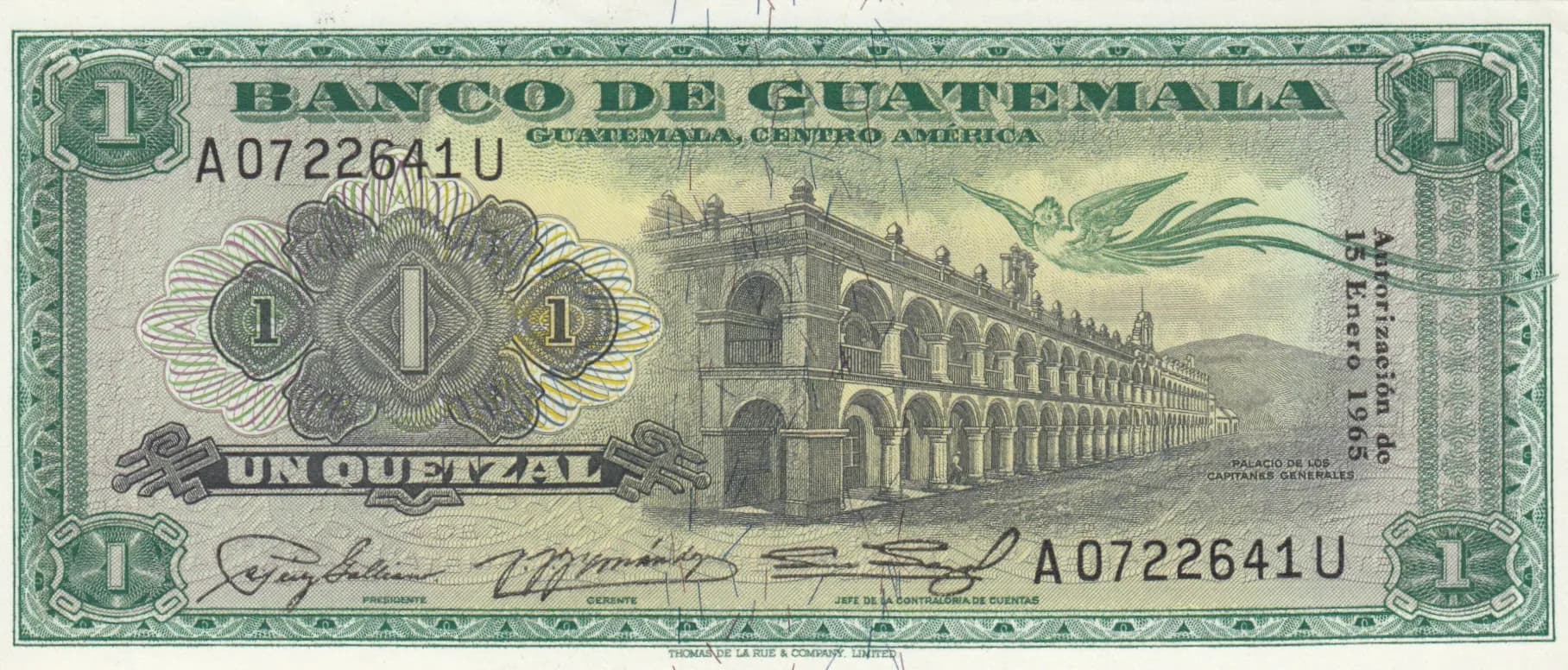
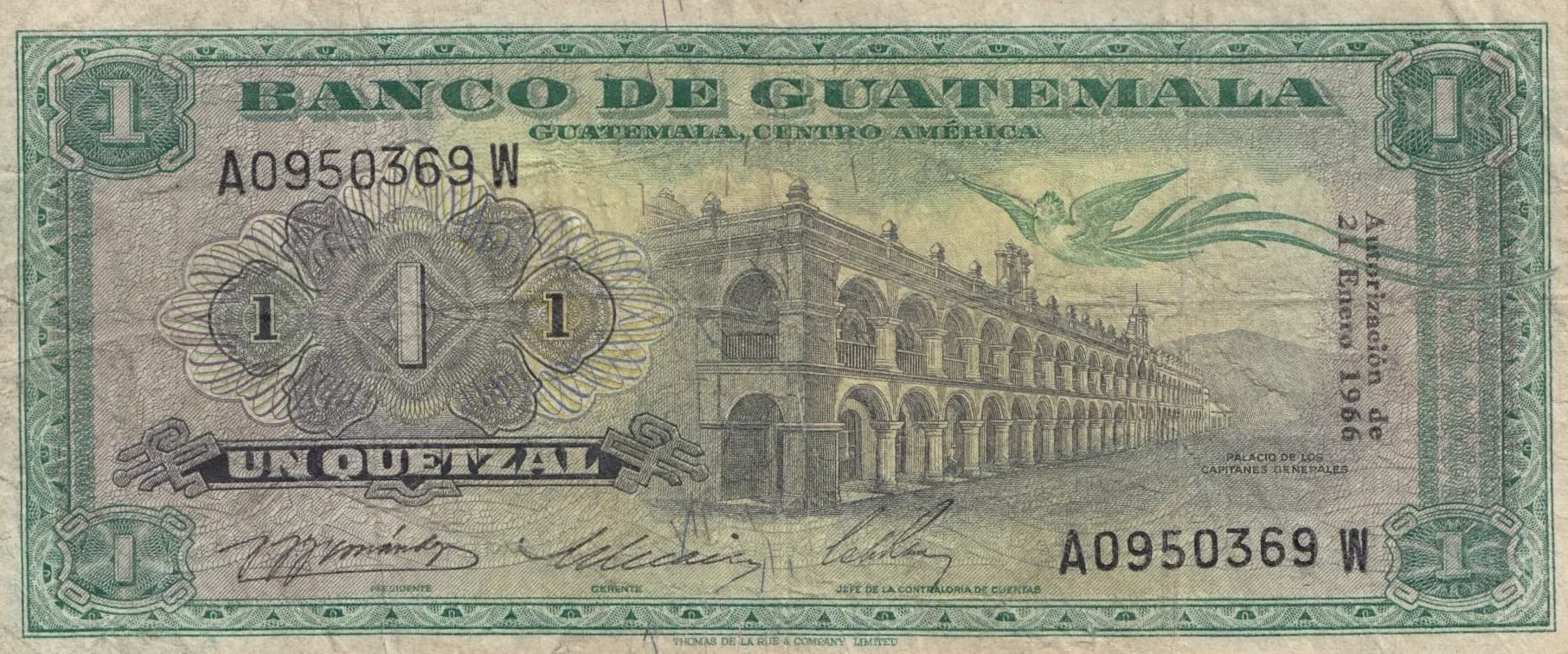
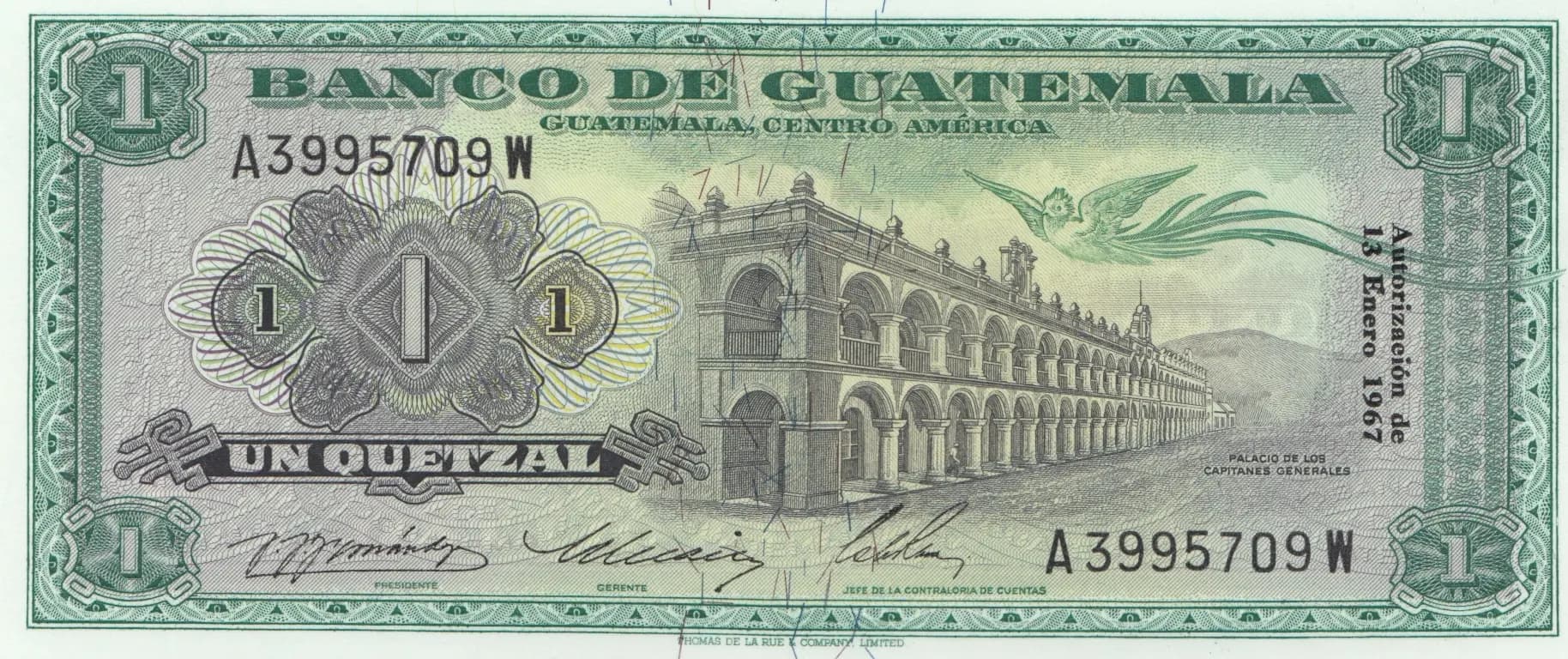
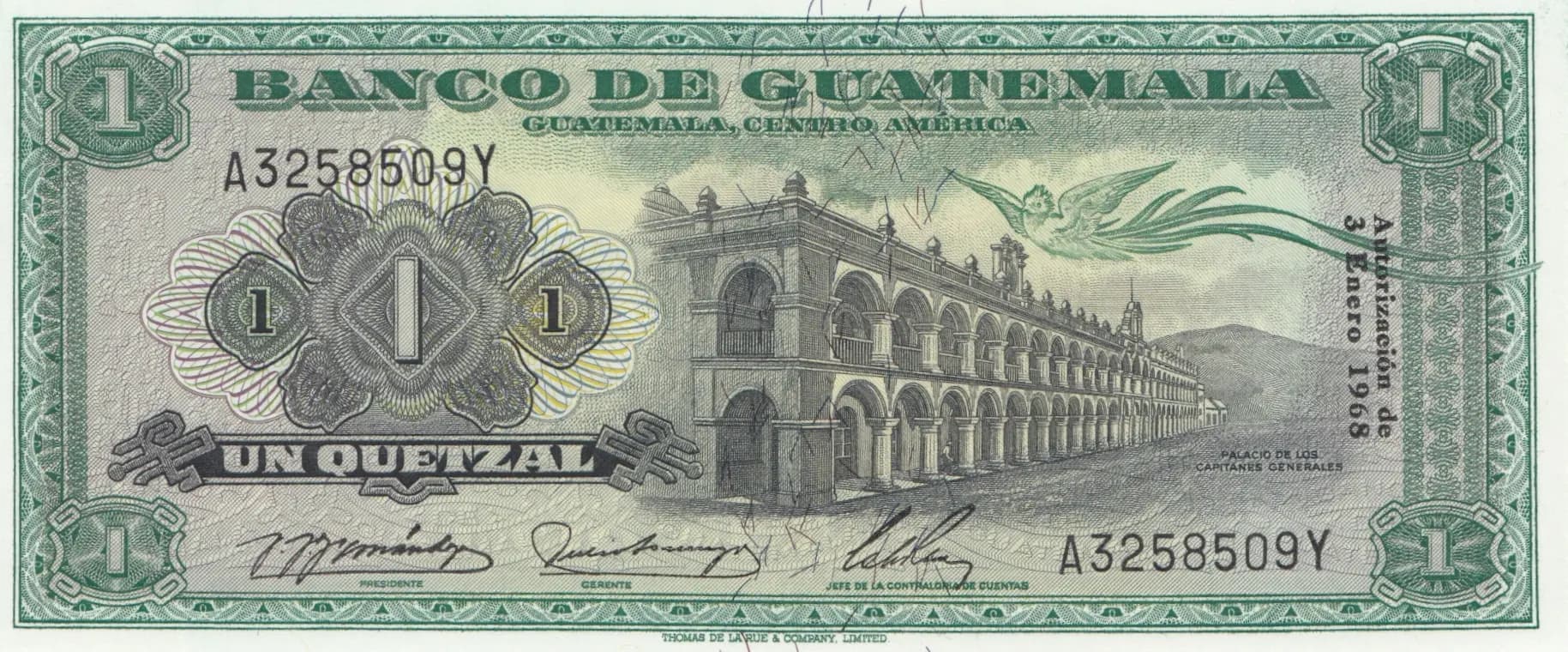
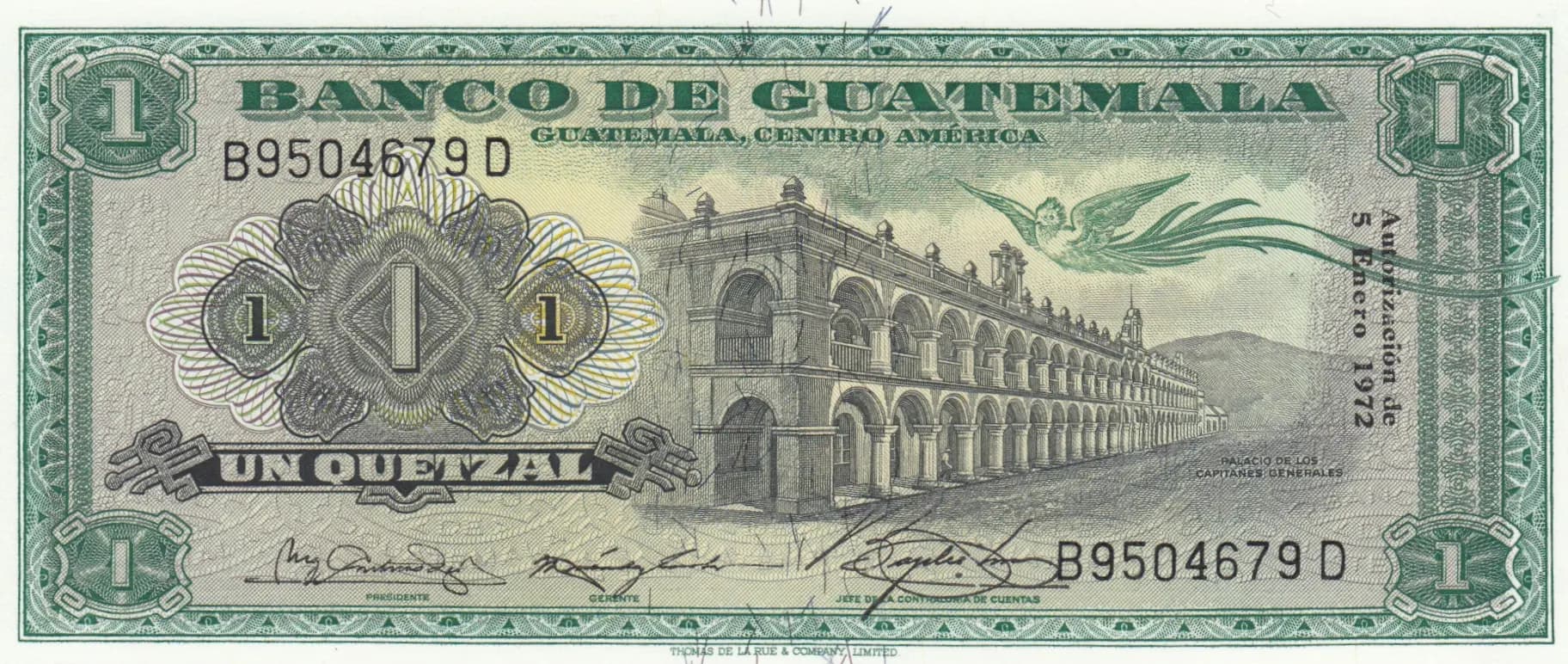
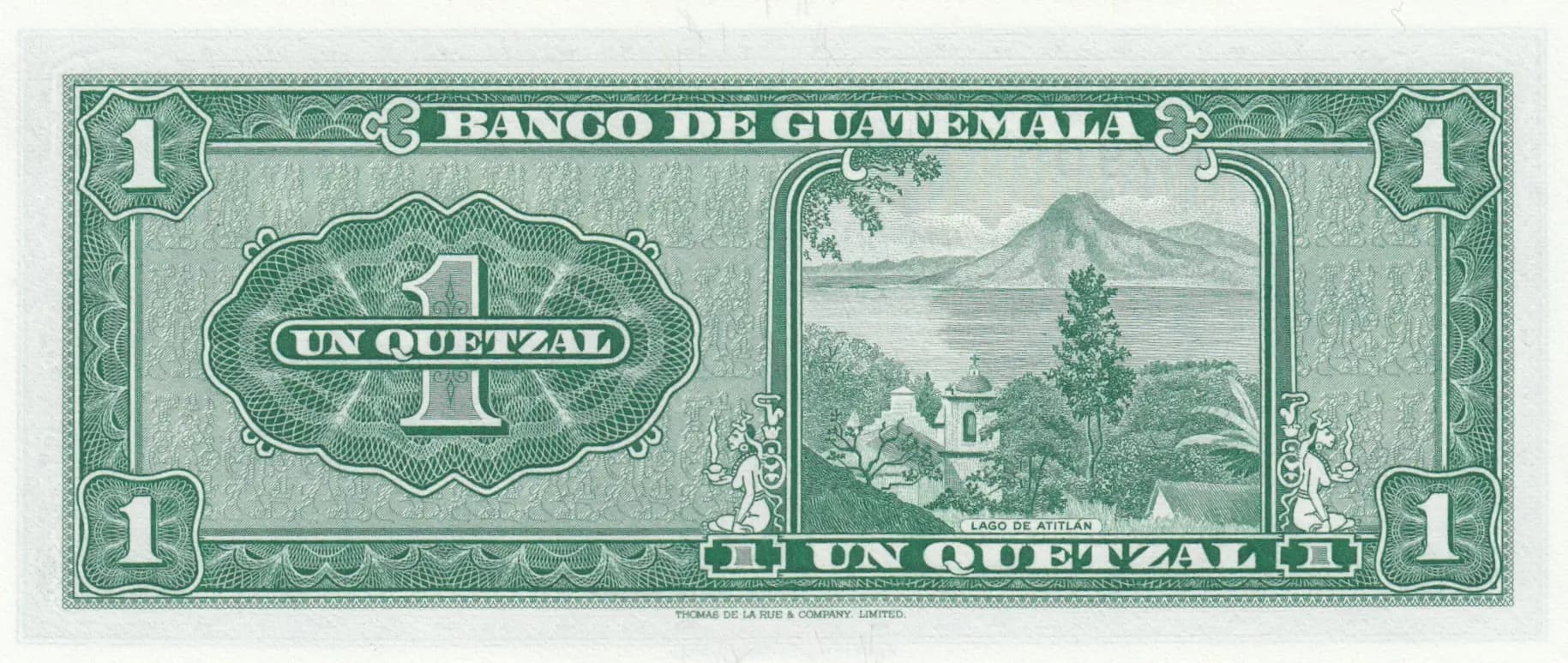
This is a Guatemala 1 Quetzal banknote from 1972 (Pick P-52i) in uncirculated condition, printed by Thomas de la Rue in London. The note features the iconic Palacio de los Capitanes Generales on the obverse and Lake Atitlan with its volcanic backdrop on the reverse, both executed in classic green and multicolor tones with fine engraved detailing characteristic of de la Rue's work. Despite some minor foxing visible on the front, the sharp print quality and overall preservation make this an excellent example of mid-20th century Guatemalan currency design.
Common. Market data from realbanknotes.com indicates this note trades in the $5-$37.50 range depending on condition, with UNC examples valued at $37.50 (2019 catalog value). eBay transaction history shows consistent sales activity with notes regularly selling for $5-$36, indicating steady availability and demand typical of common-date banknotes. The 1972 issue was part of a larger series printed by de la Rue covering the 1964-1972 period, suggesting reasonable print quantities. No evidence of scarcity or limited circulation.
This 1972 issue represents Guatemala's currency during a period of relative stability under the Banco de Guatemala's management. The depicted landmarks—the Palace of the Captains General (a symbol of colonial Spanish heritage) and Lake Atitlan (Guatemala's most geographically and culturally significant lake)—reflect the nation's emphasis on its pre-Columbian and colonial identity. The use of the quetzal bird (visible on the obverse) as the currency unit and design element further anchors the note to Guatemalan national symbolism and the Maya cultural heritage.
The obverse features an ornate rosette medallion with the numeral '1' at center-left, surrounded by classical corner emblems bearing the denomination. The dominant design element is the Palacio de los Capitanes Generales—a grand colonial-era administrative building rendered in architectural detail on the right side, featuring multiple arched windows and decorative stonework typical of Spanish colonial design. A quetzal bird illustration appears as a heraldic symbol. The reverse presents a landscape vignette of Lake Atitlan (Lago de Atitlán) dominated by a prominent volcanic peak in the background, with a small chapel or indigenous church structure nestled on the shore surrounded by vegetation, representing the region's cultural and religious heritage. Decorative borders and fine ornamental patterns frame both designs. The color scheme employs green as the primary color with beige, black, and gold accents throughout.
FRONT SIDE: 'BANCO DE GUATEMALA' (Bank of Guatemala), 'GUATEMALA, CENTROAMERICA' (Guatemala, Central America), 'UN QUETZAL' (One Quetzal), 'PALACIO DE LOS CAPITANES GENERALES' (Palace of the Captains General), Serial number 'B9504679 D'. BACK SIDE: 'BANCO DE GUATEMALA' (Bank of Guatemala), 'UN QUETZAL' (One Quetzal), 'LAGO DE ATITLAN' (Lake Atitlan), 'THOMAS DE LA RUE & COMPANY, LIMITED' (printer mark).
Intaglio engraving (line engraving and steel plate engraving), as evidenced by the fine linework visible in the ornate rosette patterns, the detailed architectural rendering of the palace, and the intricate landscape vignette on the reverse. The note was produced by Thomas de la Rue & Company, Limited (London), one of the world's leading security printers of the era, known for high-quality engraved banknote production. Multiple layers of fine line patterns and decorative borders indicate sophisticated security measures incorporated through the engraving process.
This note carries serial number B9504679 D, with the letter suffix 'D' indicating a specific printing batch or series variant within the 1972 issuance. The prefix 'B' suggests this particular serial block assignment. Pick catalog designates this as P-52i, with the 'i' suffix indicating it is part of a numbered series of varieties for this denomination and year. Without evidence of signature variations, overprints, or color variants visible in the images, this appears to be a standard variety of the 1972 regular issue. Notes from different serial blocks or with different letter prefixes may represent distinguishable collecting varieties.