1 quetzal 1965
Market Prices
3 salesAbout This Note
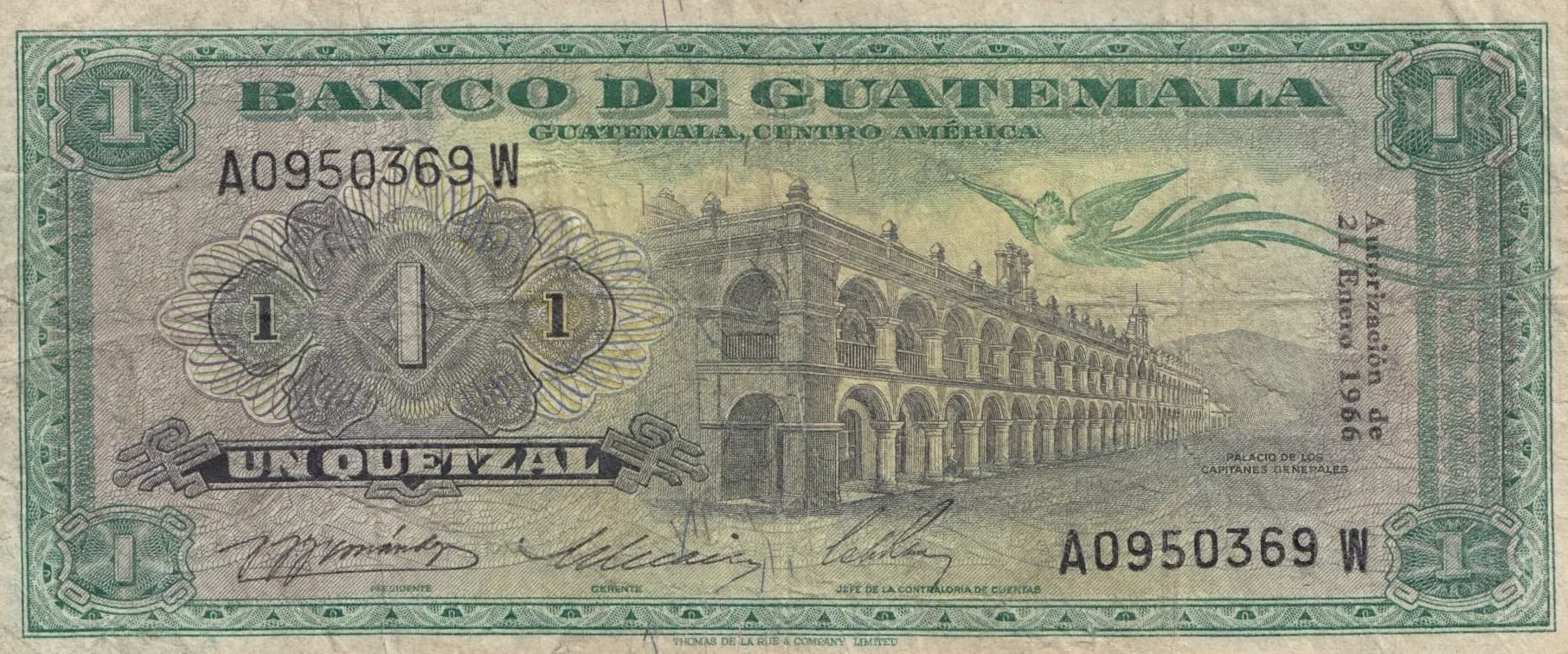
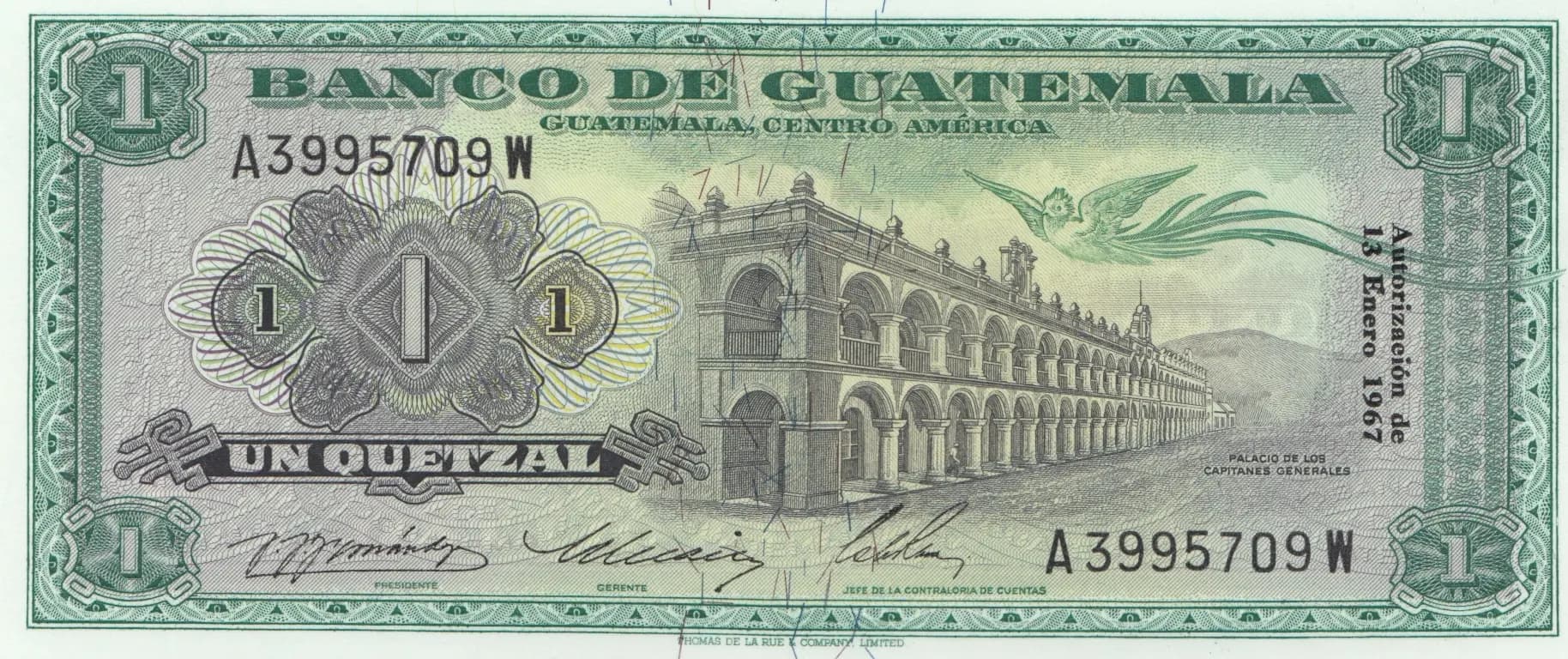
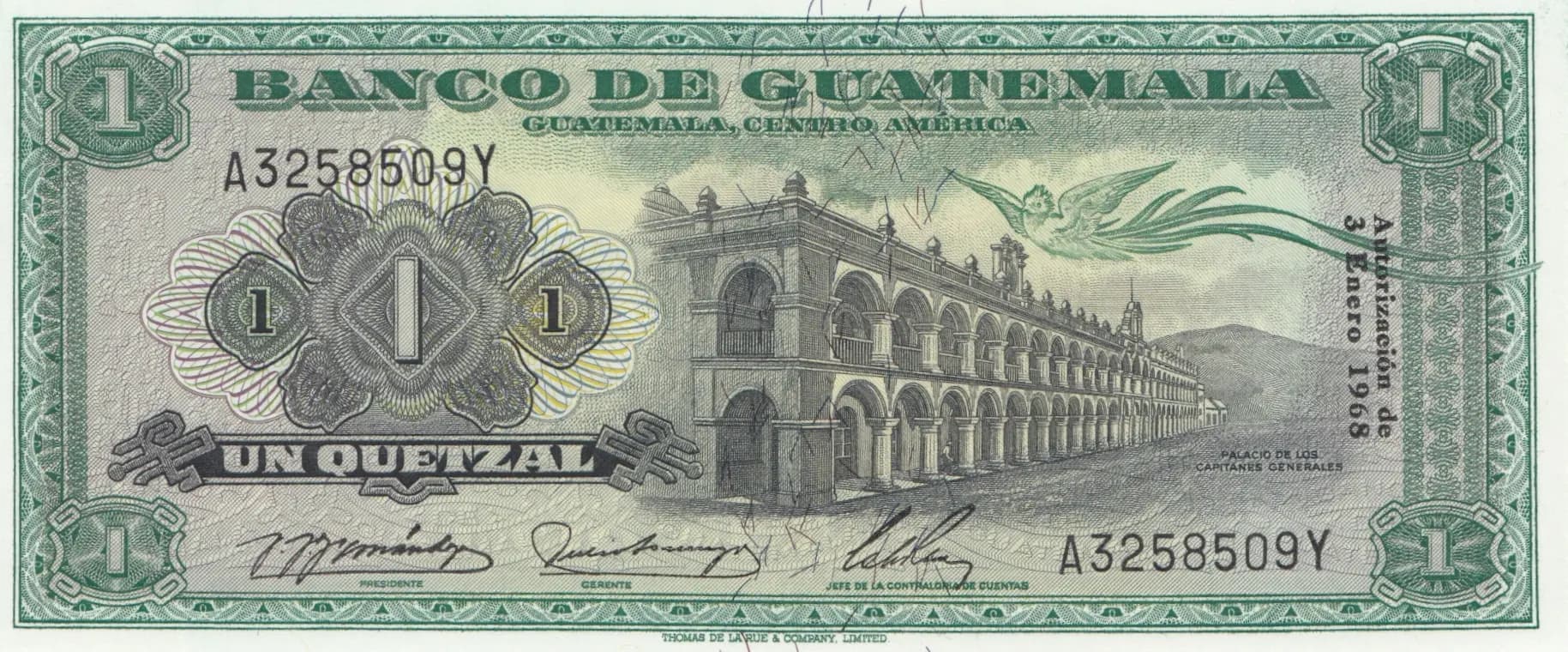
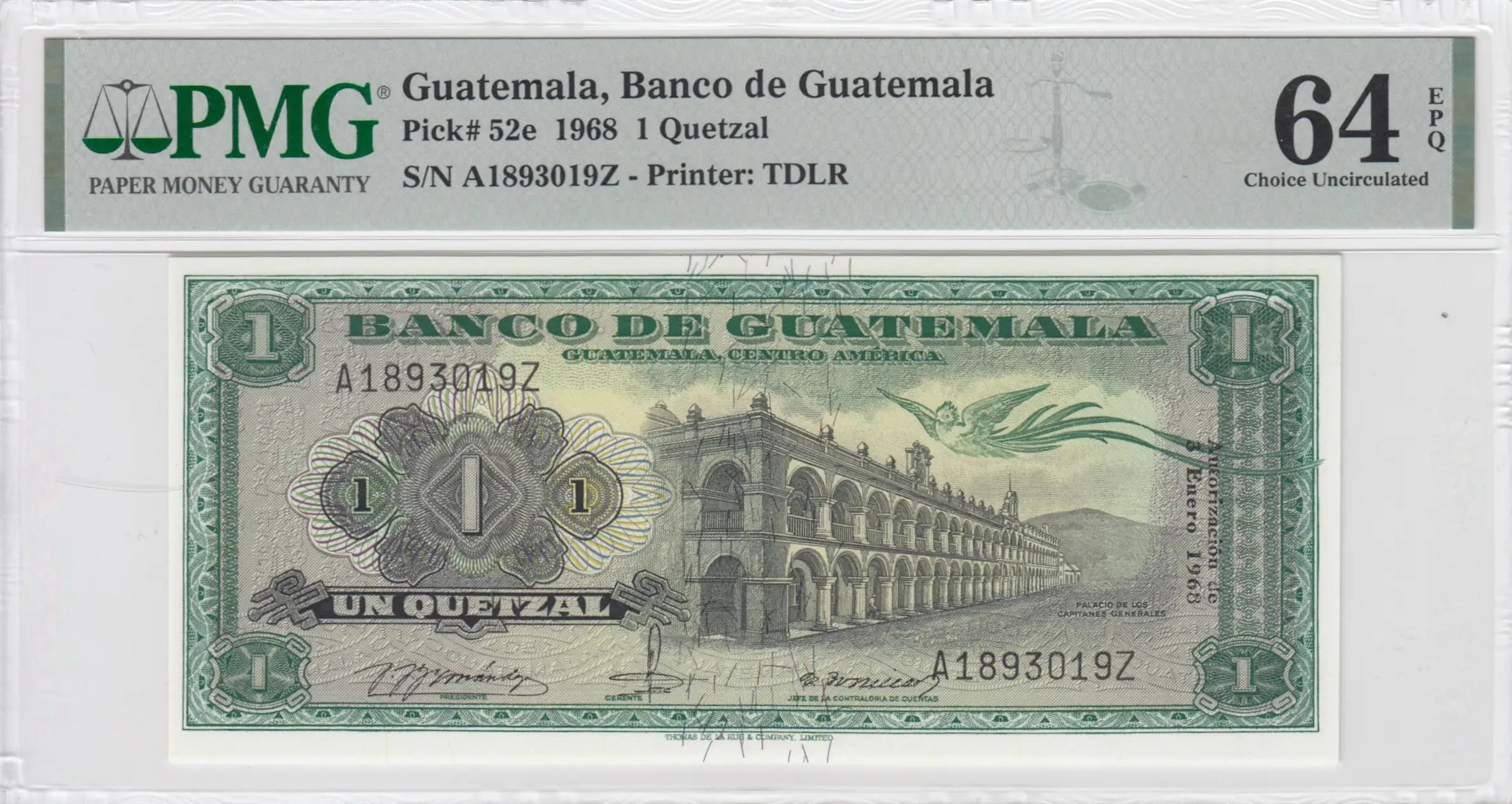
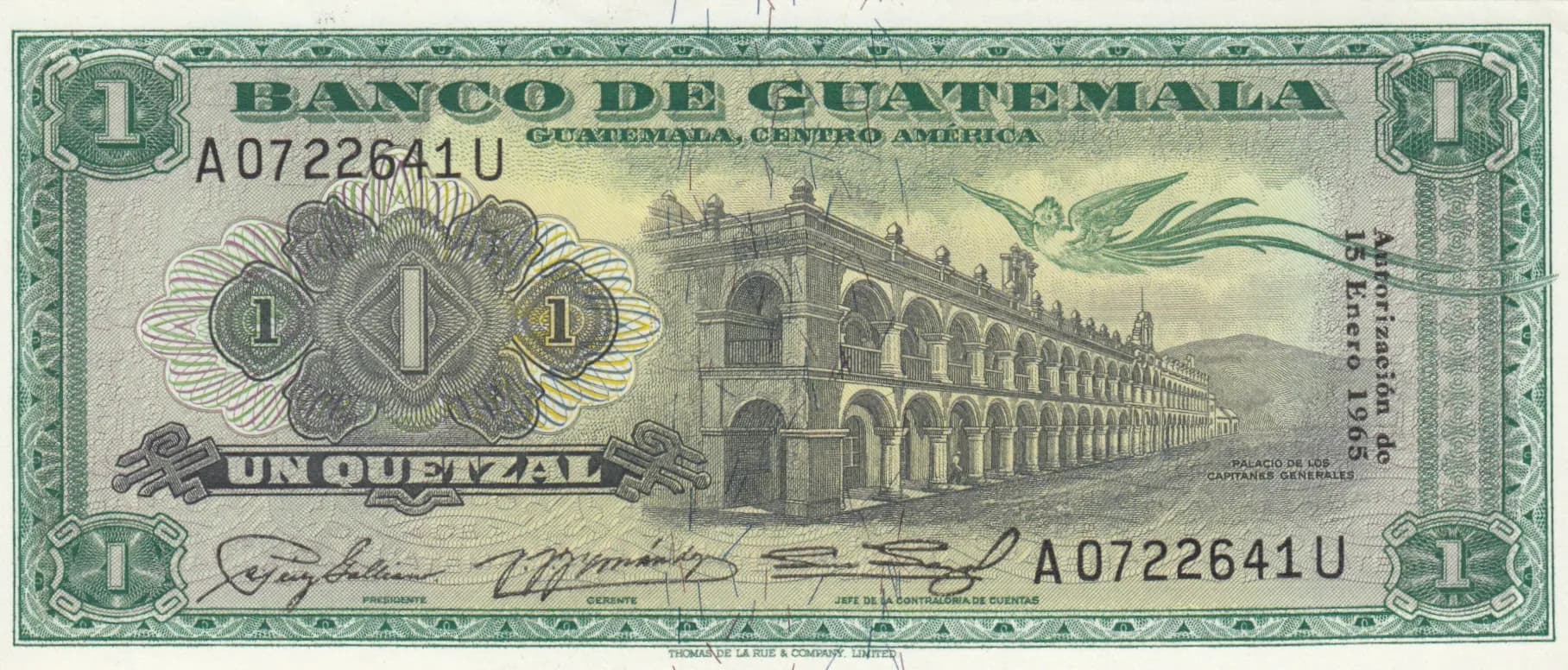
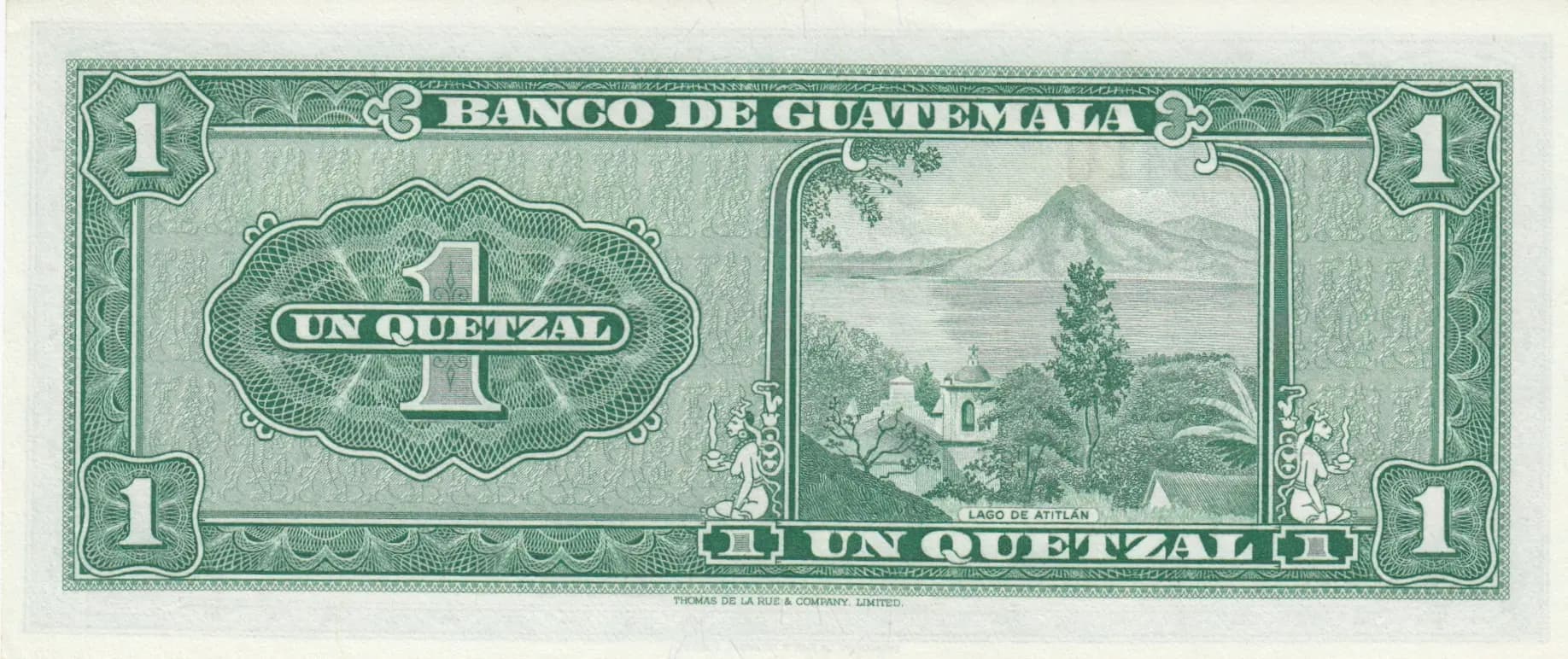
This 1965 Guatemalan 1 Quetzal note (Pick 52b) features exceptional engraving quality by Thomas de la Rue, showcasing the iconic Palacio de los Capitanes Generales on the obverse and a scenic Lake Atitlán landscape on the reverse. The note exhibits the characteristic green and black color scheme typical of this issue, with intricate decorative borders and a quetzal bird motif reflecting Guatemala's national heritage.
Common. The eBay market data provided shows consistent sales in the $16-$102 range depending on grade, with numerous transactions recorded across multiple years (2018, 2020, 2025). Even PMG-graded specimens (65 grade) are trading at modest prices ($49-$102), and the 2019 catalog value for UNC condition is listed at $37.50. This indicates robust supply in the market and regular collector demand at stable, low premium prices. The note was produced during a nine-year series (1964-1972) by a major security printer, suggesting substantial print runs.
Issued during Guatemala's mid-20th century under the Banco de Guatemala, this note reflects the country's emphasis on its colonial architectural heritage and natural landmarks. The Palacio de los Capitanes Generales depicted on the obverse represents Guatemala City's seat of colonial power, while Lake Atitlán on the reverse—one of Central America's most iconic natural features—symbolizes the nation's geographical and cultural significance. This series was produced between 1964-1972 by the renowned London security printer Thomas de la Rue.
The obverse features a sophisticated engraved composition centered on the Palacio de los Capitanes Generales, a multi-story colonial structure with numerous arches characteristic of 18th-century Spanish colonial architecture located in Guatemala City. The denomination '1' is presented within an ornate floral medallion on the left side. The national bird, the quetzal, is depicted in flight in the upper right corner, symbolizing Guatemala's sovereignty and connection to pre-Columbian heritage. The note employs a yellowish-green tint throughout with intricate decorative floral borders. The reverse presents a romanticized landscape engraving of Lago de Atitlán, Guatemala's largest lake, with a prominent volcano in the background and a small chapel or church visible on the shoreline amid tropical vegetation including palm trees and shrubs. Classical or allegorical figures appear in baroque-style ornamental frames at the bottom corners, adding to the note's aesthetic appeal.
FRONT SIDE: 'BANCO DE GUATEMALA' (Bank of Guatemala), 'GUATEMALA, CENTRO AMERICA' (Guatemala, Central America), 'UN QUETZAL' (One Quetzal), 'PALACIO DE LOS CAPITANES GENERALES' (Palace of the Captain Generals), 'El Banco de 1965' (The Bank of 1965), 'PRESIDENTE' (President), 'GERENTE' (Manager), 'JEFE DE LA CONTRALORIA DE CUENTAS' (Head of the Comptroller of Accounts), 'THOMAS DE LA RUE & COMPANY LIMITED' (printer attribution), and serial number 'A 0722641 U'. BACK SIDE: 'BANCO DE GUATEMALA' (Bank of Guatemala), 'UN QUETZAL' (One Quetzal), 'LAGO DE ATITLÁN' (Lake Atitlán), 'THOMAS DE LA RUE & COMPANY LIMITED' (printer attribution), and denomination '1'.
Intaglio engraving (line engraving) on banknote paper, executed by Thomas de la Rue & Company Limited of London. The visual analysis confirms fine line engraving throughout with complex decorative border patterns and elaborate ornamental designs characteristic of high-security banknote production. Multiple colors (green, yellow, black, and white) are employed, suggesting multi-pass printing typical of De la Rue's security printing standards.
This specimen is identified as Pick 52b variant. The serial number observed is 'A 0722641 U' with prefix 'A', which is consistent with the 1964-1972 series. Known varieties for this pick number relate to signature combinations of the PRESIDENTE (President), GERENTE (Manager), and JEFE DE LA CONTRALORIA DE CUENTAS (Head of Comptroller of Accounts), as these positions changed during the eight-year issue period. The visual analysis indicates standard printing characteristics with no visible overprints or corrections, suggesting a routine circulation issue from the established series.