5000 drachmai 1941
Market Prices
4 salesAbout This Note
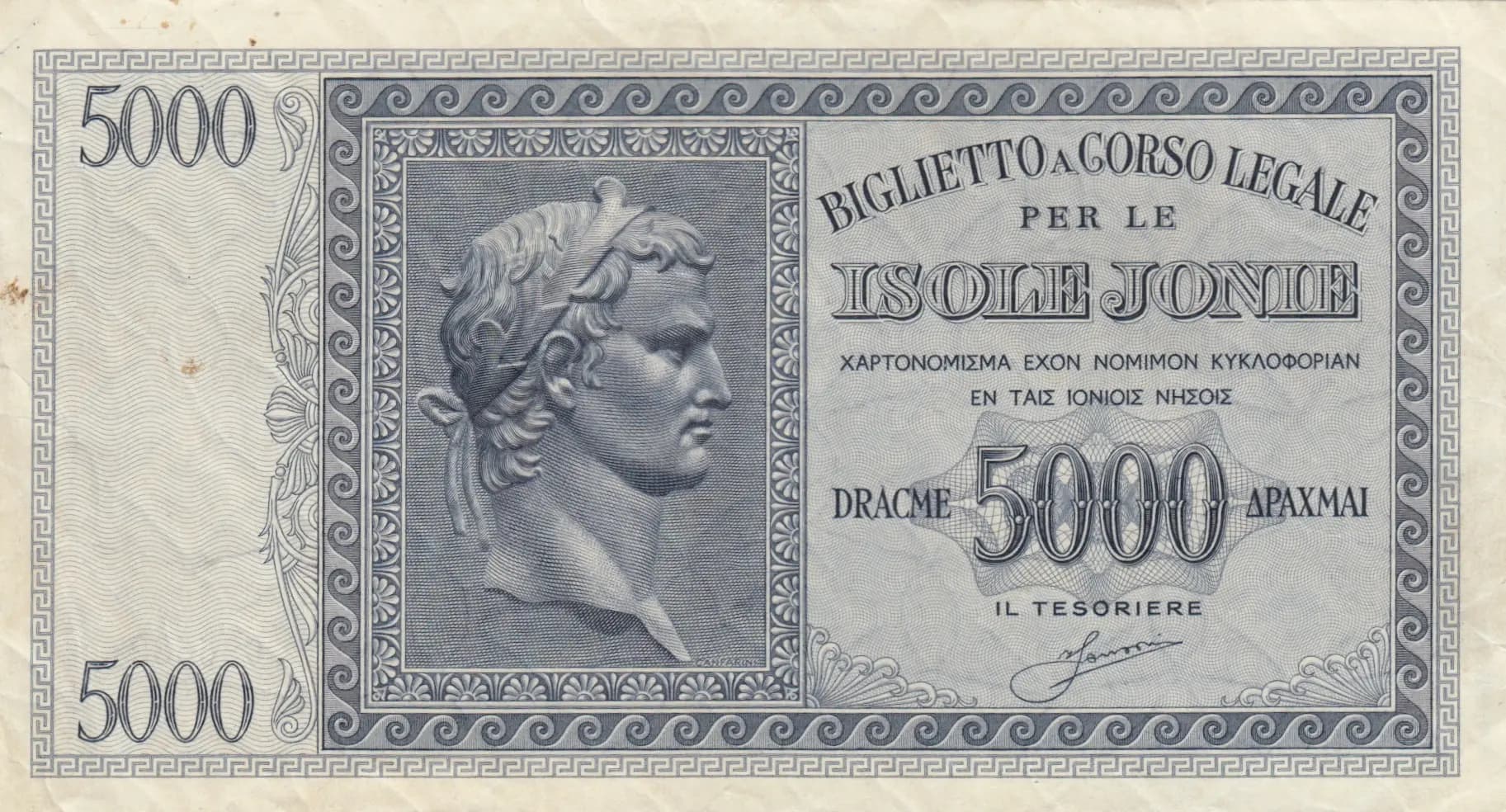
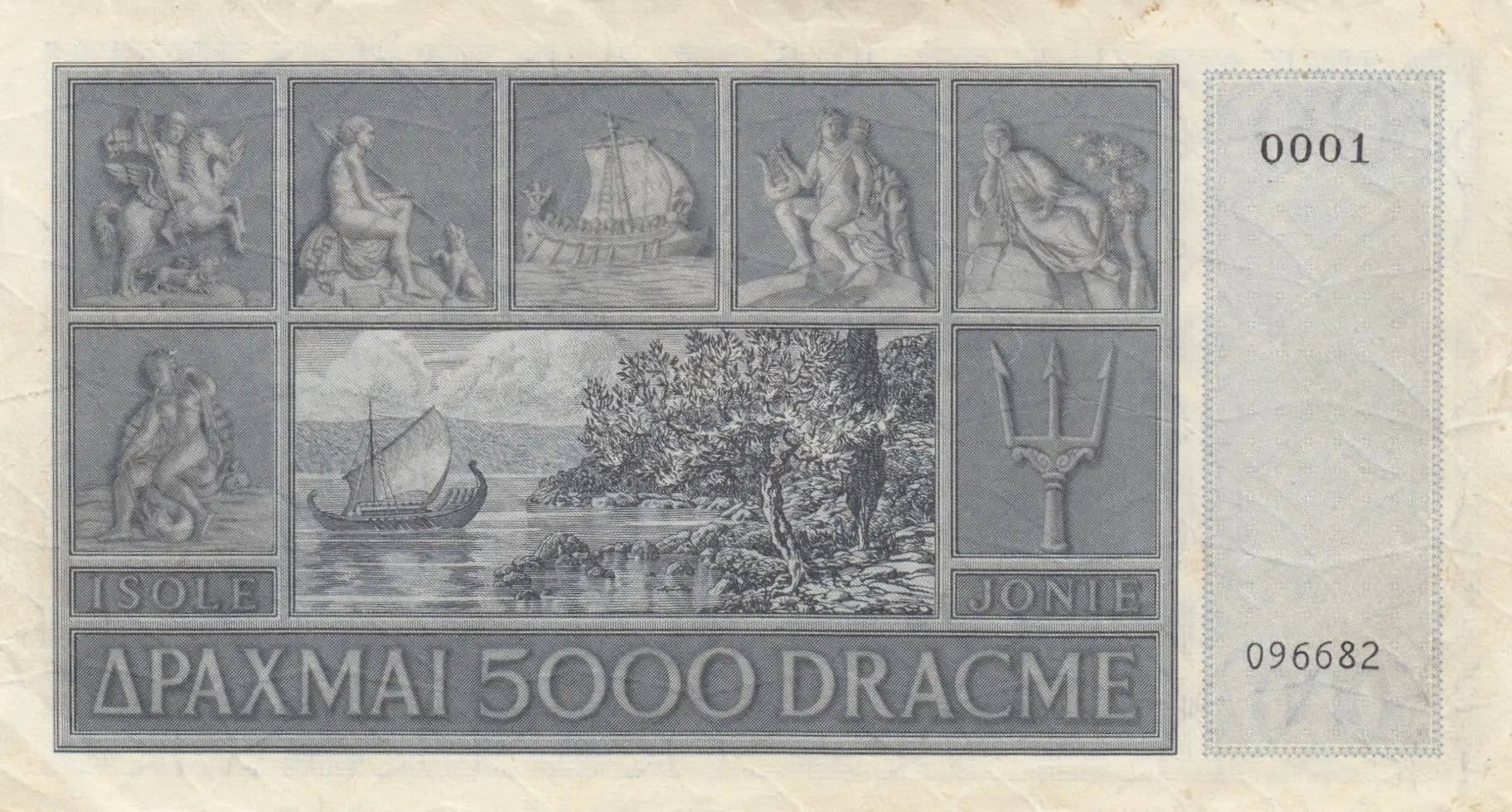
This 5000 Drachmai note from 1941 is a military payment certificate issued by Italy for the Ionian Islands occupation, featuring a classical Greek male portrait in profile on the obverse and an elaborate reverse with allegorical vignettes depicting maritime and island themes. The note displays authentic age-related patina with visible foxing and discoloration consistent with VF condition, and represents an important piece of WWII numismatic history from a short-lived Italian occupation authority.
Uncommon. While catalog values from 2008 show VF at $75, recent eBay market data reveals highly variable pricing ($149.99 to $395 USD), suggesting modest collector demand but limited supply. The note was issued by a short-lived occupation authority (1941-1943) with likely constrained print runs for a secondary theater. The condition grade and catalog rarity suggest this is neither common circulation material nor exceptionally rare, placing it in the uncommon category for numismatic collectors.
Issued during Italy's occupation of the Ionian Islands (1941-1943), this note reflects the Italian fascist regime's administrative control of formerly Greek territory. The bilingual Italian-Greek inscriptions and classical imagery—including the central portrait and maritime symbolism with sailing vessels and tridents—were deliberately chosen to assert Italian cultural authority while acknowledging the Hellenic heritage of the islands, a common propagandistic tactic of occupying powers.
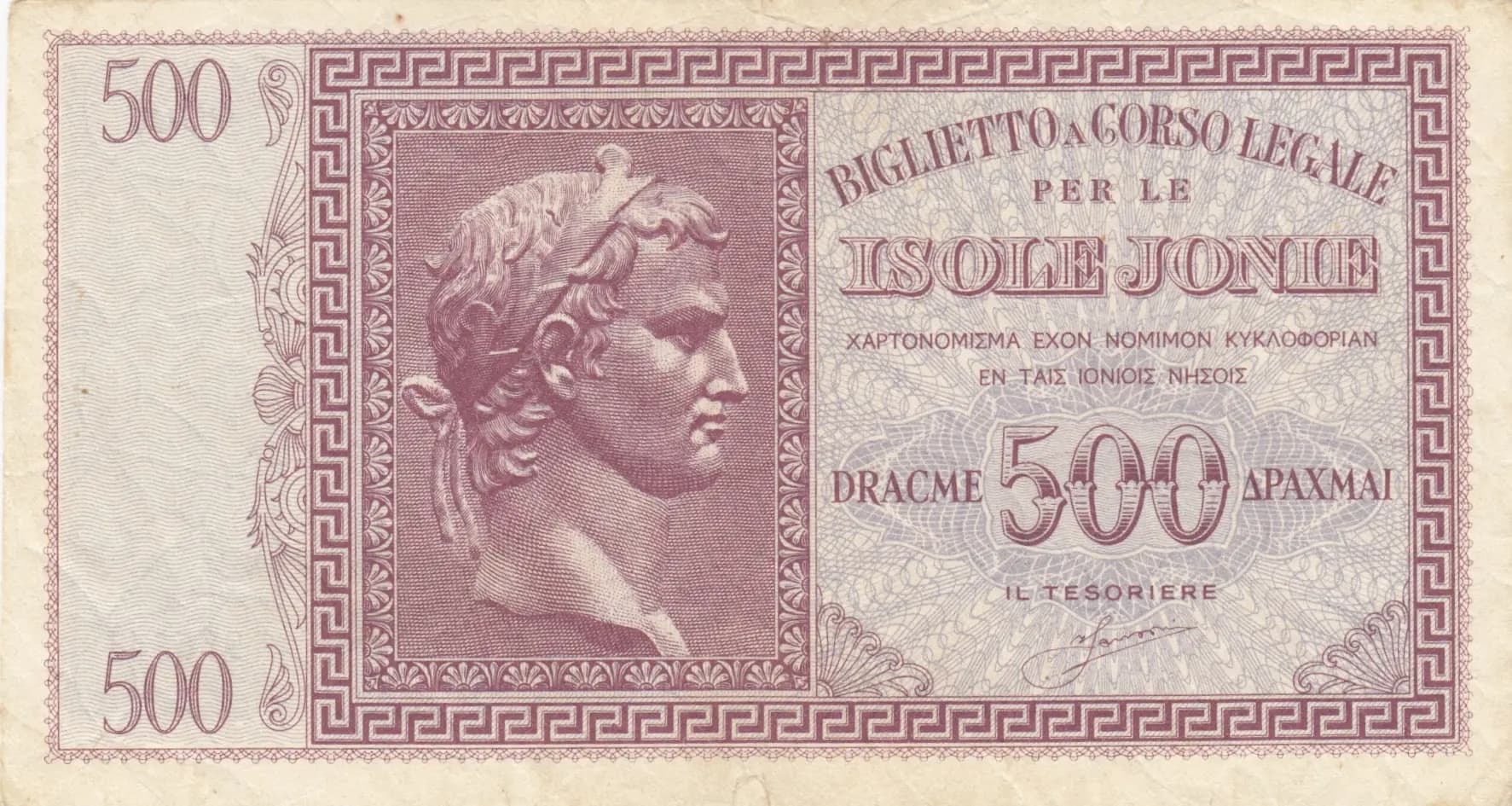
The obverse features a classical male portrait in right-facing profile, rendered in the style of ancient Greek or Roman coinage, positioned in a framed rectangle at center-left. The figure wears draped classical clothing and has the curled hair typical of Greco-Roman numismatic portraiture. The reverse is dominated by an elaborate allegorical composition with six rectangular vignette panels surrounding a central landscape scene depicting a Ionian island with sailing vessel, water, and vegetation. The upper panels contain classical allegorical figures and putti representing concepts of commerce, prosperity, and maritime trade. Maritime symbols including ancient Greek sailing ships and tridents (symbols of Poseidon) reinforce the Ionian Islands identity. Greek key (meander) pattern borders frame the note in classical style. The design employs fine engraving throughout to create security through complexity.
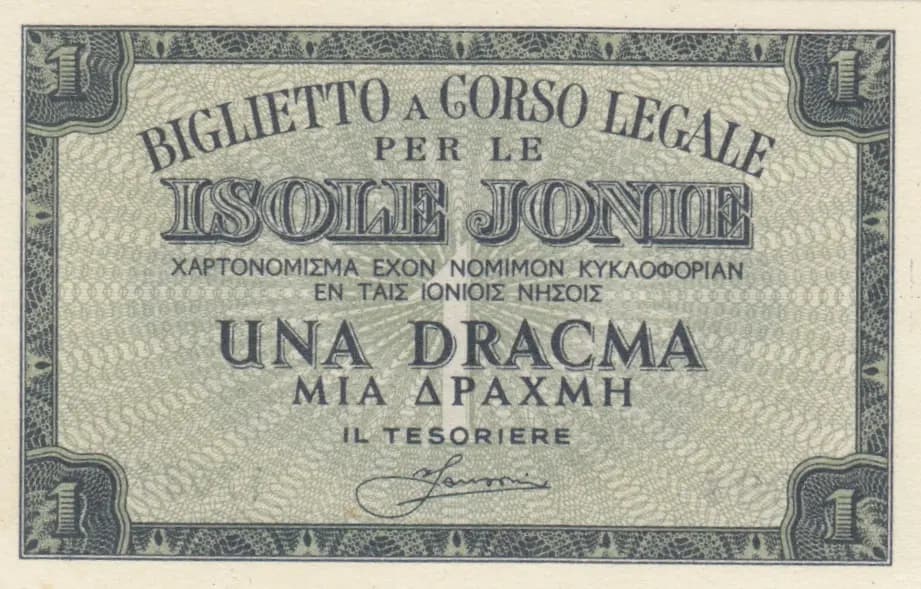
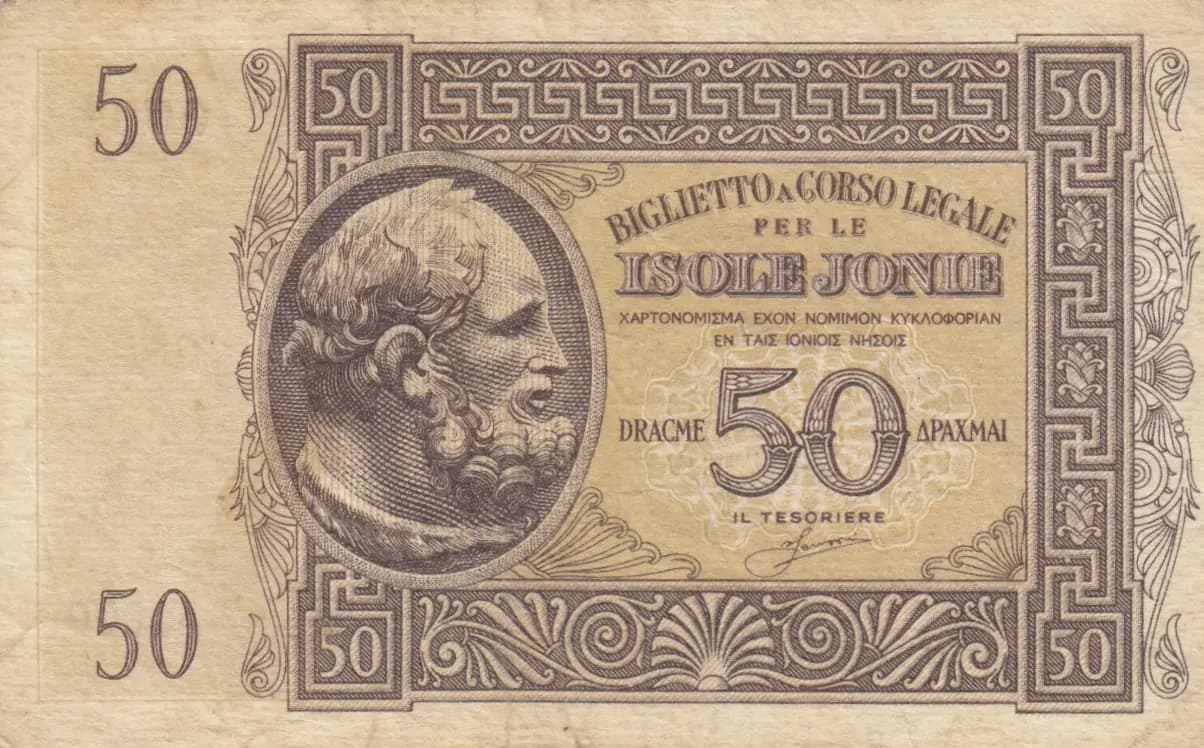
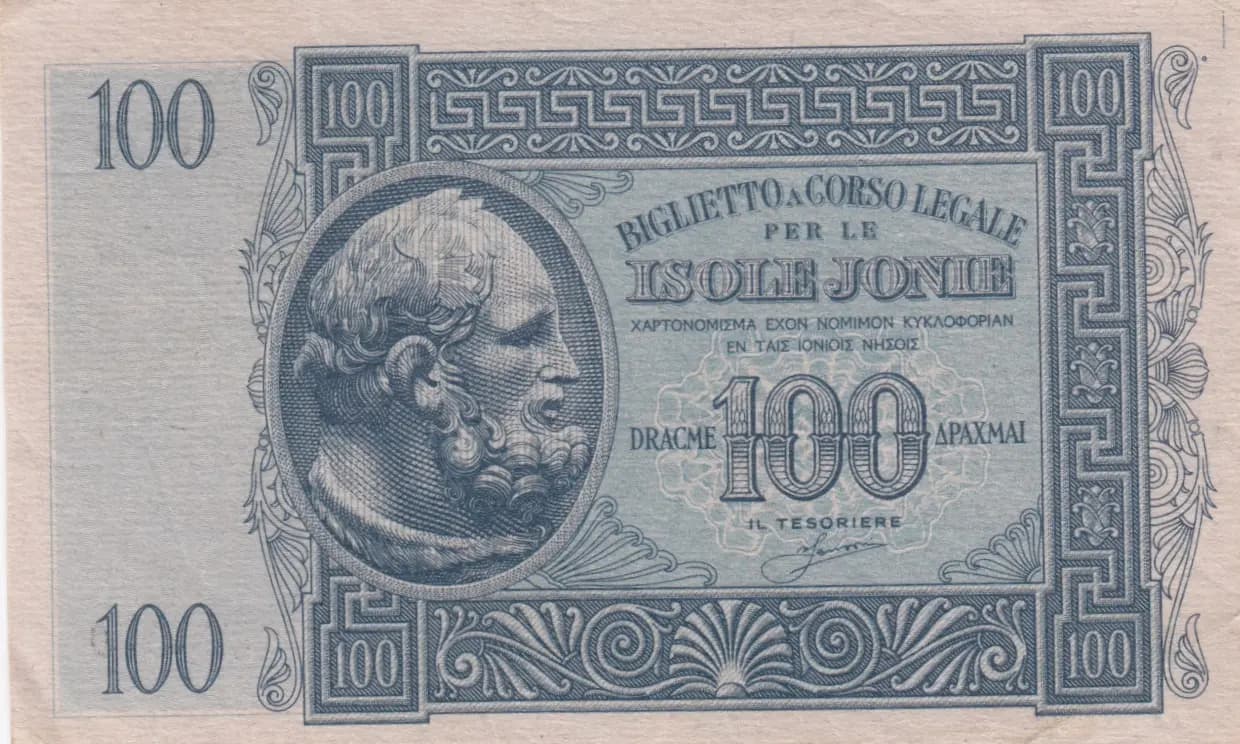
OBVERSE: 'BIGLIETTO A CORSO LEGALE PER LE ISOLE IONIE' (Legal tender banknote for the Ionian Islands); 'ΧΑΡΤΟΝΟΜΙΣΜΑ ΕΧΟΝ ΝΟΜΙΜΟΝ ΚΥΚΛΟΦΟΡΙΑΝ ΕΝ ΤΑΙΣ ΙΟΝΙΟΙΣ ΝΗΣΟΙΣ' (Currency having legal circulation in the Ionian Islands); 'DRACME' / 'ΑΡAXMAI' (Drachmai); '5000' (denomination); 'IL TESORIERE' (The Treasurer). REVERSE: 'ISOLE IONIE' (Ionian Islands); 'ΔΡAXMAI 5000 DRACME' (5000 Drachmai); Serial numbers '0001' and '096632'.
Intaglio engraving (steel plate line engraving), characteristic of high-security banknote production. The fine line work, intricate border patterns, and detailed allegorical vignettes are hallmarks of classical intaglio currency printing. The printer for Italian occupation currency of this period was typically the Istituto Poligrafico e Zecca dello Stato (Italian State Printing House and Mint), though documentation for this specific occupation issue may be limited.
Pick catalog P-M18a indicates this is a specific variety of the 5000 Drachmai issue. The serial numbers visible ('0001' and '096632') suggest this may be from an early printing run. No signature varieties are distinctly visible in the visual analysis. The bilingual Italian-Greek formatting is standard for all Ionian Islands occupation notes. Further variety differentiation would require examination of printer marks, watermarks, or additional serial number range documentation.