500 drachmai 1950
Market Prices
23 salesAbout This Note
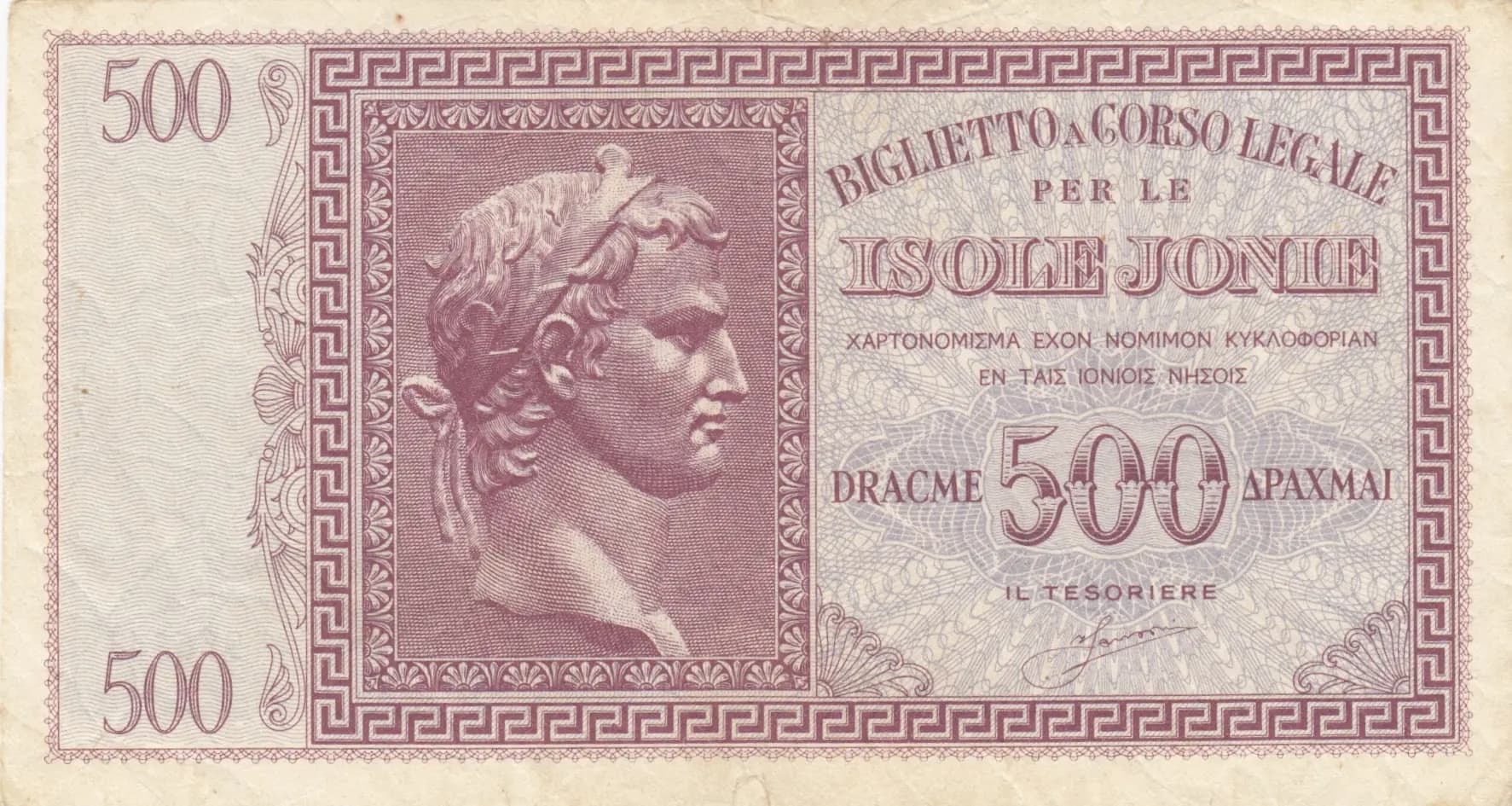
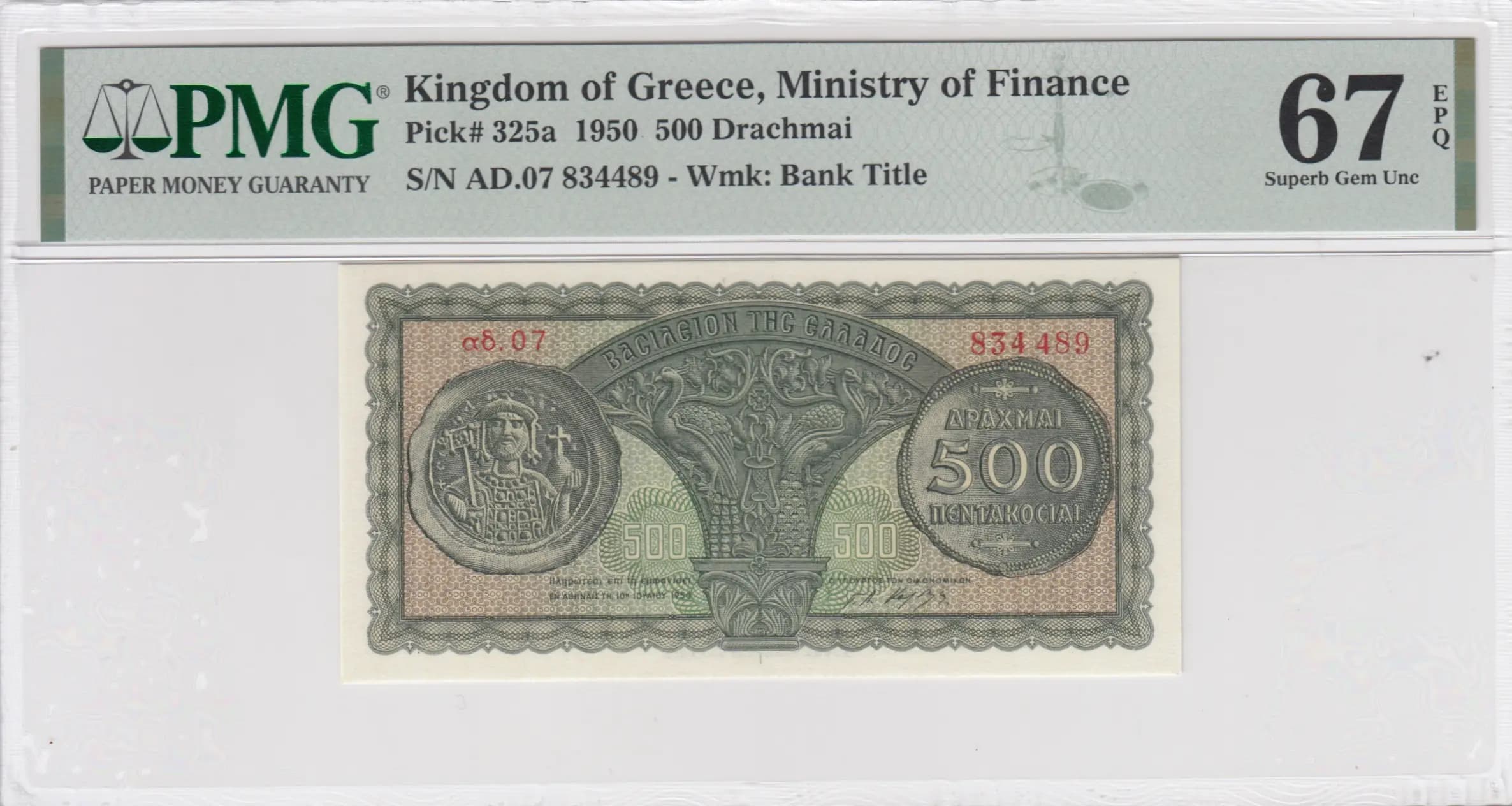
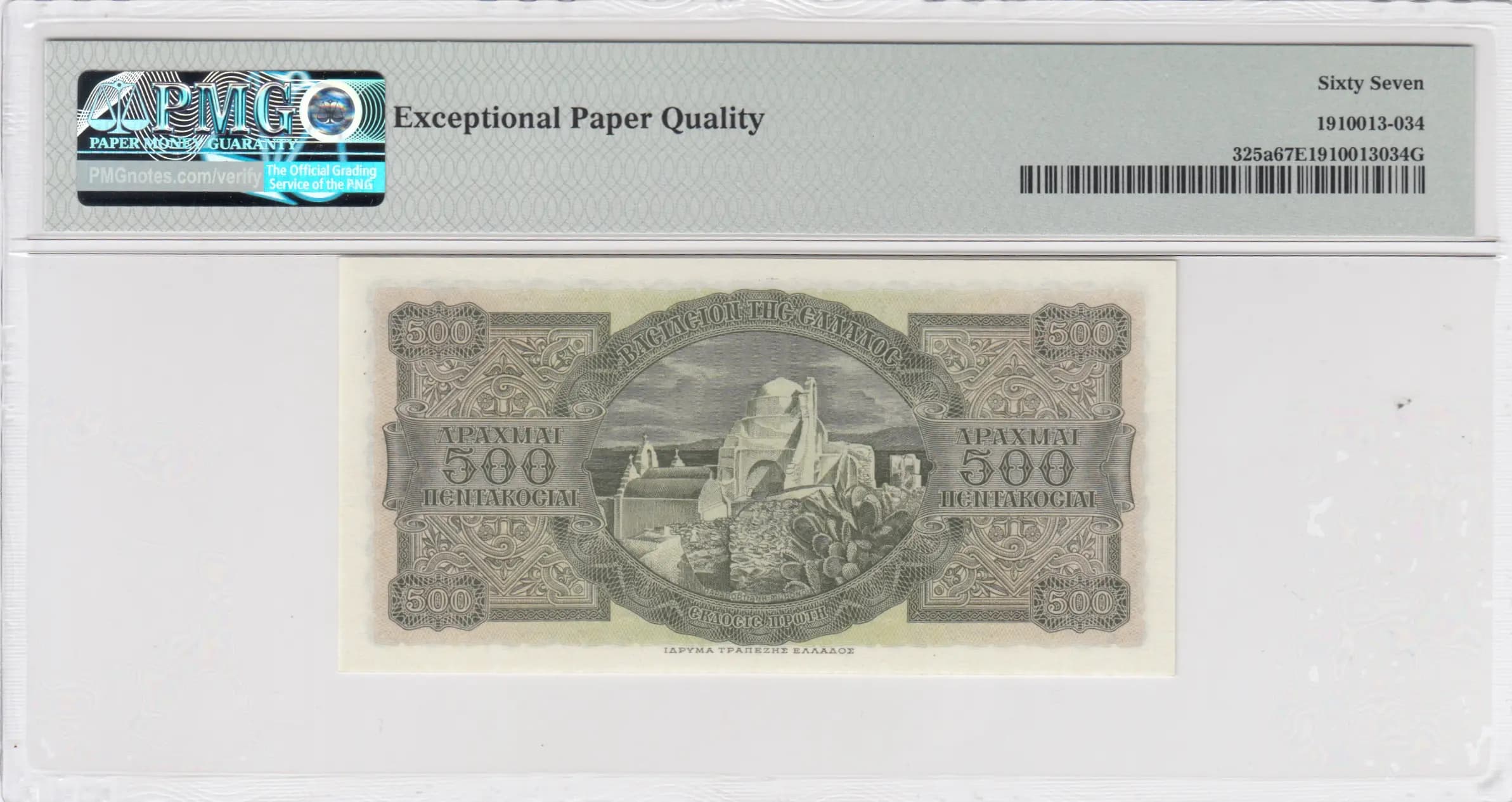
This is a PMG 67 EPQ example of the 500 Drachmai issued by the Kingdom of Greece in 1950, representing an exceptional survivor in near-gem condition. The note features impressive intaglio engraving with a classical design incorporating a bearded portrait in Byzantine style on the obverse and a detailed landscape vignette of what appears to be the Paraportiani Church (or similar Cycladic monastery) on the reverse. Recent comparable sales data (PMG 67 sold for $199.50 in August 2023) indicates strong collector demand for high-grade examples of this issue, making this a desirable piece for Greek currency specialists.
Common. Despite the elegant design and historical significance, this denomination and issue date represents a standard regular-issue banknote from the Kingdom of Greece's post-war currency production. The eBay market data shows consistent availability across multiple condition grades over many years (2009-2023), with even PMG 67 examples selling in the $150-200 range. Print runs for 500 Drachmai notes of this period were substantial, and the note was not subject to recall or replacement within a short timeframe. The grade PMG 67 EPQ commands a premium relative to circulated examples but is not exceptionally rare; the note's value derives from condition rather than scarcity.
The 500 Drachmai note issued in 1950 reflects the Kingdom of Greece's post-war monetary reconstruction under the reign of King Paul I, with the Bank of Greece (Ίδρυμα Τράπεζας Ελλάδος) resuming full note-issuing authority. The design's emphasis on Byzantine numismatic heritage and Cycladic religious architecture served to reinforce Greek national identity and cultural continuity during the early Cold War period. The classical ornamental patterns and ecclesiastical imagery reflected Greece's historical and spiritual foundation as the nation rebuilt its economy following the devastating occupation and civil war.
The obverse features two connected circular medallions with elaborate Greek ornamental framing. The left medallion contains a portrait of a bearded man in classical Byzantine style wearing what appears to be religious or imperial vestments, with a prominent cross symbol on the chest—likely representing either a Byzantine emperor or religious figure important to Greek historical identity. The right medallion displays the denomination '500' with Greek text for the value. Decorative Greek key patterns, floral motifs, and stylized urns frame the central design in green and tan tones with red serial numbers. The reverse showcases a large oval vignette depicting the Paraportiani Church (or similar Cycladic monastery) situated on an elevated landscape with stone architectural elements rendered in fine black line engraving. The entire note is bordered by symmetrical ornamental Greek patterns reflecting classical design principles, with the denomination repeated in all four corners. The color scheme of green, beige, black, and cream creates an elegant, classically-inspired appearance.
FRONT: 'ΒΑΣΙΛΕΙΟΝ ΤΗΣ ΕΛΛΑΔΟΣ' (Kingdom of Greece); 'ΔΡΑΧΜΑΙ' (Drachmai); 'ΠΕΝΤΑΚΟΣΙΑΙ' (Five Hundred); Serial number: AD.07 834489. BACK: 'ΔΡΑΧΜΑΙ ΠΕΝΤΑΚΟΣΙΑΙ' (Five Hundred Drachmai) - repeated in all four corners; 'ΙΔΡΥΜΑ ΤΡΑΠΕΖΗΣ ΕΛΛΑΔΟΣ' (Banking Institution of Greece/Bank of Greece); Additional text references to historical/ancient themes. The denomination and issuing authority appear prominently on both sides in classical Greek typography.
Intaglio engraving (line engraving/steel engraving), characteristic of high-security banknote production of the era. The fine line work visible throughout the ornamental borders, the detailed landscape vignette of the church, and the crisp rendering of facial features and architectural elements are typical of steel plate engraving. The printer is identified as 'Ίδρυμα Τράπεζας Ελλάδος' (Bank of Greece), which produced or oversaw production of the note. The multi-color printing (green, beige, black, red) was achieved through multiple intaglio press runs, a standard security printing technique for the 1950s.
This example is Pick 325a (1950 issue), with catalog data noting that Pick 325b also exists (cataloged as a variant for the same base Pick number, likely representing the 1953 reissue). The serial number prefix 'AD.07' and serial number 834489 are specific to this individual note. No visible signatures or date variants are noted in the visual analysis. The note exhibits the standard design characteristics of the 1950 Kingdom of Greece issue without discernible overprints or modifications, consistent with the regular issue classification.