500 000 000 drachmai 1944
Market Prices
20 salesAbout This Note
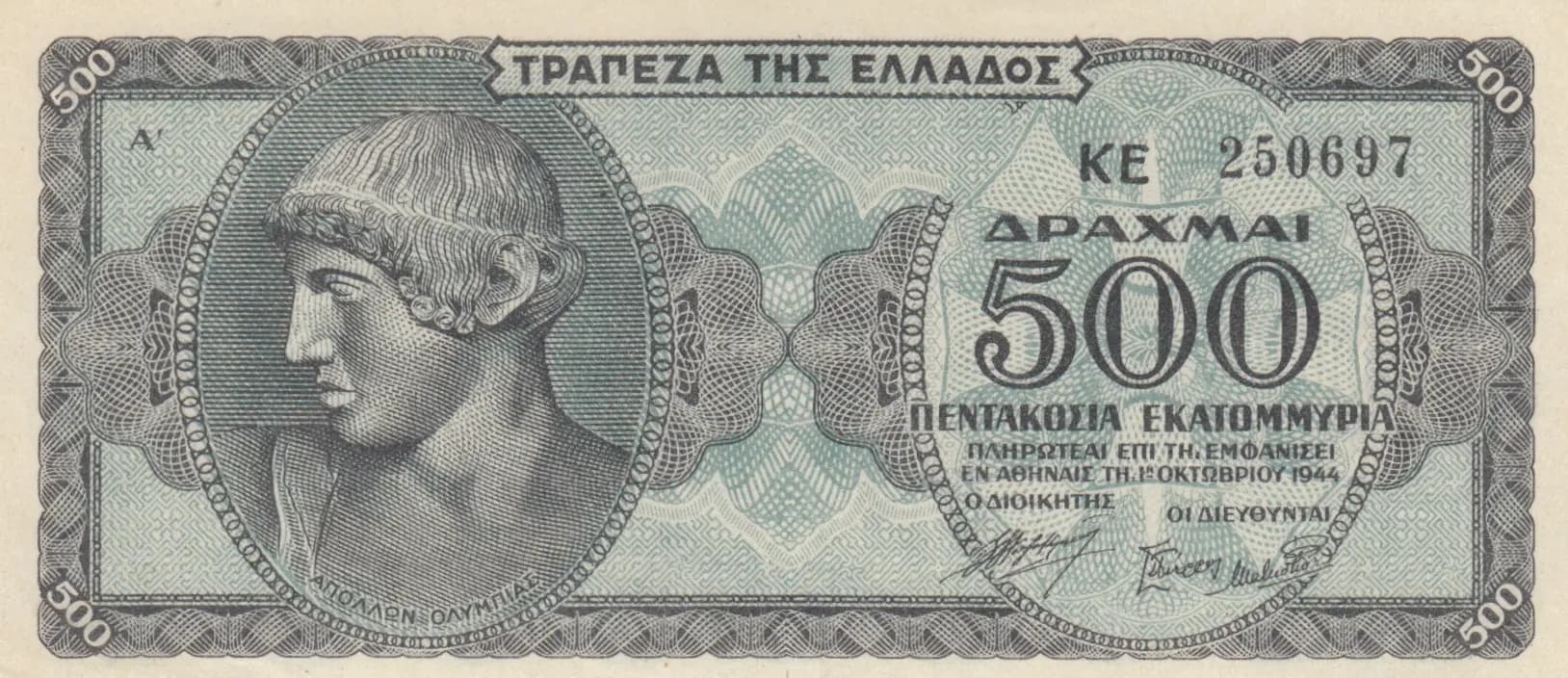
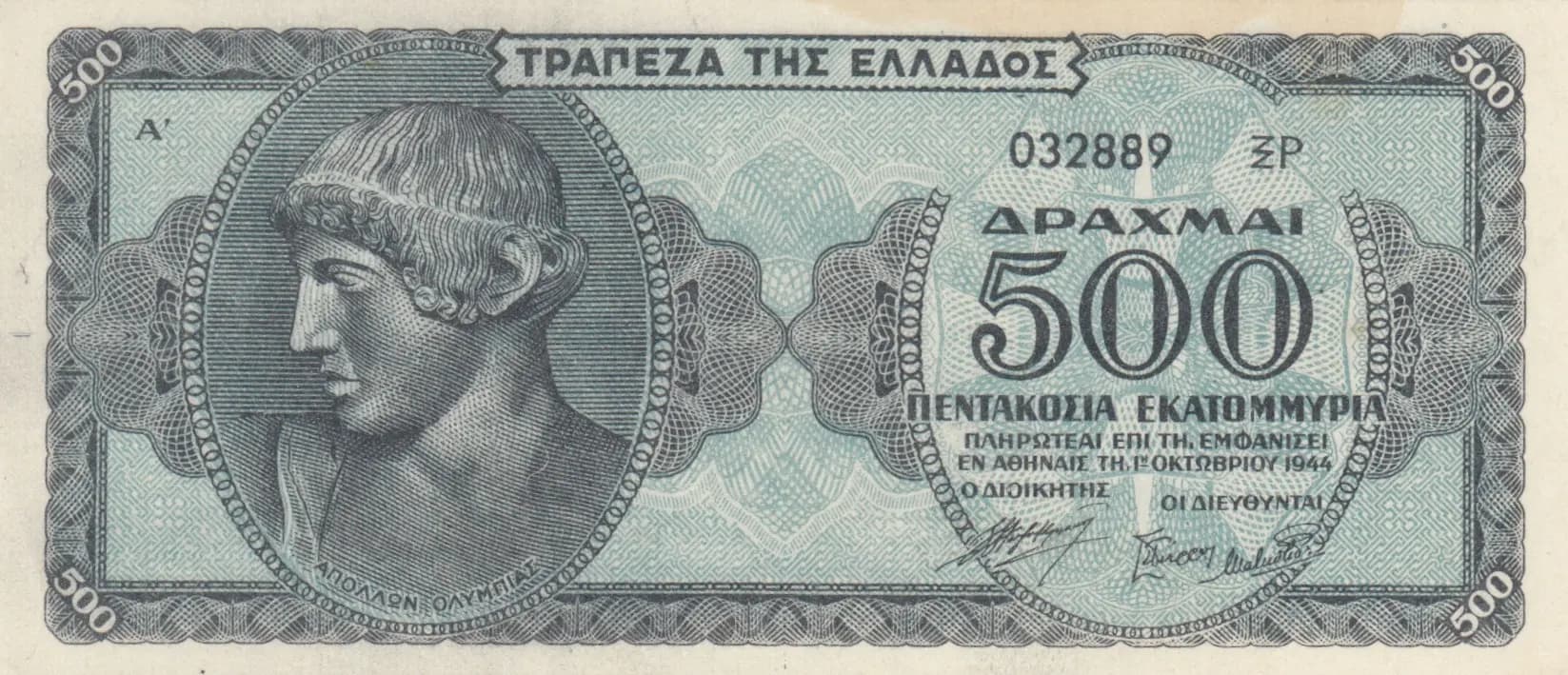
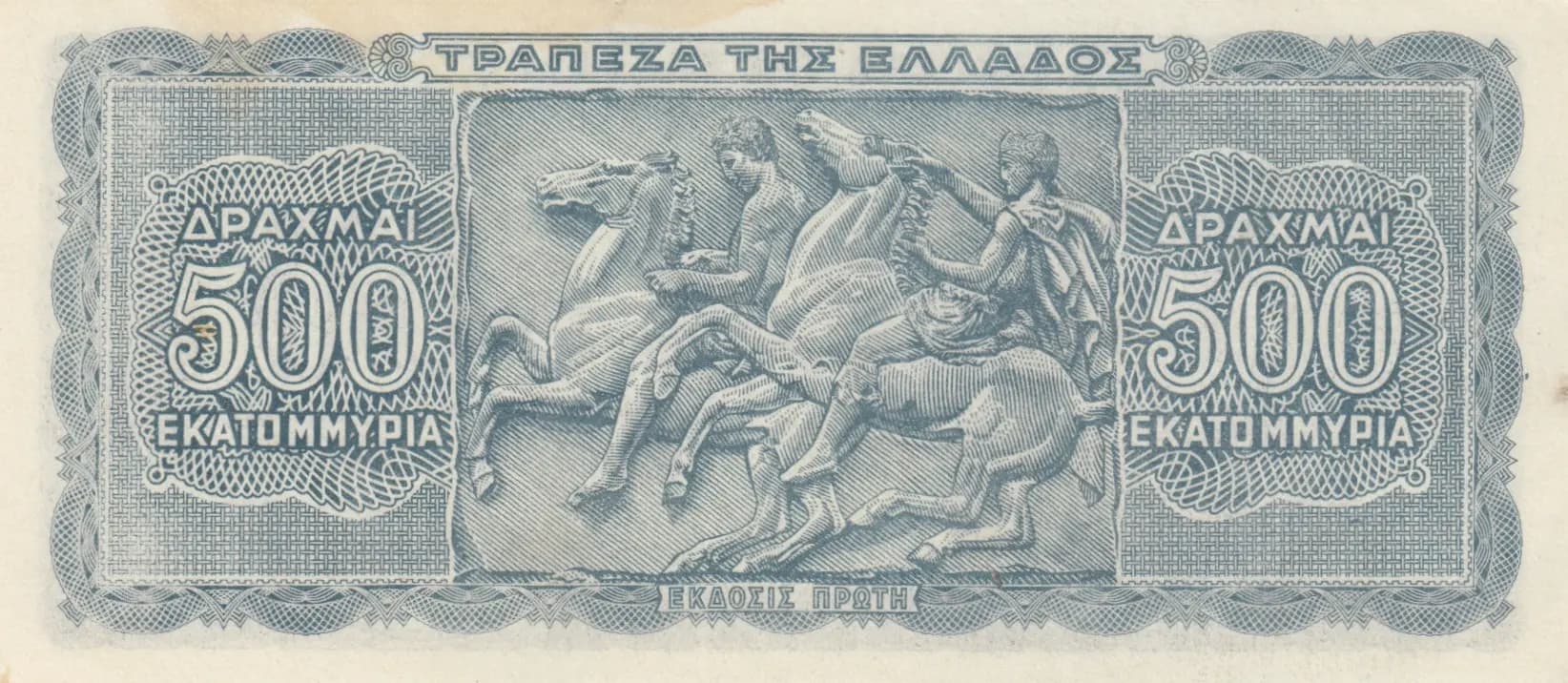
This Greek 500,000,000 drachmai note from October 1, 1944, presents a striking example of wartime hyperinflation currency issued by the Bank of Greece during the German occupation and liberation period. The obverse features a classical male portrait (likely Apollo based on catalog data) in fine line engraving surrounded by ornate circular framing, while the reverse displays an elaborate allegorical scene with multiple classical figures and cherubs, characteristic of Greek neoclassical design aesthetics. The AU condition grade indicates minimal wear with no creases or tears, presenting the note in nearly pristine state with only normal aging evident.
Common. eBay market data shows consistent sales across a wide price range ($2-$157), with most examples in PMG 64-65 grades selling between $20-$95, and lower-grade examples selling for under $20. The 2016 catalog valuation of $7.50 for UNC specimens and the high frequency of sales evidence indicate this is a regularly encountered note in the collector market. Despite the historically significant nature and extraordinary denomination, this note was produced in sufficient quantity to remain common and affordable for most collectors.
Issued on October 1, 1944, this banknote represents Greece's emergency currency during the final stages of World War II occupation and the subsequent liberation period. The astronomical denomination of 500 million drachmai reflects the severe hyperinflation that gripped Greece following the Axis occupation, which had devastated the nation's economy and currency value. The classical allegorical imagery on the reverse and the Apollo portrait on the obverse reflect Greece's historical appeal to its ancient heritage during a period of national crisis and reconstruction.
The obverse features Apollo depicted as a classical male head in left-facing profile with curled hair, styled after ancient Greek and Roman numismatic traditions, enclosed within an ornate circular frame with decorative borders. The denomination '500' appears in all four corners in ornamental cartouches. The reverse presents an elaborate allegorical composition typical of Greek neoclassical banknote design, depicting multiple classical figures in dynamic poses surrounding a centrally seated figure, with putti (cherub figures) integrated into the composition. Symmetrical decorative patterns, scrollwork, and leaf motifs frame the allegorical scene on both sides. The color scheme employs gray, light green/teal, and black ink throughout, with fine line engraving providing intricate detail and security value.
FRONT SIDE: 'ΤΡΑΠΕΖΑ ΤΗΣ ΕΛΛΑΔΟΣ' (Bank of Greece) | 'ΖΡ' (currency designation for Drachmai) | 'ΔΡΑΧΜΑΙ' (Drachmai) | '500' (denomination numeral) | 'ΠΕΝΤΑΚΟΣΙΑ ΕΚΑΤΟΜΜΥΡΙΑ' (Five Hundred Million) | '032889' (serial number) | 'ΠΛΗΡΩΤΕΑΙ ΕΠΙ ΤΗ. ΕΜΦΑΝΙΣΕΙ ΕΝ ΑΘΗΝΑΙΣ ΤΗ 1° ΟΚΤΩΒΡΙΟΥ 1944' (Payable upon presentation in Athens on the 1st of October 1944) | 'Ο ΔΙΟΙΚΗΤΗΣ' (The Director) | 'ΟΙ ΔΙΕΥΘΥΝΤΑΙ' (The Managers). BACK SIDE: 'ΤΡΑΠΕΖΑ ΤΗΣ ΕΛΛΑΔΟΣ' (Bank of Greece) | 'ΔΡΑΧΜΑΙ' (Drachmai) | '500' (denomination numeral) | 'ΕΚΑΤΟΜΜΥΡΙΑ' (Million) | 'ΕΚΑΟΣΙΣ ΠΡΩΤΗ' (First Issue/Edition).
Intaglio/engraving printing method, as evidenced by the fine line work, precise detail in the portrait rendering, and the characteristic depth and texture visible in the allegorical scene composition. The elaborate border work, ornamental frames, and detailed shading effects are consistent with classical intaglio banknote production. For Greek notes of this period, the Bank of Greece typically utilized security printers such as Bradbury, Wilkinson & Co. or similar European security printing houses, though specific printer attribution for Pick P-132b would require additional documentation.
Pick P-132b designation indicates this is the variant 'b' printing of the 500,000,000 drachmai denomination. The observed serial number '032889' with 'ΖΡ' prefix is consistent with first-issue printings from October 1, 1944. The note displays 'ΕΚΑΟΣΙΣ ΠΡΩΤΗ' (First Issue) notation on the reverse, confirming its status as an early emission. Variations among this Pick number may include different serial number prefixes, signature combinations of Bank of Greece officials (Director and Managers), and possibly minor design adjustments between printing runs, though the visual analysis does not reveal any overprints or obvious anomalies.