500 000 000 drachmai 1944
Market Prices
3 salesAbout This Note
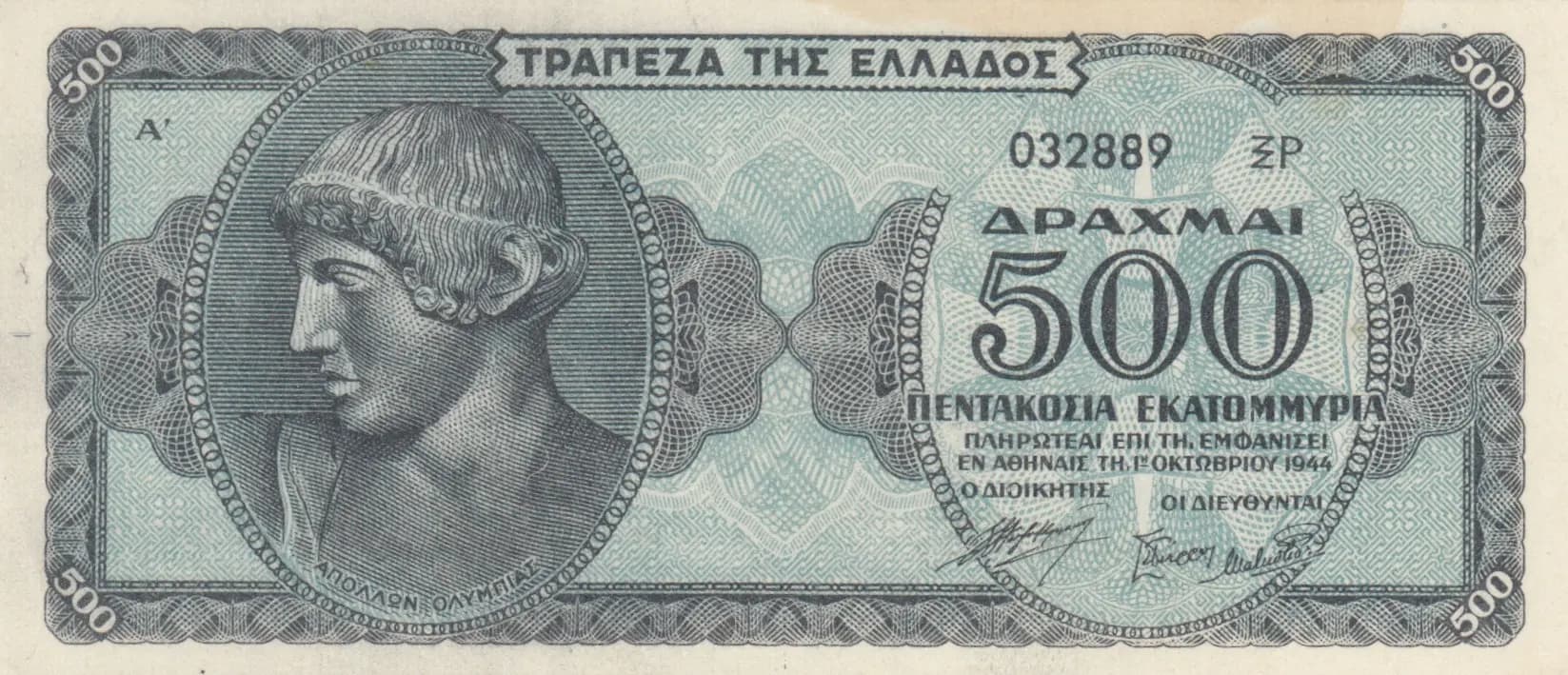
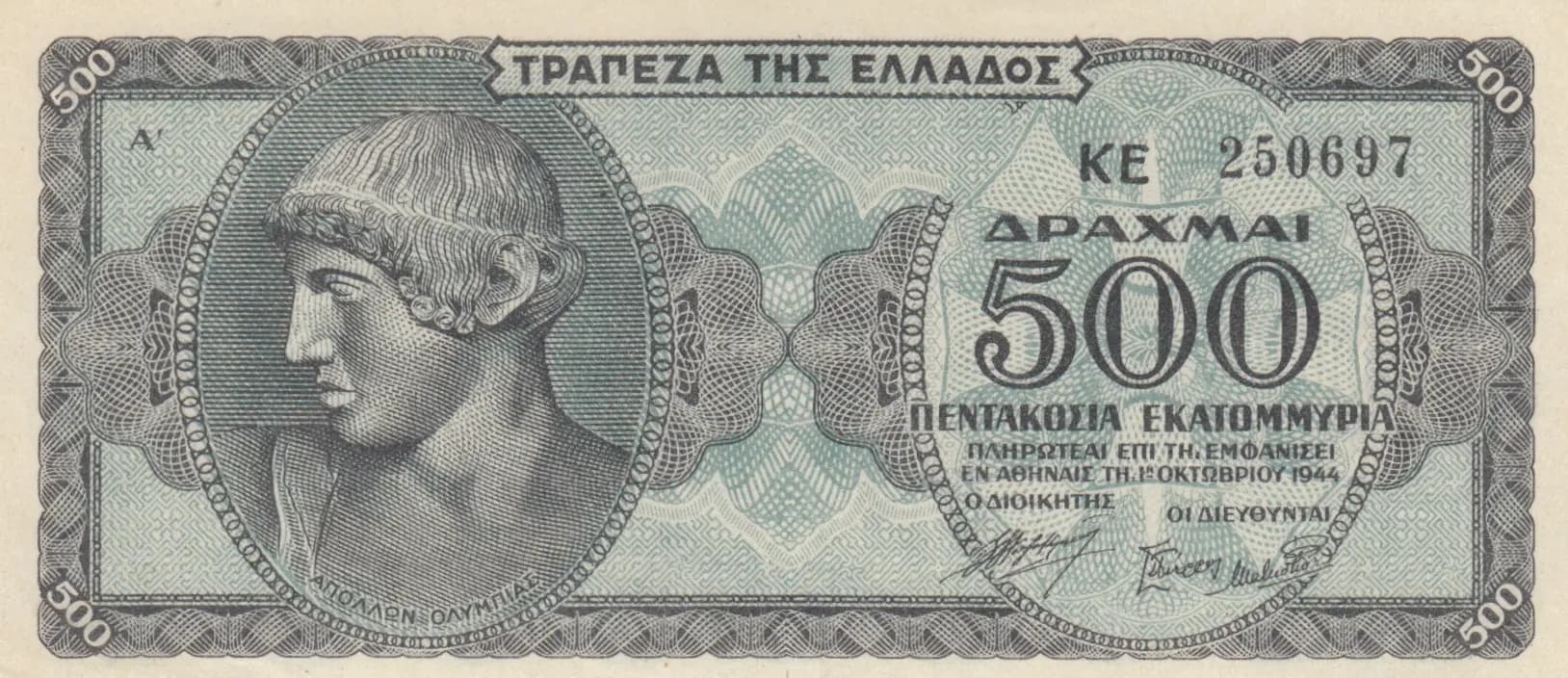
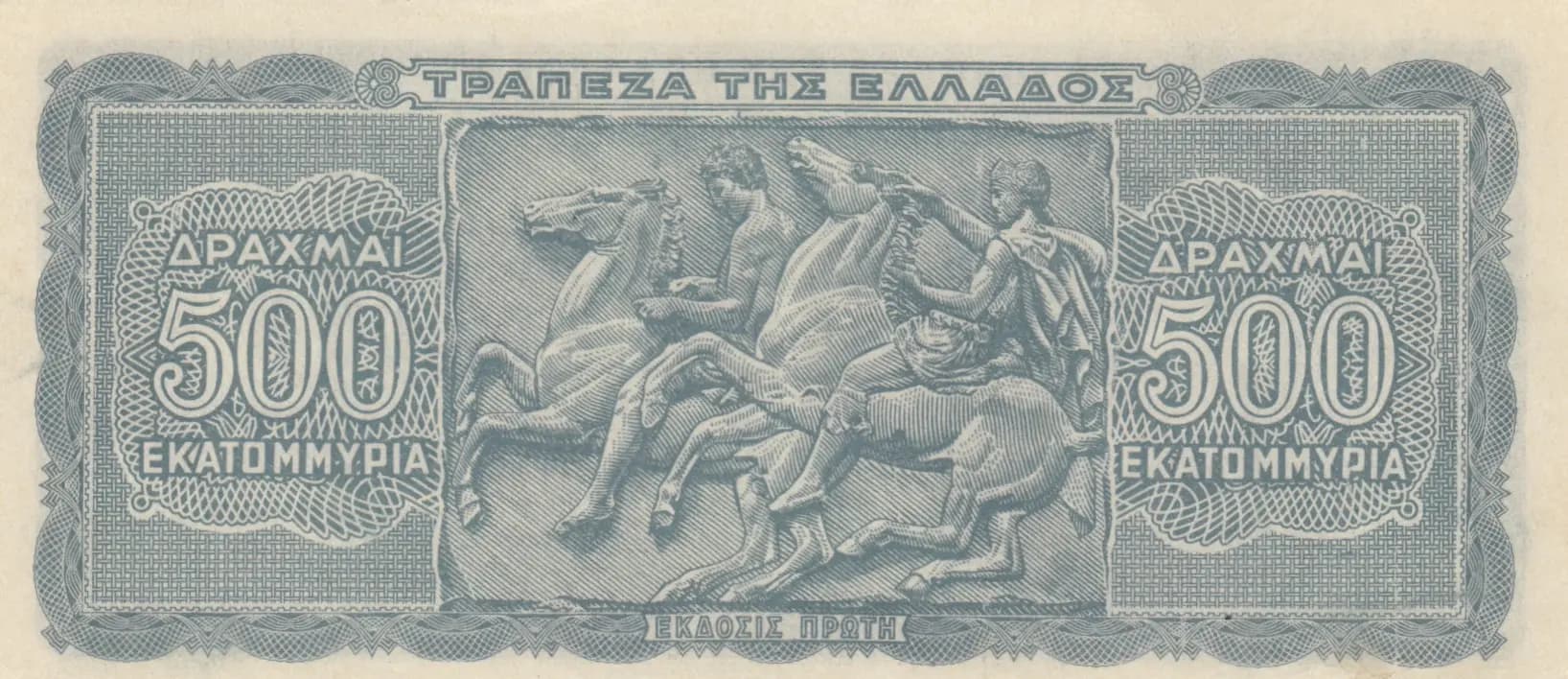
This is an exceptionally well-preserved example of the Greek 500 million drachmai emergency currency issued October 1, 1944 by the Bank of Greece during the German occupation and liberation period. The note displays pristine AU condition with sharp, crisp impressions throughout, no creases or wear, and excellent color consistency. The classical design featuring Apollo on the obverse and an elaborate mythological relief scene with cherubs on the reverse exemplifies the refined engraving standards maintained even during Greece's most challenging wartime circumstances.
Common. This note appears in substantial quantities in the numismatic market. The eBay sales data provided shows examples selling consistently in the $2.90 to $21.50 range across grades from F to PMG 58, indicating an active but modest collector market with ready availability. The 2016 catalog values list even UNC examples at $7.50, which is typical for common emergency issues. The large denomination and emergency nature of the 1944 issuance suggest substantial print runs were required to meet wartime circulation demands. While historically significant, this note is not scarce in any grade.
Issued during the tumultuous final months of World War II as Greece transitioned from German occupation toward liberation, this 500 million drachmai note represents the Bank of Greece's emergency currency response to severe inflation and economic disruption. The classical imagery—Apollo on the front and the mythological relief scene on the back—reflect Greece's deliberate appeal to its ancient cultural heritage as a stabilizing force during national crisis. The October 5, 1944 payable date inscribed on the note marks the critical period when Athens was being liberated by Allied forces, making this currency both a functional emergency measure and a symbolic assertion of Greek sovereignty.
The obverse features Apollo, the classical Greco-Roman god of music, prophecy, and healing, rendered in elegant profile facing left within an ornate circular frame composed of geometric patterns and decorative elements. This choice of Apollo symbolized enlightenment and cultural continuity during occupation. The reverse displays an elaborate mythological relief scene depicting classical figures and putti (cherubs) in dynamic composition, likely representing abundance or divine blessing—a common iconographic choice for emergency currency designed to inspire confidence. Both sides employ symmetrical decorative scrollwork, laurel wreath elements in the corners, and ornamental side panels. The denomination appears prominently in large numerals on both sides. The fine line engraving throughout creates complex geometric anti-counterfeiting patterns and demonstrates the sophisticated security printing standards of the Bank of Greece.
FRONT SIDE: 'ΤΡΑΠΕΖΑ ΤΗΣ ΕΛΛΑΔΟΣ' (Bank of Greece); 'ΔΡΑΧΜΑΙ' (Drachmas); 'ΠΕΝΤΑΚΟΣΙΑ ΕΚΑΤΟΜΜΥΡΙΑ' (Five Hundred Million); 'ΠΛΗΡΩΤΕΑΙ ΕΠΙ ΤΗ ΕΜΦΑΝΙΣΕΙ ΕΝ ΑΘΗΝΑΙ ΤΗ Ε ΟΚΤΩΒΡΙΟΥ 1944' (Payable upon presentation in Athens on October 5, 1944); 'Ο ΔΙΟΙΚΗΤΗΣ' (The Governor); 'ΟΙ ΔΙΕΥΘΥΝΤΑΙ' (The Directors); Series identifier 'ΚΕ' and serial number '250697'. BACK SIDE: 'ΤΡΑΠΕΖΑ ΤΗΣ ΕΛΛΑΔΟΣ' (Bank of Greece); 'ΔΡΑΧΜΑΙ' (Drachmas); 'ΕΚΑΤΟΜΜΥΡΙΑ' (Million); 'ΕΚΑΘΟΣ ΠΡΩΤΗ' (First Edition).
Intaglio engraving (line engraving) executed by classical banknote security printing methods. The fine line work visible throughout, the crisp impression quality, the geometric background patterns serving as anti-counterfeiting measures, and the ornate frame designs are all characteristic of traditional intaglio security printing. For Greek banknotes of this period, production was typically contracted to specialized European security printers, though the specific printer for P-132a would require archival research. The pristine condition suggests careful handling from press to circulation.
Pick P-132a represents the first (or principal) variety of this denomination. The series identifier 'ΚΕ' and serial number '250697' observed on this example are consistent with the main issue. No overprints or unusual markings are evident. The October 1, 1944 issue date (referenced in catalog) aligns with the payable date of October 5, 1944 inscribed on the note. Known variations for this type typically involve series letter/number combinations and signature combinations of Bank of Greece officials, which would require comparison with multiple examples to establish a complete variety census. The AU condition example presented here appears to represent a standard, unvariated specimen of the main type.