50 drachmai 1964
Market Prices
76 salesAbout This Note
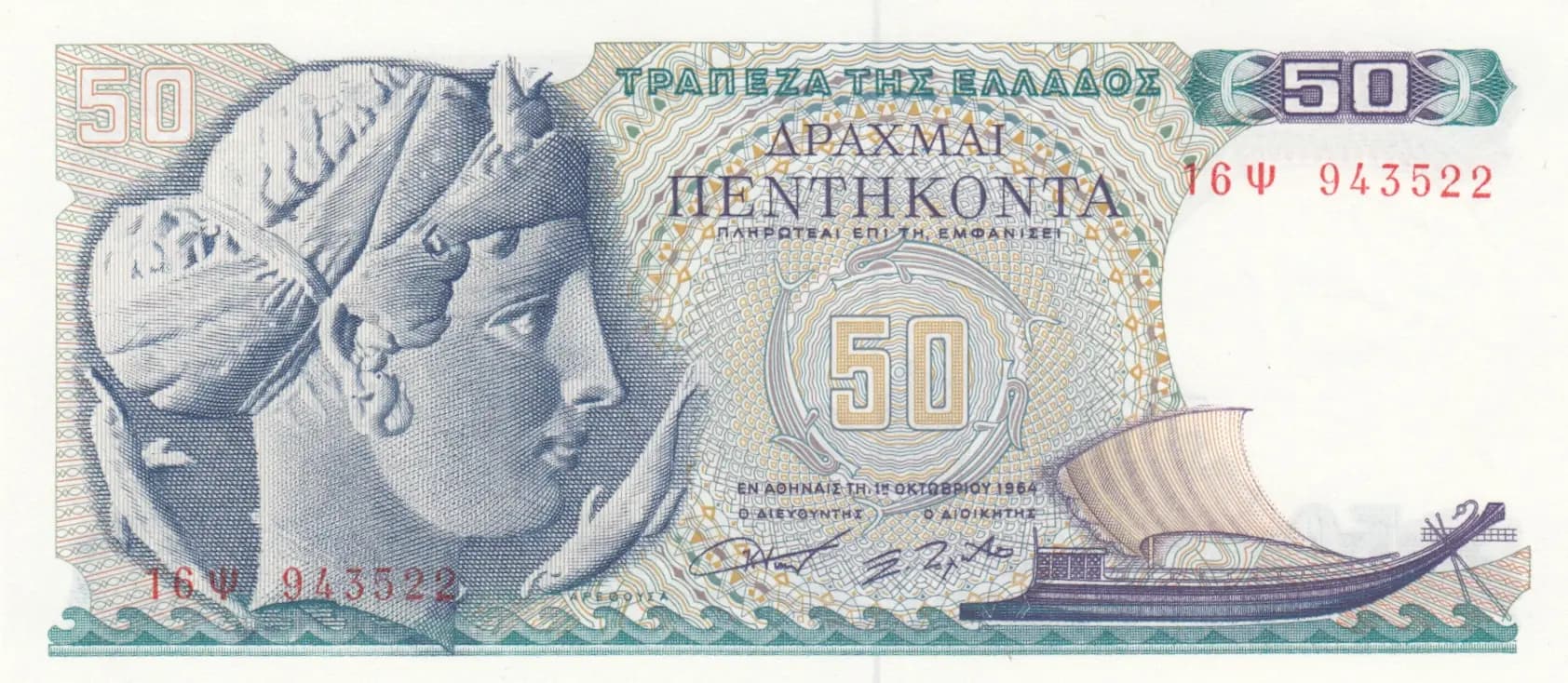
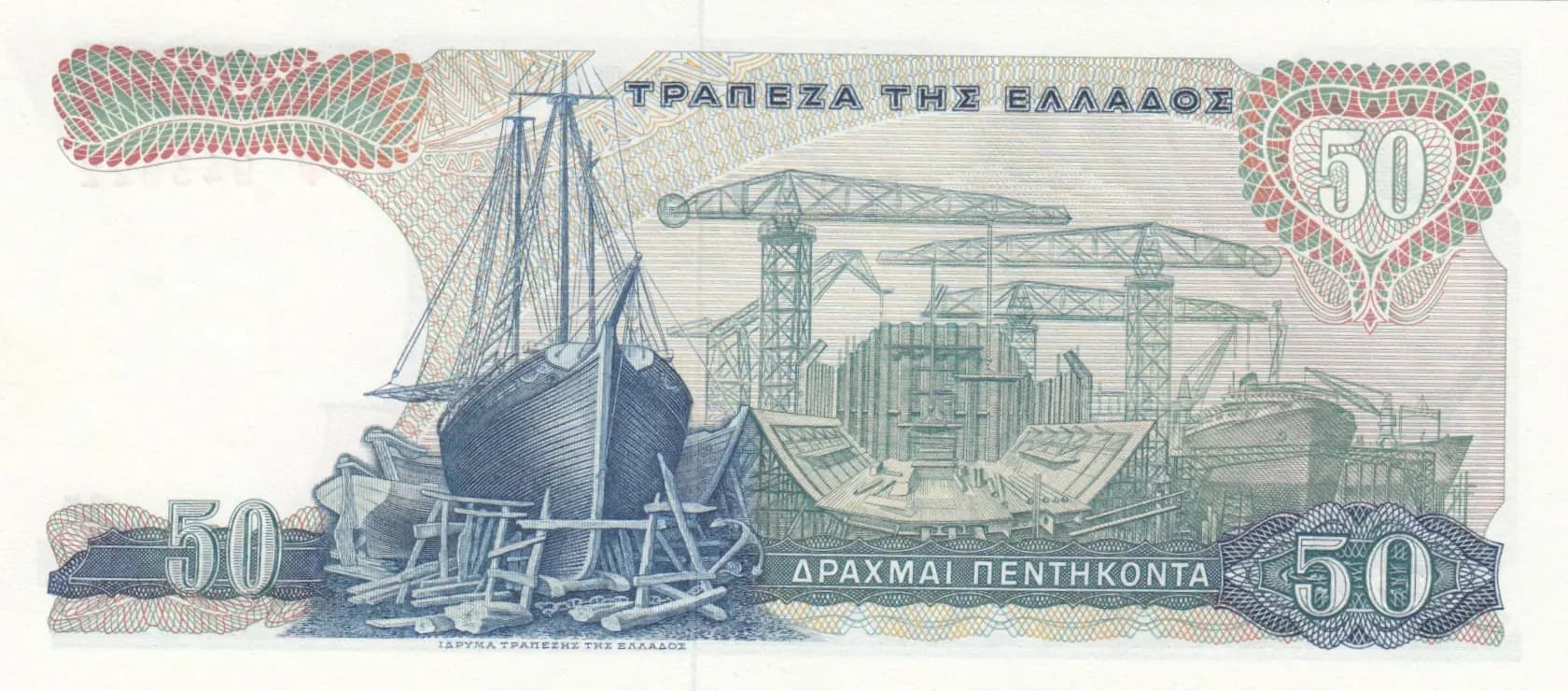
This 1964 Bank of Greece 50 drachmai note (Pick P-195) presents a crisp uncirculated example of classical Greek design merged with mid-century industrial imagery. The obverse features a finely engraved profile of Arethusa with an ornate geometric border, while the reverse depicts both a classical Greek galley and a modern industrial shipyard complex—symbolizing Greece's connection to its maritime heritage and contemporary development. The sharp engraving detail, vibrant multicolored printing, and pristine condition make this an attractive specimen for collectors of Greek currency and classical numismatic design.
Common. The eBay price tracking data shows consistent sales across multiple condition grades (F through PMG 68) spanning from 2012 to 2025, with ungraded UNC examples selling in the $3-$8 range and PMG-graded examples commanding $15-$45 depending on grade. The broad circulation history and consistent availability in the market indicate this was a standard circulation issue with substantial print run. No scarcity indicators or special factors elevate this beyond common status.
Issued on October 15, 1964, this note reflects Greece's post-war economic development and modernization efforts during the 1960s. The juxtaposition of the classical galley ship with the industrial shipyard complex on the reverse embodies the nation's dual identity—honoring its ancient maritime prowess while showcasing contemporary industrial progress. The Bank of Greece's deliberate choice to pair Arethusa, a figure from classical mythology, with modern industrial facilities demonstrates the mid-century Greek narrative of preserving cultural heritage while embracing economic transformation.
The obverse features Arethusa, a nymph from Greek mythology, depicted as a classical male head in profile facing left, rendered in exceptional linear engraving style. The portrait is flanked by intricate geometric guilloche patterns and the denomination '50' prominently displayed in multiple locations. The right side depicts a classical Greek galley in full sail, symbolizing the nation's ancient seafaring dominance. The reverse presents a striking dual composition: on the left, a detailed classical Greek galley with multiple sails and authentic rigging detail; on the right, a modern industrial complex with factory buildings, smokestacks, loading cranes, and contemporary infrastructure. The borders feature elaborate decorative rosette patterns in pink/red and green, emphasizing the artistic quality of the design. The color palette of blue, green, tan/beige, and cream creates visual depth across both sides.
FRONT SIDE: 'ΤΡΑΠΕΖΑ ΤΗΣ ΕΛΛΑΔΟΣ' (Bank of Greece) / 'ΔΡΑΧΜΑΙ ΠΕΝΤΗΚΟΝΤΑ' (Fifty drachmai) / 'ΠΑΡΡΟΤΕΙΑΙ ΕΠΙ ΤΗ. ΕΜΦΑΝΙΞΕΙ' (Penalties for falsification) / 'ΕΝ ΑΘΗΝΑΙΣ ΤΗ.15 ΟΚΤΟΒΡΙΟΥ 1964' (In Athens on October 15, 1964) / 'Ο ΔΙΕΥΘΥΝΤΗΣ' (The Director) / 'Ο ΑΙΟΙΚΗΤΗΣ' (The Governor) / Serial number: '76Ψ 9435522'. BACK SIDE: 'ΤΡΑΠΕΖΑ ΤΗΣ ΕΛΛΑΔΟΣ' (Bank of Greece) / 'ΔΡΑΧΜΑΙ ΠΕΝΤΗΚΟΝΤΑ' (Fifty drachmai) / 'ΙΔΡΥΜΑ ΤΡΑΠΕΣΗΣ ΤΗΣ ΕΛΛΑΔΟΣ' (Institute of the Bank of Greece).
Intaglio engraving (line engraving) combined with multicolor offset lithography. The note exhibits the characteristic sharp detail and fine line work typical of Bank of Greece currency of this period. The printer is identified as 'ΙΔΡΥΜΑ ΤΡΑΠΕΣΗΣ ΤΗΣ ΕΛΛΑΔΟΣ' (Institute of the Bank of Greece), indicating in-house production by the central bank's printing facility. The complex guilloche patterns, layered color work, and precise register evident in both the security patterns and portrait work confirm professional security printing standards of the era.
This specimen corresponds to Pick P-195a (the primary variant of the 1964 50 drachmai issue). The serial number observed is '76Ψ 9435522'. The date printed on the obverse is October 15, 1964, confirming the initial issue date. No visible overprints, commemorative markings, or secondary varieties are evident in this specimen. Standard signature and title variations typical of the regular circulation issue may exist but are not distinctly identified in this individual example without comparison to comprehensive catalogs of signatory officials.