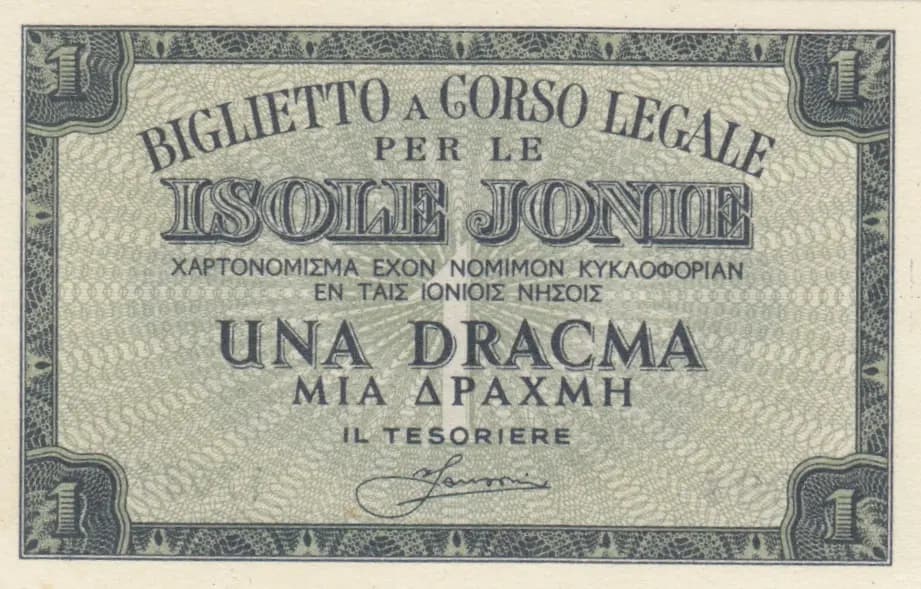
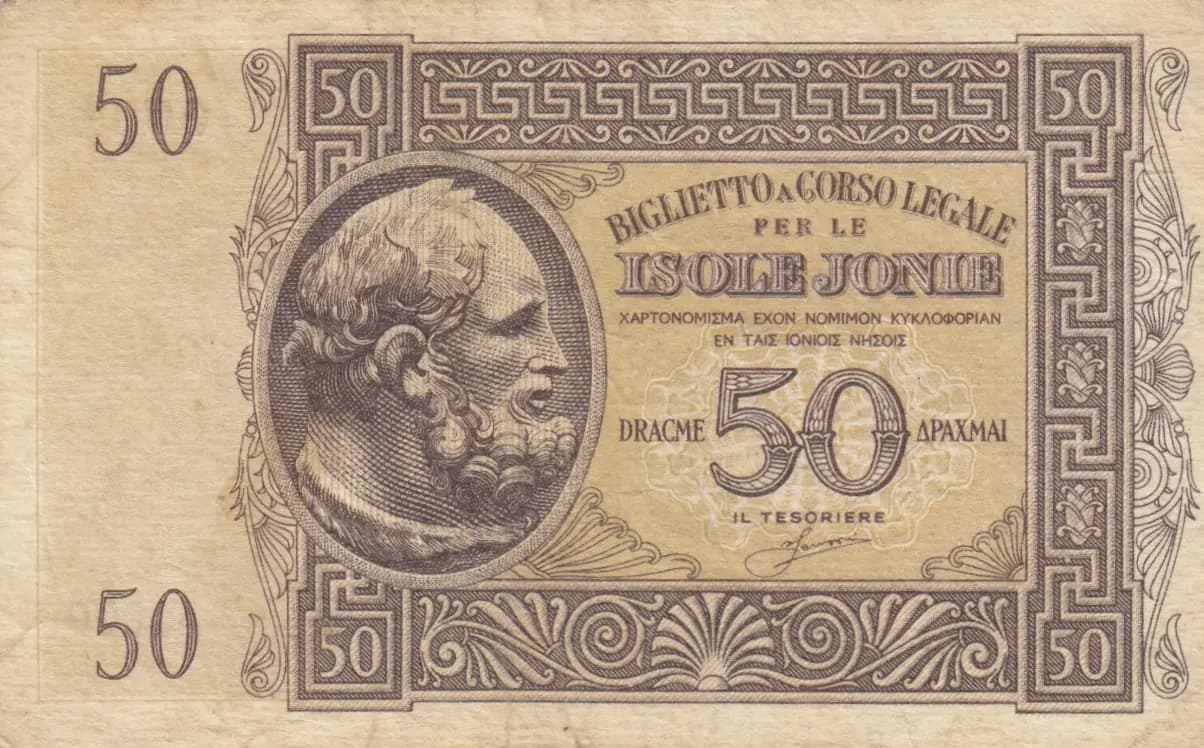
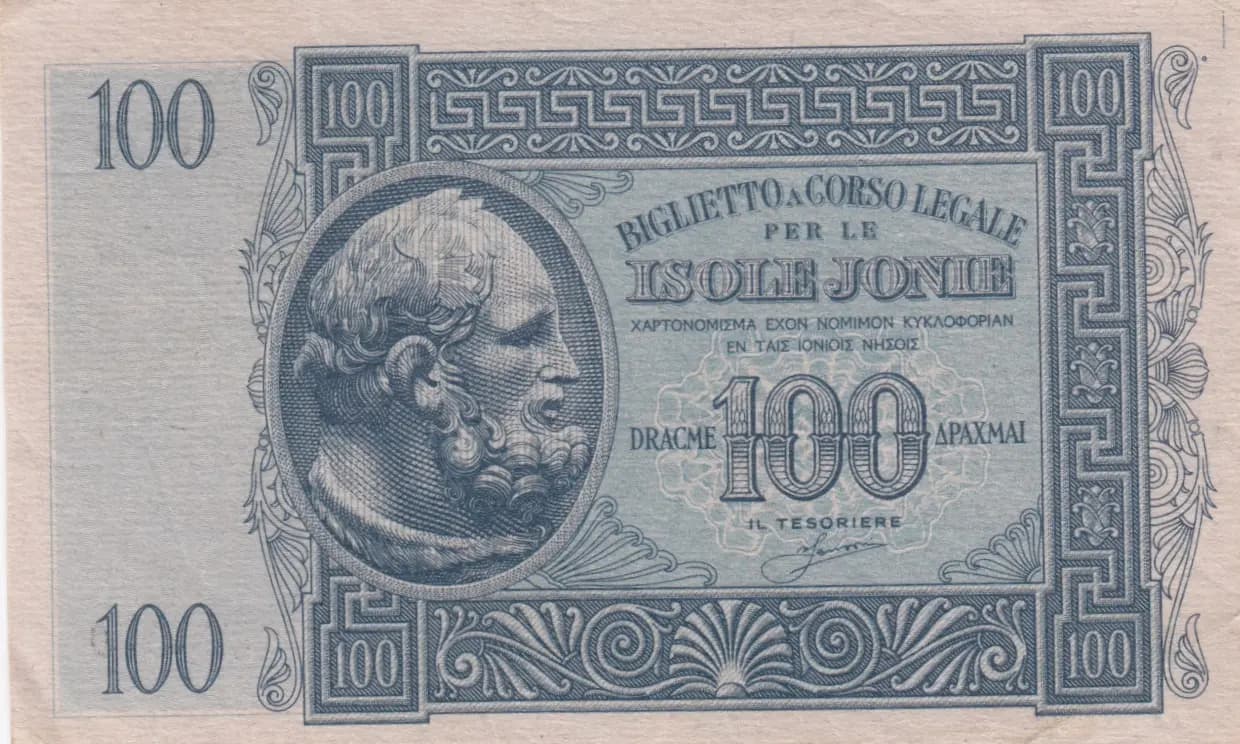
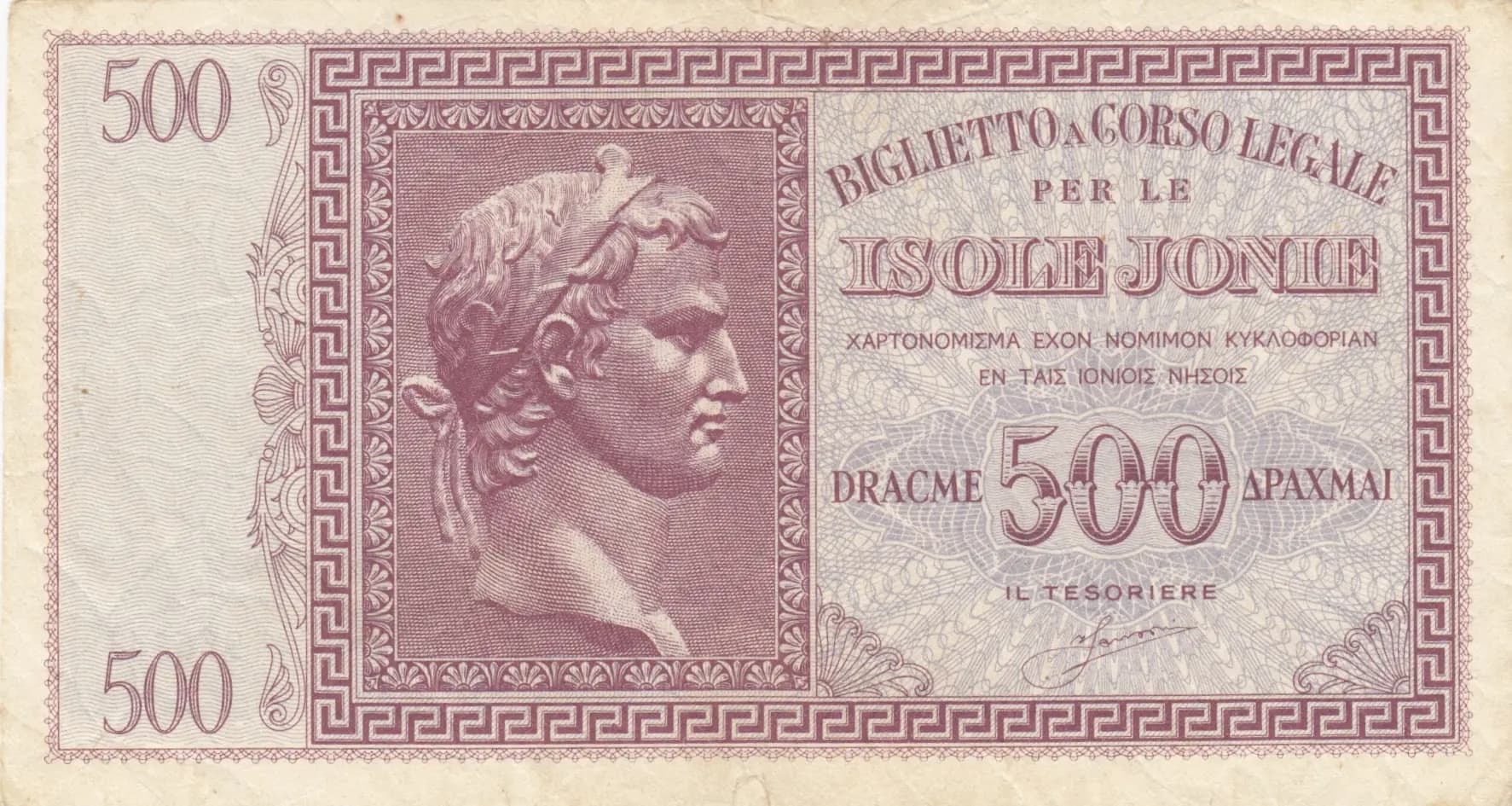
50 drachmai 1945
Market Prices
44 salesAbout This Note
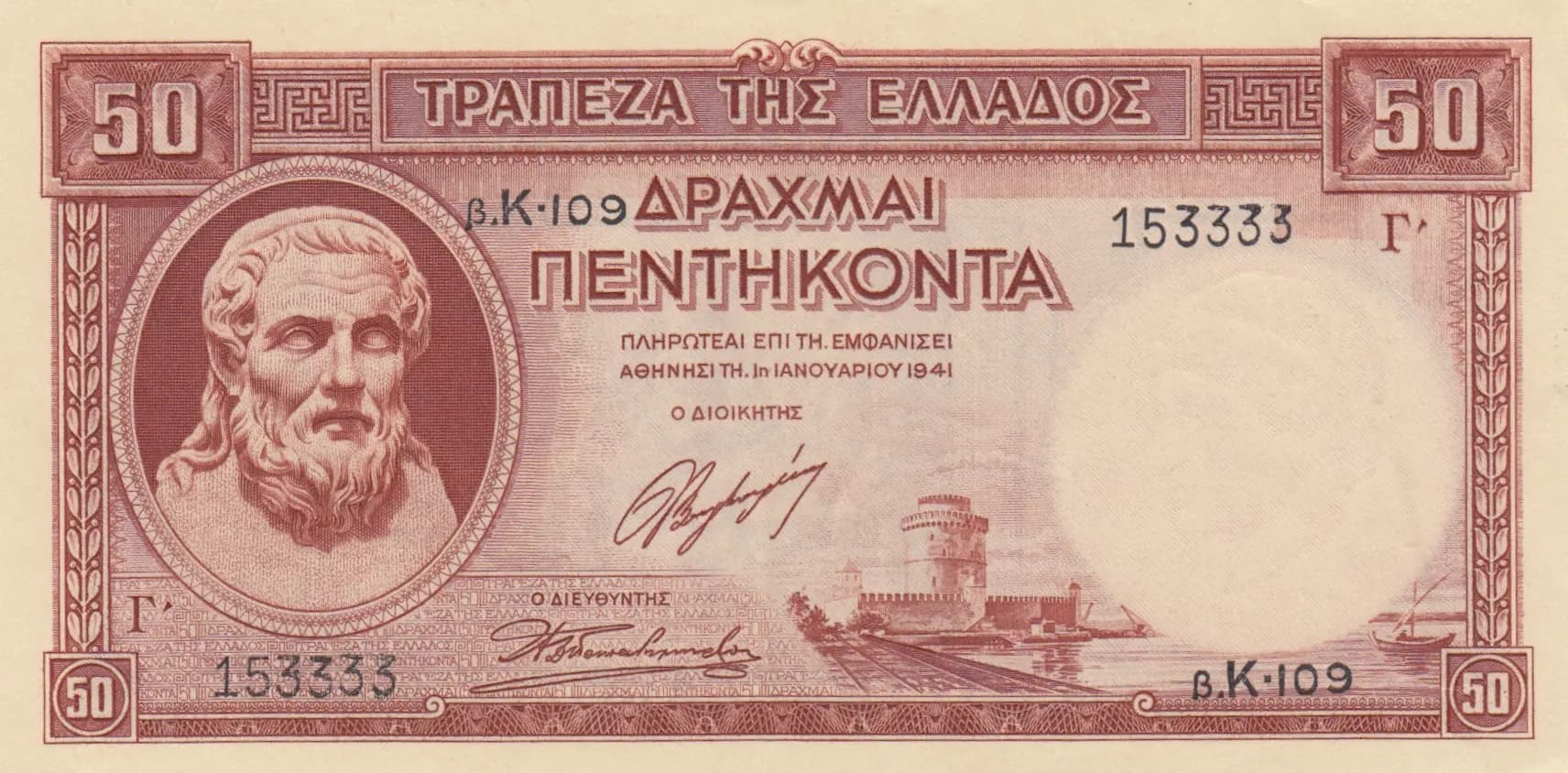
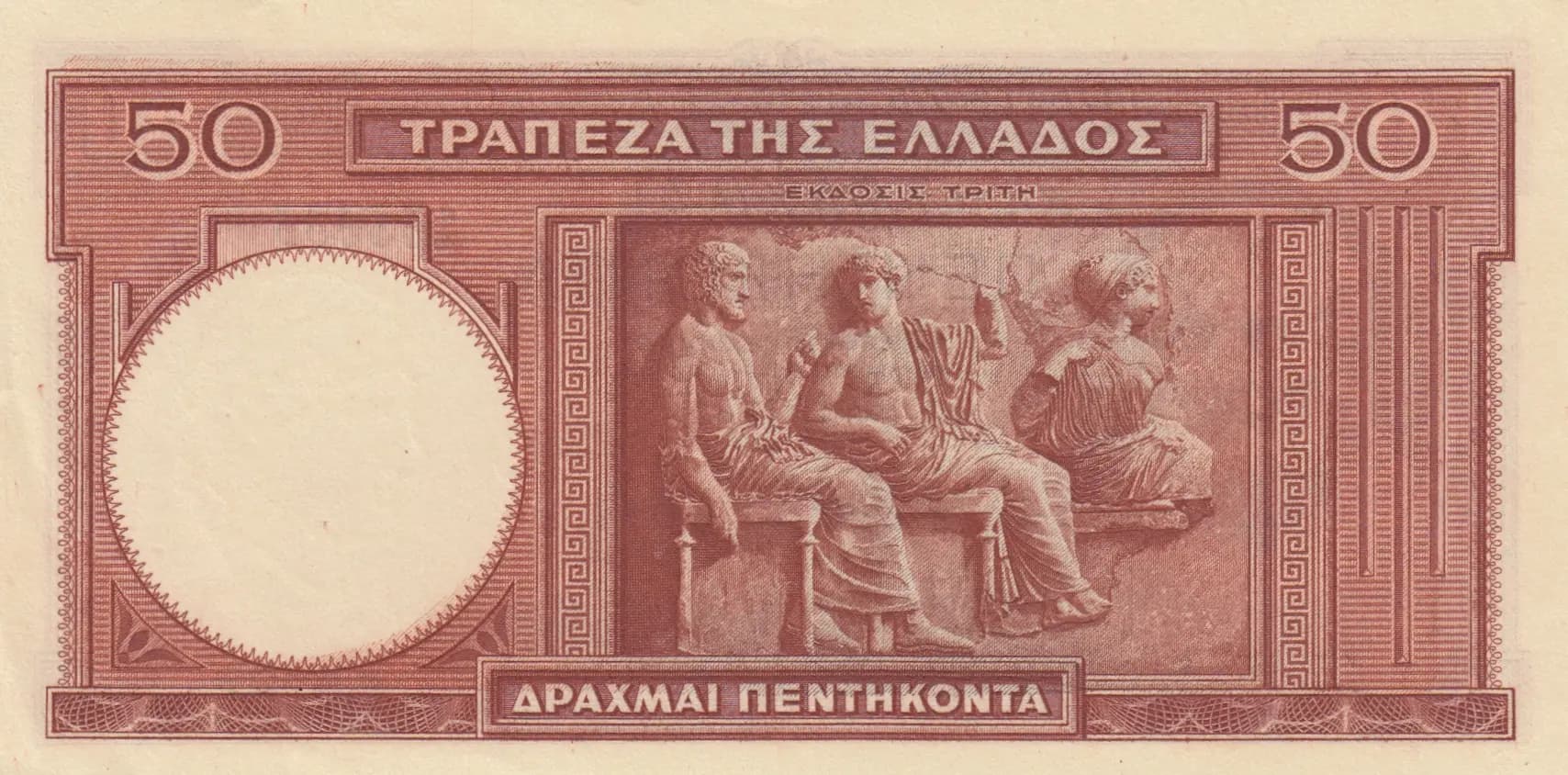
An exceptionally preserved example of Greece's 1945 50 drachmai note (Pick 168) graded AU, showcasing the classical design aesthetic of the Bank of Greece's wartime currency. The obverse features a finely engraved portrait of Hesiod in mauve and dusty rose tones with the iconic White Tower of Thessaloniki depicted on the right, while the reverse displays an elaborate classical frieze scene. This note represents the post-occupation currency reissue and remains in uncirculated condition with sharp printing, clean margins, and no visible wear.
Common. This note appears regularly in the secondary market with extensive eBay transaction history spanning from 2009 to 2026. Market pricing data shows consistent availability across all condition grades, with AU/AUNC specimens typically trading between $5–$21 and PMG-graded examples ranging from $28–$76. The large print run and post-war circulation ensure ready availability to collectors. Catalog values from 2016 list UNC at only $15, reinforcing common status.
Issued January 1, 1941 (though dated 1945), this note was released during Greece's German occupation in World War II, with the actual 1945 date reflecting when the Bank of Greece resumed normal operations following liberation. The choice of Hesiod, the ancient Greek poet, and classical architectural imagery—including the White Tower and Parthenon frieze—reinforced Hellenic cultural identity during a period of national hardship. The inscription 'Payable on presentation in Athens' reflects the restoration of normalized banking operations under the restored Greek government.
The obverse features Hesiod (circa 700 BC), the celebrated Boeotian poet of the Theogony and Works and Days, depicted as a classical bearded male with curled hair shown in left-facing profile within a circular medallic frame. To the right stands the White Tower (Lefkos Pyrgos) of Thessaloniki, a 15th-century Ottoman-era fortress that became an iconic symbol of Greek national identity. The reverse displays a classical frieze adaptation from the Parthenon marbles depicting Poseidon, Apollo, and Artemis in draped classical style, rendered as four figures in allegorical discussion. Both sides incorporate Greek key (meander) pattern borders and fine line engraving throughout, with security framing elements including the large circular area on the reverse. The mauve-rose color scheme on cream background is characteristic of this issue.
FRONT: 'ΤΡΑΠΕΖΑ ΤΗΣ ΕΛΛΑΔΟΣ' (Bank of Greece); 'ΠΕΝΤΗΚΟΝΤΑ ΔΡΑΧΜΑΙ' (Fifty Drachmai); 'Β.Κ.109' (Series designation); 'ΠΛΗΡΟΤΕΑΙ ΕΠΙ ΤΗ. ΕΜΦΑΝΙΣΕΙ' (Payable on presentation); 'ΑΘΗΝΗΣΙ Th. In ΙΑΝΟΥΑΡΙΟΥ 1941' (Athens in January 1941); 'Ο ΔΙΟΙΚΗΤΗΣ' (The Governor); 'Ο ΔΙΕΥΘΥΝΤΗΣ' (The Director); Serial number: '153333'; Series: 'Γ'' (Gamma). BACK: 'ΤΡΑΠΕΖΑ ΤΗΣ ΕΛΛΑΔΟΣ' (Bank of Greece); 'ΔΡΑΧΜΑΙ ΠΕΝΤΗΚΟΝΤΑ' (Fifty Drachmai); 'ΕΙΚΟΣΙΣ ΤΡΙΤΗ' (Twenty-third [edition]).
Intaglio engraving (copperplate), executed with fine line work and detailed cross-hatching typical of high-security banknote production. The printer is identified as TDLR (Τυπογραφεία Δημοσίου Λογιστηρίου—Government Printing Office) without imprint mark on the note itself. The fine portrait execution, intricate border patterns, and elaborate classical allegorical imagery serve both aesthetic and security functions characteristic of interwar and wartime Greek banknote production.
This example carries series designation 'Γ'' (Gamma/Third Series) with serial number 153333. The cataloging reference 'B.K.109' appears on the obverse. Watermark features a young male head profile. Known varieties for Pick 168 include different series issues (Α, Β, Γ, etc.); this specimen represents the Gamma series variant. Signature varieties exist for different governors and directors; the specific signatories on this note would require direct verification against Bank of Greece records. No major overprints or error varieties are documented for this straightforward regular issue.