50 drachmai 1935
Market Prices
63 salesAbout This Note
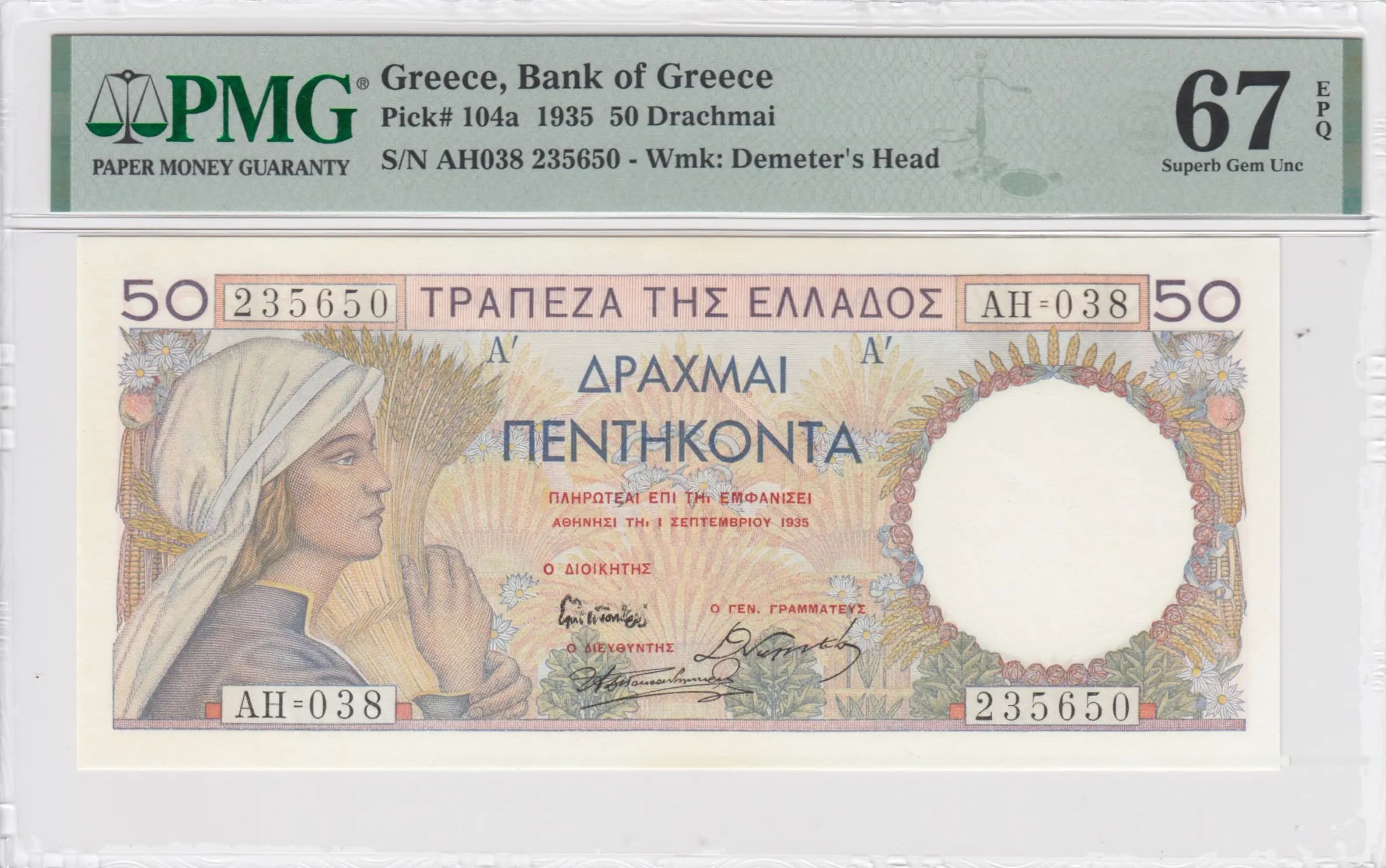
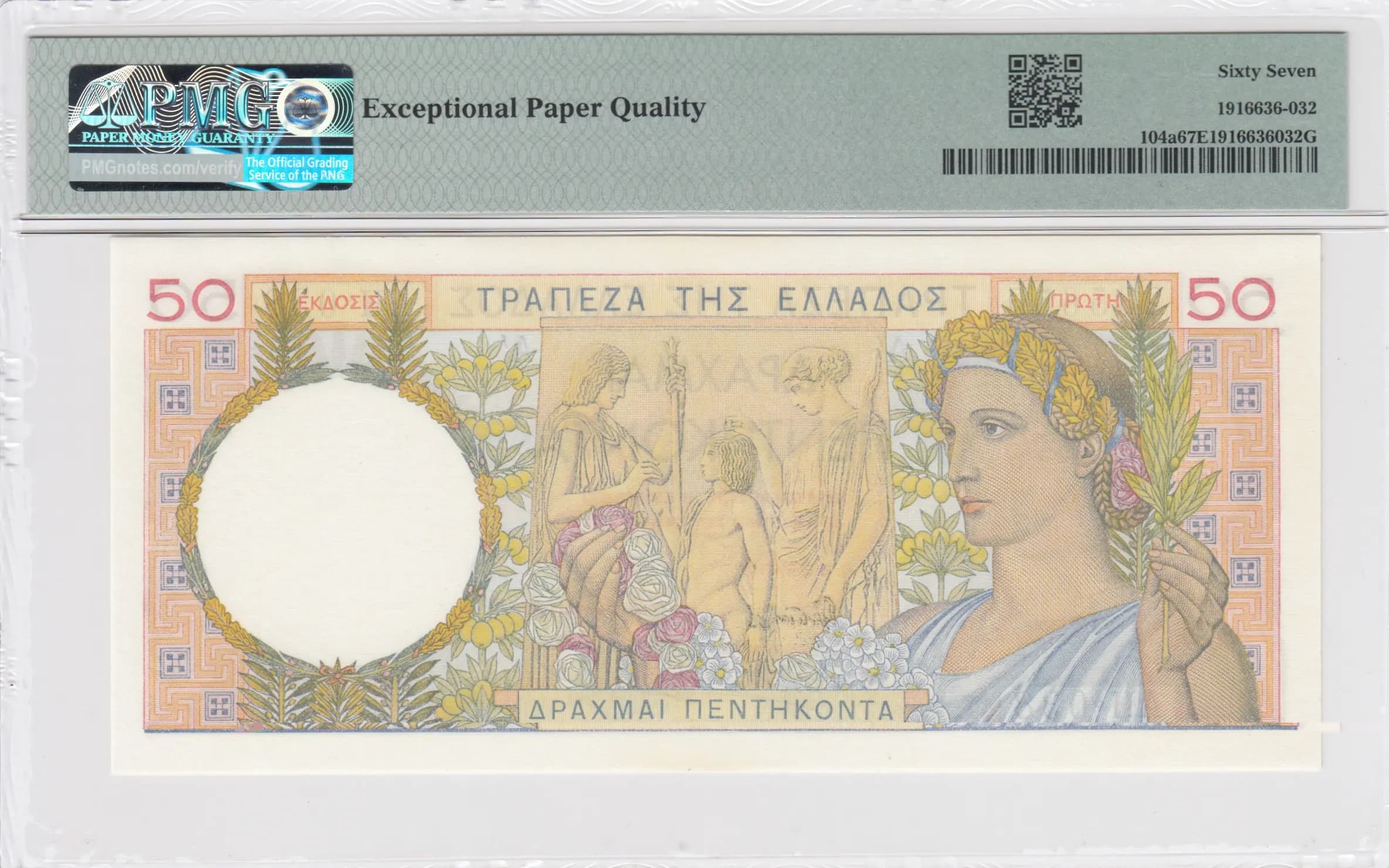
This is an exceptional example of Greece's 1935 50 Drachmai banknote (Pick-104), graded PMG 67 EPQ. The note displays pristine uncirculated condition with no visible wear, creases, or imperfections, featuring classical Greek imagery on both sides rendered in warm cream and beige tones accented with purple, blue, and rust-colored inks. The exceptional quality and historical significance of this interwar-era Greek currency make it a desirable addition to any world banknote collection.
Common. This is a regular issue from 1935 with no noted print restrictions or recalls. Market evidence from realbanknotes.com demonstrates consistent circulation in the secondary market with examples selling regularly between $1-$40 across various grades, and PMG-graded examples in the 64-66 range typically bringing $40-$100. The denomination and period represent standard Bank of Greece production. The PMG 67 EPQ grade is superior to most surviving examples, which contributes to its collector value, but the Pick-104 denomination itself remains common in the 1935 Greek drachma series.
Issued September 1, 1935 by the Bank of Greece (Trapeza tis Ellados) during the reign of King George II, this note reflects Greece's cultural pride during the interwar period through its classical imagery. The front features Demeter, the goddess of grain and harvest, while the reverse depicts Ceres or Demeter with wheat stalks, emphasizing the agrarian importance to Greece's economy in the 1930s. This period marked Greece's recovery following its monetary reforms and the reestablishment of the drachma currency after significant economic turmoil in the preceding decades.
The front side features a classical female portrait identified as Demeter, the Greek goddess of agriculture, grain, and fertility, depicted in profile facing left and wearing an elegant white head covering or kalathos. She is framed by ornate decorative borders incorporating floral wreaths and geometric Greek key patterns in purple, blue, and rust tones. The reverse side presents another classical female figure (Ceres/Demeter) facing right, crowned with a laurel wreath and holding wheat stalks, symbolizing the harvest and agrarian prosperity. Both sides incorporate extensive decorative elements including sunflowers, roses, wheat, and laurel wreaths, emphasizing the note's themes of agriculture and classical Greek heritage. The large circular white spaces on both sides likely contained security features or watermark designs. The overall aesthetic reflects the neoclassical revival popular in Greek state imagery of the 1930s, celebrating the nation's ancient cultural legacy.
FRONT SIDE: 'ΤΡΑΠΕΖΑ ΤΗΣ ΕΛΛΑΔΟΣ' (Bank of Greece) | 'ΠΕΝΤΗΚΟΝΤΑ ΔΡΑΧΜΑΙ' (Fifty Drachmai) | 'ΠΛΗΡΩΤΕΑΙ ΕΠΙ ΤΗ ΕΜΦΑΝΙΣΕΙ' (Payable on Presentation) | 'ΑΘΗΝΗΣΙ ΤΗ 1 ΣΕΠΤΕΜΒΡΙΟΥ 1935' (Athens, September 1, 1935) | 'Ο ΔΙΟΙΚΗΤΗΣ' (The Director) | 'Ο ΓΕΟΝ. ΓΡΑΜΜΑΤΕΥΣ' (The General Secretary) | 'Ο ΔΙΕΥΘΥΝΤΗΣ' (The Manager) | Denomination numerals: '50' | Serial designation: 'ΑΗ=038' | Serial number: '235650'. BACK SIDE: 'ΤΡΑΠΕΖΑ ΤΗΣ ΕΛΛΑΔΟΣ' (Bank of Greece) | 'ΔΡΑΧΜΑΙ ΠΕΝΤΗΚΟΝΤΑ' (Fifty Drachmai) | 'ΚΛΑΣΟΣ' (Grain/Harvest) | 'ΠΡΟΤΕ' (Protection/Defense) | Denomination numeral: '50'
This banknote was produced using intaglio engraving, evidenced by the fine line work, ornate borders, detailed portraiture, and the deeply impressed quality visible in the visual analysis. The multi-color printing on cream-colored paper was executed with precision, with separate color passes for the purple, blue, rust, gold, and yellow inks observed in the imagery. Bank of Greece notes from this period were typically printed by the National Bank of Greece's printing facilities or contracted European security printers, utilizing the highest standards of engraving and intaglio technology available in the 1930s.
This note is identified as Pick-104a (the primary variety catalogued for this base Pick number). The visual analysis indicates serial number 235650 with designation ΑΗ=038 and Greek letter prefix Α' (first). The external reference notes that a reissue with punch holes exists (Pick-112, 1941), indicating post-issue modifications were made to some examples during World War II occupation. This note appears to be from the original 1935 issue without such modifications. Specific identification of the variety would require comparison of signature combinations, serial number prefixes, and printing characteristics, but the noted condition and apparent original state suggest this is a pristine example of the standard 1935 issue.