5 000 000 drachmai 1944
About This Note
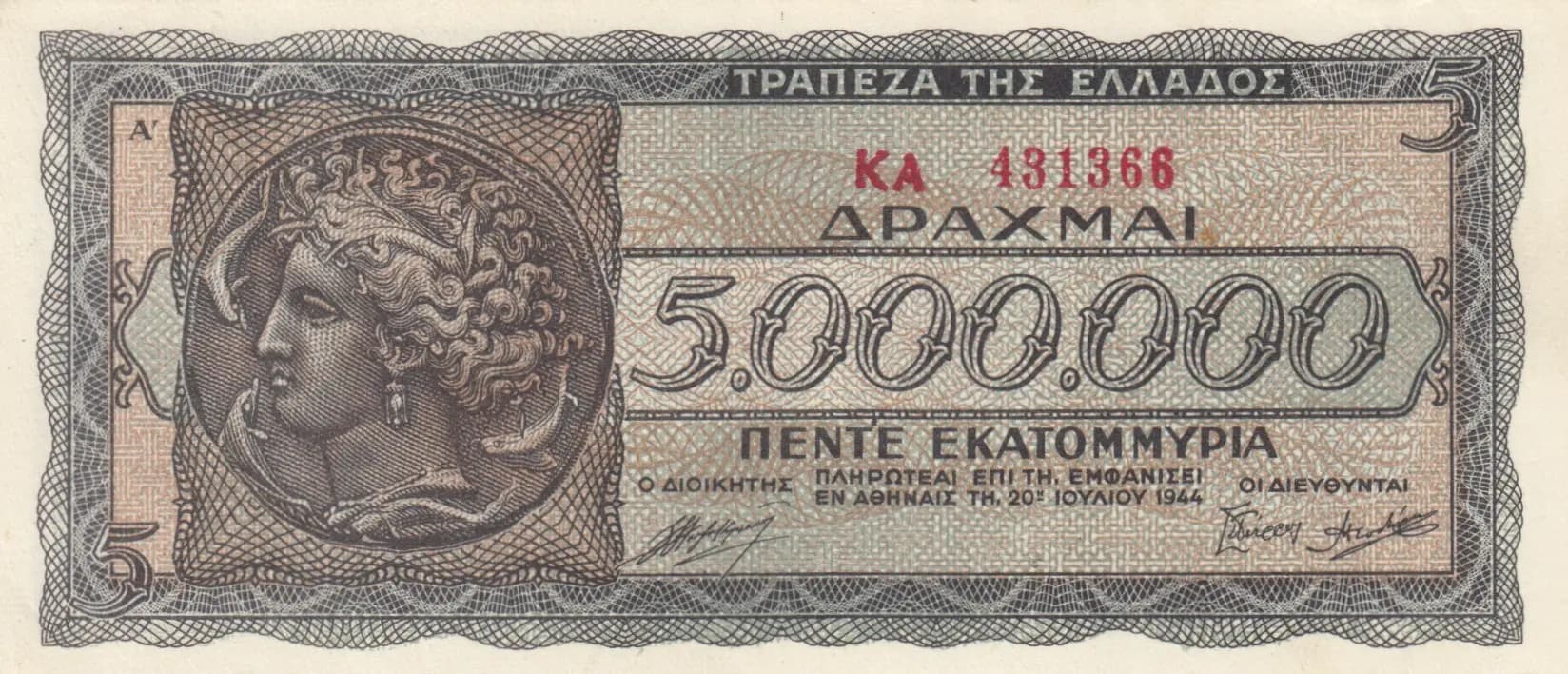
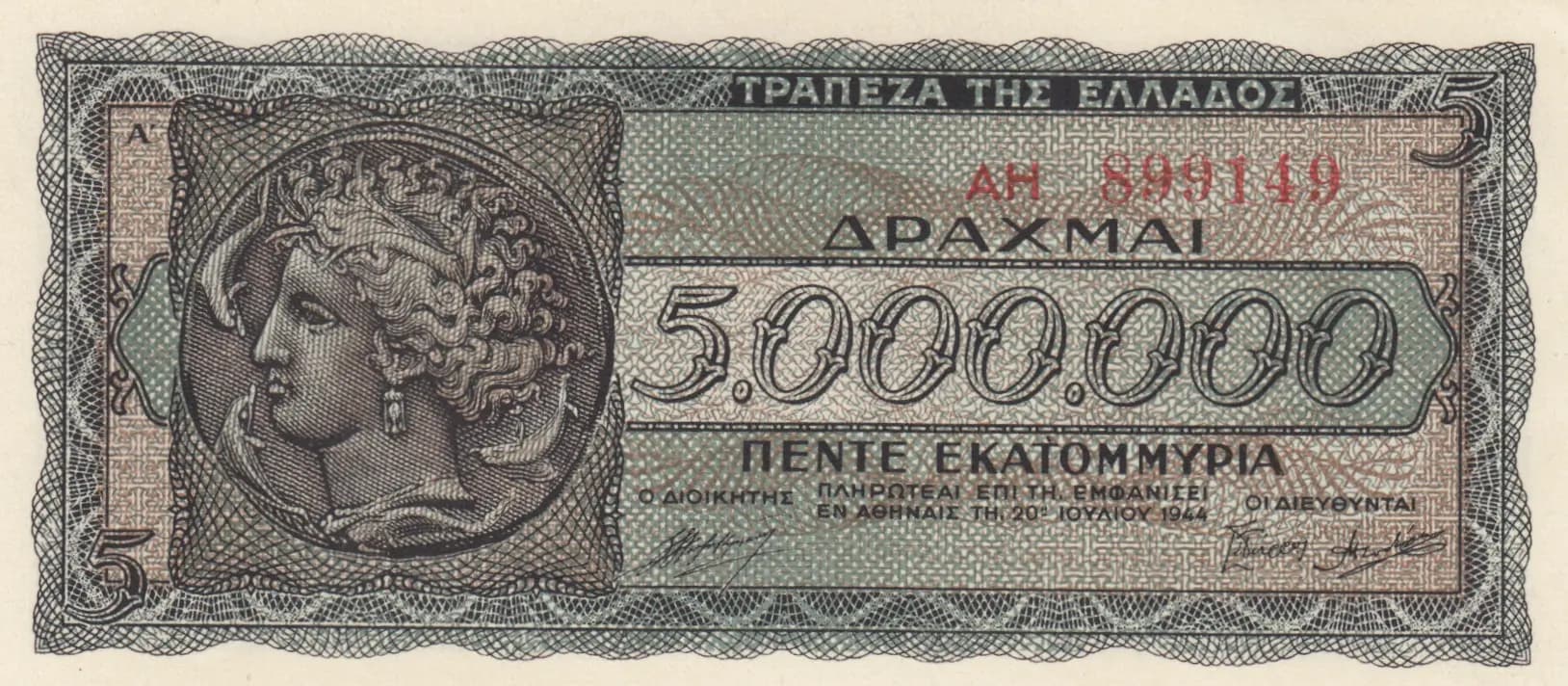
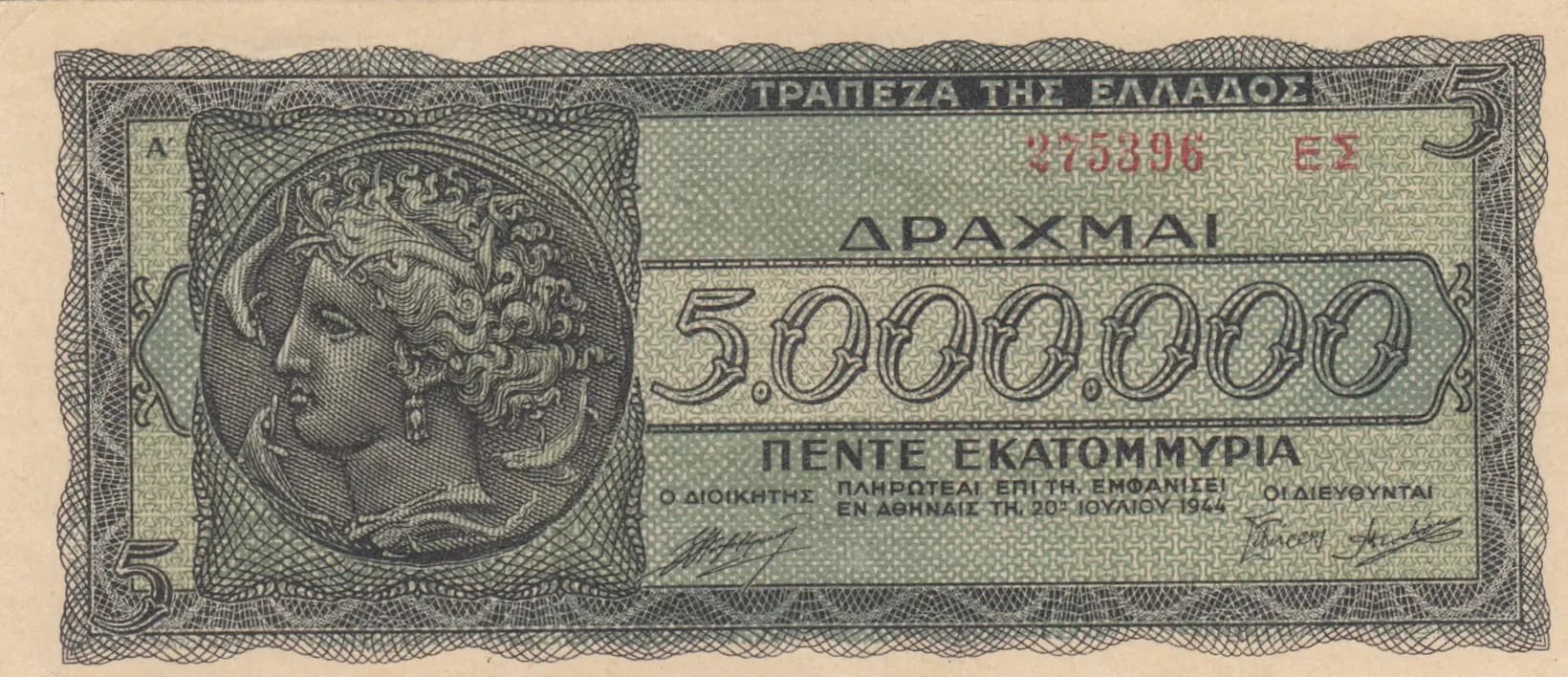
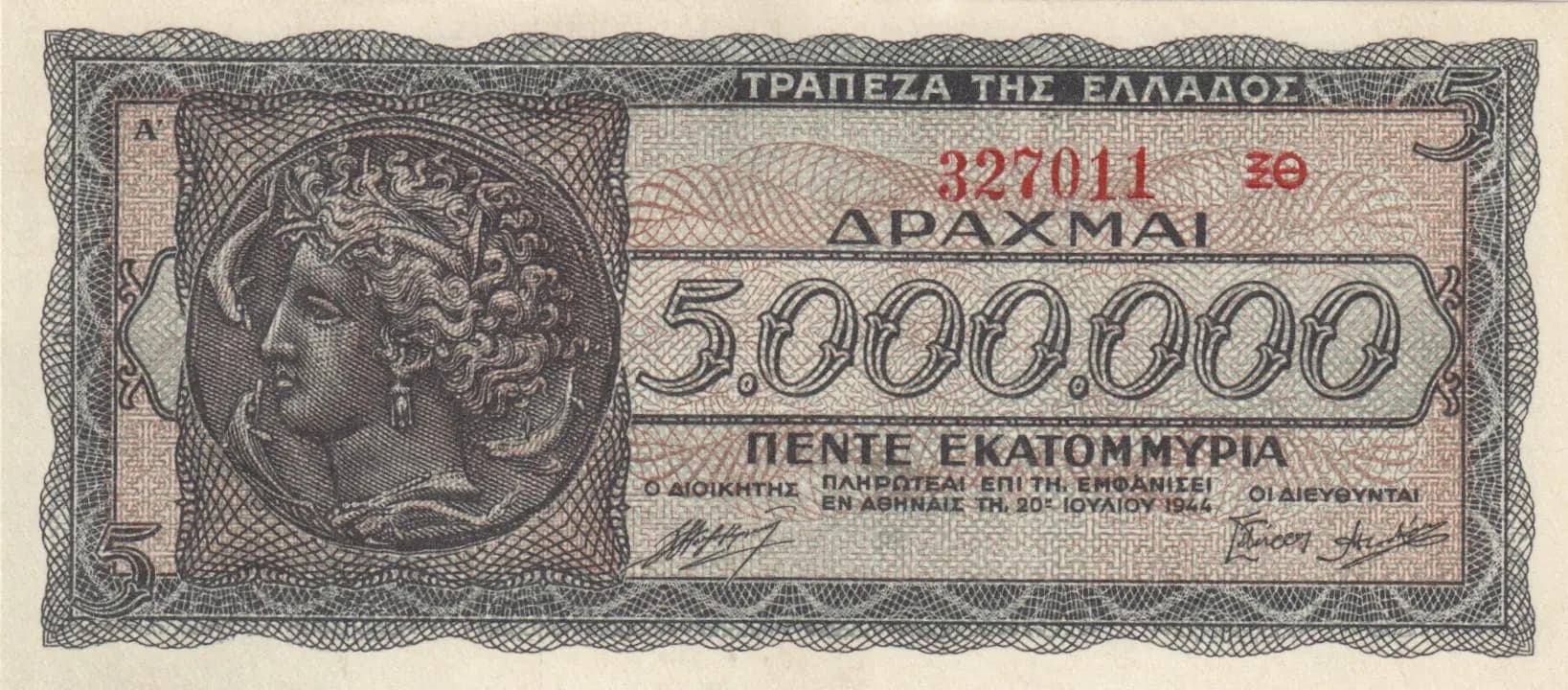
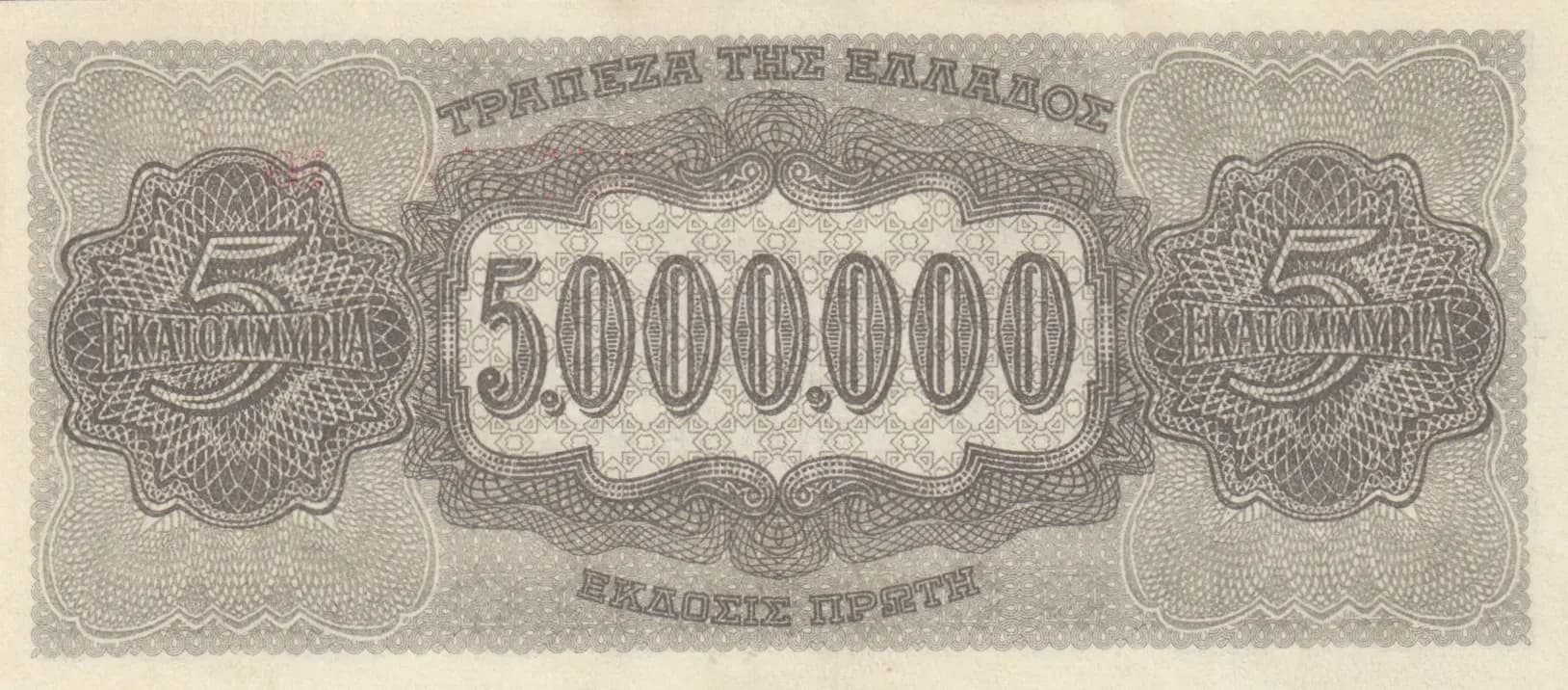
A spectacular example of Greece's 5,000,000 drachmai issued in July 1944, graded AU with exceptional eye appeal. The note displays pristine condition with no visible wear, creases, or stains, showcasing crisp printing throughout with sharp definition of all engraved elements. The front features a classical Greek male portrait in profile, while the reverse displays an ornate denomination frame flanked by heraldic shields with eagle motifs—all rendered in meticulous fine-line engraving that exemplifies the security printing standards of wartime Greece.
Common. The 5,000,000 drachmai of 1944 was issued during an extended period of wartime occupation and immediate post-liberation, with substantial print runs to meet hyperinflation currency demands. Despite its historical significance, examples survive in reasonable quantities in both circulated and uncirculated grades. AU condition examples, while desirable, are not exceptionally scarce in the collector market. The denomination was part of a widely distributed series rather than a limited emergency issue.
Issued on 20 July 1944 by the Bank of Greece (Trapeza tis Ellados) during the final stages of German occupation and just weeks before Greece's liberation, this banknote represents a critical moment in Greek monetary history. The classical Greek imagery—featuring Arethusa on the obverse and heraldic eagles on the reverse—deliberately evoked ancient Greek cultural identity at a time when national sovereignty was reasserting itself. The denomination of 5,000,000 drachmai reflects severe wartime inflation that had gripped Greece throughout the occupation period.
The obverse features Arethusa, the classical Greek nymph from ancient Greek mythology, rendered in profile facing left in the neoclassical style typical of ancient Greek coinage. Her portrait exhibits the traditional curled hair treatment seen in Hellenistic numismatic art. The design is enclosed within an ornate rectangular border with fine crosshatch patterning and geometric embellishments characteristic of high-security engraved currency. The reverse displays a more formal design centered on the denomination prominently framed within an elaborate baroque-influenced ornamental cartouche. Two identical classical Greek heraldic shields, each bearing an eagle (the traditional symbol of Greek sovereignty and power), flank the denomination on either side. The entire note employs extensive fine-line engraving with intricate mesh and crosshatch patterns throughout the background, representing state-of-the-art anti-counterfeiting security measures for the period.
FRONT: ΤΡΑΠΕΖΑ ΤΗΣ ΕΛΛΑΔΟΣ (Bank of Greece) | ΔΡΑΧΜΑΙ (Drachmas) | 5,000,000 (Five million) | ΠΕΝΤΕ ΕΚΑΤΟΜΜΥΡΙΑ (Five million in words) | ΕΝ ΑΘΗΝΑΙΕ ΤΗ 20ᵋ ΙΟΥΛΙΟΥ 1944 (In Athens, 20th July 1944) | Ο ΔΙΟΙΚΗΤΗΣ (The Director) | ΟΙ ΔΙΕΥΘΥΝΤΑΙ (The Directors) | ΠΛΗΡΟΦΛΕΑΙ ΕΠΙ ΤΗ, ΕΜΦΑΝΙΣΕΙ (Payment upon presentation) | Serial numbers: 327011 and 39. REVERSE: ΤΡΑΠΕΖΑ ΤΗΣ ΕΛΛΑΔΟΣ (Bank of Greece) | 5,000,000 (Five million) | 5 ΕΚΑΤΟΜΜΥΡΙΑ (Five million) | ΕΚΑΤΟΜΜΥΡΙΑ (Million—appears twice) | ΕΚΛΟΓΗ ΠΡΩΤΗ (First edition/First printing)
Intaglio engraving (steel die engraving) with multicolor capability, employing fine-line security patterns including crosshatch backgrounds and geometric mesh designs typical of central bank currency production. The sharp definition of the portrait, heraldic symbols, and border elements visible in the AU condition indicates professional currency engraving on specialized security presses. The Greek central bank's printing contracts for this period were typically handled by established European security printers, though specific printer attribution for Pick 128b would require archival research.
This example is identified as Pick 128b(2), indicating it is a second variety of the b-variant. The inscription 'ΕΚΛΟΓΗ ΠΡΩΤΗ' (First edition) on the reverse establishes this as part of the first printing run. The serial number 327011-39 is consistent with mid-range production numbers from the July 1944 issue. Collectors should note that this series includes multiple signature varieties reflecting different Bank of Greece officials serving as Directors during the transitional period of 1944-1945.