5 000 000 drachmai 1944
About This Note
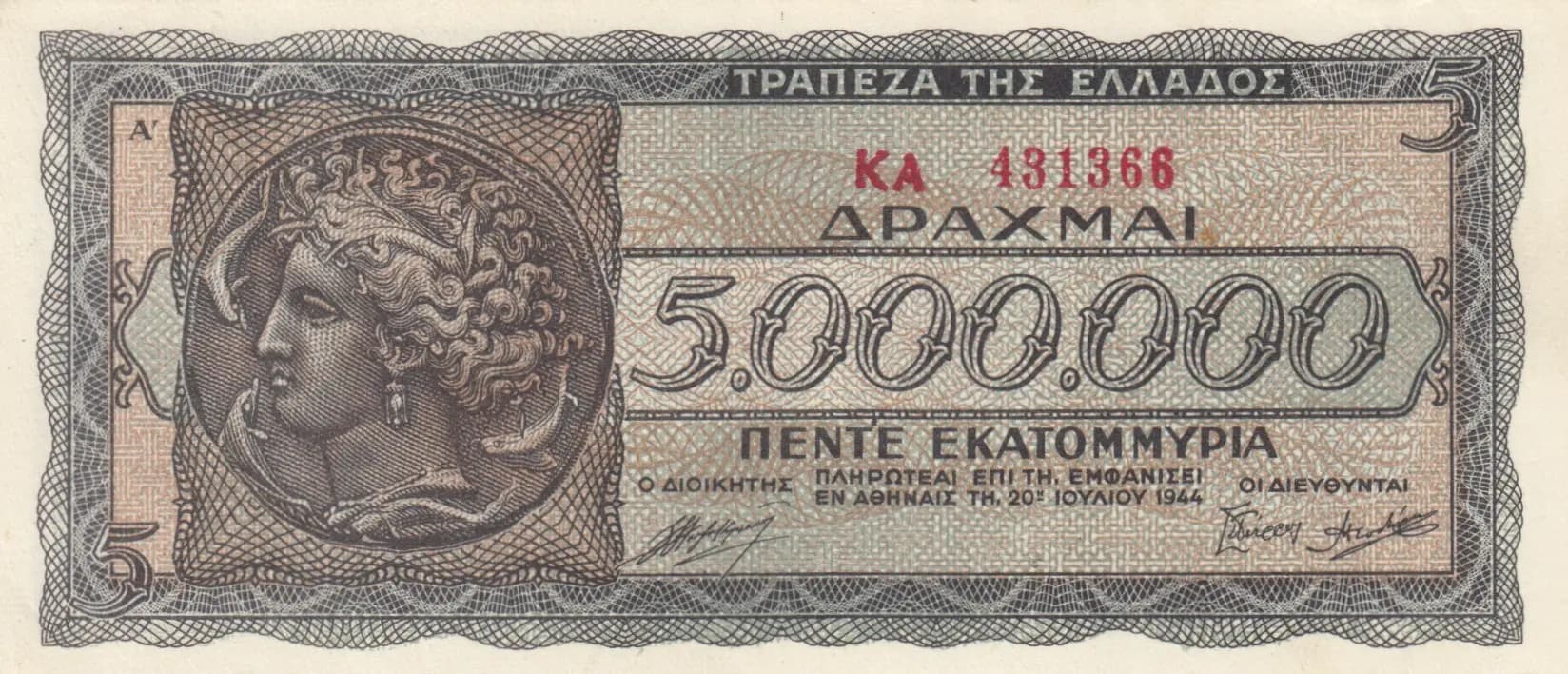
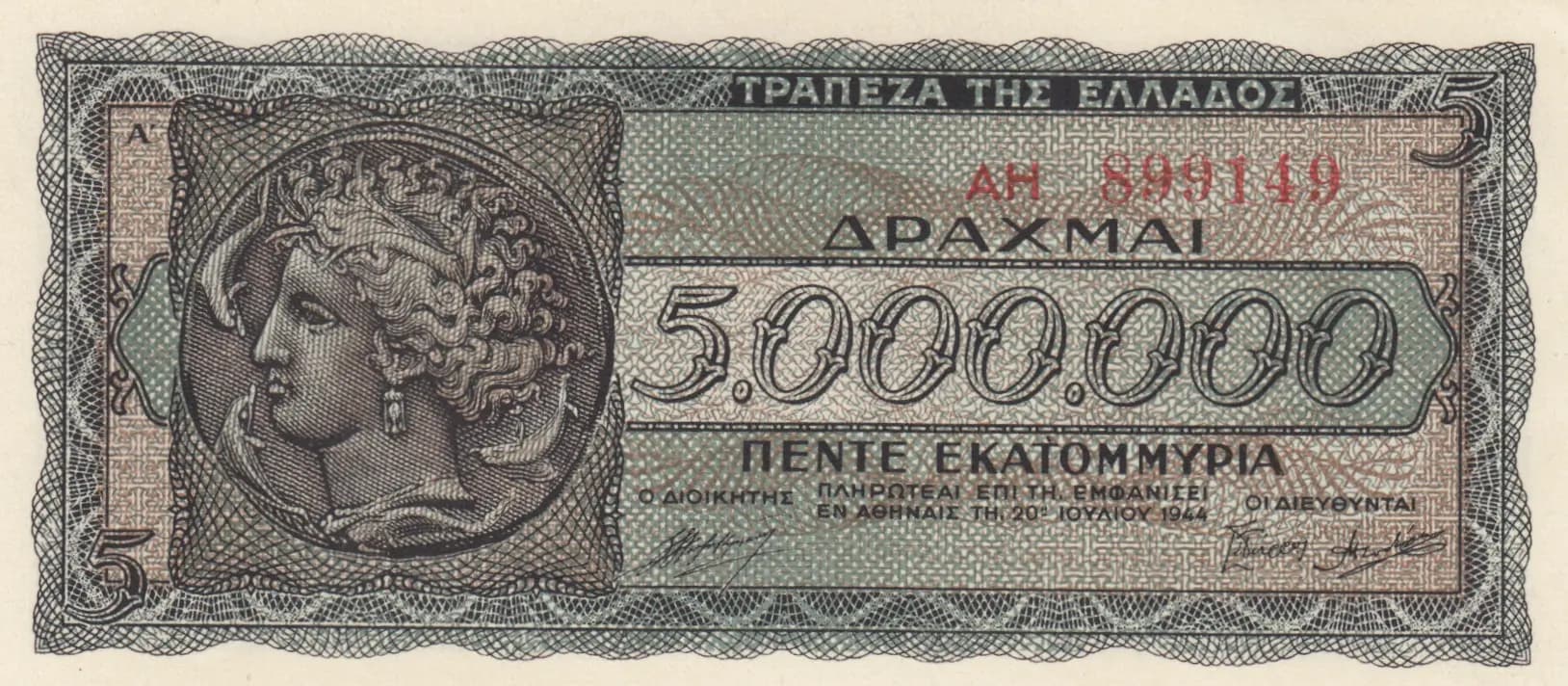
This is an exceptional example of the Greek 5,000,000 drachmai emergency banknote issued on 20 July 1944 by the Bank of Greece during the final stages of World War II and the German occupation. The note displays pristine, uncirculated condition with crisp engraving throughout, sharp printing detail, and no signs of circulation, handling, or deterioration. The classical Greek portrait and ornate security features reflect the sophisticated engraving standards maintained even during this turbulent period of Greek history.
Common. While this is a high-denomination emergency issue from a significant historical moment, the 1944 Greek hyperinflationary issues were printed in substantial quantities to meet wartime monetary demands. The Pick-128a(2) variety remains readily available in the numismatic market, even in uncirculated condition. The abundance of surviving examples, combined with typical collector interest rather than extreme scarcity, places this note in the common category despite its historical interest.
Issued during the chaotic final months of German occupation in Greece (1944), this hyperinflationary denomination represents the desperate monetary conditions of the wartime period. The classical Greek portrait on the obverse references the nation's ancient heritage as a symbol of continuity and national identity during occupation. The note's elaborate geometric security features and fine-line engraving demonstrate the Bank of Greece's commitment to producing secure currency despite severe wartime constraints and resource limitations.
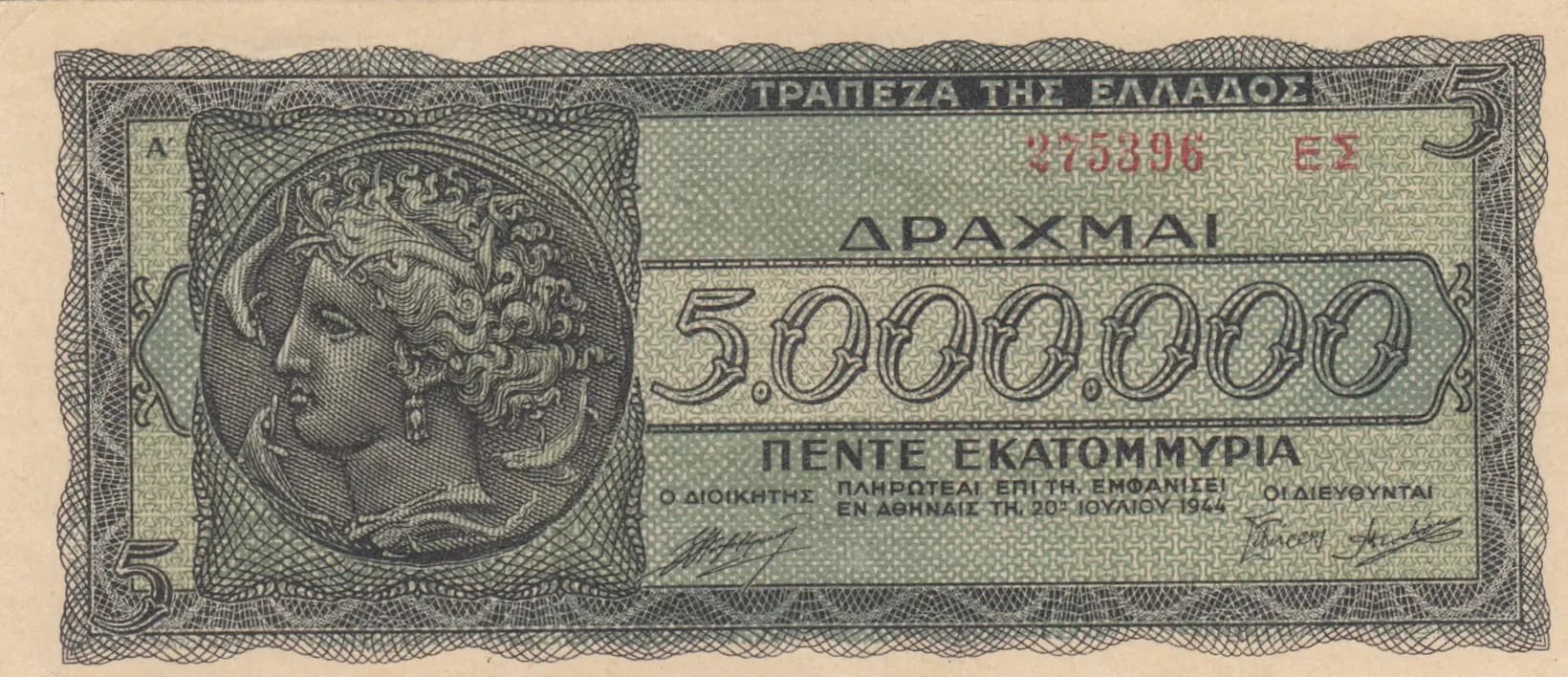
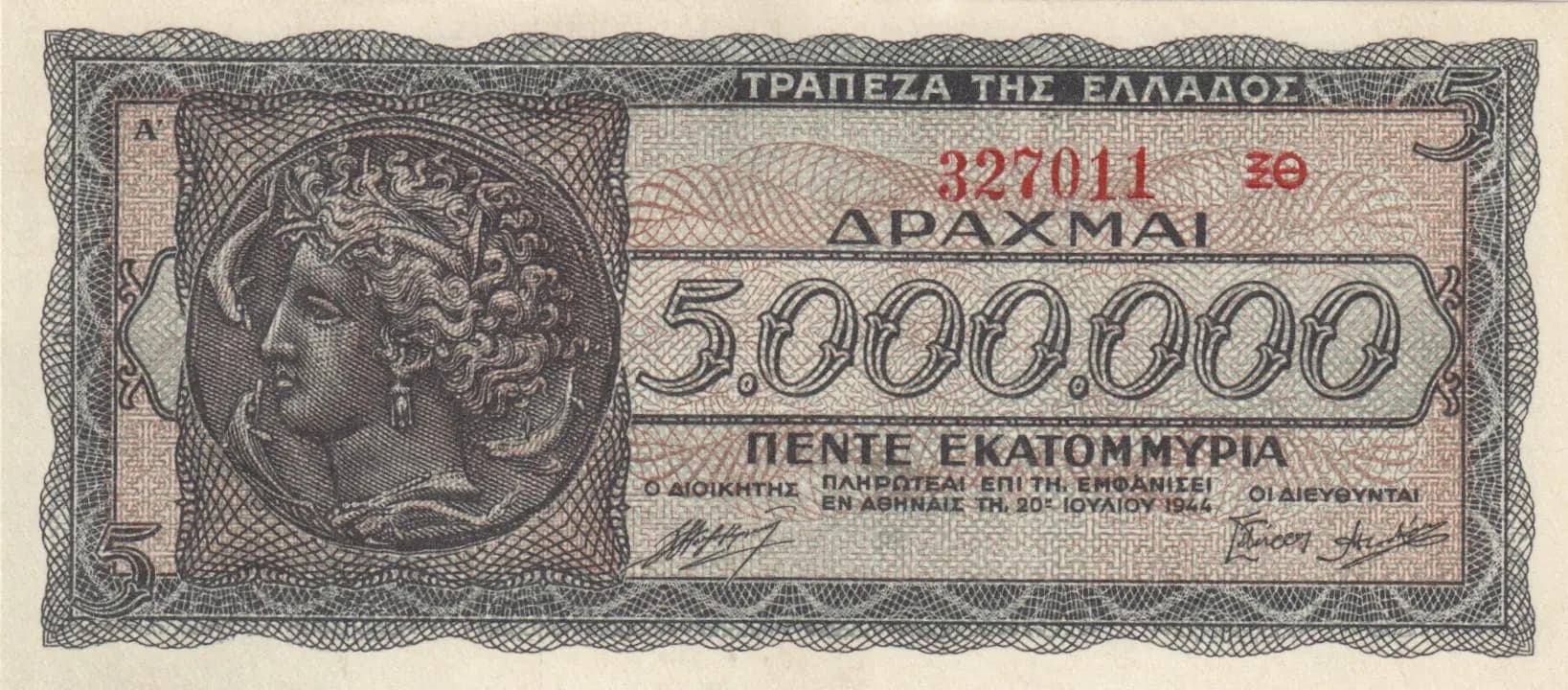
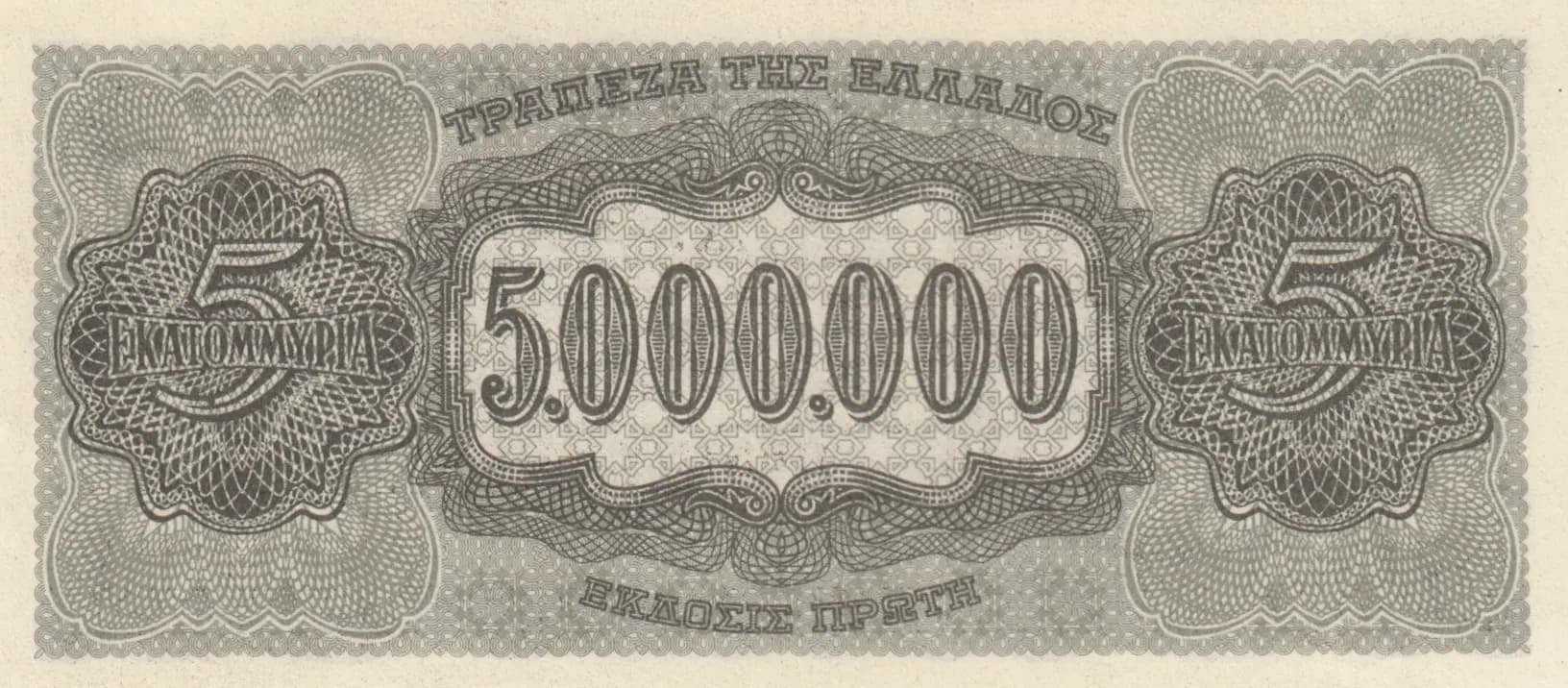
The obverse features a classical Greek male portrait in profile facing left, rendered in fine engraving style and positioned on the left side of the note. This portrait depicts Arethusa, the legendary Greek nymph from classical mythology, represented in the traditional numismatic convention of classical portraiture. The reverse presents a symmetrical design with decorative panels on both sides containing fish or mythological creature designs within ornate borders, emphasizing classical Greek iconography. Both sides are surrounded by an ornamental border featuring interlocking geometric patterns and intricate crosshatch designs. The dominant color scheme is greenish-gray with black printing on a cream background, typical of Greek banknotes from this era. The layout emphasizes the denomination prominently, with '5,000,000' displayed in both numeric and spelled-out forms (ΠΕΝΤΕ ΕΚΑΤΟΜΜΥΡΙΑ).
FRONT: 'ΤΡΑΠΕΖΑ ΤΗΣ ΕΛΛΑΔΟΣ' = Bank of Greece; 'ΔΡΑΧΜΑΙ' = Drachmas; '5,000,000' = Five million (numeric); 'ΠΕΝΤΕ ΕΚΑΤΟΜΜΥΡΙΑ' = Five million (spelled out); 'ΔΙΟΙ ΚΤΗΣΙ ΠΑΡΕΝΤΕΛ ΕΠΙ ΤΗ ΕΜΦΑΝΙΣΕΙ ΕΝ ΑΘΗΝΑΙΣ ΤΗ 20ᾒ ΙΟΥΛΙΟΥ 1944' = Issue details: 20th July 1944 in Athens; 'Αριθ' = Number. BACK: 'ΤΡΑΠΕΖΑ ΤΗΣ ΕΛΛΑΔΟΣ' = Bank of Greece; '5,000,000' = Five million (numeric); 'ΕΚΑΤΟΜΜΥΡΙΑ' = Million (appears twice in decorative cartouches); 'ΕΚΛΟΣΙΣ ΠΡΩΤΗ' = First issue.
Intaglio engraving (line-engraved printing), the standard security printing method for banknotes of this period. The fine-line engraving throughout the note, complex geometric crosshatch patterns, detailed stippling, and varying line densities visible in the security features are characteristic of intaglio production. The sharp detail preservation and crisp impressions indicate high-quality engraving plates and skilled printing execution. This note was likely produced by a European security printer, possibly in Switzerland or another neutral country, or by the Bank of Greece's own printing facilities.
Pick-128a(2) represents the second variety of the 5,000,000 drachmai issue from 20 July 1944. The '(2)' designation indicates a subsequent printing variant, likely distinguishable by serial number prefixes, signature variations, or minor design differences in the engraving. The 'First issue' (ΕΚΛΟΣΙΣ ΠΡΩΤΗ) inscription visible on the reverse confirms this is from the initial emission period. Collectors should note the specific serial number prefix and any signature variations when cataloging this note, as these details define the exact variety within the Pick-128a classification system.