5 000 000 drachmai 1944
About This Note
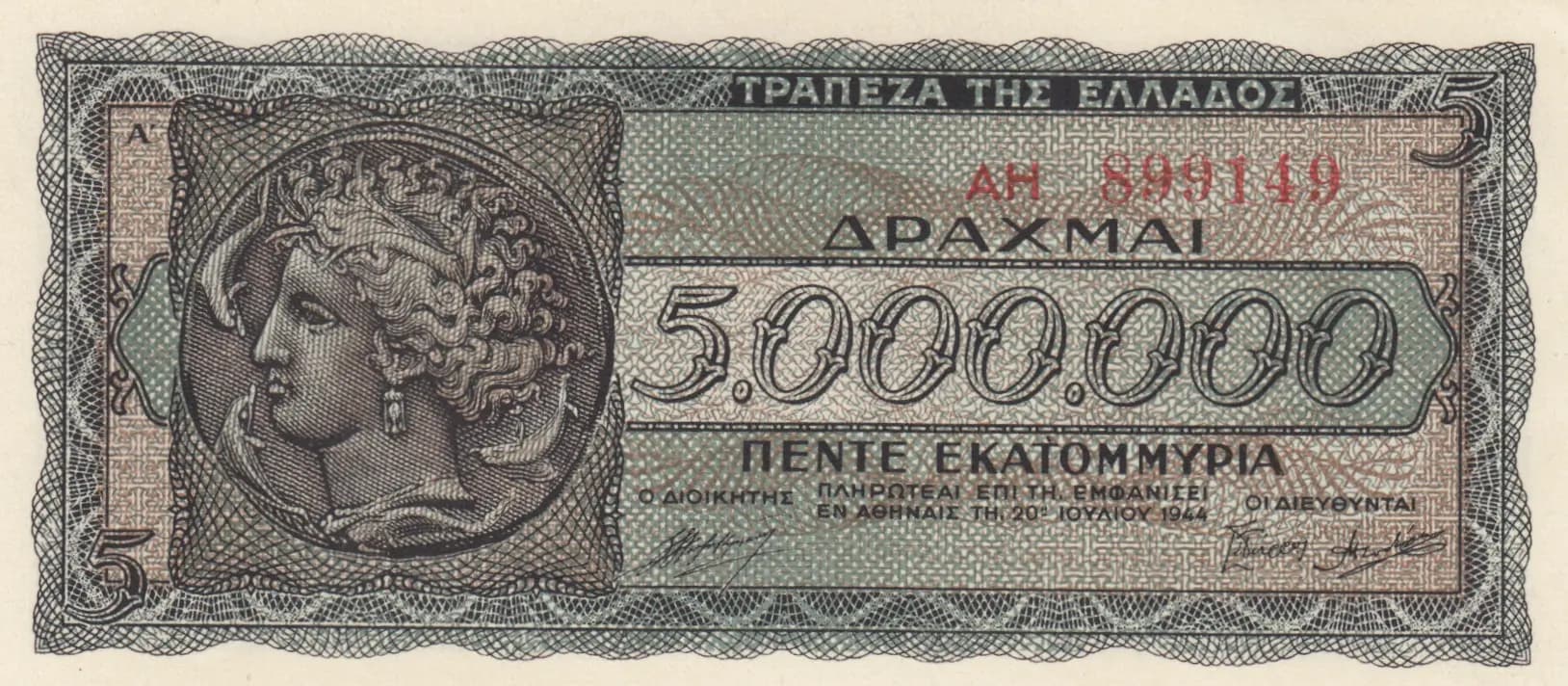
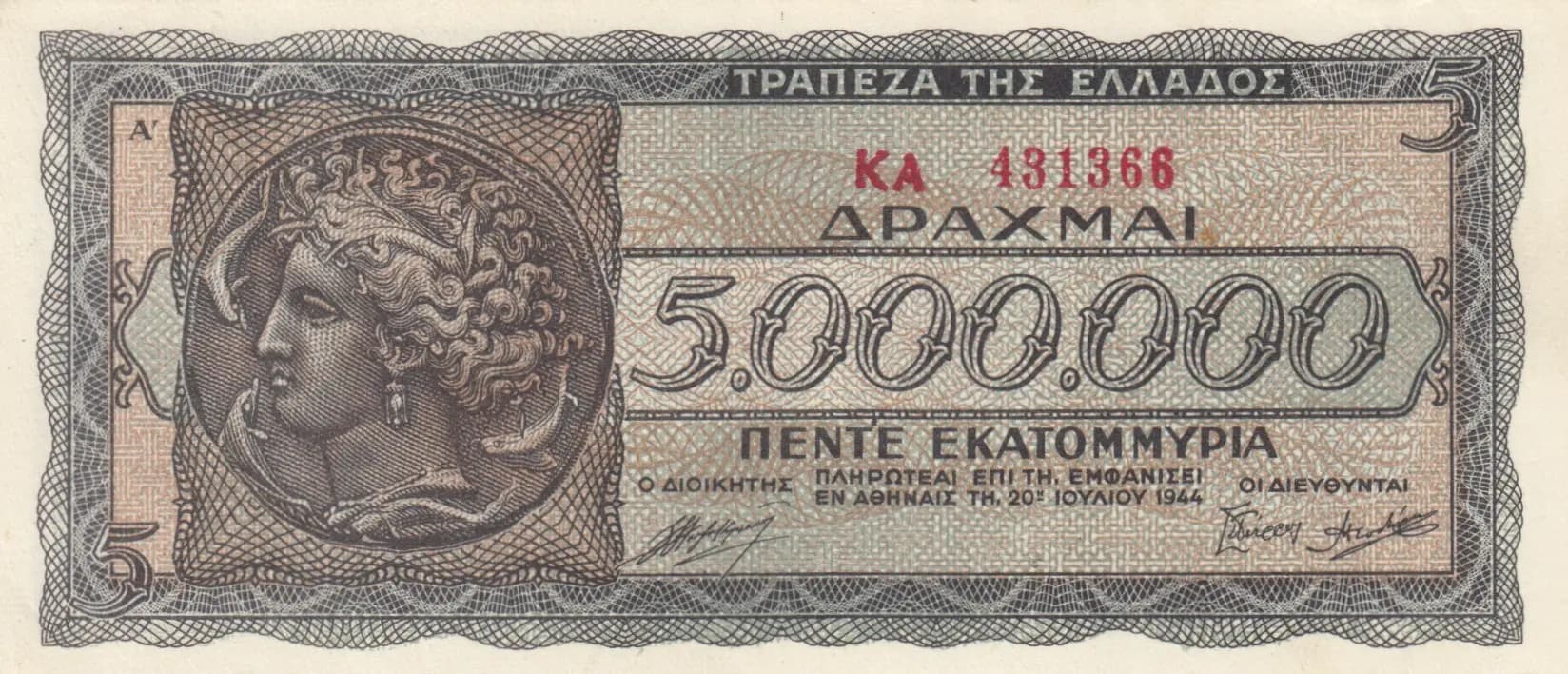
This 5,000,000 drachmai note from 1944 represents a remarkable piece of Greek numismatic history during the Nazi occupation and liberation period. The note exhibits an exceptional AU condition with pristine paper quality, sharp impressions, and no visible wear, creases, or foxing—making it an outstanding example of this high-denomination emergency currency. The classical portraiture and intricate security printing demonstrate the Bank of Greece's commitment to quality design despite extraordinary wartime circumstances.
Common. While this specific denomination represents hyperinflationary-period currency from 1944, Greek 5,000,000 drachmai notes from this period were issued in substantial quantities as emergency currency during the transition from occupation to liberation. The denomination itself was rendered obsolete by subsequent currency reforms and redenominations. No evidence suggests restricted print runs or significant recall. Notes from this series appear regularly in the numismatic market and dealer inventories.
Issued on 20 July 1944, during Greece's liberation from Nazi occupation, this banknote reflects the monetary chaos and hyperinflation that plagued Greece in the final stages of World War II. The classical Arethusa portrait on the obverse connects to Greek cultural heritage and national identity during a period of foreign occupation and reconstruction. The 'First Issue' (Εκδόσησ Πρώτη) designation on the reverse indicates this was among the initial emergency currency released by the Bank of Greece as the nation transitioned from occupation currency to restoration of sovereign monetary authority.
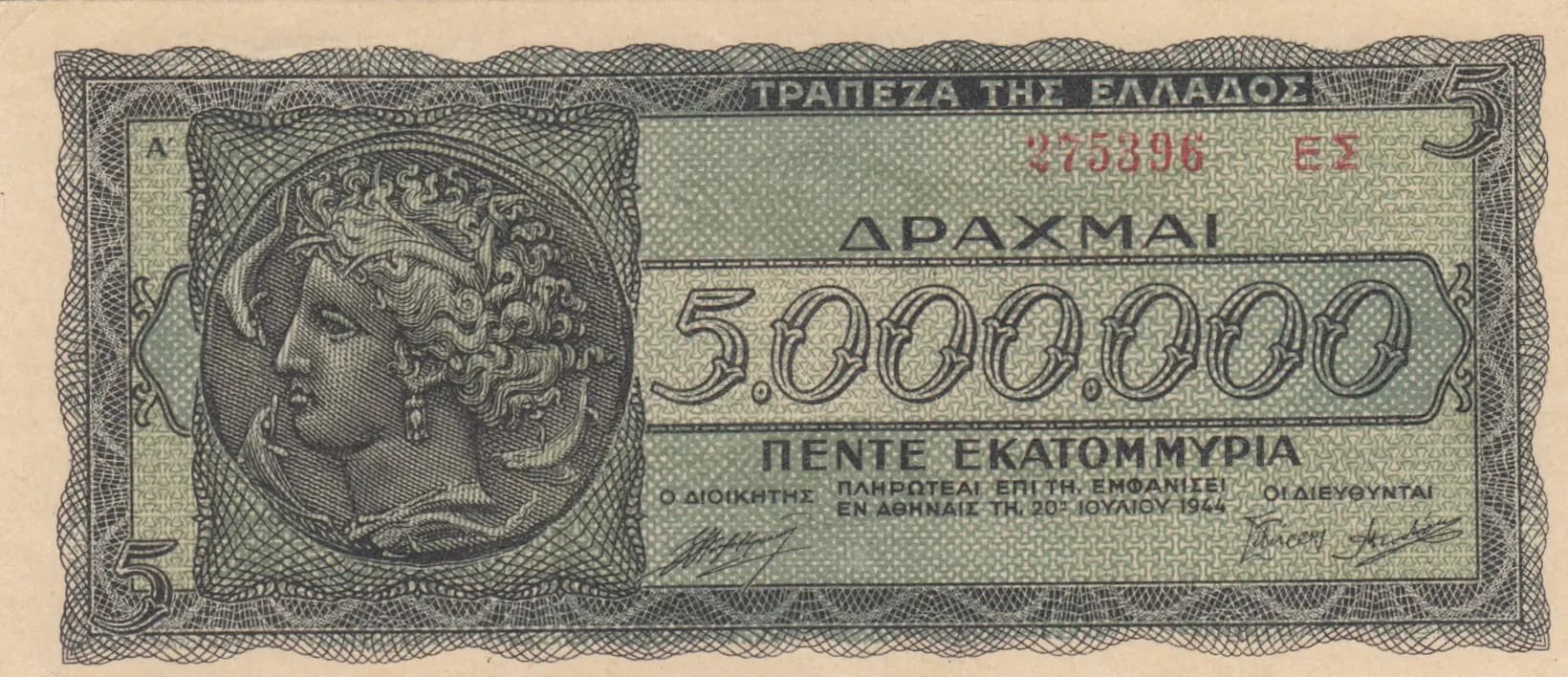
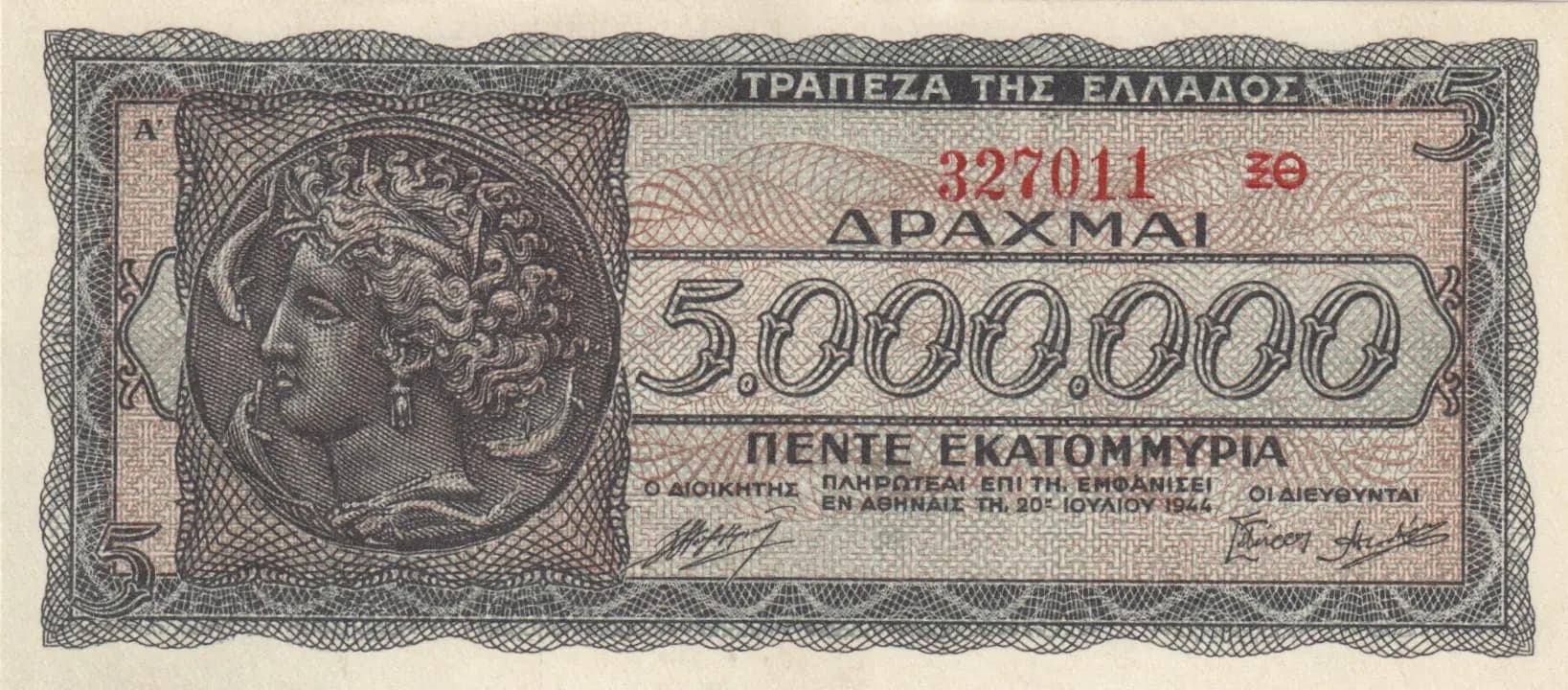
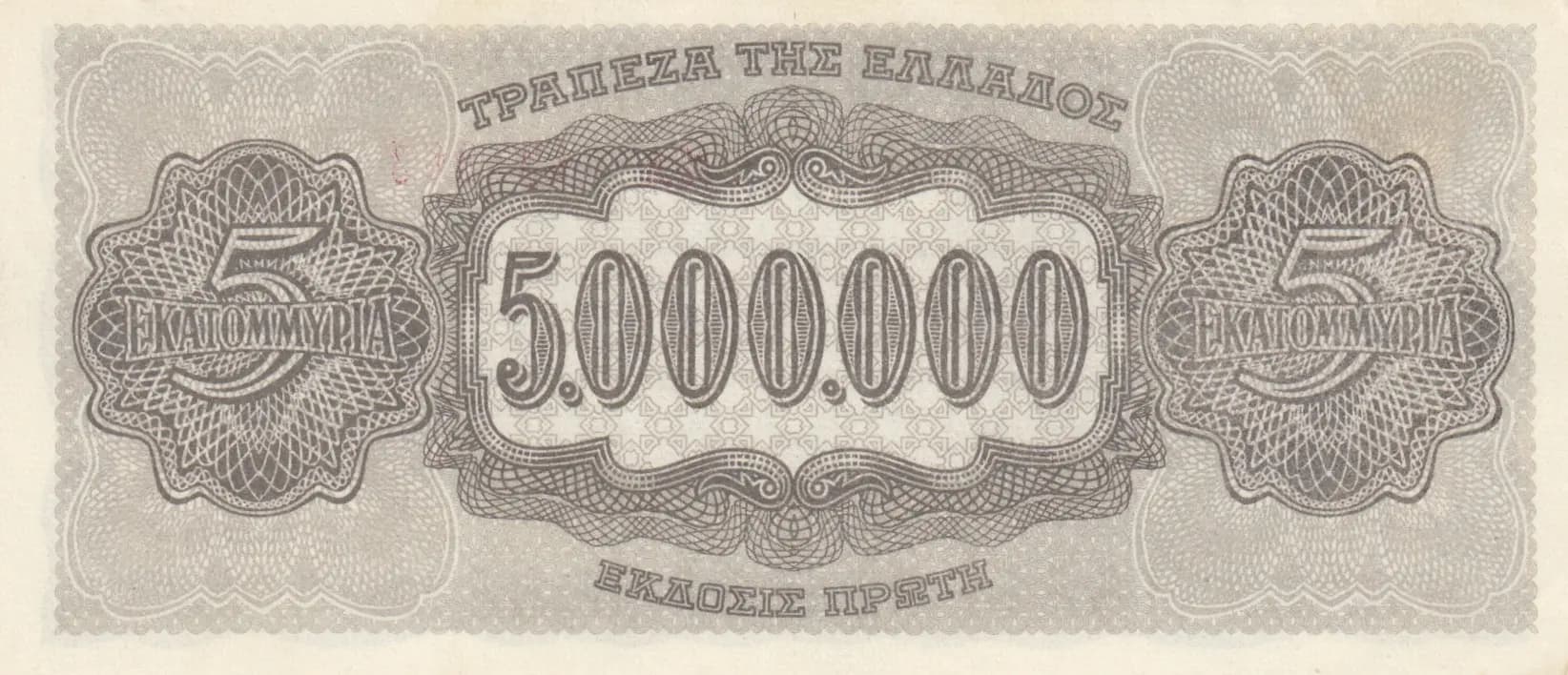
The obverse features a classical male portrait in left profile, identified as Arethusa, the nymph from Greek mythology celebrated for her association with Sicily and the Arethusa Spring. The portrait is set within an ornate circular frame and demonstrates fine classical styling with curled hair rendered in precise line work. The reverse displays an ornamental, symmetrical design with two identical shields featuring stylized leaf and palm frond motifs flanking a central denomination cartouche. The entire note employs extensive cross-hatching, geometric mesh patterns, and Greek key borders as security features. The color scheme uses sepia, tan, and brown tones on the obverse with gray and black predominating on the reverse, printed on cream-colored paper stock.
FRONT SIDE: 'ΤΡΑΠΕΖΑ ΤΗΣ ΕΛΛΑΔΟΣ' (Bank of Greece); '5.000.000' (Five million); 'ΔΡΑΧΜΑΙ' (Drachmas); 'ΠΕΝΤΕ ΕΚΑΤΟΜΜΥΡΙΑ' (Five million); 'Ο ΔΙΟΙΚΗΤΗΣ' (The Governor); Serial number 'ΚΑ 431366'. BACK SIDE: 'ΤΡΑΠΕΖΑ ΤΗΣ ΕΛΛΑΔΟΣ' (Bank of Greece); '5.000.000' (Five million); 'ΕΚΑΤΟΜΜΥΡΙΑ' (Million); 'ΕΚΔΟΣΗΣ ΠΡΩΤΗ' (First Issue). Additional regulatory/legal text present on front regarding presentation and declaration requirements dated 20th of the month.
This note was produced using intaglio (engraved) printing, evidenced by the fine line work, precise cross-hatching, intricate geometric patterns, and the depth of impression visible in the portrait and security features. The extensive decorative borders and repetitive mesh patterns are characteristic of engraved plate production. The Bank of Greece employed National Bank of Greece printing facilities and international security printers for this emergency issue during the liberation period.
The Pick catalog designation P-128a(1) indicates this is the first recorded variety. The serial number prefix 'ΚΑ' and the printed date of 20.07.1944 are consistent with the first issue designation ('ΕΚΔΟΣΗΣ ΠΡΩΤΗ'). Collectors should note that signature varieties may exist based on the Governor's tenure, as multiple individuals held this position during the liberation period. The 'First Issue' notation on reverse distinguishes this from any subsequent printings or reissues that may have followed.