25 000 000 drachmai 1944
About This Note
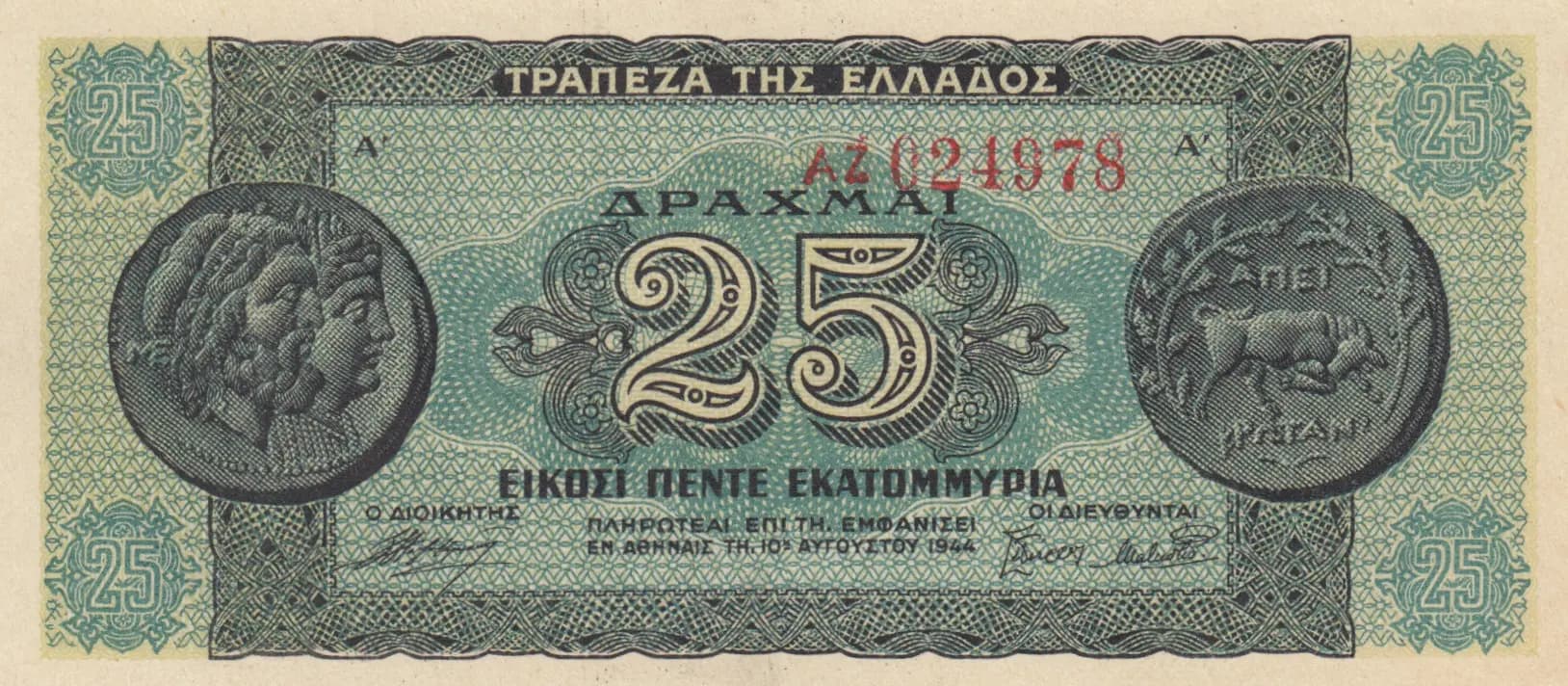
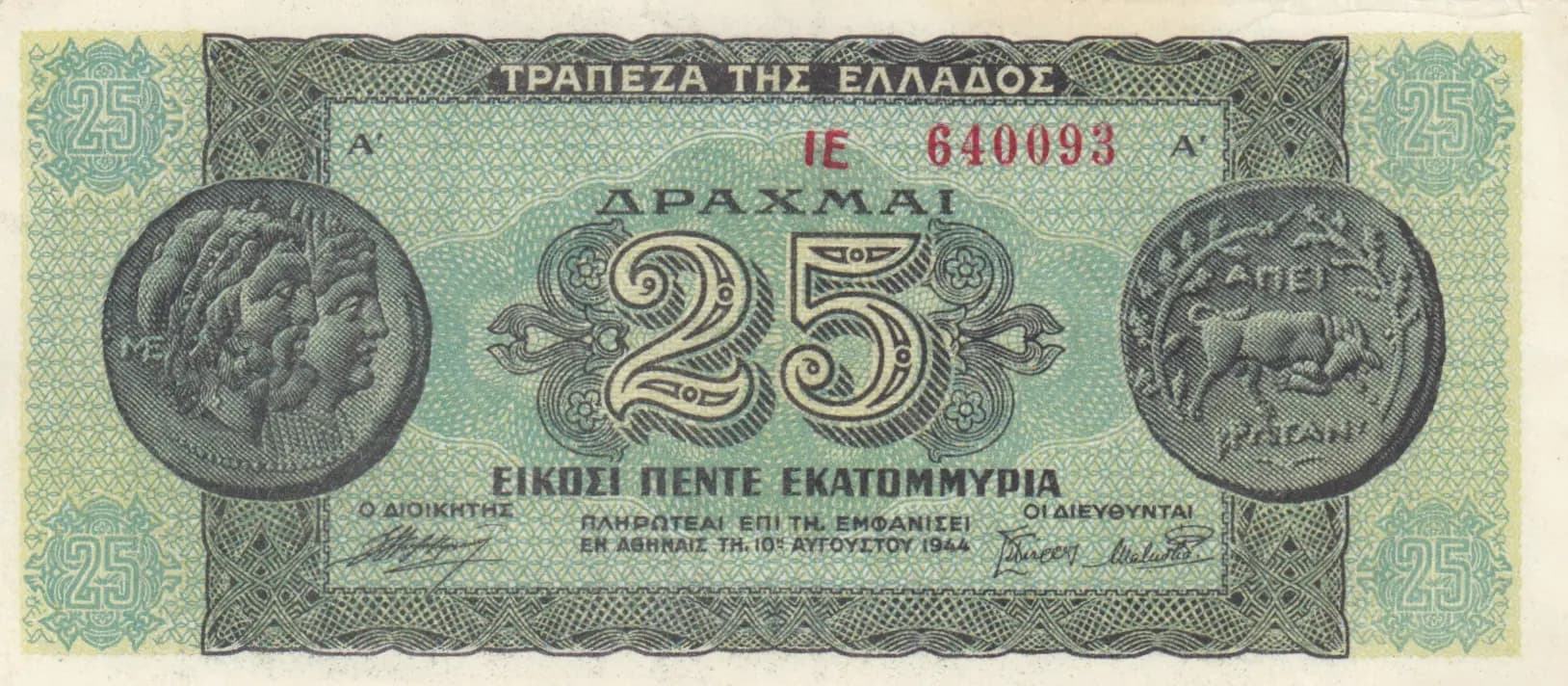
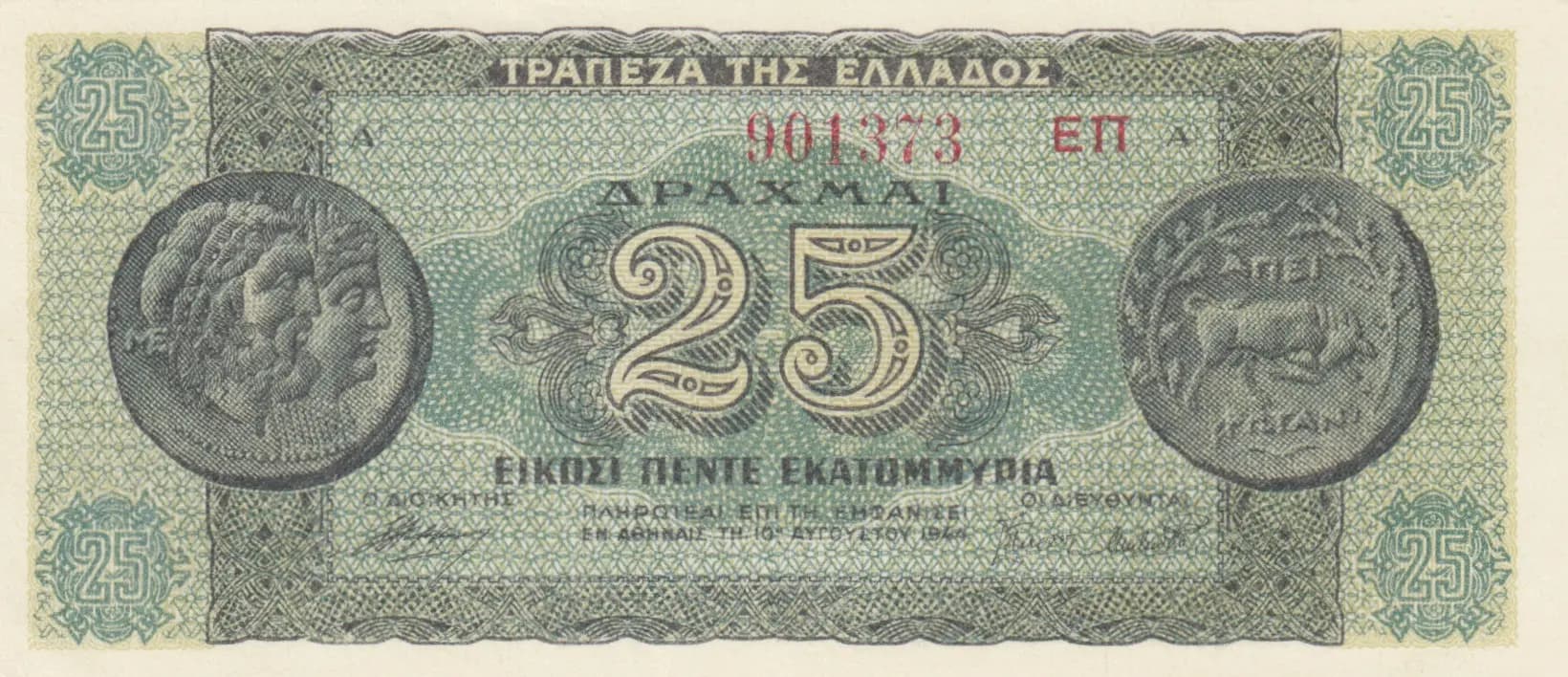
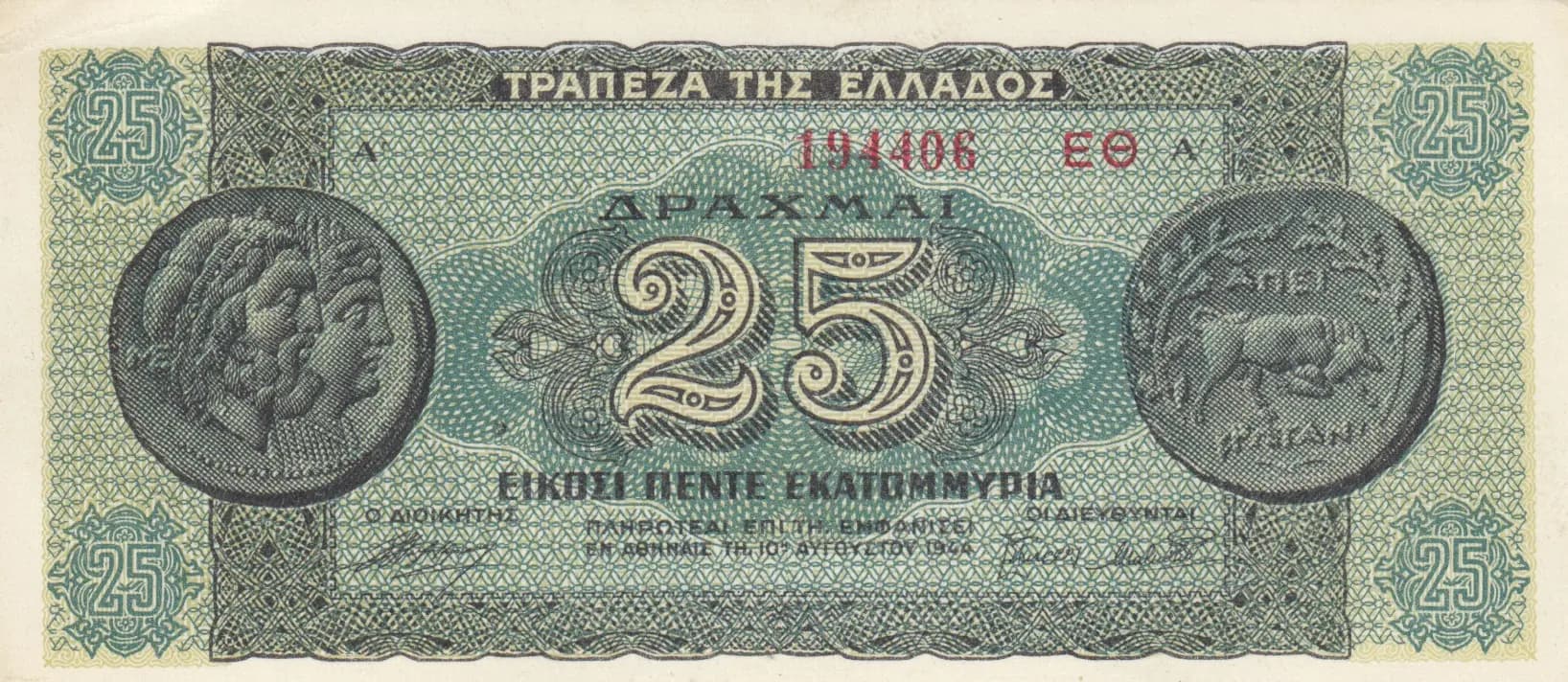
This is a Greek 25,000,000 drachmai note from August 1944, issued during the final stages of World War II occupation. The note exhibits pristine, uncirculated condition with no visible wear, creases, or aging. The design features classical Greek aesthetics with ornate geometric patterns, dual classical portrait medallions on the obverse, and intricate scrollwork borders, making it a visually striking example of Greek hyperinflation-era currency.
Common. Hyperinflation-era Greek banknotes from 1944, particularly high-denomination notes, were issued in substantial quantities and remain relatively abundant in collector markets. The 25,000,000 drachmai denomination is not particularly scarce, and AU-condition examples are regularly available. Notes from this series do not command significant premiums beyond face value to collectors, as they represent a standard emergency issue rather than a limited or withdrawn denomination.
Issued by the Bank of Greece (Τράπεζα της Ελλάδος) on August 10, 1944, this denomination reflects the severe hyperinflation that gripped Greece during the final year of German occupation in World War II. The classical imagery—featuring ancient coin profiles and Greek ornamental design—represents the Greek government's attempt to maintain cultural and institutional dignity despite economic collapse. By mid-1944, such astronomical denominations became necessary as the occupation currency crisis rendered smaller denominations worthless.
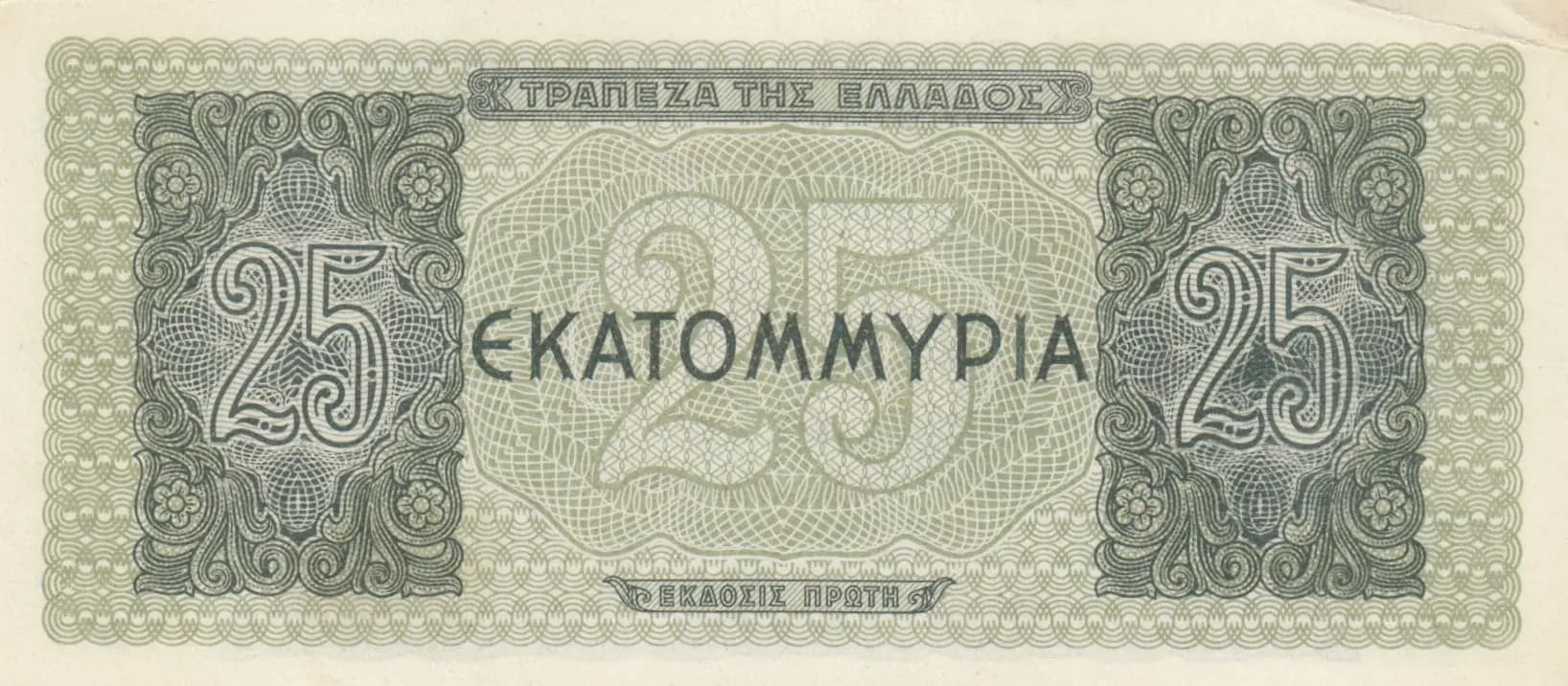
The obverse features a classical design with dual circular medallions containing profile busts of ancient Greek figures, positioned symmetrically on left and right sides. The center displays an elaborate ornamental '25' numeral in stylized script, with denomination text below in Greek. The reverse emphasizes the 'million' (ΕΚΑΤΟΜΜΥΡΙΑ) denomination with repeated '25' numerals in decorative oval frames and an all-over classical scrollwork border pattern. Both sides employ fine-line engraving techniques characteristic of mid-20th century Greek banknote production, with intricate geometric lattice patterns and ornamental borders throughout. The color scheme of green and cream with black engraving creates visual hierarchy while the red overprint on the obverse indicates a subsequent validation or reissue marking.
FRONT: 'ΤΡΑΠΕΖΑ ΤΗΣ ΕΛΛΑΔΟΣ' (Bank of Greece); 'ΕΙΚΟΣΙ ΕΝΝΕΑ' (Twenty-nine) appears as a red overprint; '25' in stylized numerals; 'ΕΙΚΟΣΙ ΕΝΝΕΑΚΙ ΕΚΑΤΟΜΜΥΡΙΑ' (Twenty-nine million). BACK: 'ΤΡΑΠΕΖΑ ΤΗΣ ΕΛΛΑΔΟΣ' (Bank of Greece); 'ΕΚΑΤΟΜΜΥΡΙΑ' (Million); '25' in decorative frames; additional Greek text including reference to date or issue information.
Intaglio engraving (recess printing), executed with fine-line detail work for the portrait medallions, geometric backgrounds, and ornamental borders. The precision of the classical profile representations and the complex lattice patterns indicate professional security printing, likely produced by the Bank of Greece's official printing facilities or a contracted security printer. The red overprint was applied as a secondary process, typical of Greek occupation-era notes requiring revalidation or emergency modifications.
This note is cataloged as Pick P-130b(2), indicating it is the second variety of the 25,000,000 drachmai issue. The red overprint reading 'ΕΙΚΟΣΙ ΕΝΝΕΑ' (Twenty-nine) represents a printing variety or revalidation marking distinguishing this from the base P-130b issue. The specific date of August 10, 1944 (10.08.1944) corresponds to the final phase of Greek hyperinflation before currency stabilization. Serial number prefixes and exact overprint variations may identify further sub-varieties within this Pick number, though such details would require examination of the actual serial number and overprint characteristics not fully detailed in the visual analysis.