25 000 000 drachmai 1944
About This Note
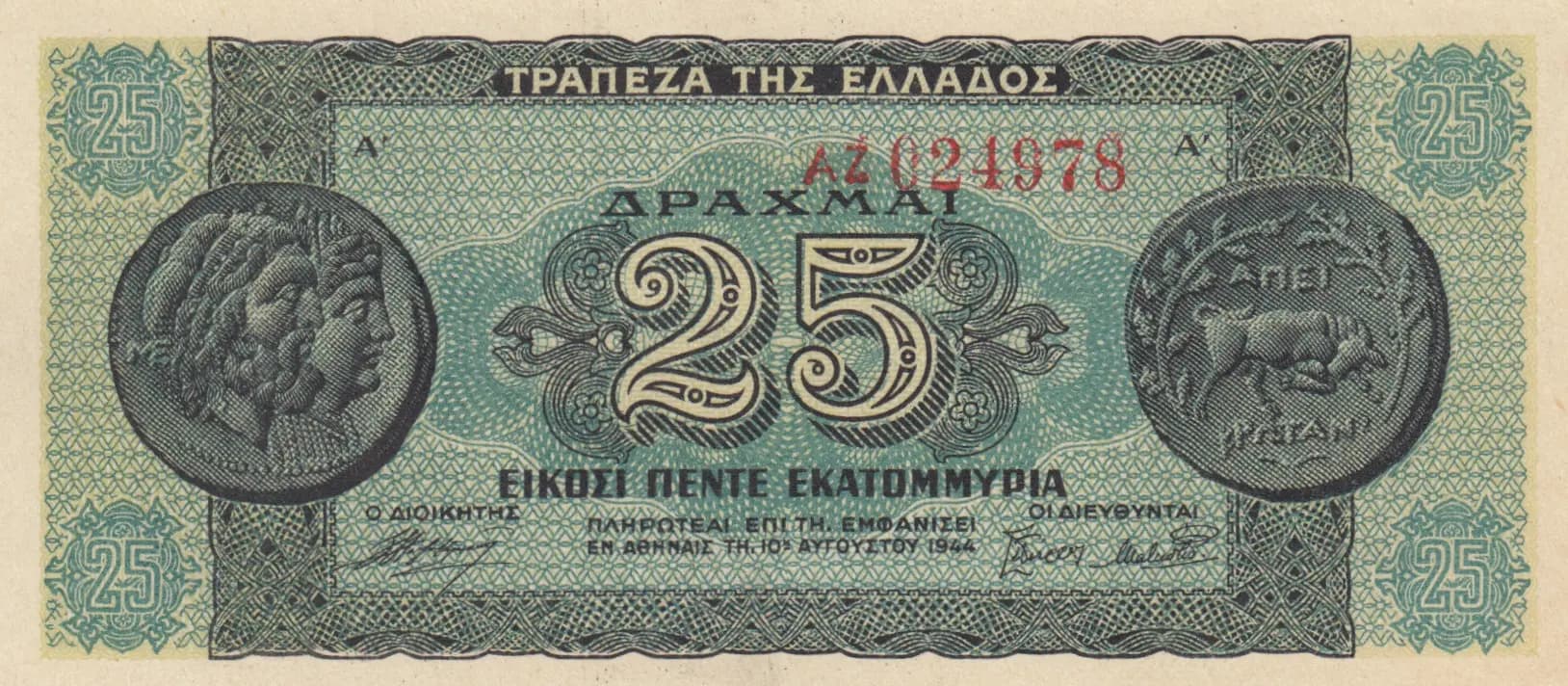
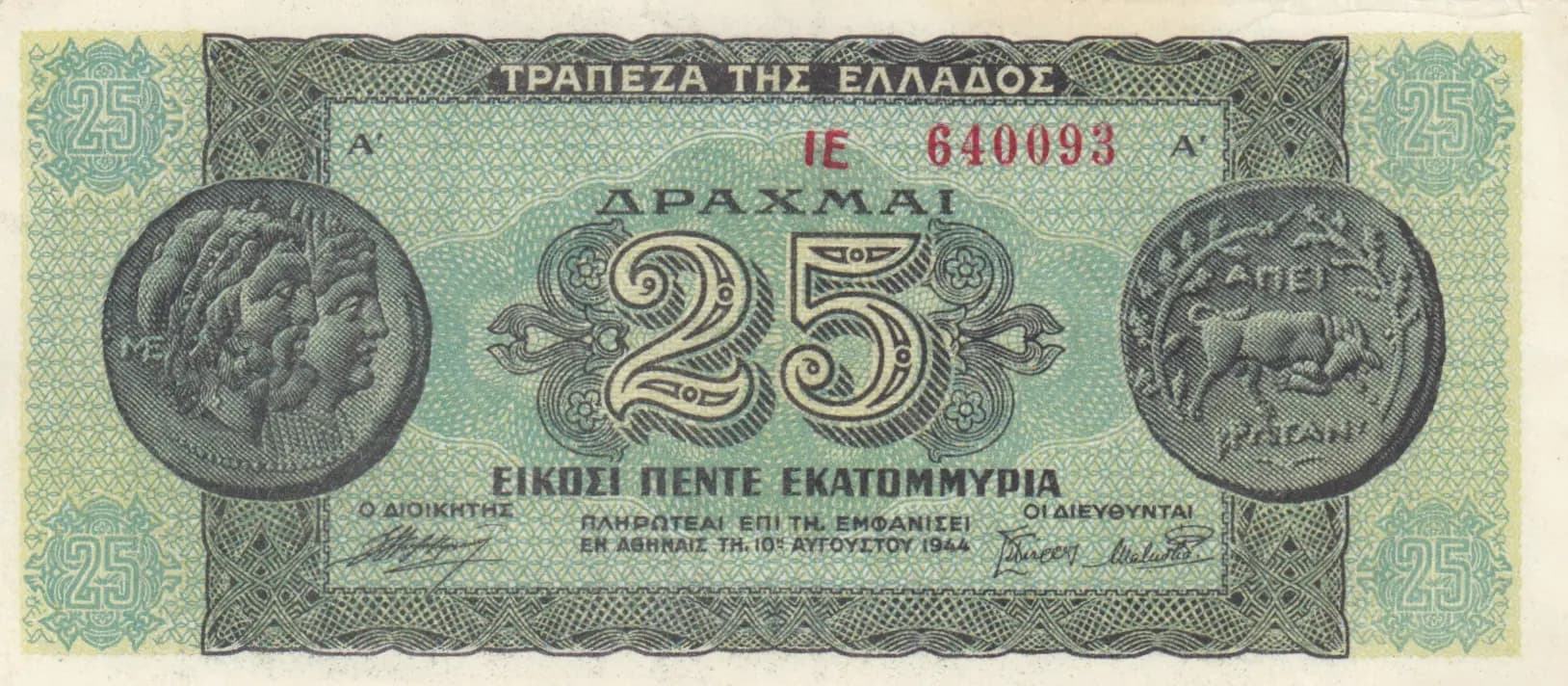
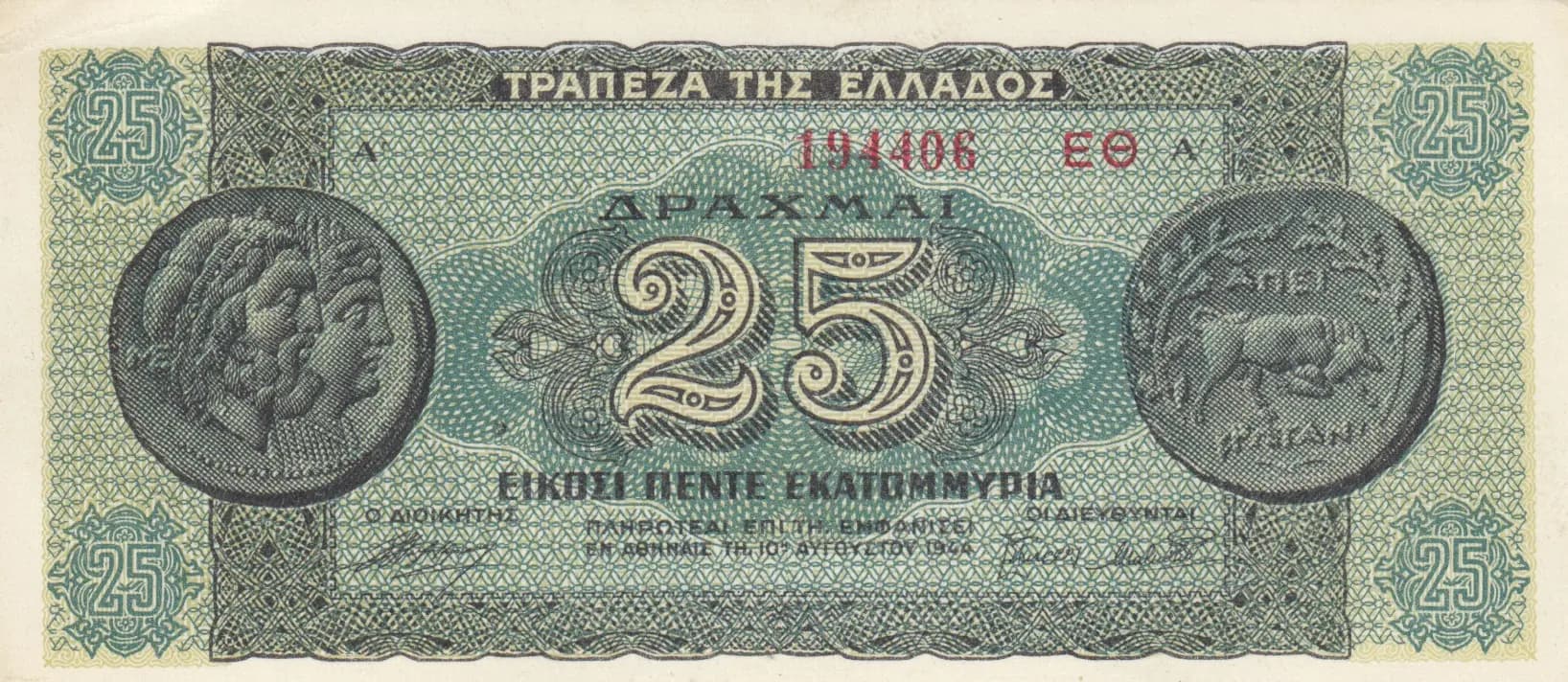
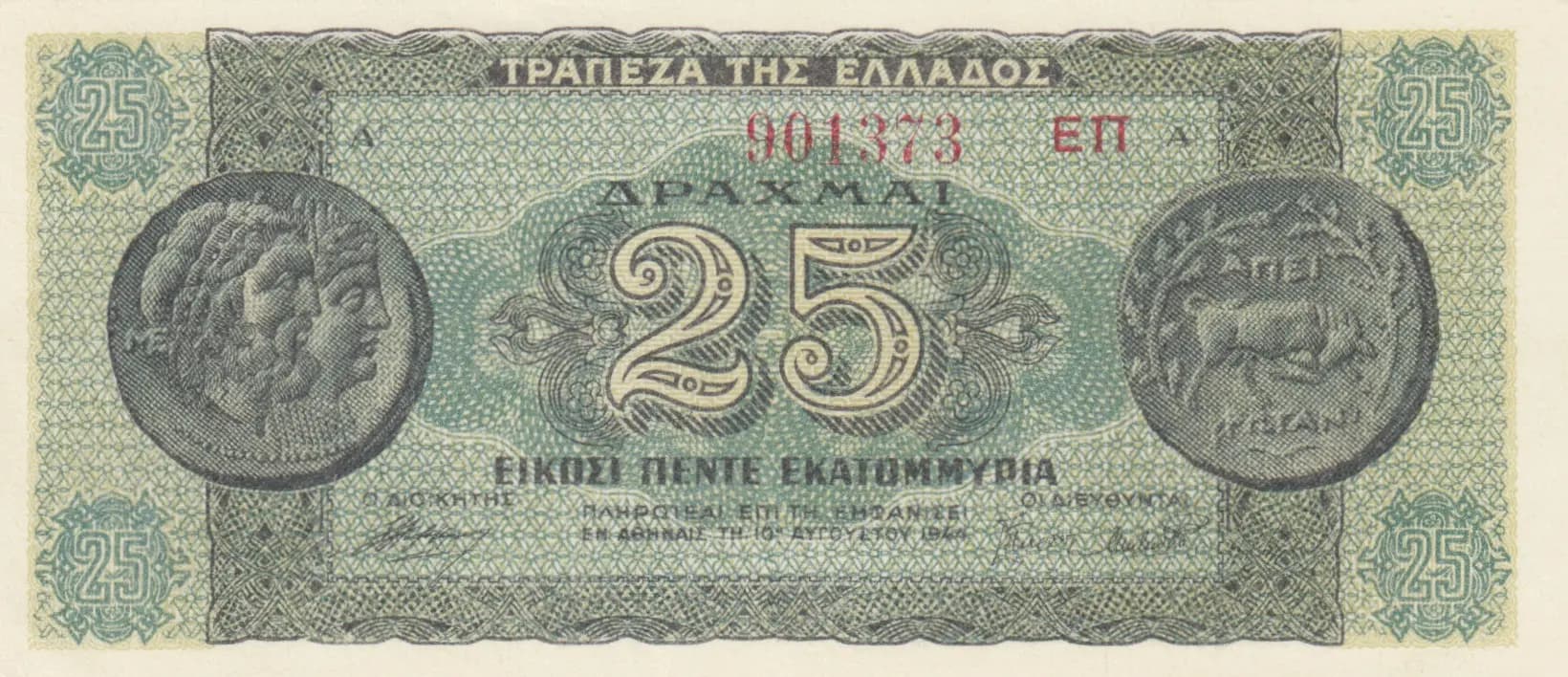
This is a striking example of the Greek 25,000,000 drachmai note from August 1944, issued during the tumultuous final year of World War II occupation. The note displays exceptional uncirculated condition with pristine surfaces showing no wear, creasing, or handling marks. The design showcases classical Greek aesthetics with ornate medallions bearing profile portraits, elaborate geometric patterns, and decorative numerals rendered in green and black on cream stock—characteristic of high-denomination emergency currency from this hyperinflationary period.
Common. While this is an extremely high-denomination note from a hyperinflationary episode, the 25,000,000 drachmai denomination from 1944 was issued in substantial quantities to meet the economy's desperate need for circulating currency. The Pick-130b(1) variety appears regularly in collector markets and typically trades at modest prices reflecting its common status. The AU condition grade represents a preserved example rather than an exceptional find, as many notes from this period survived uncirculated due to rapid currency reforms that followed.
The 25,000,000 drachmai denomination reflects the severe hyperinflation that gripped Greece during and immediately after World War II, particularly following the German occupation (1941-1944) and subsequent civil conflict. Issued by the Bank of Greece on 10 August 1944, this note represents the final months of Nazi occupation and the beginning of liberation, when the Greek economy was in complete collapse. The classical Greek imagery—evident in the portrait medallions and ornate design elements—reflects the issuer's attempt to maintain Greek cultural identity and institutional legitimacy during a period of national crisis, while the astronomical denomination underscores the currency's rapid devaluation.
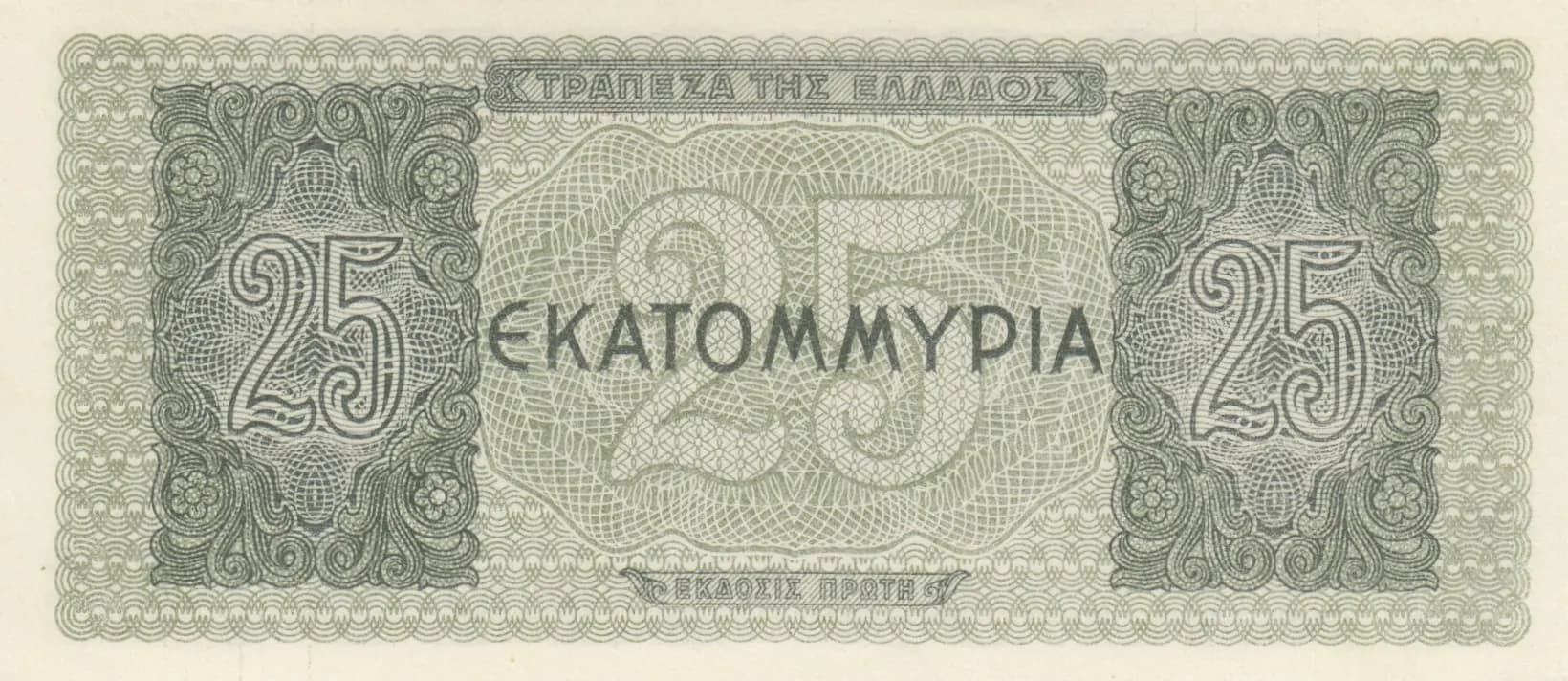
The front features a symmetrical composition with two classical male profile portraits in ornamental circular medallions—one facing right on the left side and one facing left on the right side, representing idealized classical Greek figures symbolic of the nation's ancient heritage. The center is dominated by an ornate numeral '25' with elaborate scrollwork embellishment, flanked by decorative crossed elements within an ornamental frame. The back presents an ornate border of repeating curved and floral motifs surrounding a central rectangular cartouche filled with complex geometric lattice patterns and crosshatch work. Large decorative numerals '25' appear as cornerstones on both left and right edges of the reverse. Throughout both sides, fine line engraving creates sophisticated geometric and floral patterns in green and black ink on a cream/beige substrate.
FRONT SIDE: 'ΤΡΑΠΕΖΑ ΤΗΣ ΕΛΛΑΔΟΣ' (Bank of Greece); 'ΕΙΚΟΣΙ ΠΕΝΤΕ ΕΚΑΤΟΜΜΥΡΙΑ' (Twenty-five million); 'ΕΠΙ ΑΛΦΑ' (Upon Alpha); Serial number: 901373. BACK SIDE: 'ΚΤΡΑΠΕΖΑ ΤΗΣ ΕΛΛΑΔΟΣ' (Bank of Greece); 'ΕΚΑΤΟΜΜΥΡΙΑ' (Million); 'ΕΚΔΟΣΙΣ ΠΡΩΤΗ' (First Edition/First Issue).
Intaglio (engraved) printing, employing fine line engraving techniques to create the security-enhancing crosshatch patterns, geometric fills, and portrait medallions. The complex background patterns and ornamental elements are characteristic of classical engraved banknote production. The Bank of Greece's primary security printer during this period was the National Printing Works (Εθνικό Τυπογραφείο); however, given the emergency nature of this emission and Greece's occupation status, printing may also have involved British or other Allied facilities supporting the Greek government-in-exile operations.
This note is identified as Pick-130b(1), representing the first edition ('ΕΚΔΟΣΙΣ ΠΡΩΤΗ' visible on reverse). The Pick designation 'b' distinguishes it from variant 'a' issues. The observed serial number (901373) and the 'ΑΛΦΑ' (Alpha) designation on the front represent standard cataloging markers for this variety. Known varieties of this denomination include differences in signatures, printer marks, and sequential edition designations; the 'ΠΡΩΤΗ' (First) edition marking on this example confirms its place in the initial release sequence of this denomination.