25 000 000 drachmai 1944
About This Note
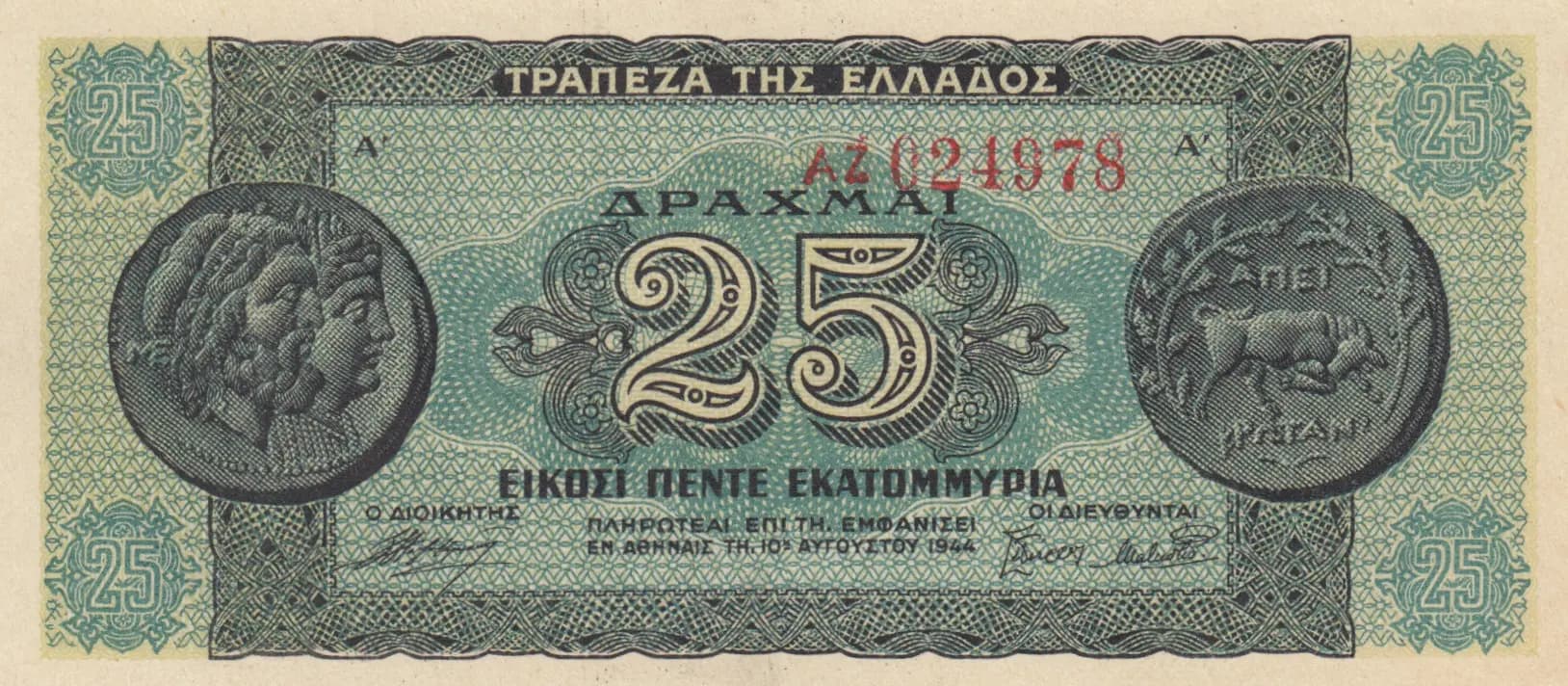
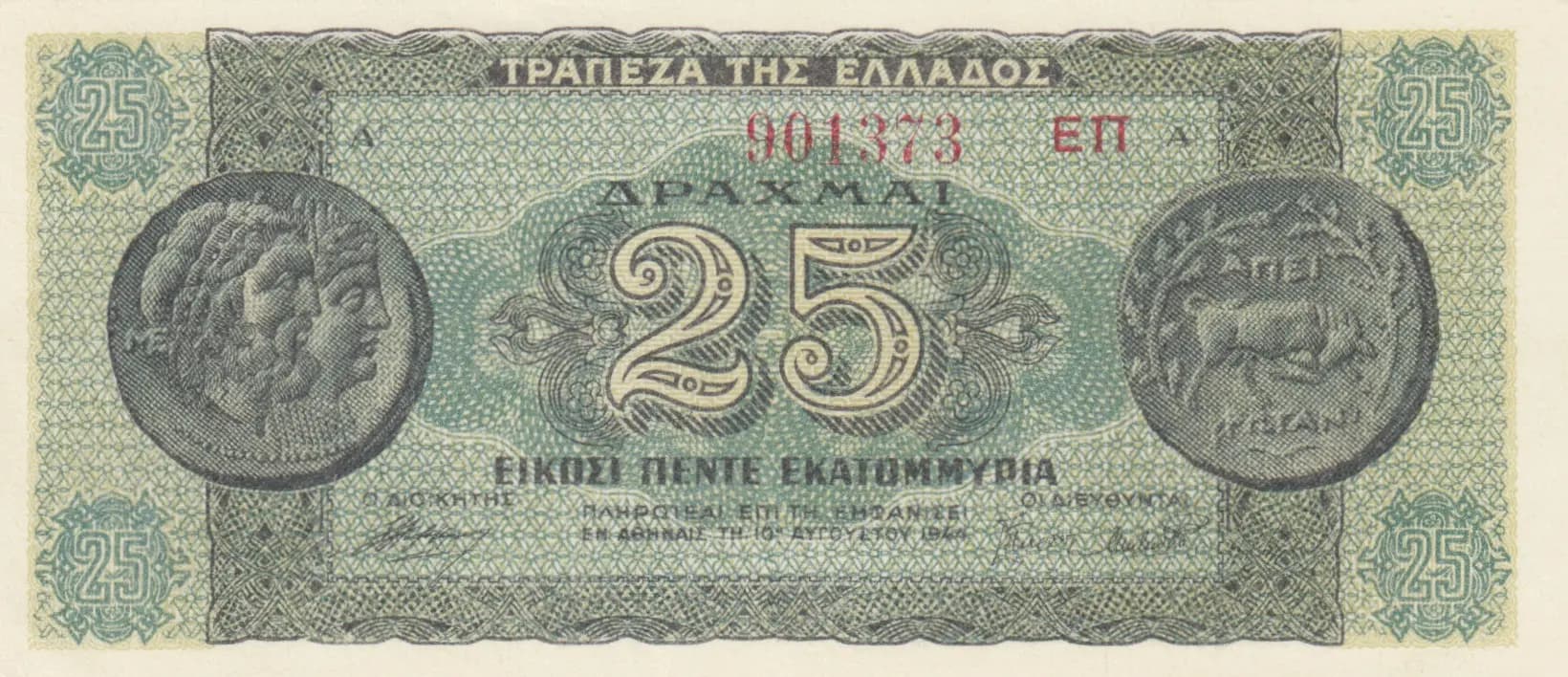
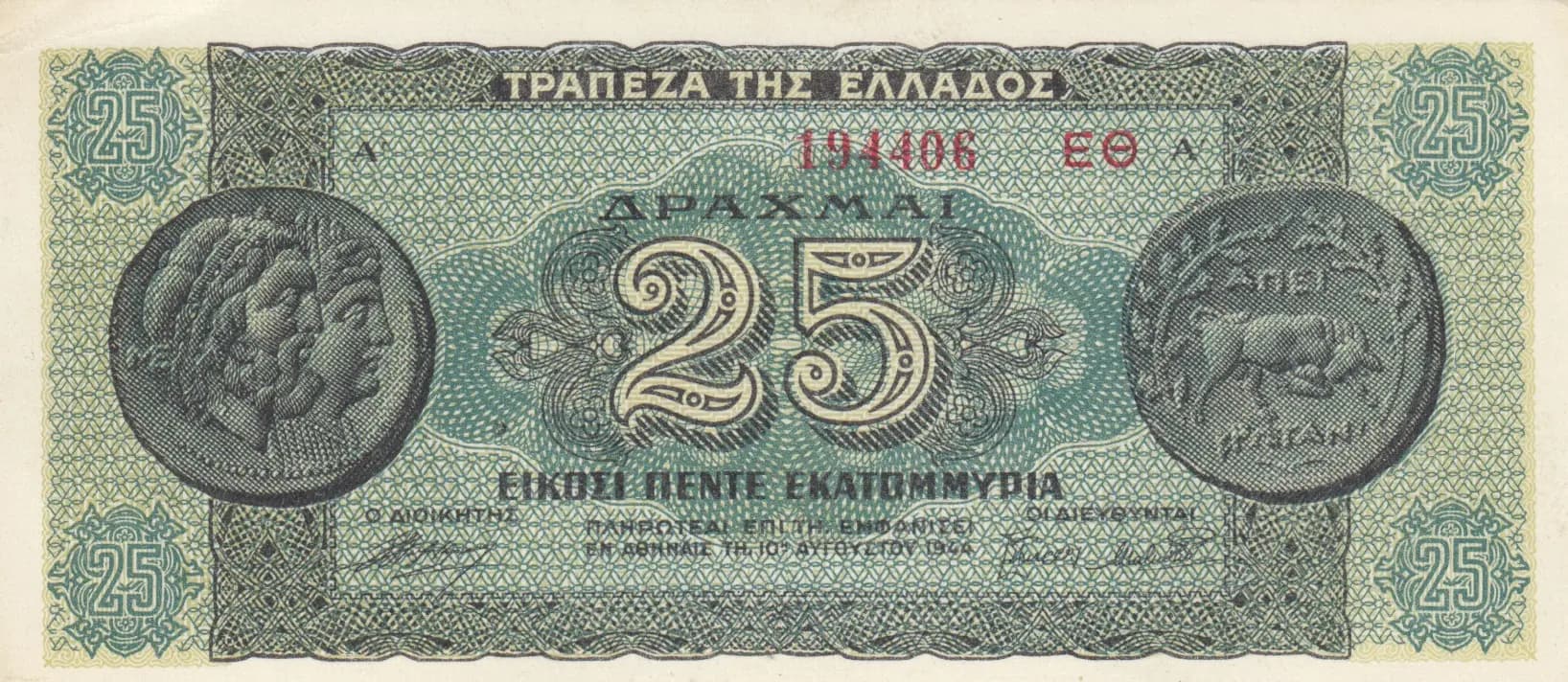
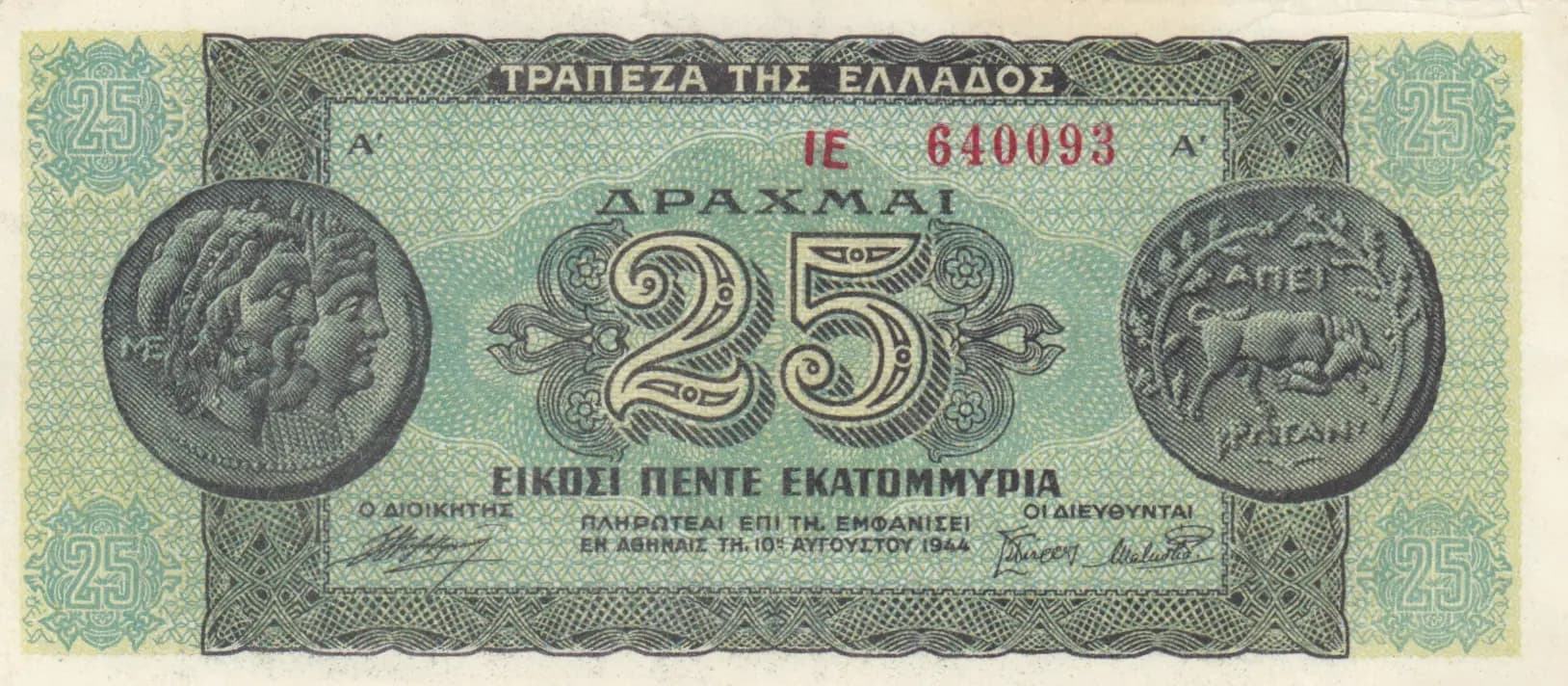
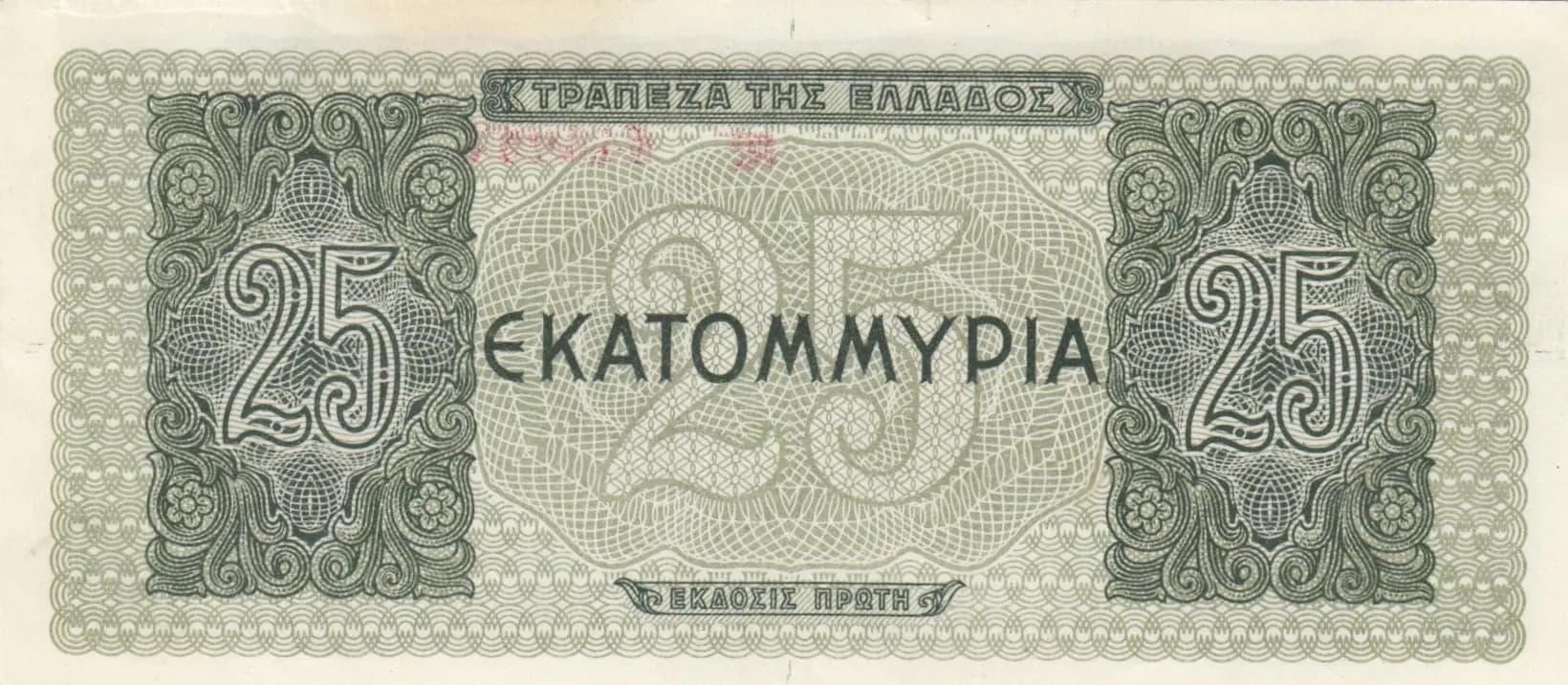
This is a Greek 25,000,000 drachmai banknote from August 10, 1944, issued by the Bank of Greece during the critical final months of World War II and the subsequent occupation period. The note is in AU (About Uncirculated) condition with sharp, clear printing throughout and no visible wear, creases, or damage. The front features an elegant light green/teal design with classical profile portraits in circular medallions and an ornamental denomination numeral, while the back displays intricate geometric patterns and crosshatching—characteristic of high-security banknote engraving from this era.
Common. While this note represents a high-denomination hyperinflation issue from a specific wartime date, Greek drachmai notes from the 1944 period were issued in substantial quantities to facilitate commerce during and immediately after the occupation. The Pick catalog designation P-130a(2) indicates this is a documented standard variety rather than a rare variant. Notes of this type remain available in the numismatic market at moderate prices, and the AU condition grade, while desirable, does not indicate exceptional scarcity. These notes are of significant historical interest but are not rare by numismatic standards.
This banknote was issued during one of Greece's most turbulent periods, just weeks before the German Wehrmacht withdrawal from Greece in October 1944 and the subsequent British-supported restoration of the Greek government. The use of classical Greek imagery—particularly the ancient coin-inspired portraits—reflects Greece's attempt to maintain cultural continuity and legitimacy during occupation and liberation. The astronomical denomination of 25 million drachmai reflects the severe hyperinflation that gripped Greece during the German occupation, with this note representing the currency's desperate attempt to maintain purchasing power.
The front of this note centers on a large ornamental numeral 25 in black with elaborate decorative flourishes, flanked by two circular medallions containing classical profile portraits of bearded male figures facing right—likely representing ancient Greek statesmen or philosophers, though not specifically identified in available sources. A light green/teal background with fine geometric patterns provides the base, with decorative borders featuring interlocking Greek-style patterns in the corners. The back features an even more elaborate design, dominated by a large central oval frame filled with precise crosshatching and mesh patterns—a hallmark of anti-counterfeiting engraving—with large denomination numerals 25 positioned in the bottom corners. The entire design emphasizes classical Greek aesthetics, reflecting the note's intent to project stability and historical legitimacy during a period of severe currency crisis.
FRONT: 'ΤΡΑΠΕΖΑ ΤΗΣ ΕΛΛΑΔΟΣ' (Bank of Greece) — decorative band at top; 'ΕΙΚΟΣΙ ΠΕΝΤΕ ΕΚΑΤΟΜΜΥΡΙΑ' (Twenty-five million); 'ΔΡΑΧΜΑΙ' (Drachmai); 'ΕΚ ΑΘΗΝΑΙΣ ΤΗ.10ς ΑΥΓΟΥΣΤΟΥ.1944' (In Athens on the 10th of August 1944); 'Ο ΑΙΔΙΚΗΤΗΣ' and 'ΟΙ ΑΙΕΥΘΥΝΤΑΙ' (The Director / The Directors — signature lines); Serial number 'ΙΕ 640093'. BACK: 'ΤΡΑΠΕΖΑ ΤΗΣ ΕΛΛΑΔΟΣ' (Bank of Greece); 'ΕΚΑΤΟΜΜΥΡΙΑ' (Million); 'ΕΚΔΟΣΙΣ ΠΡΩΤΗ 5' (First Issue 5).
Steel engraving (intaglio printing), the standard security printing method for banknotes of this era. The extremely fine line work, detailed crosshatching, and precision geometric patterns visible throughout both sides are characteristic of high-quality engraved banknote production. The printer for Bank of Greece issues of this period was typically an established European security printer, though the specific printer for this Pick-130a(2) variety is not definitively documented in the provided catalog data. The sharp, clear impression and absence of printing defects in the observed AU specimen indicate production by skilled craftsmen with well-maintained engraving plates.
This specimen is identified as Pick-130a(2), indicating it is the second documented variety of the 25,000,000 drachmai note from August 10, 1944. The serial number prefix 'ΙΕ' and the 'ΕΚΔΟΣΙΣ ΠΡΩΤΗ 5' (First Issue 5) designation on the reverse are consistent with this Pick classification. Variations in this series typically include different signature combinations, serial number prefixes, and potentially different printing runs. The presence of the 'First Issue 5' notation suggests there may be multiple printing runs or varieties of this denomination from the same date.