200 000 000 000 drachmai 1944
About This Note
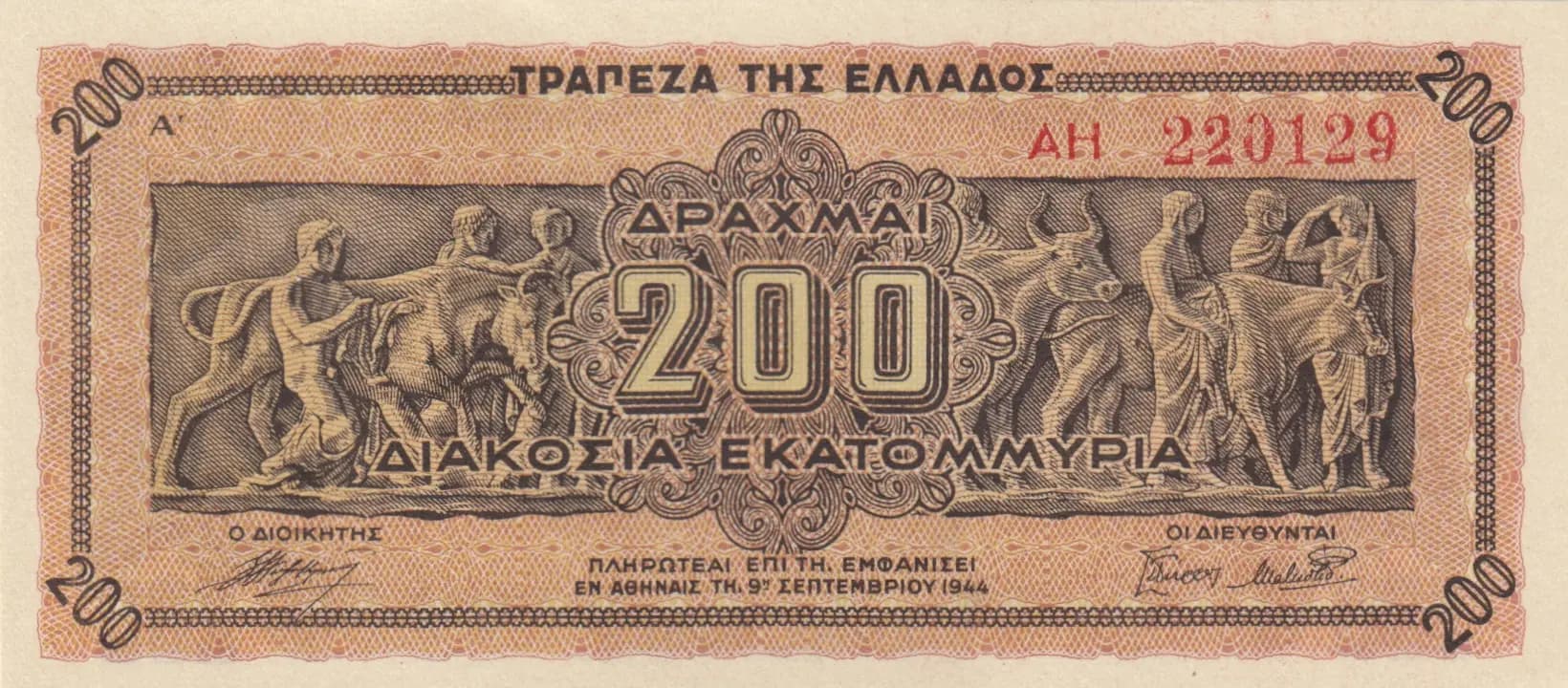
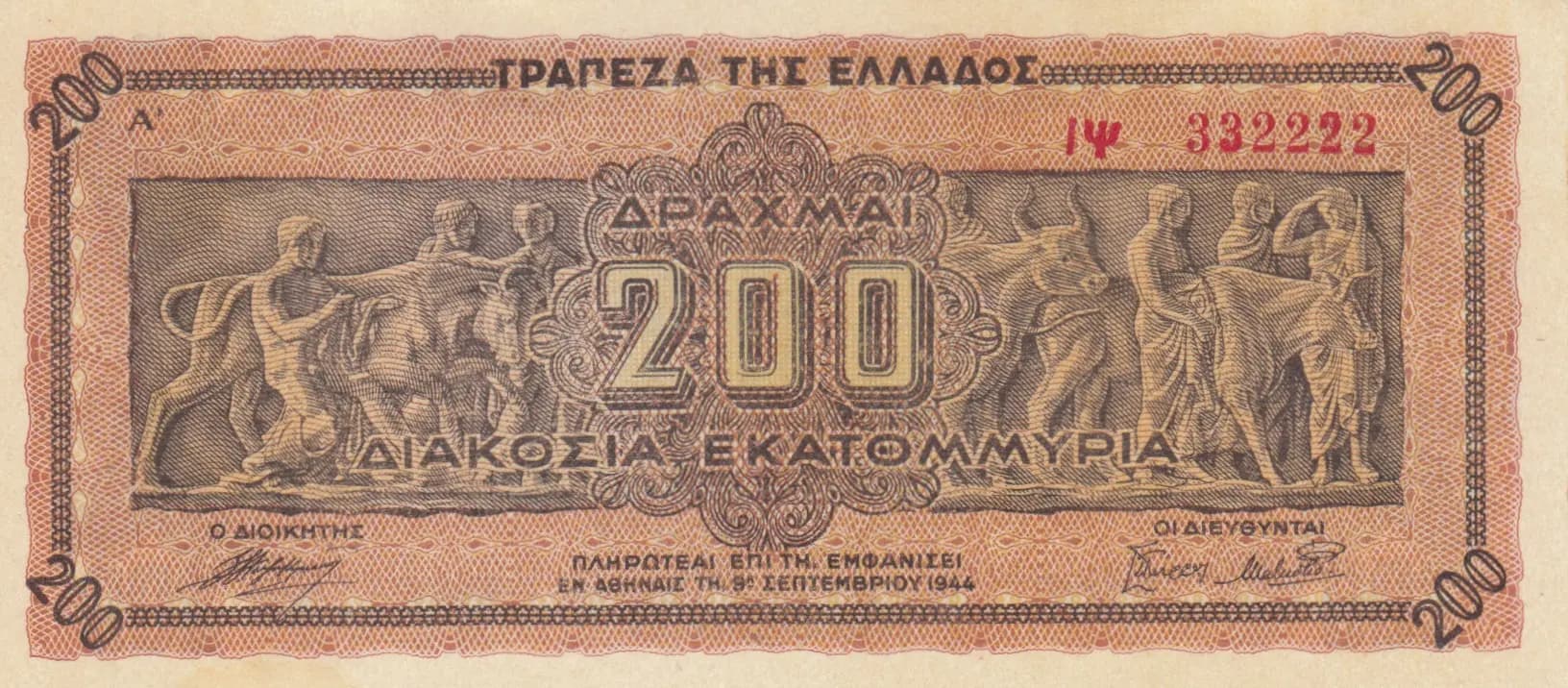
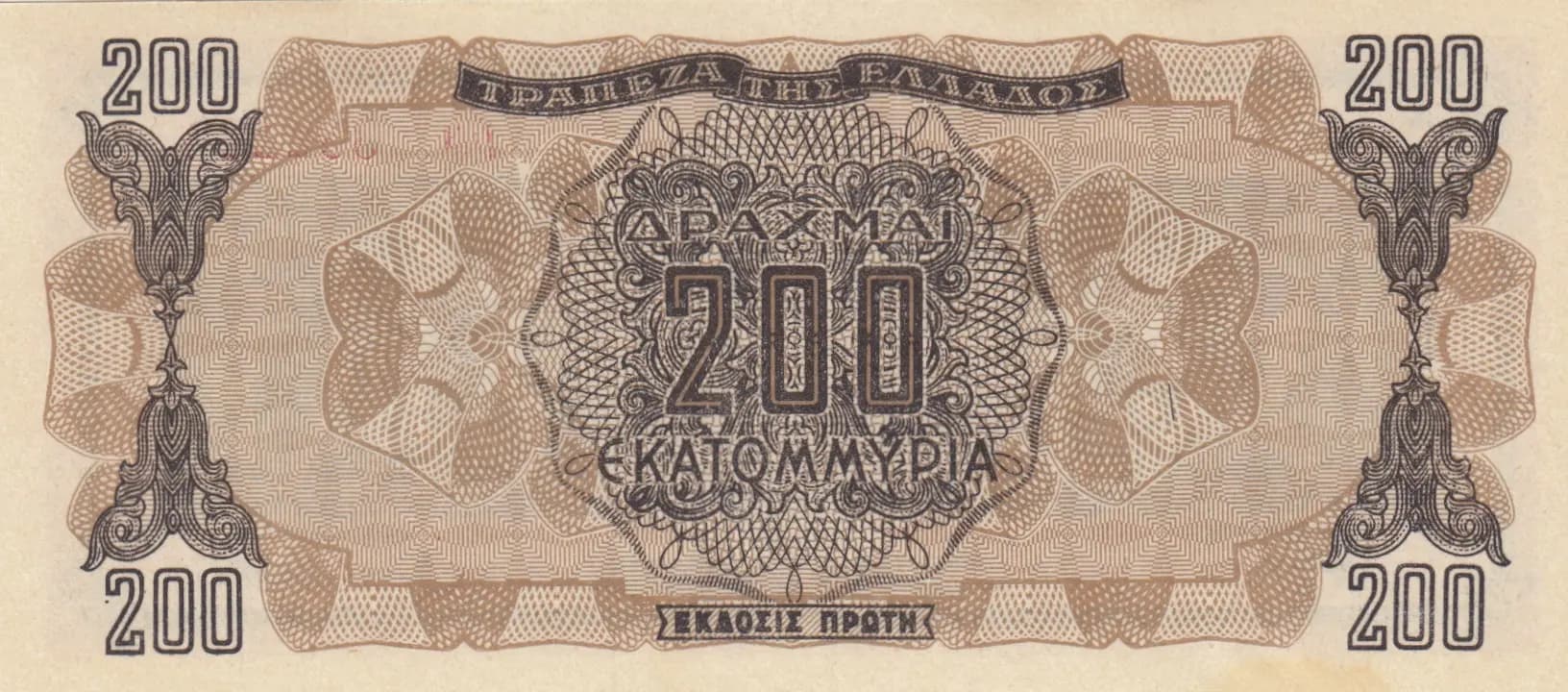
This 200,000,000 drachmai note from September 1944 represents one of Greece's extraordinary hyperinflation-era denominations, issued by the Bank of Greece during the Nazi occupation's final months. The banknote is in AU condition with crisp, well-defined intaglio printing throughout, featuring classical allegorical figures and ornate Byzantine-style decorative elements in reddish-orange and tan tones. The exceptional preservation and fine engraving work make this a compelling example of wartime Greek currency, capturing a critical moment in the nation's monetary history.
common. The 200,000,000 drachmai denomination, while extraordinary in face value, was issued during a hyperinflation period when such high denominations were printed in substantial quantities to meet immediate circulation needs. The note's AU condition and lack of specific scarcity indicators (no mention of short print runs, recall, or rarity in standard catalogs) suggest this is a readily available example of this emergency issue among collectors of Greek hyperinflation currency.
Issued on September 9, 1944, just before Greece's liberation from Nazi occupation, this note exemplifies the severe hyperinflation that gripped Greece during the occupation period. The Bank of Greece (Trapeza tis Ellados) issued increasingly higher denominations as the drachmai's value collapsed due to excessive wartime printing and economic devastation. The classical Greek iconography—featuring allegorical figures and the national eagle—reasserted Greek cultural and national identity during the final weeks of occupation, while the 'First Edition' designation on the reverse reflects the emergency nature of these high-denomination issues.
The front features a centrally positioned allegorical composition with four classical figures—female and male personifications—flanking the large denomination numeral 200, representing civic virtues or national ideals appropriate to the period. These figures are rendered in classical relief style with ornate scrollwork and neoclassical ornamental frames. The Greek national coat of arms with the eagle is positioned at the top center, reinforcing state authority. The back displays a more symmetrical, geometric design with the denomination enclosed in an elaborate ornamental shield or crest, flanked by double-headed eagle motifs in Byzantine-influenced corner ornaments. The overall design language emphasizes Greece's classical heritage and continuity despite the wartime emergency context.
Front side: 'ΤΡΑΠΕΖΑ ΤΗΣ ΕΛΛΑΔΟΣ' (Bank of Greece), 'ΔΡΑΧΜΑΙ ΕΚΑΤΟΜΜΥΡΙΑ' (Drachmai Million), '200' (denomination), 'Α΄ 932222' (serial number), 'Ο ΔΙΟΙΚΗΤΗΣ' (The Director), 'Ο ΤΑΜΙΑΣ' (The Cashier), 'ΠΑΡΑΤΗΡΕΙ ΕΠΙ ΤΗ ΕΜΦΑΝΙΣΕΙ ΕΠΙ ΑΘΗΝΑΙΣ ΣΕΠΤΕΜΒΡΙΟΥ (944)' (Observed upon presentation in Athens September 1944). Back side: 'ΤΡΑΠΕΖΑ ΤΗΣ ΕΛΛΑΔΟΣ' (Bank of Greece), 'ΔΡΑΧΜΑΙ ΕΚΑΤΟΜΜΥΡΙΑ' (Drachmai Million), '200' (denomination, appears in all four corners), 'ΕΚΔΟΣΙΣ ΠΡΩΤΗ' (First Edition).
Intaglio (engraved) printing, evidenced by the fine line work, complex geometric patterns, and detailed relief effects visible throughout both sides. The crisp definition of the allegorical figures, ornamental scrollwork, and fine-line security patterns indicate high-quality copperplate engraving. The printer for Bank of Greece notes during this period was typically a Greek security printer or European engraver contracted by the central bank; specific attribution would require additional research on Pick-131a(2) production records.
This note is catalogued as Pick-131a(2), indicating it is the second identified variety of the 131a type. The 'First Edition' (ΕΚΔΟΣΙΣ ΠΡΩΤΗ) designation on the reverse is notable. The serial number format 'Α΄ 932222' with the Greek letter alpha prefix should be documented. Varieties of this high-denomination issue may be distinguished by signature blocks (Director/Cashier combinations), serial number prefix letters, and printing characteristics; the specific variety classification (2) suggests there are at least two distinct printings or signature variations of this denomination.