200 000 000 000 drachmai 1944
About This Note
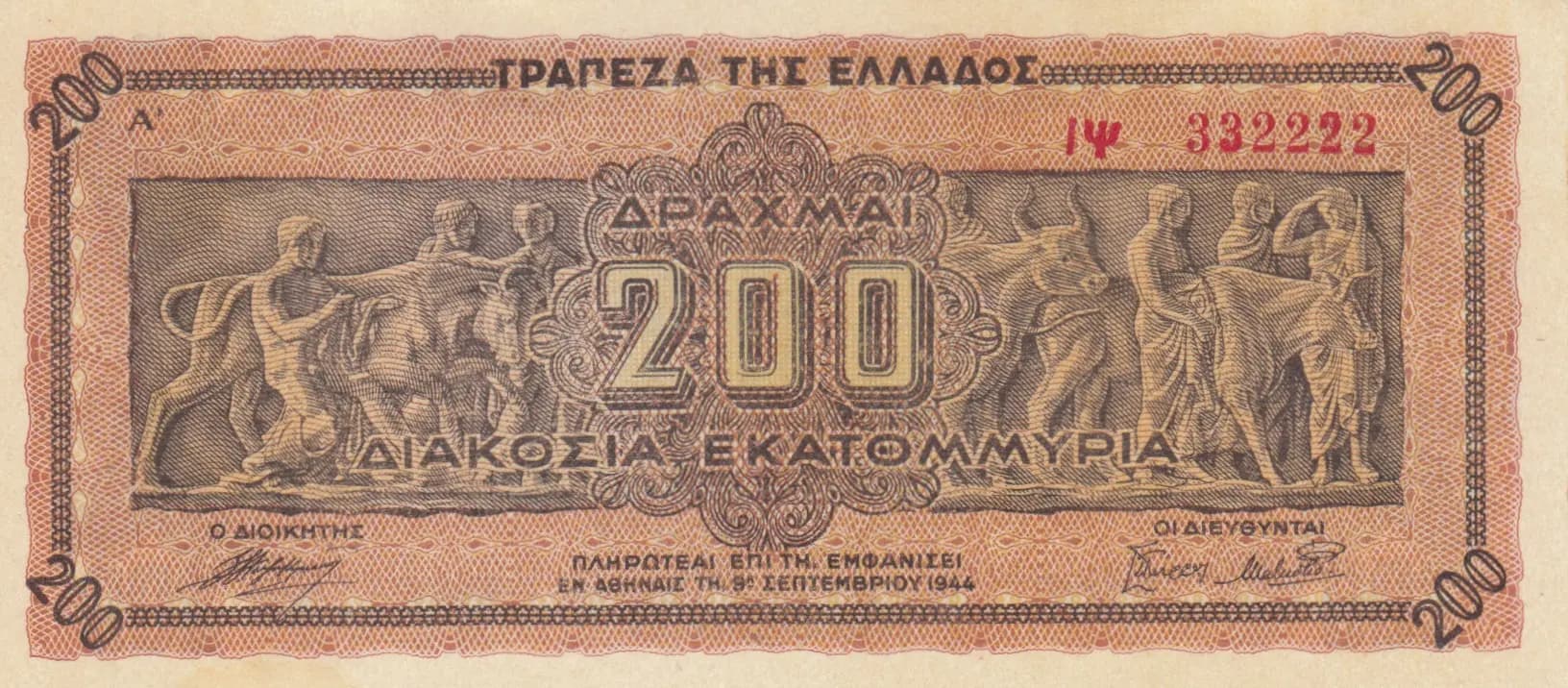
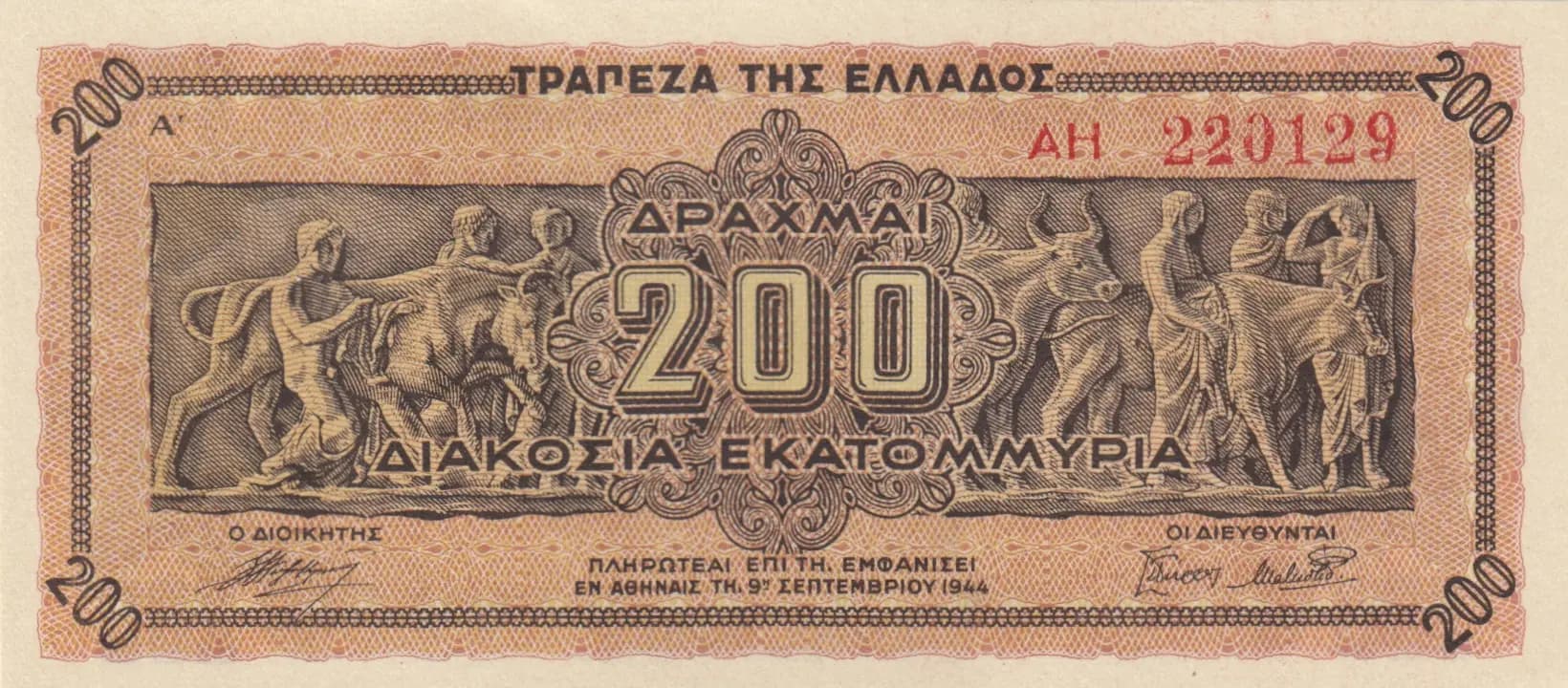
This is an exceptionally well-preserved example of the Greek 200 Million Drachmai emergency currency issued by the Bank of Greece on September 9, 1944, during the final stages of German occupation and the transition to liberation. The note displays the characteristic peach/salmon front and cream back coloration of this hyperinflationary series, with intricate classical allegorical engravings and ornate Greek decorative motifs throughout. In uncirculated condition with no visible wear, creases, or foxing, this note represents an important artifact of Greece's tumultuous World War II period and the subsequent hyperinflation crisis.
Common. This note was issued in substantial quantities as emergency currency during the hyperinflation period of 1944. While all banknotes from the World War II occupation and immediate liberation period are historically significant, this specific denomination and date were printed in high volumes and survive in reasonable numbers. The uncirculated condition is not exceptionally uncommon for these notes, as many were withdrawn quickly during the subsequent currency reform period and have been preserved in collections. No major scarcity factors are documented for Pick 131a(1).
Issued just as German forces were withdrawing from Greece and the country faced severe economic dislocation, this note is part of the final wave of emergency drachmai currency that reflected the catastrophic inflation of the occupation period. The classical Greek imagery—featuring allegorical figures and ornamental drachma symbols—represents an intentional appeal to Hellenic heritage and national identity during a period of profound national trauma. By late 1944, denominations had reached astronomical levels (200 million drachmai), rendering such notes nearly worthless within months as hyperinflation continued until currency reform in 1953.
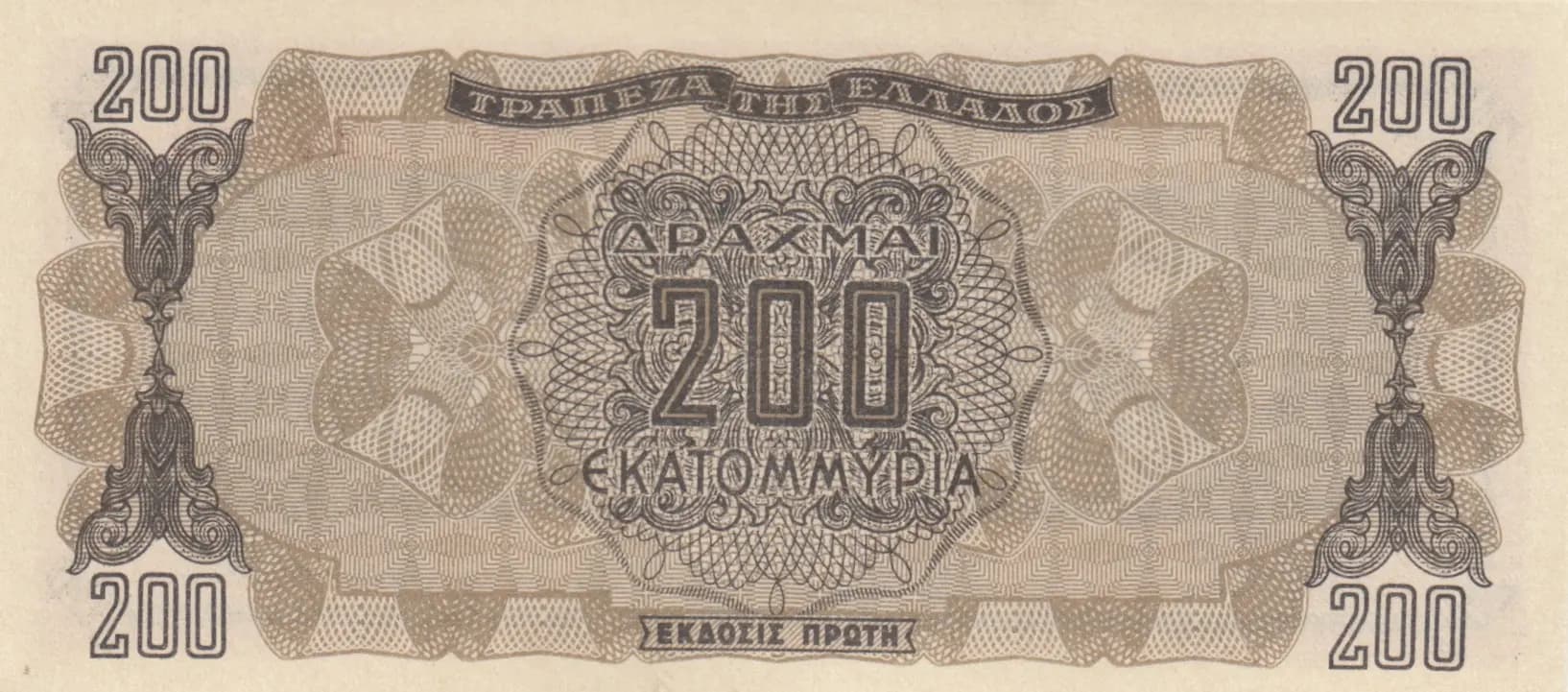
The obverse features a classical allegorical composition in the center depicting winged figures and robed individuals in the style of classical Greek relief art, flanked by ornamental drachma symbols and intricate scrollwork. The composition emphasizes themes of victory, freedom, and national restoration appropriate to the moment of liberation. The reverse abandons portraiture in favor of purely ornamental design, with the large denomination '200' as the focal point surrounded by elaborate geometric and botanical patterns characteristic of Greek classical design vocabulary. The salmon-peach border on the front and cream background throughout provide visual distinction in a series marked by rapidly escalating denominations. Serial numbers appear in the lower left of the obverse (example: ΔΗ 2220129).
FRONT: 'ΤΡΑΠΕΖΑ ΤΗΣ ΕΛΛΑΔΟΣ' (Bank of Greece) at top center; '200' in large numerals in all four corners; 'ΔΡΑΧΜΑΙ' (Drachmai) and 'ΔΙΑΚΟΣΙΑ ΕΚΑΤΟΜΜΥΡΙΑ' (Two Hundred Million) indicating denomination; 'ΔΗ 2220129' (Serial number); 'ΠΑΛΡΟΤΕΑΙ ΕΠΙ ΤΗ. ΕΜΦΑΝΙΣΕΙ ΕΝ ΑΘΗΝΑΙΕ ΤΗ. 9η ΣΕΠΤΕΜΒΡΙΟΥ 1944' (Issued in Athens on September 9, 1944); 'Ο ΔΙΟΙΚΗΤΗΣ' (The Governor) and 'ΟΙ ΔΙΕΥΘΥΝΤΑΙ' (The Directors) for signature lines. BACK: 'ΤΡΑΠΕΖΑ ΤΗΣ ΕΛΛΑΔΟΣ' (Bank of Greece) at top; '200' in large numerals in all four corners; 'ΔΡΑΧΜΑΙ' and 'ΕΚΑΤΟΜΜΥΡΙΑ' (Million); 'ΕΚΑΤΟΣΗΣ ΠΡΩΤΗΣ' (First Edition).
Intaglio engraving on paper, executed with fine line work and detailed crosshatching typical of high-security banknote production of the 1940s era. The Bank of Greece employed experienced engravers to create the complex vignettes and ornamental borders, with multiple denominational numerals and intricate geometric patterns to deter counterfeiting. The precision of the engraved lines and the depth of impression visible in well-preserved examples like this one indicate professional security printing standards maintained despite wartime and immediate post-war conditions.
This note is identified as Pick 131a(1), indicating the first issue/printing of this variety. The 'a' designation typically distinguishes it from subsequent printings or signature varieties. The serial number prefix 'ΔΗ' and the specific serial number 2220129 visible on this example represent standard Bank of Greece numbering from this period. Collectors should note that signature varieties exist on Greek hyperinflation notes from this era, with different governors and directors authorizing different batches; the signature lines reading 'Ο ΔΙΟΙΚΗΤΗΣ' and 'ΟΙ ΔΙΕΥΘΥΝΤΑΙ' would identify the specific authorization variant.