20 drachmai 1944
Market Prices
29 salesAbout This Note
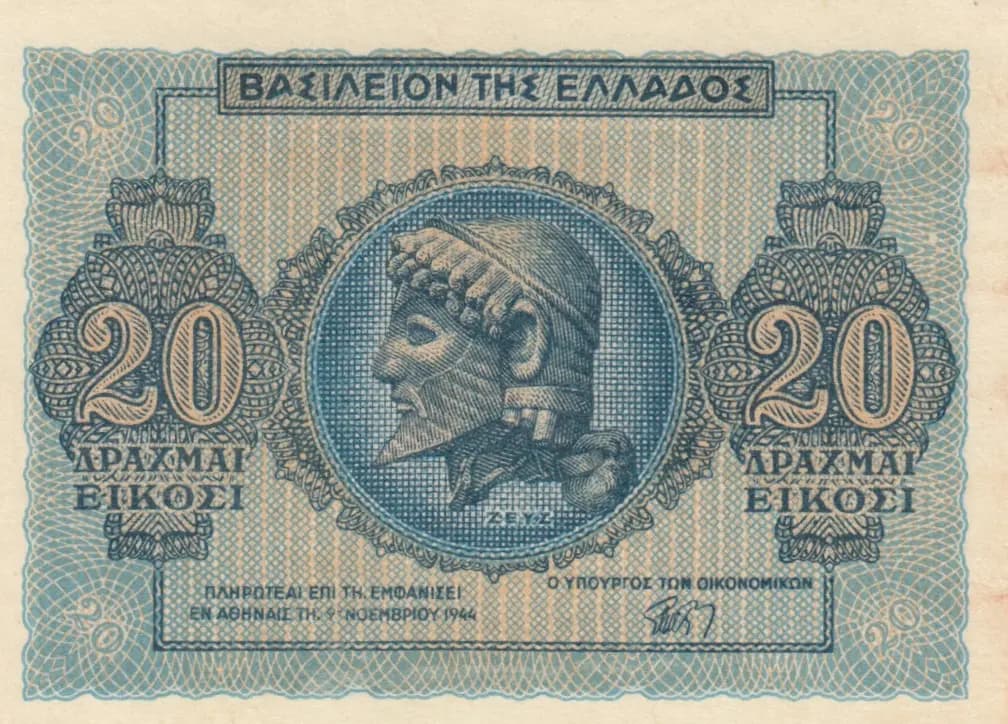
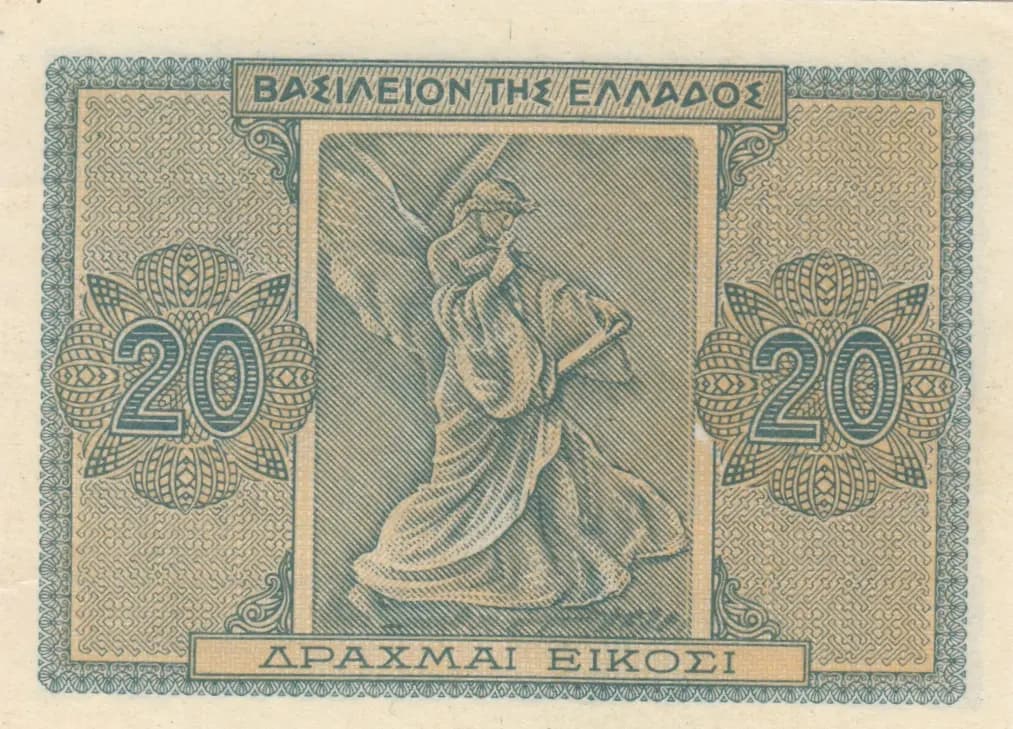
This is an uncirculated 1944 Greek 20 Drachmai note (Pick 323) issued during a pivotal moment in Greek history—the German occupation's final months. The note features exceptional line engraving with Zeus depicted in profile on the obverse and a classical allegorical female figure (likely representing Glory or Liberty) on the reverse, both rendered in fine detail against geometric patterned backgrounds. In UNC condition, this note displays pristine surfaces with no wear, creases, or foxing, representing the finest preservation state for this wartime issue.
Common. While this is a wartime issue from 1944, eBay auction data demonstrates consistent market availability with regular sales across all condition grades from heavily circulated to high-grade specimens (PMG 65-66 examples regularly appear). Catalog values indicate UNC specimens trade in the $9-12 range, with even premium PMG 65-66 grades selling in the $30-70 range historically. Print runs for Greek drachmai denominations in 1944 were substantial, and this note has not been recalled or withdrawn from circulation in numbers that would create scarcity. The frequency of available examples and modest price points confirm this as a common note.
Issued on November 9, 1944, this banknote marks Greece's transition following the German occupation of World War II. The classical imagery—Zeus and an allegorical female figure—reflects Greece's cultural identity and classical heritage at a moment when the nation was reasserting sovereignty. The November 1944 date is particularly significant as it comes immediately after the liberation of Athens (October 1944) and the restoration of the Greek monarchy under King George II, making this an important symbol of national reconstruction.
The obverse features a classical portrait medallion of Zeus in left-facing profile, rendered in fine line engraving and enclosed within an ornate circular frame with elaborate decorative border work. The denomination '20' appears in ornate floral cartouches on both sides of the portrait. The reverse depicts a classical allegorical female figure (representing Glory of Psara, according to external references) in flowing robes, holding a torch or staff, symbolizing Greek cultural and national revival. Both sides employ a repeating geometric pattern background in tan/cream tones with blue-green and dark navy ink. The design language is decidedly classical, reflecting Greece's historical heritage during a period of national recovery.
FRONT SIDE: 'ΒΑΣΙΛΕΙΟΝ ΤΗΣ ΕΛΛΑΔΟΣ' (Kingdom of Greece); '20' and 'ΔΡΑΧΜΑΙ ΕΙΚΟΣΙ' (Twenty Drachmai); 'ΠΑΡΑΤΕΘΕΙ ΕΠΙ ΤΗ ΕΜΦΑΝΙΣΕΙ ΣΑ ΑΘΗΝΑΙ ΤΗ 9 ΝΟΕΜΒΡΙΟΥ 1944' (Issued/Released at Athens on November 9, 1944); 'Ο ΥΠΟΥΡΓΟΣ ΤΟΝ ΟΙΚΟΝΟΜΙΚΩΝ' (The Minister of Finance). BACK SIDE: 'ΒΑΣΙΛΕΙΟΝ ΤΗΣ ΕΛΛΑΔΟΣ' (Kingdom of Greece); '20' and 'ΔΡΑΧΜΑΙ ΕΙΚΟΣΙ' (Twenty Drachmai).
Intaglio printing (line engraving), characteristic of banknote production of the 1940s era. The fine detail visible in the portraiture, ornamental frames, and geometric patterns, combined with the sharp line work throughout, confirms professional banknote engraving. The note was printed by Bank of Greece security printing facilities; specific printer information for P-323 variants is not definitively documented in standard references.
This is the base Pick 323 issue dated 9 November 1944. PMG population data indicates a single cataloged variant for P-323. No notable overprints, security overprints, or significant signature varieties have been documented for this particular Pick number. The specimen analyzed matches the standard issue specifications with no distinguishing features that would classify it as a distinct sub-variety.