2 000 000 000 drachmai 1944
Market Prices
16 salesAbout This Note
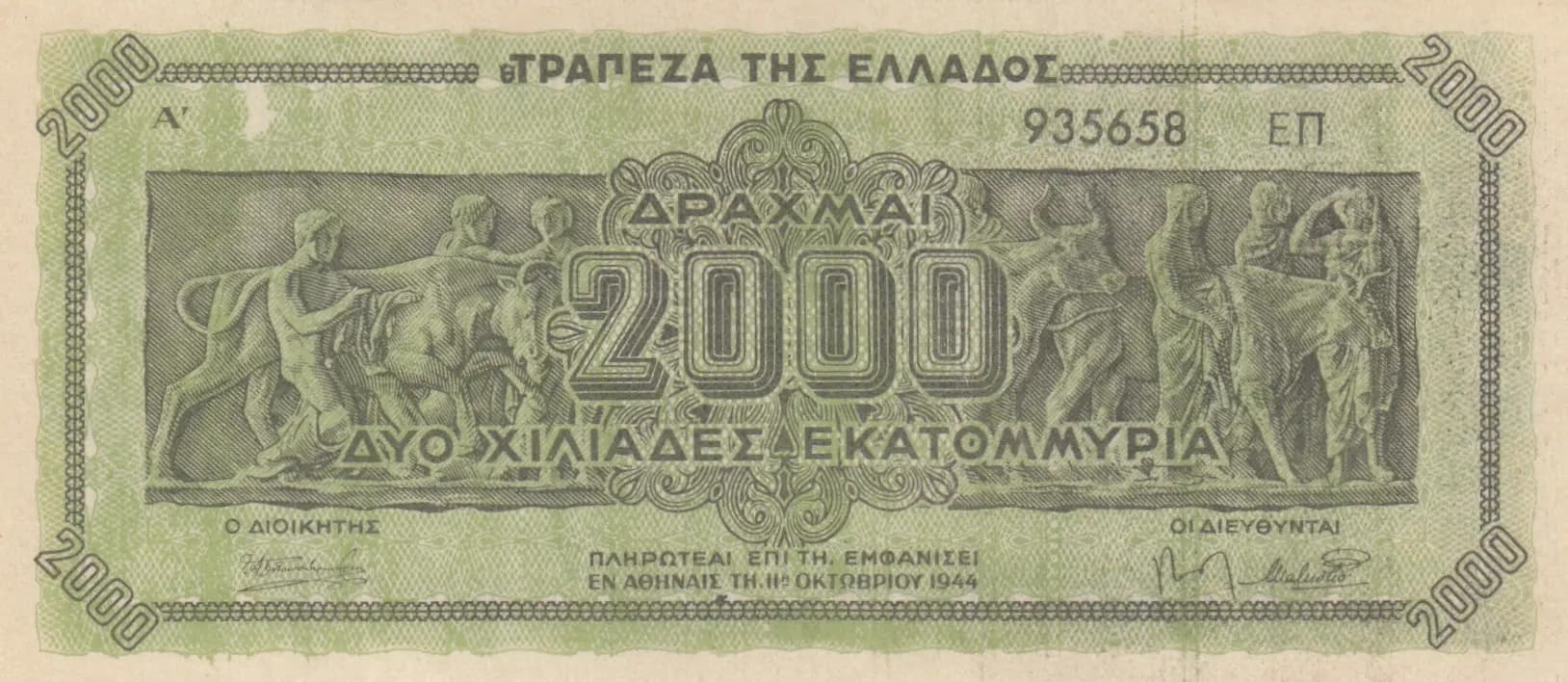
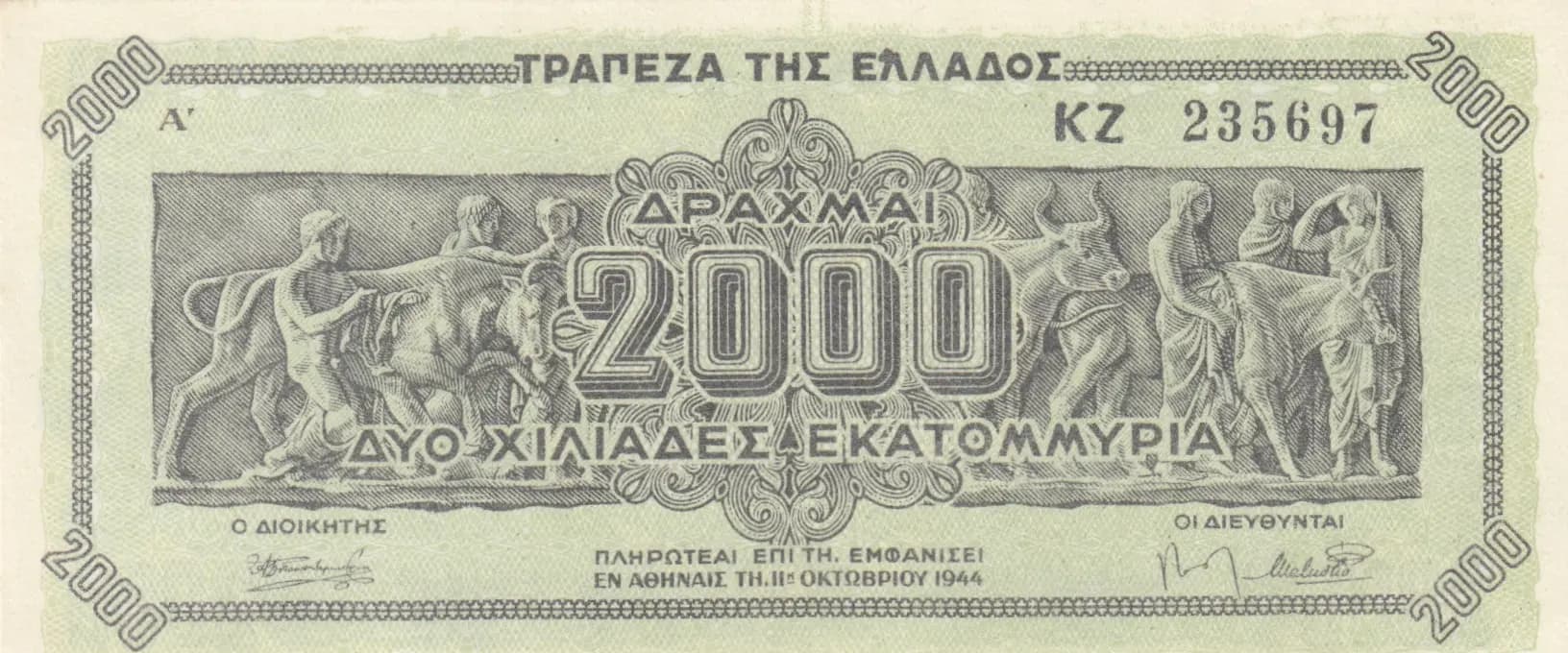
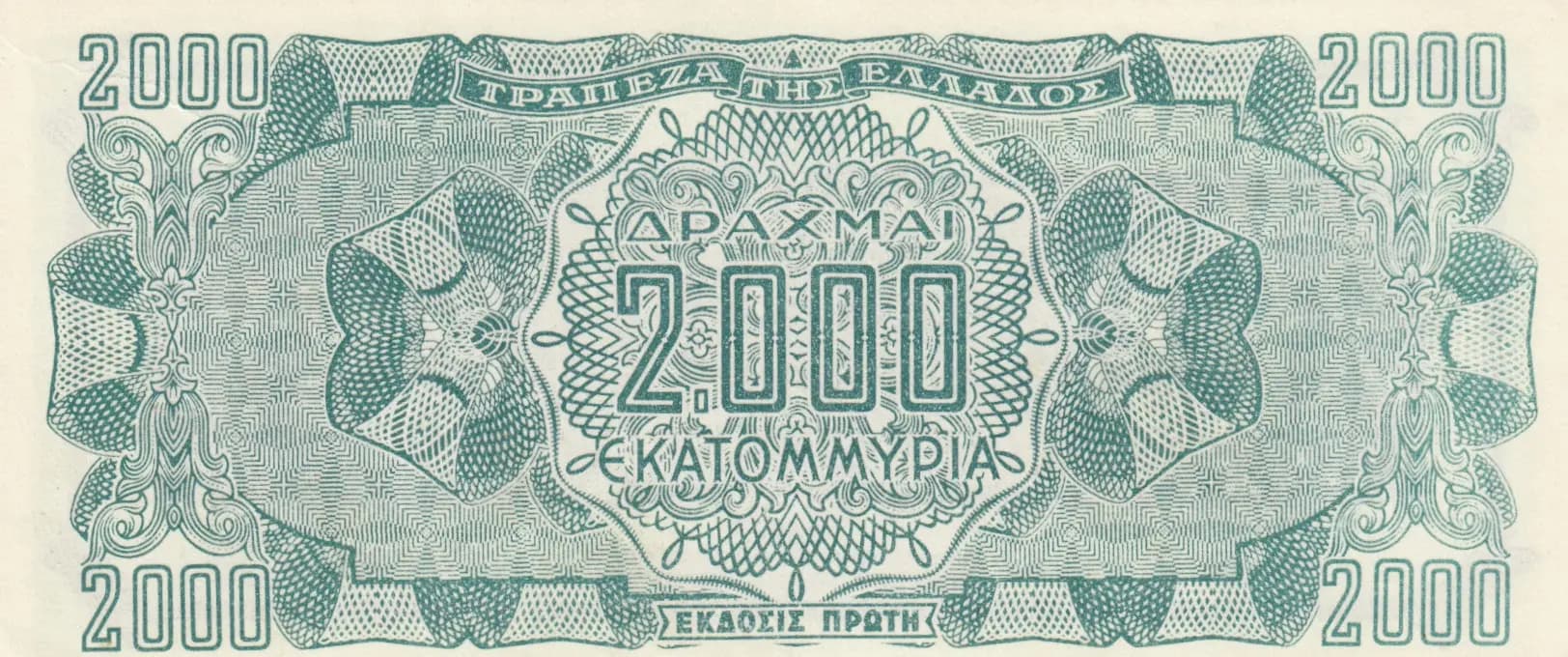
This is a Greek 2,000,000,000 drachmai note from October 1944, issued during the German occupation and liberation period of World War II. The note exhibits uncirculated condition with crisp, clean paper and vibrant intaglio printing in dark gray-green on the obverse and teal on the reverse. The classical allegorical designs and ornate baroque-style ornamentation reflect Greece's cultural heritage, making this an important historical and numismatic artifact from a critical period in Greek history.
Common. Despite the historical significance and dramatic denomination, this note remains common in the collector market. eBay transaction data shows consistent sales activity with prices ranging from $0.39 to $30.01 (PMG 63), with most UNC and VF examples selling for under $10. The 2016 catalog value of $3 for UNC confirms modest collector demand. The large print runs typical of WWII-era emergency currency and the note's survival in multiple high-grade examples indicate no supply scarcity. The hyperinflation context, while historically important, does not confer rarity status.
This hyperinflation-era banknote was issued on October 11, 1944, as Greece was being liberated from Axis occupation and faced severe monetary instability. The denominations of this magnitude (2 billion drachmai) underscore the economic devastation of WWII and the occupation period, during which the drachma experienced catastrophic devaluation. The classical Greek imagery—featuring allegorical figures and Parthenon-related iconography—served as a patriotic reassertion of Greek cultural identity at a moment of national recovery.
The obverse features a classical allegorical composition with four draped figures (two male, two female) positioned on either side of an ornate central medallion. These classical figures represent virtues or concepts important to Greek national identity. The central panel is crowned with a baroque-style ornamental motif and framed by Greek key pattern borders and scrollwork. The reverse displays a symmetrical design centered on a large medallion containing the denomination, decorated with intricate geometric interlocking patterns, cross-hatching, and maze-like designs throughout the background. Floral acanthus leaf motifs and additional Greek key patterns occupy the corners. The pale greenish-cream background contrasts with the rich intaglio printing, creating a sophisticated and security-conscious design typical of high-denomination emergency currency.
FRONT: 'ΤΡΑΠΕΖΑ ΤΗΣ ΕΛΛΑΔΟΣ' (Bank of Greece) | 'ΔΥΟ-ΧΙΛΙΑΔΕΣ ΕΚΑΤΟΜΜΥΡΙΑ' (Two Billion) | 'ΑΡΧXMAI' (Drachmai) | 'Ο ΔΙΟΙΚΗΤΗΣ' (The Governor) | 'ΟΙ ΔΙΕΥΘΥΝΤAI' (The Directors) | 'ΠΛΗΡΩΤΕΑΙ ΕΝ ΑΘΗΝΑΙ ΕΝ ΠΑΣ Η ΕΜΠΑΝΙΕΙΕΙ' (Payable in Athens at any bank) | 'ΕΝ ΑΘΗΝΑΙ ΤΗ ΙΙ.ΙΙ. ΟΚΤΟΒΡΙΟΥ 1944' (In Athens on October 11, 1944) | Serial Number: 'KZ 235697' | Corner denominations: '2000' (Two Thousand). BACK: 'ΤΡΑΠΕΖΑ ΤΗΣ ΕΛΛΑΔΟΣ' (Bank of Greece) | 'ΑΡΧXMAI' (Drachmai) | 'ΕΚΑΤΟΣΣ ΠΡΩΤΗ' (First Edition) | Corner denominations: '2000' (all four corners).
Intaglio printing (engraved steel plate printing) on both sides, characteristic of Bank of Greece banknotes from this period. The fine linear details, complex ornamental patterns, cross-hatching, and maze-like background designs visible in both the visual analysis and security features confirm traditional engraved intaglio production. The precision of the allegorical figures and geometric patterns demonstrates the use of skilled engravers and high-quality steel dies. This was the standard security printing technique employed by the Bank of Greece during the 1940s.
The observed example bears serial number prefix 'KZ' with number 235697, representing one of multiple serial varieties produced during the 1944 issue. Pick P-133a designates this as the primary type. Varieties for this issue are primarily identified by serial number prefix variations rather than design changes. The notation 'ΕΚΑΤΟΣΣ ΠΡΩΤΗ' (First Edition) on the reverse confirms this is from the initial printing. No overprints, security device additions, or design modifications are evident in this example compared to the standard P-133a specification.