1000 drachmai 1935
Market Prices
51 salesAbout This Note
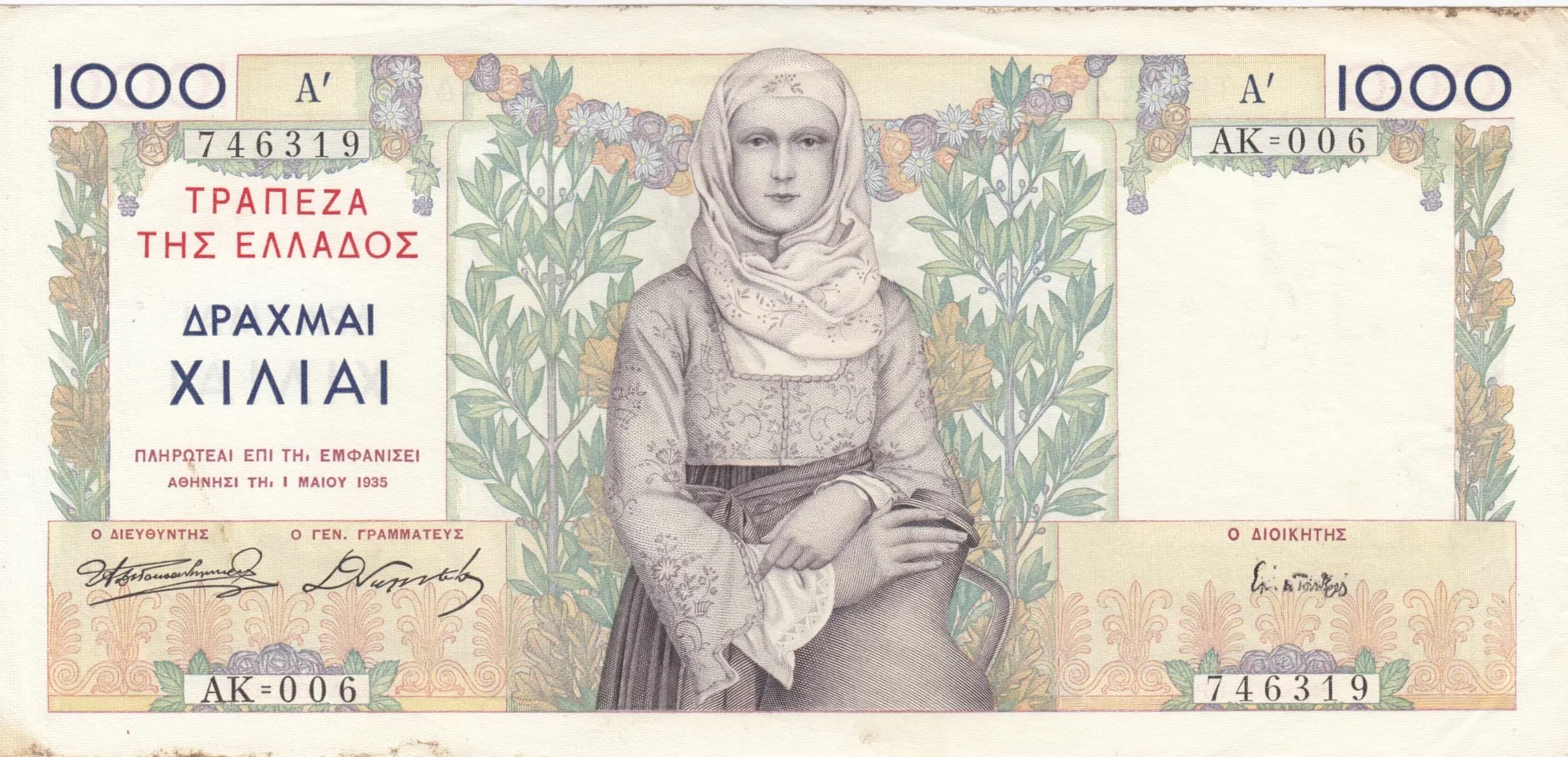
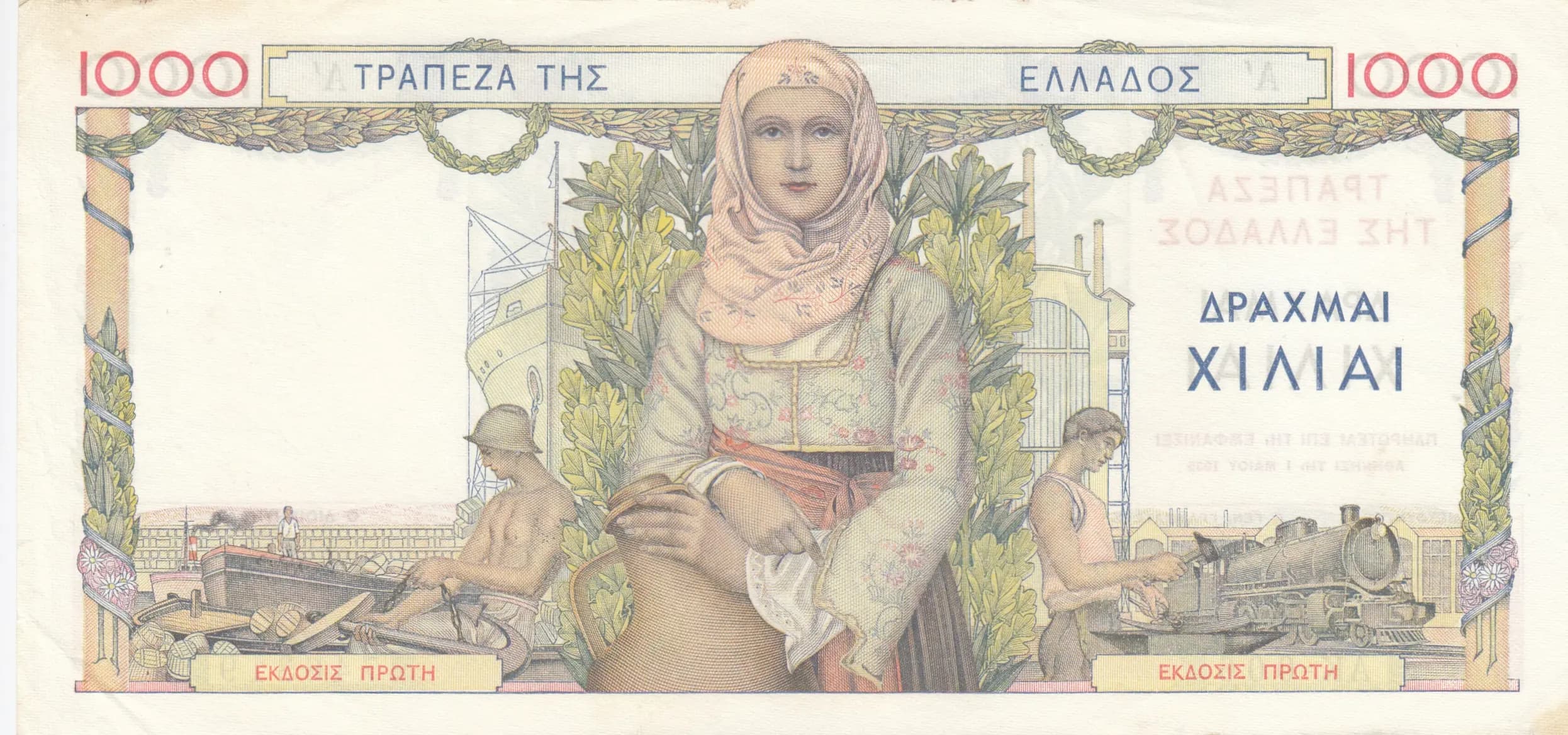
This 1000 drachmai note from 1935 is an EF-graded example of Greece's Bank of Greece regular issue, featuring a striking central portrait of a woman in traditional Greek dress with ornamental floral borders on the obverse. The reverse depicts allegorical figures representing labor and industry alongside classical ornamental design, showcasing the fine engraved work typical of interwar Greek currency. Despite some visible aging with light foxing and creases consistent with circulation, the note retains excellent eye appeal with vibrant multi-color printing and crisp detail definition.
Common. The eBay price tracking data demonstrates consistent sales across multiple condition grades spanning over a decade (2012-2026), with EF examples selling for approximately $48, well within the range typical for common circulated banknotes of this type. The 2016 catalog value of $50 UNC further supports common status. The existence of multiple PMG-graded examples and the frequency of sales listings indicate this was a substantial regular issue with adequate print runs. No evidence of rarity or limited issue status is present.
Issued on May 1, 1935, this banknote reflects Greece's interwar economic period under the restored monarchy and depicts the nation's cultural identity through traditional Greek dress and classical allegorical imagery celebrating labor and industrial development. The Bank of Greece (Trapeza tis Ellados) reaffirmed its authority through this denomination, which remained in circulation until the 1941 reissue with punch holes noted in the catalog reference. The note's imagery—combining traditional Greek cultural elements with symbols of modernization and industry—illustrates Greece's attempt to balance its classical heritage with early 20th-century progress.
The obverse features a central portrait of a woman wearing a traditional Greek white headscarf and embroidered traditional dress, facing forward in a seated position. She is surrounded by an elaborate wreath of decorative floral motifs including roses, grapes, and various flowers, with classical ornamental borders and scrollwork framing the composition in cream, green, purple, brown, orange, red, and blue inks. The reverse depicts the same central female portrait in traditional dress, flanked by two male allegorical figures representing the dignity of labor and industrial progress—the left figure engaged in manual craftsmanship or skilled trades, and the right figure associated with manufacturing and industrial work. The background includes architectural elements suggesting factories and industrial facilities, framed by laurel wreaths and classical ornamentation, emphasizing Greece's aspirations toward modernization while honoring traditional culture. This combination of imagery reflects the interwar Greek national identity.
FRONT: 'ΤΡΑΠΕΖΑ ΤΗΣ ΕΛΛΑΔΟΣ' (Bank of Greece) | 'ΔΡΑΧΜΑΙ ΧΙΛΙΑΙ' (One Thousand Drachmai) | '1000' (denomination in numerals) | 'A'' (First Edition marker) | 'ΠΛΗΡΩΤΕΑΙ ΕΠΙ ΤΗ ΕΜΦΑΝΙΣΕΙ ΑΘΗΝΗΣΙ ΤΗ Ι ΜΑΙΟΥ 1935' (Payable upon presentation in Athens on May 1, 1935) | 'Ο ΔΙΕΥΘΥΝΤΗΣ' (The Director) | 'Ο ΓΕΝ. ΓΡΑΜΜΑΤΕΥΣ' (The General Secretary) | 'Ο ΔΙΟΙΚΗΤΗΣ' (The Governor) | Serial number: '746319' | Plate reference: 'AK=006'. BACK: 'ΤΡΑΠΕΖΑ ΤΗΣ ΕΛΛΑΔΟΣ' (Bank of Greece) | 'ΔΡΑΧΜΑΙ ΧΙΛΙΑΙ' (One Thousand Drachmai) | '1000' (denomination in numerals) | 'ΕΚΔΟΣΙΣ ΠΡΩΤΗ' (First Issue).
The note employs multi-color engraved intaglio printing, evidenced by the fine detail, complex layering of colors (cream base with green, purple, brown, orange, red, and blue overprints), and the crisp definition of ornamental borders and portraiture visible in both images. The intricate engraved design with multiple signature lines and detailed allegorical figures is characteristic of high-security currency production methods standard for the Bank of Greece during this period. The specific printer for this issue is not definitively identified in the provided catalog data, but the execution suggests the work of a major European security printer contracted by the Bank of Greece.
This specimen represents the standard P-106a variety as catalogued by PMG. The visual analysis identifies this as a first edition ('A'') with plate reference 'AK=006' and serial number '746319', indicating it originates from the initial printing run. The catalog reference notes a significant reissue variant (P-115) from 1941 with punch holes added as a security measure, which represents a distinct and notably different variety from this 1935 original issue. The presence of multiple official signature lines (Director, General Secretary, Governor) and the intact original design without overprints or punch holes confirms this as an unmodified example of the original 1935 issue.