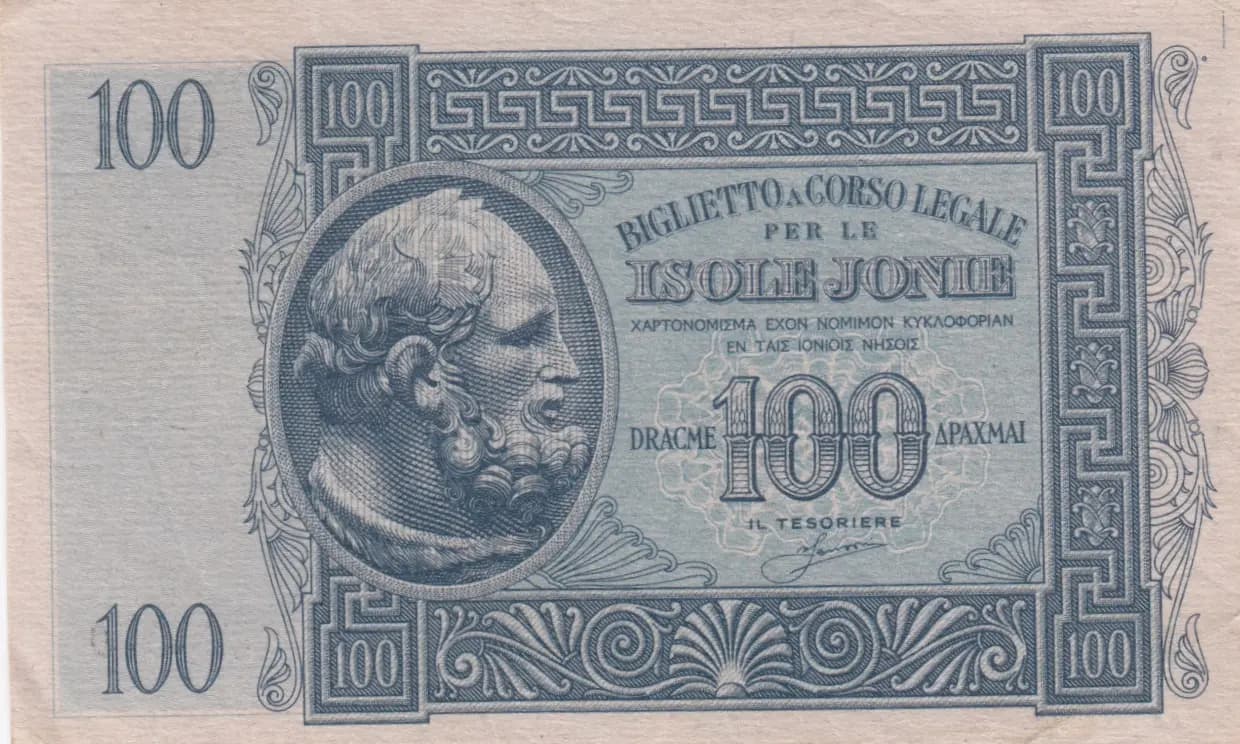
100 drachmai 1928
Market Prices
33 salesAbout This Note
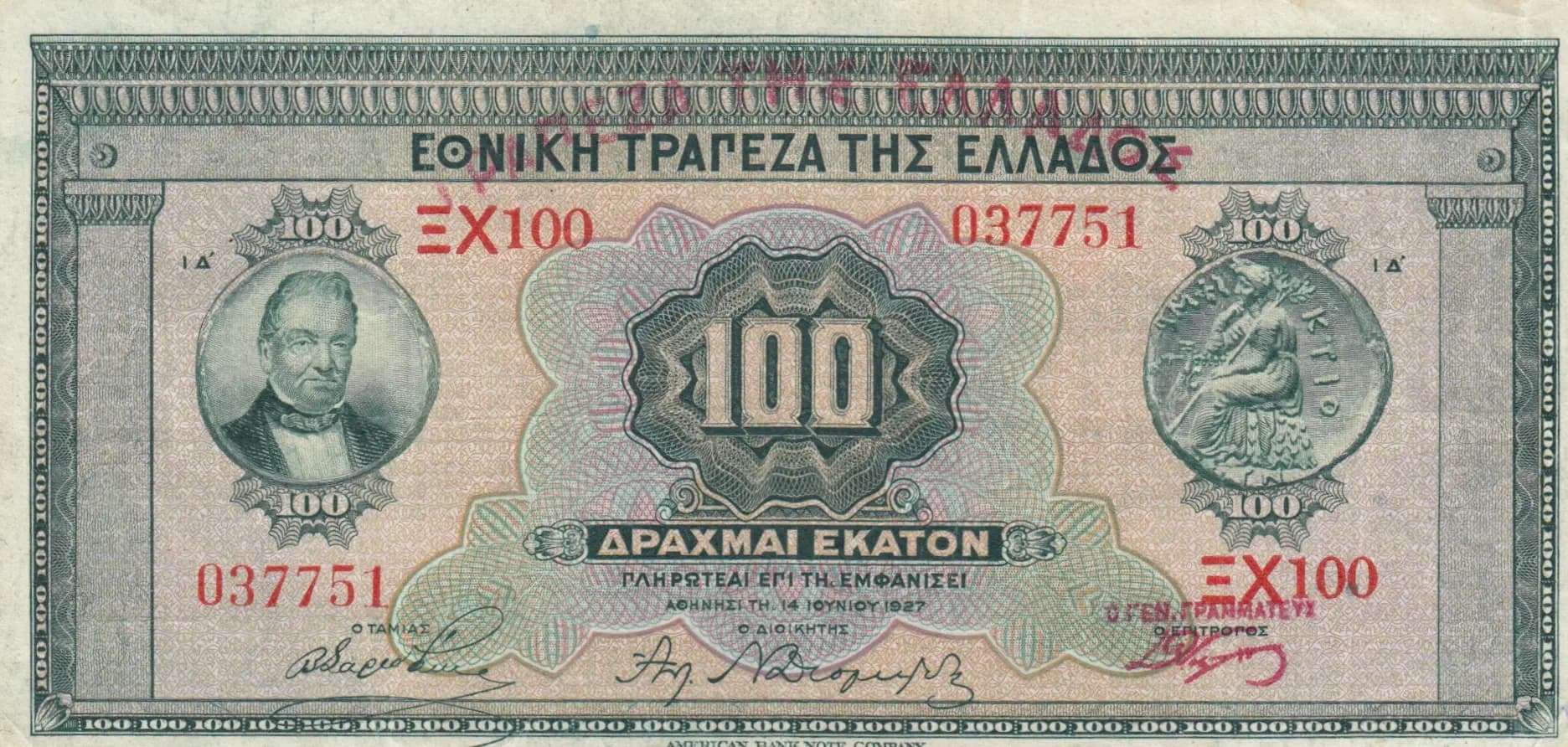
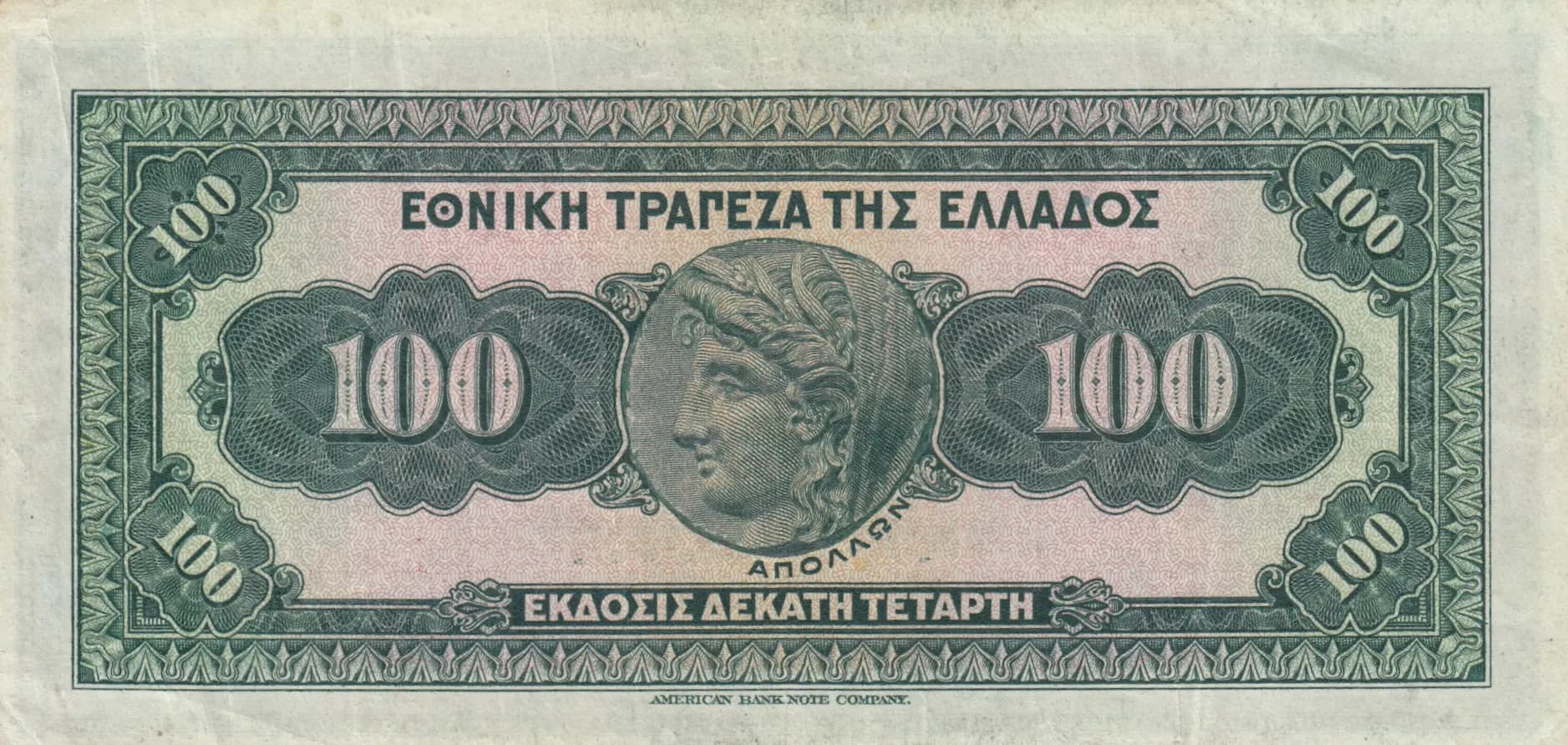
This 100 Drachmai note from 1928 represents a transitional issue of the Bank of Greece, featuring an overprint of the new bank name on the earlier P-91 design. The note displays the characteristic ornate engraving of American Bank Note Company production, with dual portrait medallions (Georgios Stavros and a classical coin profile) on the obverse and a refined classical female profile on the reverse. In VF condition, this example shows age-appropriate wear with minor creasing and yellowing, consistent with circulation during the interwar period.
Common. This note is a regular issue from the Bank of Greece with substantial print runs typical of working currency of the period. eBay market data confirms common status, with recent VF examples selling between $10.49–$25.75 (2023–2024), and historically broader range of $0.99–$68 depending on condition and grading service. The PMG population report indicates minimal population concentration in professional grading services, which is typical for common issues from this era where most circulated examples remain ungraded. No print run restrictions or recall history affect this Pick number.
Issued during Greece's post-WWI reconstruction period under the Stabilization Loan program, this 1927-dated note reflects the modernization of Greek financial institutions and the establishment of the National Bank of Greece (Ethniki Trapeza tis Ellados). The classical imagery—featuring both a contemporary bank founder and idealized Greek deity profiles—symbolized Greece's connection to classical antiquity while projecting financial modernity. The June 14, 1927 date marks the formal transition in banking authority during a critical period of Greek economic reorganization.
The obverse features an architectural composition centered on a decorative oval cartouche containing the denomination '100' in large numerals. Left and right portrait medallions flank this central element: the left shows Georgios Stavros (founder of the Ethniki Trapeza), depicted as a bearded gentleman in 19th-century formal dress, while the right presents a classical coin portrait of a bearded male figure representing ancient Greek heritage. The reverse presents a neoclassical design dominated by a fine-lined profile portrait of Apollonia (Apollo or a related Greek deity figure) facing left, with four corner cartouches displaying '100' in decorative ovals. Both sides employ ornamental border patterns with repeating geometric elements and laurel wreath motifs characteristic of late 19th/early 20th-century bank note aesthetics. The color scheme utilizes pinkish-beige paper with green, black, and red inks.
FRONT SIDE: 'ΕΘΝΙΚΗ ΤΡΑΠΕΖΑ ΤΗΣ ΕΛΛΑΔΟΣ' (National Bank of Greece); 'ΞΧ100' (100 denomination marker); 'ΔΡΑΧΜΑΙ ΕΚΑΤΟΝ' (One Hundred Drachmai); 'ΠΑΙΡΗΣΤΕΑΙ ΕΠΙ ΤΗ ΕΜΦΑΝΙΣΕΙ' (Payable on Presentation); 'ΑΘΗΝΗΣΙ ΤΗ. 14 ΙΟΥΝΙΟΥ 1927' (Athens, June 14, 1927); 'Ο ΤΑΜΙΑΣ' (The Treasurer); 'Ο ΔΙΟΙΚΗΤΗΣ' (The Governor); 'Ο ΠΕΡΙΤΡΟΠΟΣ' (The Custodian/Overseer). REVERSE SIDE: 'ΕΘΝΙΚΗ ΤΡΑΠΕΖΑ ΤΗΣ ΕΛΛΑΔΟΣ' (National Bank of Greece); '100' (Denomination); 'Απολλωνια' (Apollonia); 'ΕΚΔΟΣΙΣ ΔΕΚΑΤΗ ΤΕΤΑΡΤΗ' (Fourteenth Edition); 'AMERICAN BANK NOTE COMPANY' (Printer credit).
Steel plate engraving and letterpress, executed by the American Bank Note Company, New York. The note demonstrates the hallmark characteristics of ABNC production: intricate fine-line engraving throughout, complex repeating border patterns, multi-color printing with precise registration, and decorative cartouches rendered through skilled intaglio processes. The overprint of the new bank name 'ΤΡΑΠΕΖΑ ΤΗΣ ΕΛΛΑΔΟΣ' on the P-91 design was applied as a secondary printing operation, typical of currency reissue procedures during this period.
This is the base P-98 variety (ABNC printer). The catalog reference indicates a later P-113 variety exists with punch holes from 1941, representing a distinct reissue. The present example is identified as P-98a in PMG records. Serial number 037751 is visible in red on the obverse. The overprint of 'ΤΡΑΠΕΖΑ ΤΗΣ ΕΛΛΑΔΟΣ' distinguishes this from the unoverprinted P-91 predecessor. No signature varieties are noted for this issue; the signing authority positions (Treasurer, Governor, Custodian) are printed rather than manuscript.