100 drachmai 1935
Market Prices
17 salesAbout This Note
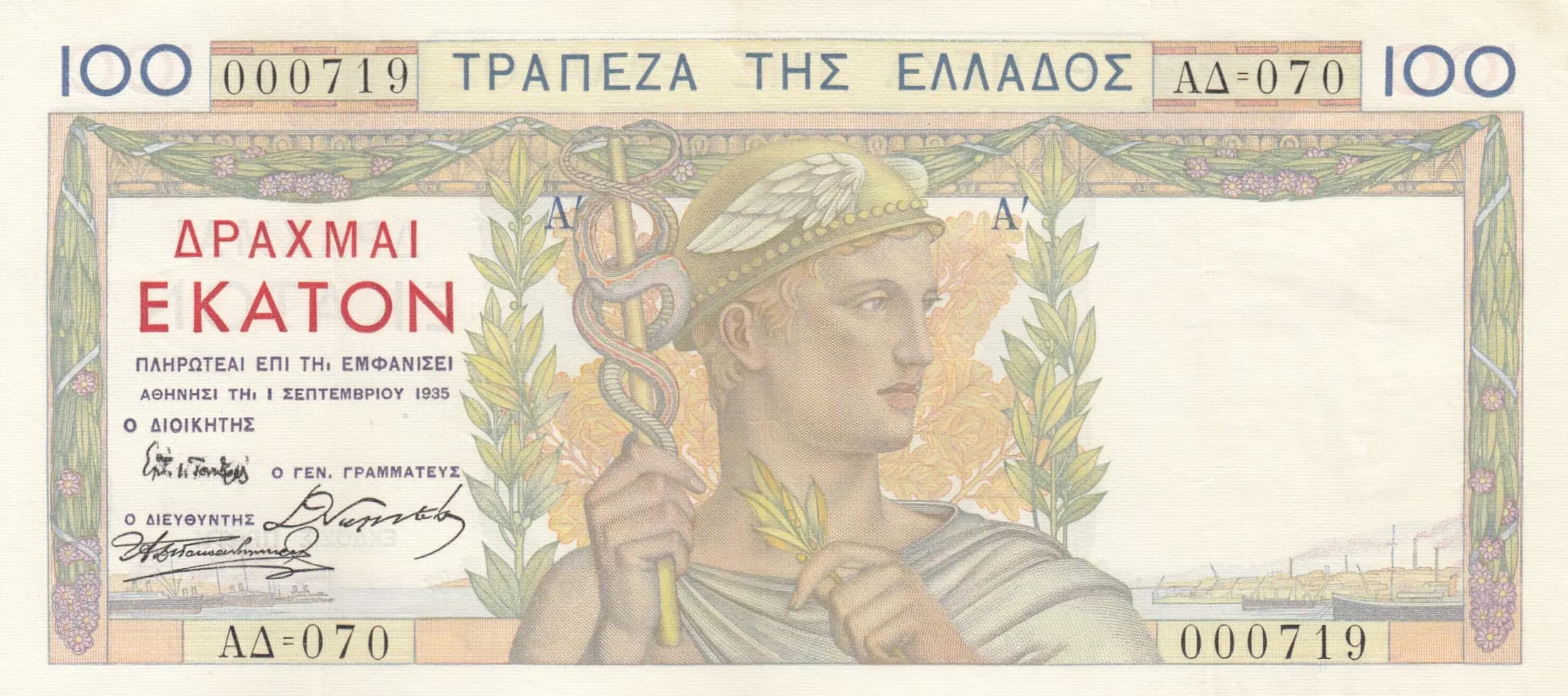
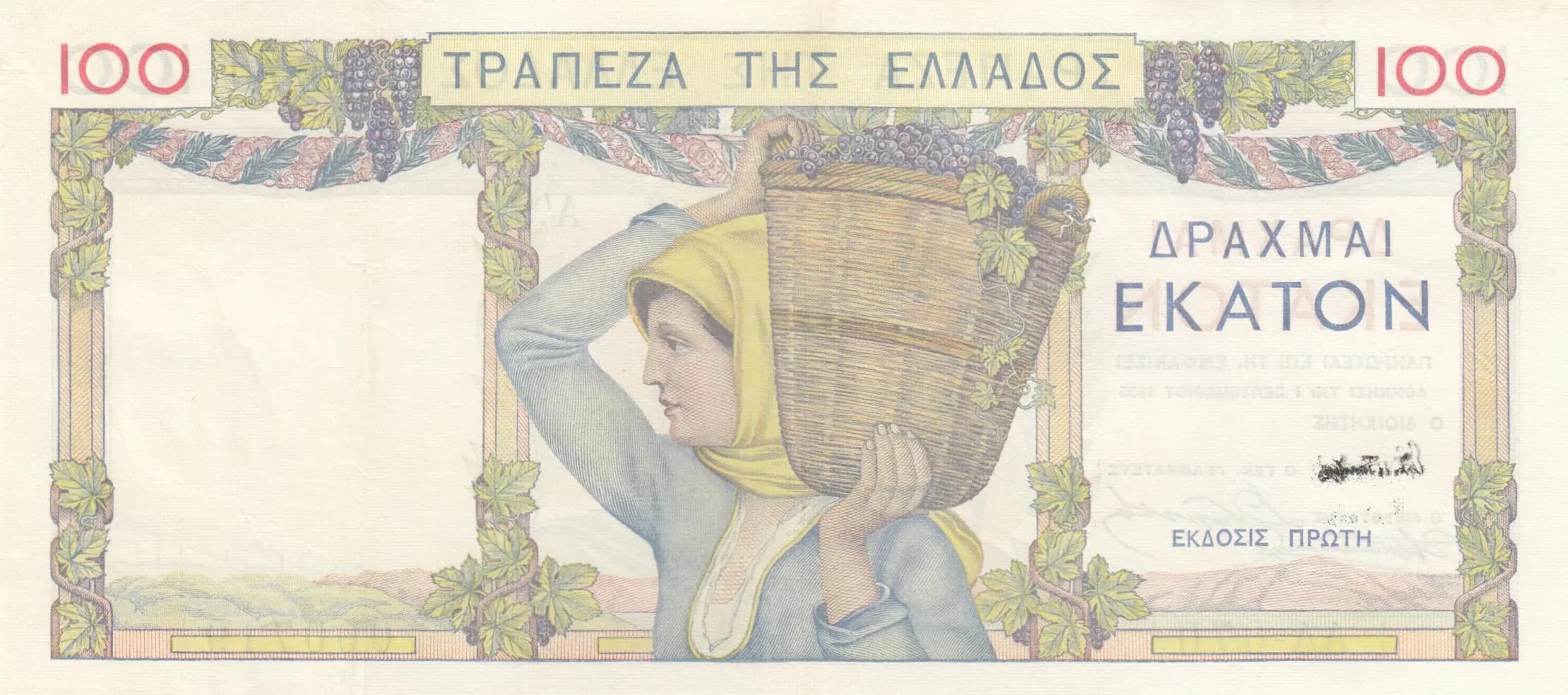
An exceptionally well-preserved example of Greece's 1935 100 drachmai note (Pick-105), graded AU, featuring classical Greek allegorical imagery on both sides. The front displays a helmeted female figure (Athena/Mercury) in profile with intricate engraving and decorative vine borders, while the reverse depicts a peasant woman carrying an agricultural basket, emphasizing Greece's agrarian heritage. The note exhibits sharp impressions, clean margins, and no visible wear, making it an attractive specimen for collectors of interwar Greek currency.
Common. This note is part of a standard regular issue from 1935 with no known restrictions on print run or special circulation circumstances. eBay market data demonstrates consistent availability and affordability across multiple condition grades, with VF-graded examples selling for $5–$15 and even certified PMG examples at higher grades (63–65) typically ranging from $80–$240. The AU-graded specimen falls within normal collector demand parameters and is readily obtainable in the secondary market.
Issued on 1 September 1935 by the Bank of Greece during a period of economic recovery following Greece's restoration of the gold standard, this banknote reflects the classical Greek symbolism favored by the government to project stability and cultural continuity. The front's depiction of Hermes (Mercury) with caduceus symbolized commerce and prosperity, while the reverse's peasant woman with harvest imagery celebrated the agrarian foundation of the Greek economy during the pre-war period. The 1935 date marks the final years of Greece's relatively stable interwar period before the disruptions of World War II.
The obverse features Hermes (Mercury) depicted as a classical female allegorical figure in right-facing profile, wearing a winged helmet (petasos) bearing the caduceus symbol—the traditional herald's staff entwined with serpents—and adorned with a laurel wreath. The figure is rendered in classical Greek artistic style with exceptional fine-line engraving detail. An industrial landscape with factories or manufacturing buildings appears in the distant background right, symbolizing Greece's modernization and industrial development. Elaborate decorative borders of grapevines and flowering plants frame the entire composition. The reverse depicts a peasant woman in left-facing profile wearing a yellow/golden headscarf, carrying a large woven basket overflowing with agricultural produce, with grape bunches prominently displayed. This imagery emphasizes Greece's agrarian economy and rural population. Both sides feature ornamental corner designs, frames, and signature lines for authorized officials (Director, General Secretary, Manager).
FRONT: 'ΤΡΑΠΕΖΑ ΤΗΣ ΕΛΛΑΔΟΣ' (Bank of Greece) | 'ΔΡΑΧΜΑΙ ΕΚΑΤΟΝ' (One Hundred Drachmai) | 'ΑΔ=070' (Identifier code) | '100' (denomination in Arabic numerals) | 'ΠΛΗΡΟΤΕΑΙ ΕΠΙ ΤΗΙ ΕΜΦΑΝΙΣΕΙ ΑΘΗΝΗΣΙ ΤΗΙ Ι ΣΕΠΤΕΜΒΡΙΟΥ 1935' (Payable on presentation in Athens on 1 September 1935) | 'Ο ΔΙΟΙΚΗΤΗΣ' (The Director) | 'Ο ΓΕΝ. ΓΡΑΜΜΑΤΕΥΣ' (The General Secretary) | 'Ο ΔΙΕΥΘΥΝΤΗΣ' (The Manager). BACK: 'ΤΡΑΠΕΖΑ ΤΗΣ ΕΛΛΑΔΟΣ' (Bank of Greece) | 'ΔΡΑΧΜΑΙ ΕΚΑΤΟΝ' (One Hundred Drachmai) | 'ΕΚΔΟΣΙΣ ΠΡΩΤΗ' (First Issue) | '100' (denomination).
Intaglio engraving (steel plate engraving), the standard security printing method for Greek banknotes of this period. The fine line work, detailed border patterns, and intricate portraiture visible throughout both sides are characteristic of professional banknote engraving executed by the Bank of Greece's printing department or contracted security printer. The sharp impressions and crisp detail observed in this AU-graded specimen indicate high-quality intaglio production with careful paper selection and pressure control.
This specimen represents the standard P-105a variety as catalogued by Pick and confirmed by PMG population records. The visual analysis confirms this as the first issue (ΕΚΔΟΣΙΣ ΠΡΩΤΗ) of the 1935 100 drachmai design. No punch holes are visible, confirming this is not the reissue variant (P-113) from 1941 which featured cancellation punch holes. The serial number '000719' and identifier code 'ΑD=070' are consistent with this standard 1935 emission.