100 000 000 000 drachmai 1944
About This Note
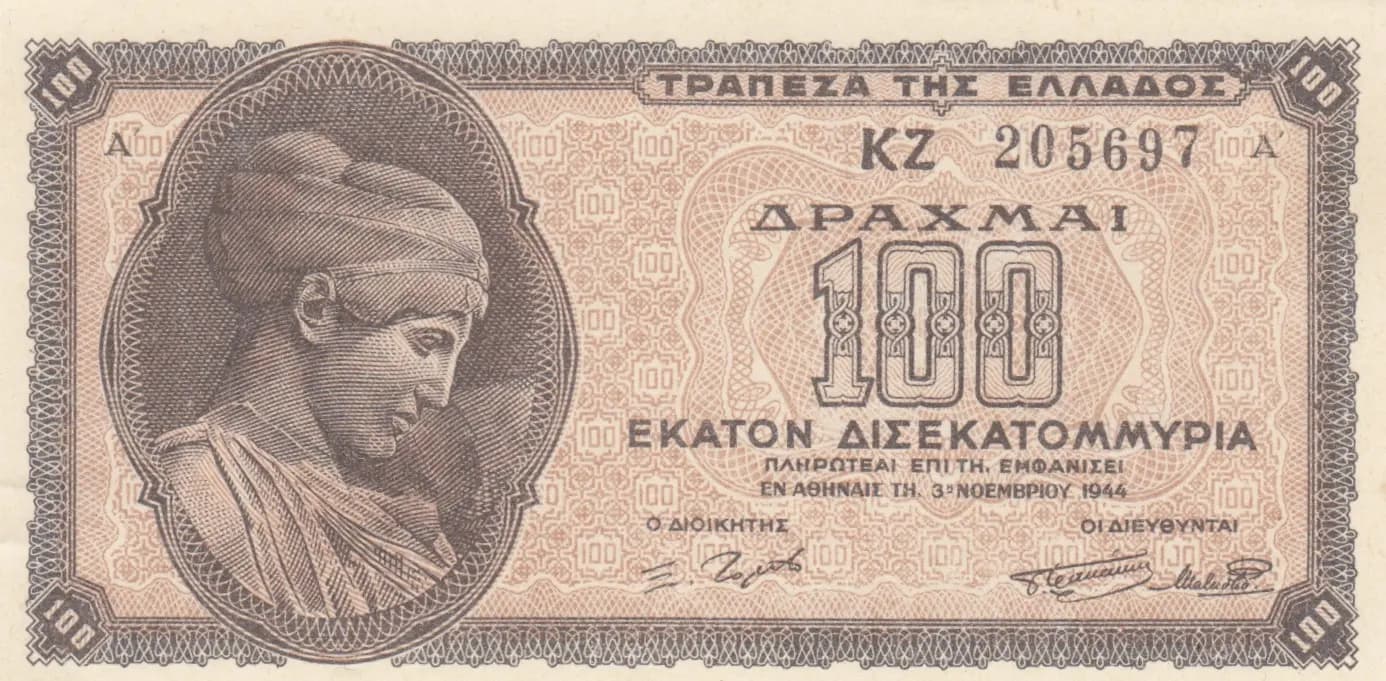
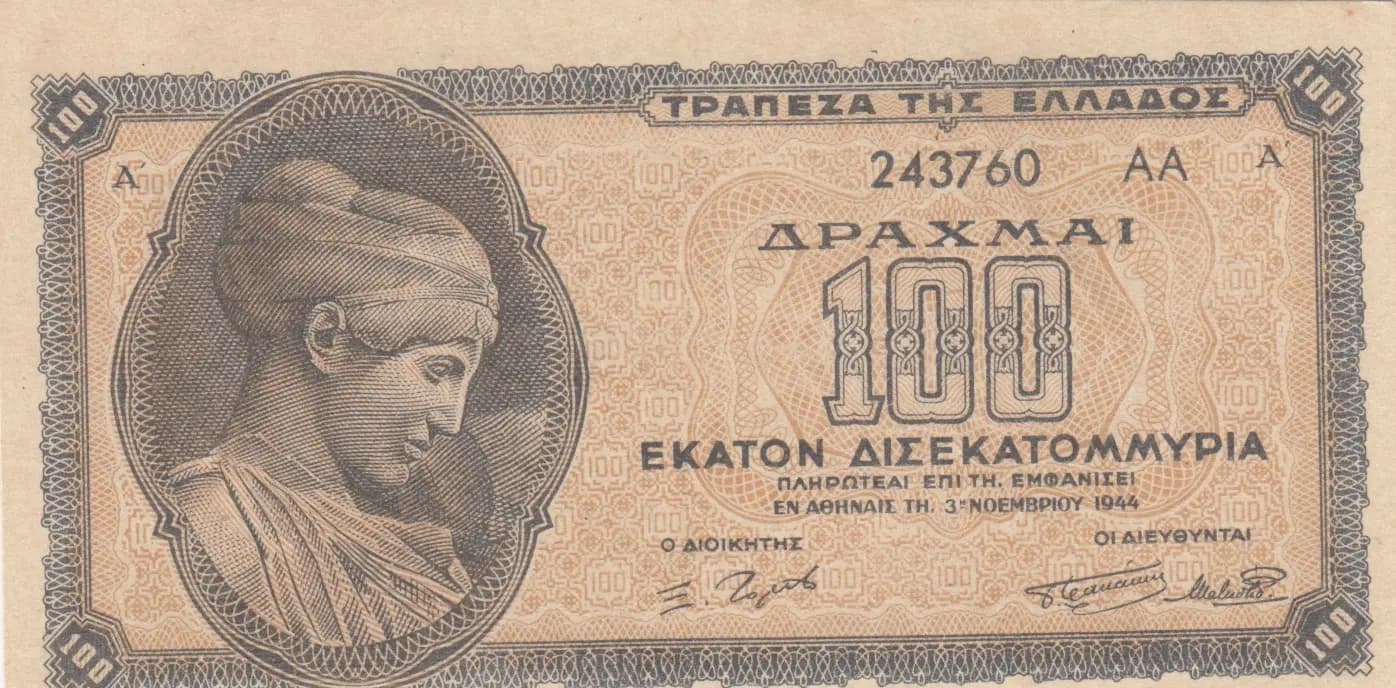
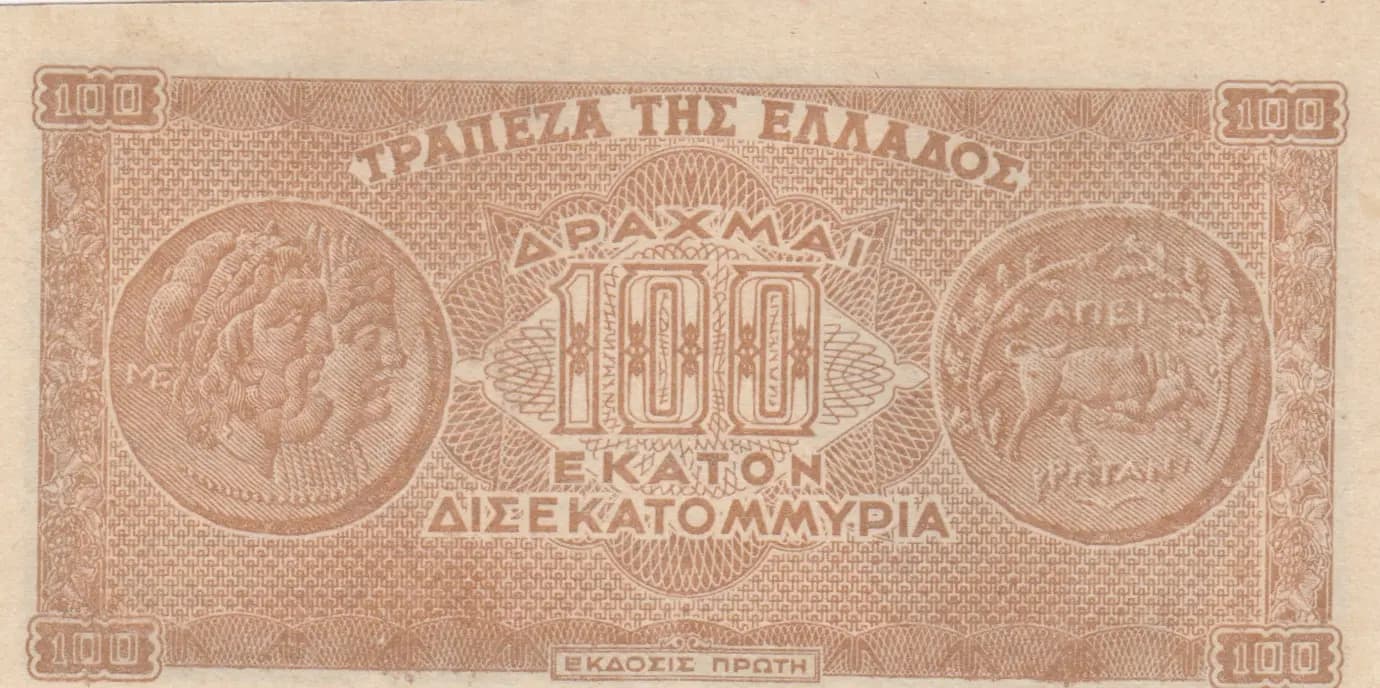
This is a Greek 100 billion drachmai banknote from November 3, 1944, issued during the critical post-occupation period of World War II. The note is graded AU and displays excellent preservation with sharp, clear printing throughout and no visible wear, tears, or creases. The front features a classical portrait in profile of the nymph Deidamia rendered in fine engraving style, while the reverse showcases two symmetrical circular medallion portraits in classical style, with the entire design framed by intricate geometric borders characteristic of high-security banknote production.
Common. While this note represents a historically significant period and extreme hyperinflation denomination, the 100 billion drachmai notes of 1944 were issued in substantial quantities to meet the enormous currency demands of the post-occupation economy. The Pick catalog designation P-135(2) indicates this is the second type/variety of this denomination, but both were printed in high volumes. No evidence suggests limited print runs, short circulation periods, or significant recalls that would elevate rarity. The AU grade is more notable than the note's inherent rarity.
This note was issued on November 3, 1944, just as Greece was being liberated from Nazi occupation during World War II, making it a significant artifact of the immediate post-war period. The classical imagery—featuring the nymph Deidamia on the obverse and classical medallion portraits (likely representing ancient Greek figures) on the reverse—reflects the Bank of Greece's deliberate use of Hellenic heritage to reinforce national identity and legitimacy during this turbulent transition. The extraordinarily high denomination reflects the severe hyperinflation that plagued Greece following the occupation, with currency values becoming astronomical as the economy struggled to recover.
The obverse features the nymph Deidamia in classical profile orientation facing right, depicted in the refined engraving style typical of high-value banknotes. She is rendered wearing classical or traditional Greek headwear, embodying the mythological heritage central to Greek national identity. The reverse displays a symmetrical composition with two circular medallion portraits in classical style positioned on the left and right sides, likely representing figures from ancient Greek coinage or mythology, which directly references the catalog notation of 'Ancient coin from Dodoni'—this reverse design thus creates a visual link between classical antiquity and contemporary Greek sovereignty. Both sides employ intricate geometric line patterns and cross-hatching as background security elements, with decorative corner ornaments and elaborate borders framing the entire design in a tan/beige color scheme with dark gray and black printing.
FRONT SIDE: 'ΤΡΑΠΕΖΑ ΤΗΣ ΕΛΛΑΔΟΣ' (Bank of Greece) | '100 ΕΚΑΤΟΝ ΔΙΣΕΚΑΤΟΜΜΥΡΙΑ ΔΡΑΧΜΑΙ' (100 Billion Drachmai) | 'ΠΛΗΡΩΤΕΑΙ ΕΠΙ ΤΗ ΕΜΦΑΝΙΣΕΙ' (Payable upon presentation) | 'ΕΝ ΑΘΗΝΑΙΣ ΤΗ 3ªΝΟΕΜΒΡΙΟΥ 1944' (In Athens on 3rd November 1944) | 'Ο ΔΙΟΙΚΗΤΗΣ' (The Governor) | 'ΟΙ ΑΙΕΥΘΥΝΤΑΙ' (The Directors) | Serial designations: 'ΑΑ' and 'Α' with serial number '243760'. REVERSE SIDE: 'ΤΡΑΠΕΖΑ ΤΗΣ ΕΛΛΑΔΟΣ' (Bank of Greece) | '100 ΕΚΑΤΟΝ ΔΙΣΕΚΑΤΟΜΜΥΡΙΑ ΔΡΑΧΜΑΙ' (100 Billion Drachmai) | 'ΕΚΔΟΣΙΣ ΠΡΩΤΗ' (First Issue).
Intaglio (line engraving) printing, evidenced by the fine detail, sharp lines, complex geometric patterns, detailed cross-hatching, and the three-dimensional quality characteristic of steel plate engraving. The production exhibits the multi-layer fine line work and intricate security features typical of interwar and World War II era Bank of Greece currency production. The Greek banknote printer for this period was likely the National Printing Office of Greece or an authorized international security printer contracted by the Bank of Greece.
This specimen is identified as Pick 135(2), indicating it represents the second cataloged type or variety of the 100 billion drachmai 1944 issue. The serial number prefix 'ΑΑ' with number 243760 and letter designation 'Α' provide specificity for this individual note. The inscription 'ΕΚΔΟΣΙΣ ΠΡΩΤΗ' (First Issue) on the reverse is a significant identifier, distinguishing this from potential later reissues or reprints. Varieties of this note may exist based on printer variations, signature varieties (Governor and Directors), or serial number series prefixes.