10 000 drachmai 1947
Market Prices
12 salesAbout This Note
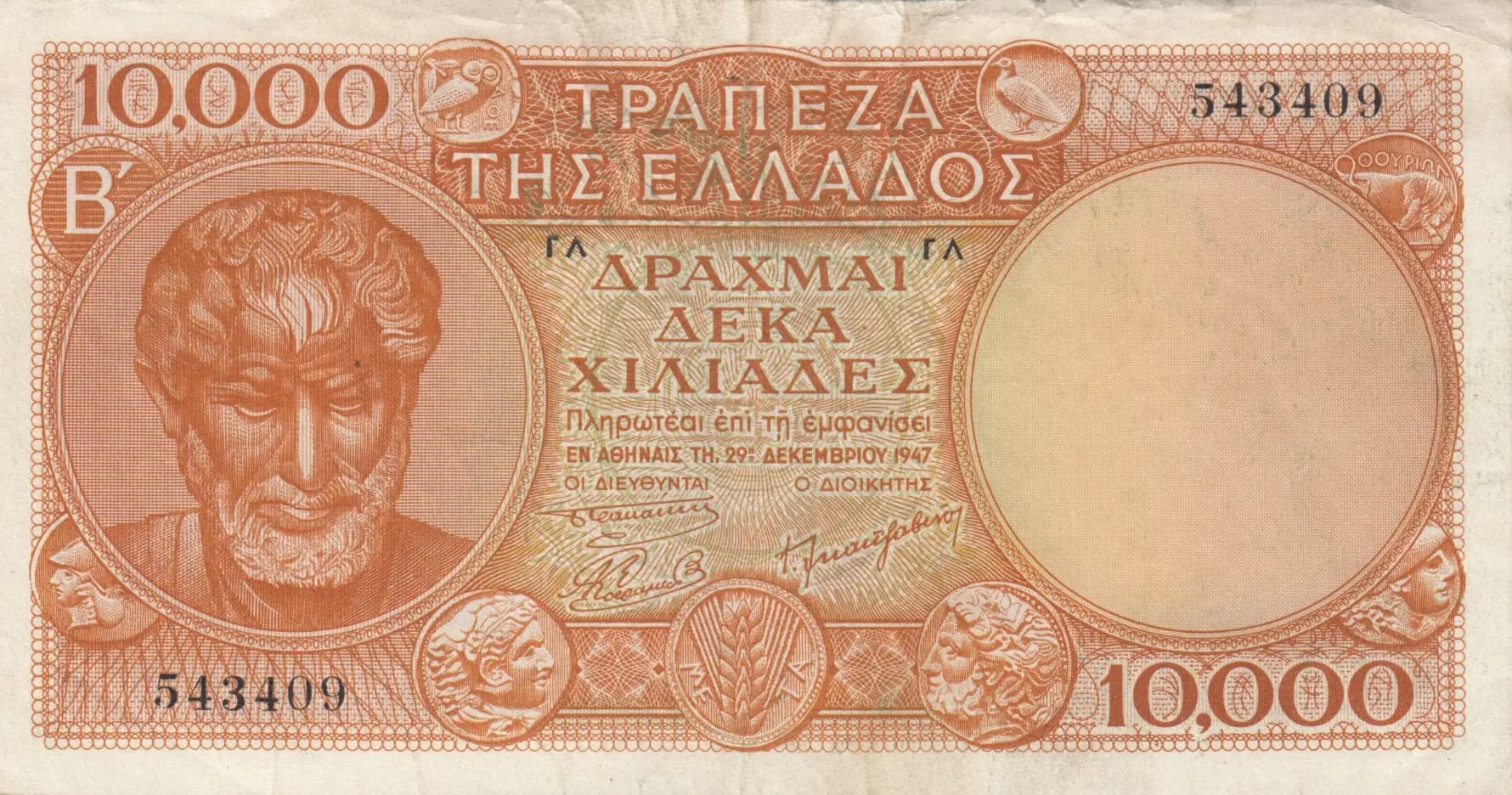
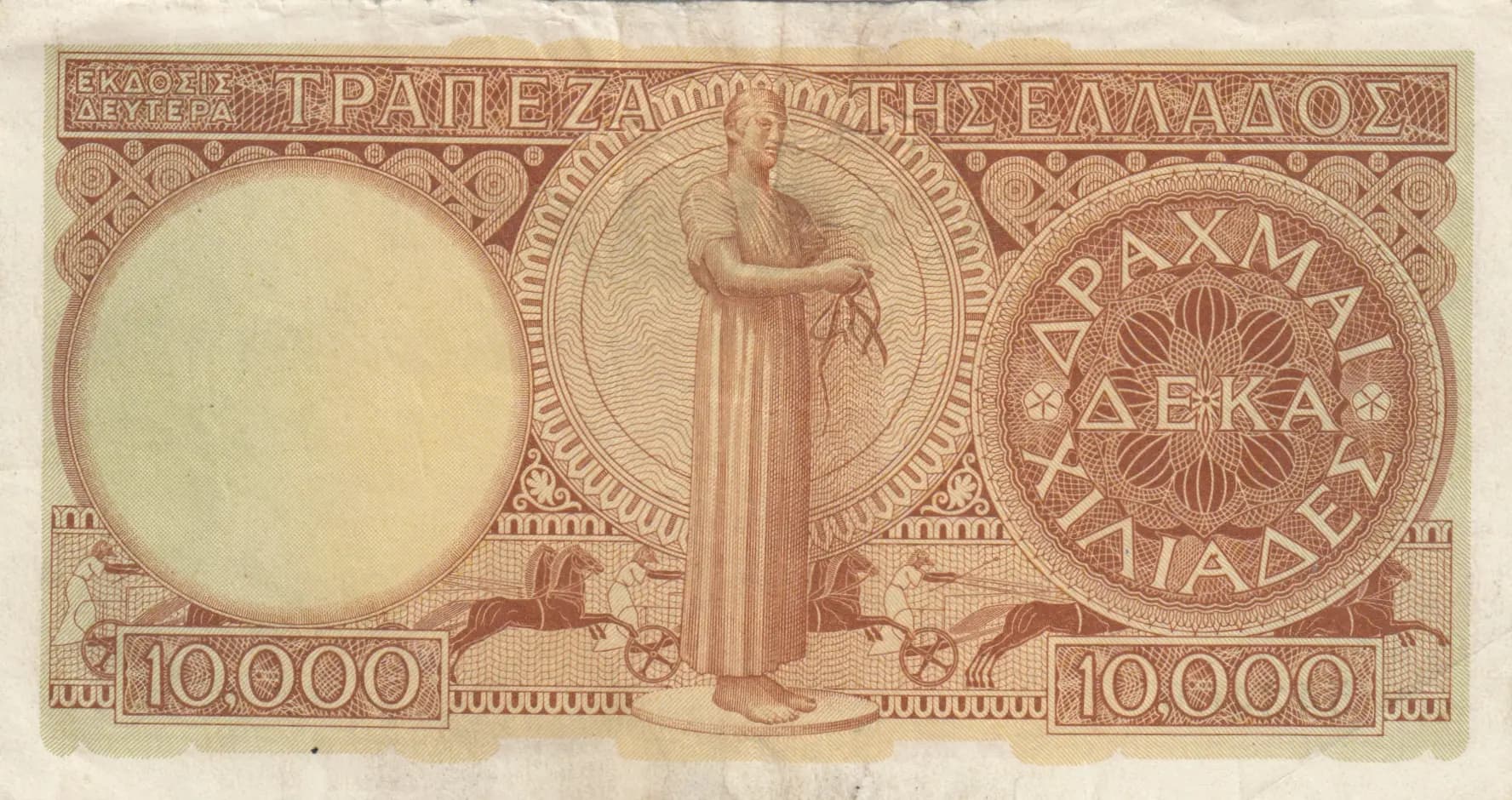
This is a Greece P-178 10,000 drachmai banknote from the 1947 first issue (ΕΚΔΟΣΙΣ ΠΡΩΤΗ), featuring the characteristic orange coloring and classical Greek iconography. The note displays Aristoteles on the obverse in an oval frame with additional classical profiles, while the reverse shows a standing female philosopher figure with a chariot race frieze. In VF condition, this specimen shows age-appropriate yellowing and foxing typical of post-war Greek currency, with no major tears or damage—a desirable collectible example of early Bank of Greece currency.
Common. Market evidence strongly supports this assessment: eBay auction data shows consistent sales in the $15–$48 range for VF specimens over the past decade, with typical VF prices clustering around $16–$31. The 2016 catalogue valuation of $125 for VF appears inflated relative to actual realized prices. Print runs for Greek 10,000 drachmai notes from 1947 were substantial, and this first issue variety remains readily available to collectors. The three-coin design variant (P-178) is more common than the five-coin variant (P-174).
Issued on December 29, 1947, this banknote represents Greece's monetary recovery during the immediate post-World War II period under the Bank of Greece (Trapeza tis Ellados). The choice of Aristoteles and classical Greek philosophical imagery reflects the nation's effort to reassert cultural identity and intellectual heritage during reconstruction, while the chariot race frieze on the reverse further emphasizes classical Hellenic civilization as a foundation for national renewal.
The obverse features a left-positioned oval portrait of Aristoteles, the ancient Greek philosopher, rendered with classical engraving detail showing his characteristic bearded, curly-haired visage. Multiple classical male profile portraits in circular medallions populate the upper and lower central areas—these represent other significant ancient Greek figures. An owl symbol (associated with Athena and wisdom) appears in the upper left, while a crane or similar bird occupies the upper right, both reinforcing the classical Greek theme. The reverse showcases a standing female figure in draped classical robes, likely representing a personification of Philosophy or a muse, centrally positioned with ornate circular frames flanking either side. A decorative Greek key pattern circle with classical medallion design anchors the right side, incorporating depictions of horses in a chariot race frieze—referencing the ancient Olympic tradition and classical Greek artistic achievement. The entire design employs intricate geometric borders and ornamental architectural pattern elements in the orange/rust color scheme with cream accents.
FRONT: 'ΤΡΑΠΕΖΑ ΤΗΣ ΕΛΛΑΔΟΣ' (Bank of Greece) | 'ΓΑ ΔΡΑΧΜΑΙ ΓΑ ΔΕΚΑ ΧΙΛΙΑΔΕΣ' (For ten thousand drachmas) | 'Πληρωτέαι επί τη εμφανίσει' (Payable on presentation) | 'ΕΝ ΑΘΗΝΑΙΣ ΤΗ 29ε ΔΕΚΕΜΒΡΙΟΥ 1947' (In Athens, the 29th of December 1947) | 'ΟΙ ΔΙΕΥΘΥΝΤΑΙ' (The Directors) | 'Ο ΔΙΟΙΚΗΤΗΣ' (The Governor) | Denomination: 10,000. BACK: 'ΕΚΛΟΣΗΣ ΔΕΚΑ' (Issue of Ten) | 'ΤΡΑΠΕΖΑ ΤΗΣ ΕΛΛΑΔΟΣ' (Bank of Greece) | 'ΔΡΑΧΜΑΙ' (Drachmas) | Denomination: 10,000.
Intaglio (engraved line printing), characteristic of high-security banknote production of the 1940s era. The fine line engraving visible throughout both sides, the intricate geometric patterns, and detailed classical portrait work indicate steel plate engraving. The Bank of Greece employed reputable European security printers for this series; this note likely originated from the Bank's contracted security printer, though specific printer attribution for P-178 requires archival documentation.
This specimen represents the first issue (ΕΚΔΟΣΙΣ ΠΡΩΤΗ) of the 10,000 drachmai type, identifiable by the orange color and three classical coin medallions at the lower center of the obverse. The date of December 29, 1947 is consistent with this issue. A related blue-colored variety (P-175) and a later 1947-dated variety (P-182) exist as separate Pick catalog entries. Serial number 543409 indicates standard production issue numbering without special overprints or commemorative markings.