10 000 000 000 drachmai 1944
Market Prices
8 salesAbout This Note
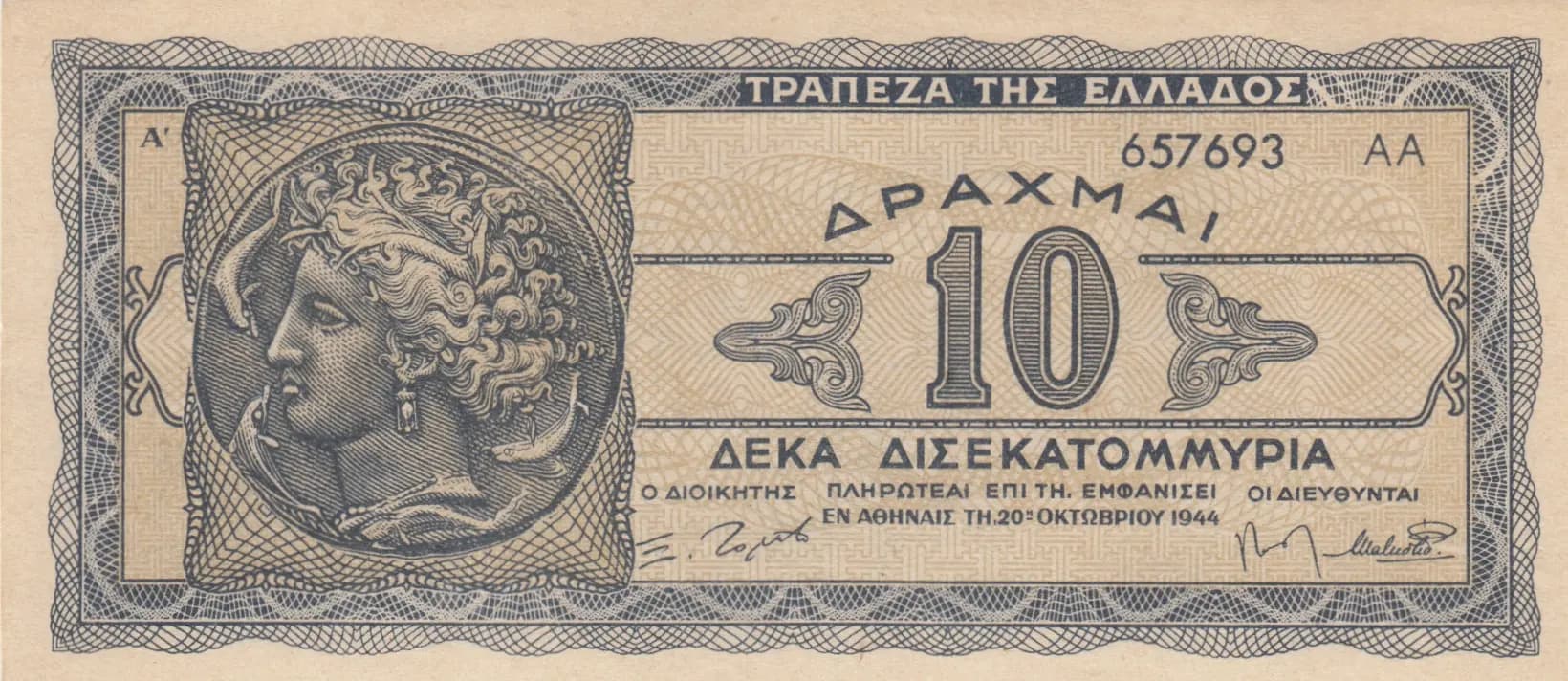
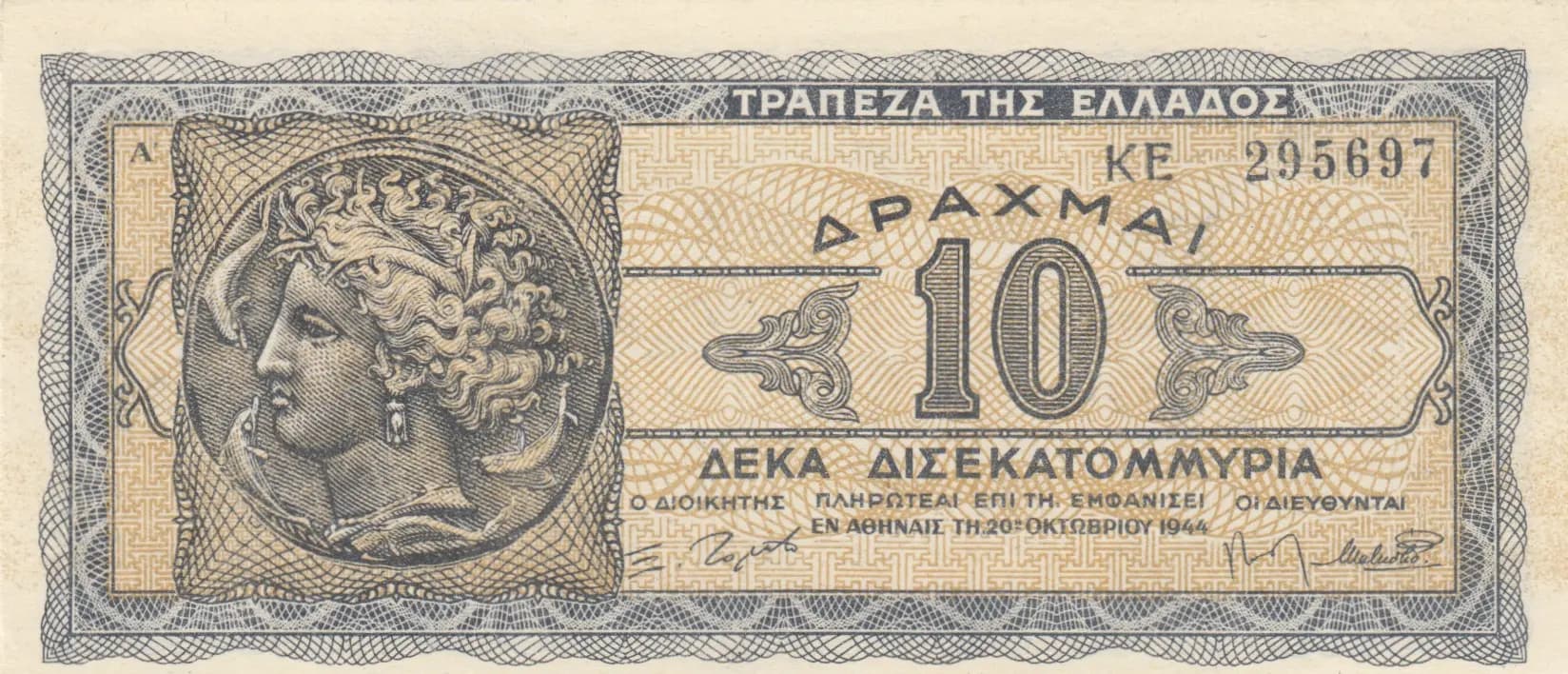
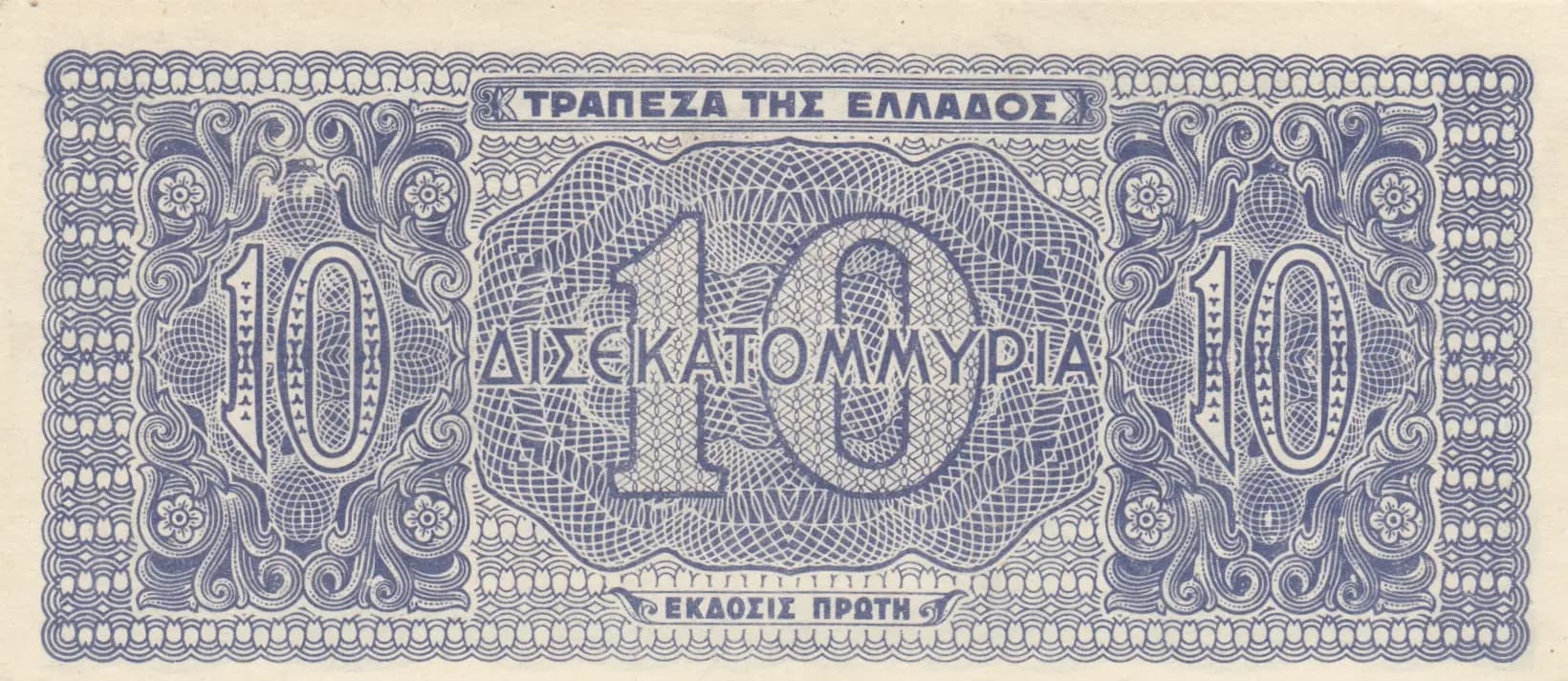
This is a Greek 10 billion drachmai note from October 1944, issued during the German occupation and liberation period. The note is in AU (About Uncirculated) condition, displaying crisp printing with no visible wear, folds, or damage. The obverse features a classical bust of Arethusa (referencing the famous dekadrachm of Syracuse) in tan and gray tones, while the reverse showcases ornate blue geometric designs typical of Greek classical motifs—making this an important historical artifact from Greece's hyperinflationary WWII era.
Common. eBay market data shows consistent sales in the $15-20 USD range for PMG-graded examples and AU specimens, with catalog values from 2016 placing UNC at only $4.50. High print runs were necessary due to hyperinflation during 1944, and multiple varieties and serial number ranges exist. The denomination's emergency nature and the note's survival in quantity indicate widespread circulation and production. The AU condition grade does not elevate rarity, as many examples survive in similar condition from the period.
This note was issued on October 20, 1944, during the final stages of German occupation of Greece and the subsequent liberation by Allied forces. The 10 billion drachmai denomination reflects the severe hyperinflation that plagued Greece during the occupation, necessitating increasingly high denominations. The classical imagery of Arethusa, drawn from Syracuse coinage, reflects Greece's cultural connection to its classical heritage—a nationalist symbol during a period of foreign occupation and national recovery.
The obverse features a classical left-facing profile bust of Arethusa, the legendary Greek nymph, rendered in the style of ancient Syracusan dekadrachms—a reference to one of antiquity's most celebrated coin designs. The portrait is rendered in black and blue-black inks on a tan underprint with intricate guilloche work forming geometric frames and meander (Greek key) patterns typical of classical Greek ornamentation. The reverse is dominated by the large '10' denomination numeral in dark blue, surrounded by elaborate scrollwork, floral motifs, and ornate borders executed in fine line engraving. The entire note employs classical Greek design vocabulary—meanders, geometric patterns, and symmetrical ornamental elements—reflecting both the Bank of Greece's institutional authority and the nation's proud classical heritage during a period of national crisis.
FRONT: 'ΤΡΑΠΕΖΑ ΤΗΣ ΕΛΛΑΔΟΣ' (Bank of Greece); 'ΔΡΑΧΜΑΙ' (Drachmai); '10' and 'ΔΕΚΑ ΔΙΣΕΚΑΤΟΜΜΥΡΙΑ' (Ten Billion); 'ΚΕ' (Series designation); '295697' (Serial number); 'Ο ΔΙΟΙΚΗΤΗΣ ΠΑΛΗΡΟΤΕΑΙ ΕΠΙ ΤΗ ΕΜΦΑΝΙΖΕΙ ΟΙ ΔΙΕΥΘΥΝΤΑΙ ΕΝ ΑΘΗΝΑΙΣ ΤΗ 20ε ΟΚΤΩΒΡΙΟΥ 1944' (The Director certifies upon presentation... in Athens on October 20th, 1944). BACK: 'ΤΡΑΠΕΖΑ ΤΗΣ ΕΛΛΑΔΟΣ' (Bank of Greece); '10' and 'ΔΙΣΕΚΑΤΟΜΜΥΡΙΑ' (Billion); '10'; 'ΕΚΔΟΣΗΣ ΠΡΩΤΗ Γ' (First Edition Γ/Gamma).
Intaglio (engraved) printing, utilizing fine line engraving and extensive guilloche work for the security patterns and decorative elements. The multi-color printing (tan/beige/gray on obverse; dark blue on reverse) was achieved through successive intaglio passes. This note was produced by the National Printing Works or under Bank of Greece supervision, employing classical engraving techniques standard for high-denomination emergency issues of the 1940s. The cross-hatch patterns, wave designs, and intricate geometric meshwork visible throughout serve both decorative and anti-counterfeiting purposes.
This example carries the series designation 'ΚΕ' (series KE) with serial number prefix indicating the first edition ('ΕΚΔΟΣΗΣ ΠΡΩΤΗ Γ'). The date is confirmed as October 20, 1944. Pick-134a represents the standard first issue; collectors should note that serial number prefixes and edition markers vary across surviving examples. This particular note shows the characteristics of the primary issue with no recorded overprints or subsequent modifications.