1 drachme 1918
Market Prices
2 salesAbout This Note
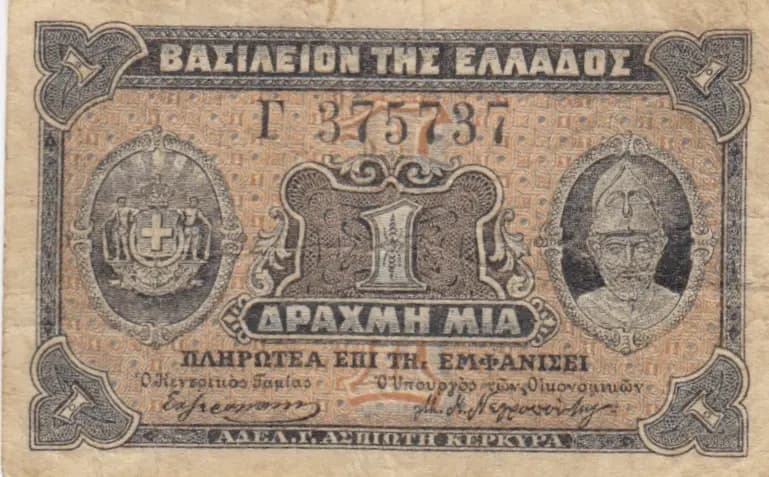
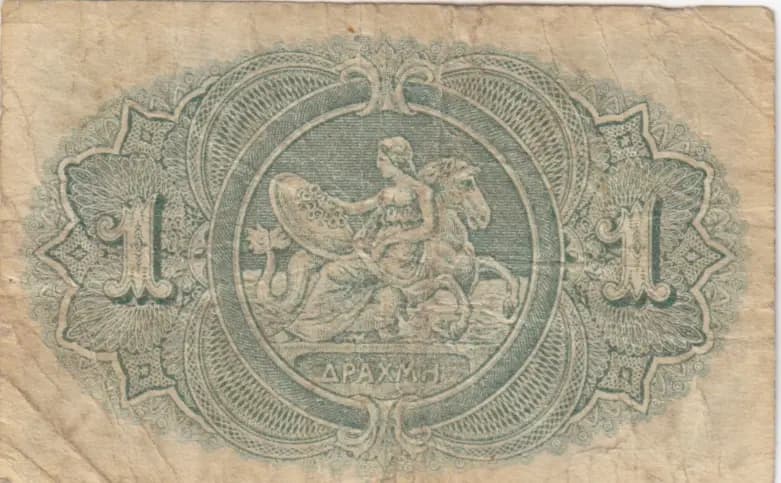
This 1 Drachme note from 1918 represents a significant piece of Greek monetary history issued during World War I by the Kingdom of Greece. The banknote displays classical Greek iconography with Pericles on the obverse and an allegorical scene of Thetis presenting Achilles with his shield on the reverse, reflecting Greece's cultural heritage during a pivotal historical moment. In Fair condition, the note shows heavy circulation wear with significant foxing, creasing, and age-related discoloration typical of early 20th-century paper currency that has survived a century without professional preservation.
Common. While this is a collectible early 20th-century Greek banknote, the catalog pricing data from realbanknotes.com shows consistent market activity with VF specimens selling for approximately $15 and VG examples for $3-5.50 on eBay. The circulation of multiple examples at modest price points, combined with the lack of any record of limited print runs or early recall, indicates this was a standard issue with adequate surviving quantities. Notes of this era and denomination were produced in volume to support wartime economic needs, making individual specimens readily available to collectors despite their historical interest.
Issued in 1918 near the end of World War I, this drachme note reflects Greece's continued monetary sovereignty and its classical cultural identity during a tumultuous period. The selection of Pericles—the great statesman of Athens' Golden Age—and the Homeric imagery of Achilles receiving his shield from Thetis reinforced Greek national pride and continuity with ancient civilization. The inscription 'Issued under the State Loan' (ΠΑΡΧΟΤΕΑ ΕΠΙ ΤΗ ΕΜΠΑΝΔΕΙ) indicates the note's connection to wartime financing mechanisms employed by the Greek government.
The obverse features a central denomination '1' flanked by two oval medallions: the left contains the royal coat of arms of Greece with a cross motif, while the right displays a bearded male portrait identified as Pericles (495-429 BCE), the renowned Athenian statesman and cultural patron. The reverse showcases an allegorical composition depicting the mythological scene of Thetis (the sea nymph) presenting the forged shield of Achilles, crafted by Hephaistos, to the hero—a scene representing divine favor and heroic virtue central to Greek classical tradition. Both sides feature ornate decorative borders with corner flourishes and fine-line engraving work characteristic of high-quality banknote production. The palette shifts from tan/beige on the obverse to sage green on the reverse, a common practice in early 20th-century currency design to aid in quick visual identification between denominations.
Front side: 'ΒΑΣΙΛΕΙΟΝ ΤΗΣ ΕΛΛΑΔΟΣ' (Kingdom of Greece), '1' (denomination numeral), 'ΔΡΑΧΜΗ ΜΙΑ' (One Drachme), 'ΠΑΡΧΟΤΕΑ ΕΠΙ ΤΗ ΕΜΠΑΝΔΕΙ' (Issued under the State Loan), 'Τ.Β75737' (Serial number), 'ΑΛΦΑΒΑΣΟΠΟΙΗΤΙΕΡΟΥΚΑ' (Alphabetically printed). Back side: '1' (denomination numeral), 'ΔΡΑΧΜΗ' (Drachme).
This note was produced using intaglio engraving, the standard high-security printing method for banknotes of the era. The printer was identified as 'ΑΔΕΛΦΟΙ Γ. ΑΣΠΙΩΤΗ' (Aspiotis Brothers) based in Kerkyra (Corfu), a respected Greek security printer. The fine-line work visible throughout the design, the sharp detail in the portrait work despite the note's age, and the intricate allegorical composition on the reverse all demonstrate the precision capabilities of intaglio printing. The security features include a serial number (Τ.Β75737) and the notation 'ΑΛΦΑΒΑΣΟΠΟΙΗΤΙΕΡΟΥΚΑ' (alphabetically printed), indicating sequential printing control methods used to prevent counterfeiting.
The observed serial number prefix 'Τ.Β' (T.B.) suggests this specimen belongs to an alphabetical series used by the printer for production control. Variations in serial number prefixes and sequences may exist within the 1918 issue. The notation 'ΑΛΦΑΒΑΣΟΠΟΙΗΤΙΕΡΟΥΚΑ' (alphabetically printed) confirms the use of alphabetical series marking. No overprints, date variations, or signature variants are apparent from the visual analysis, indicating this represents a standard printing of Pick P-305 without known major varieties.