1 000 000 drachmai 1944
Market Prices
7 salesAbout This Note
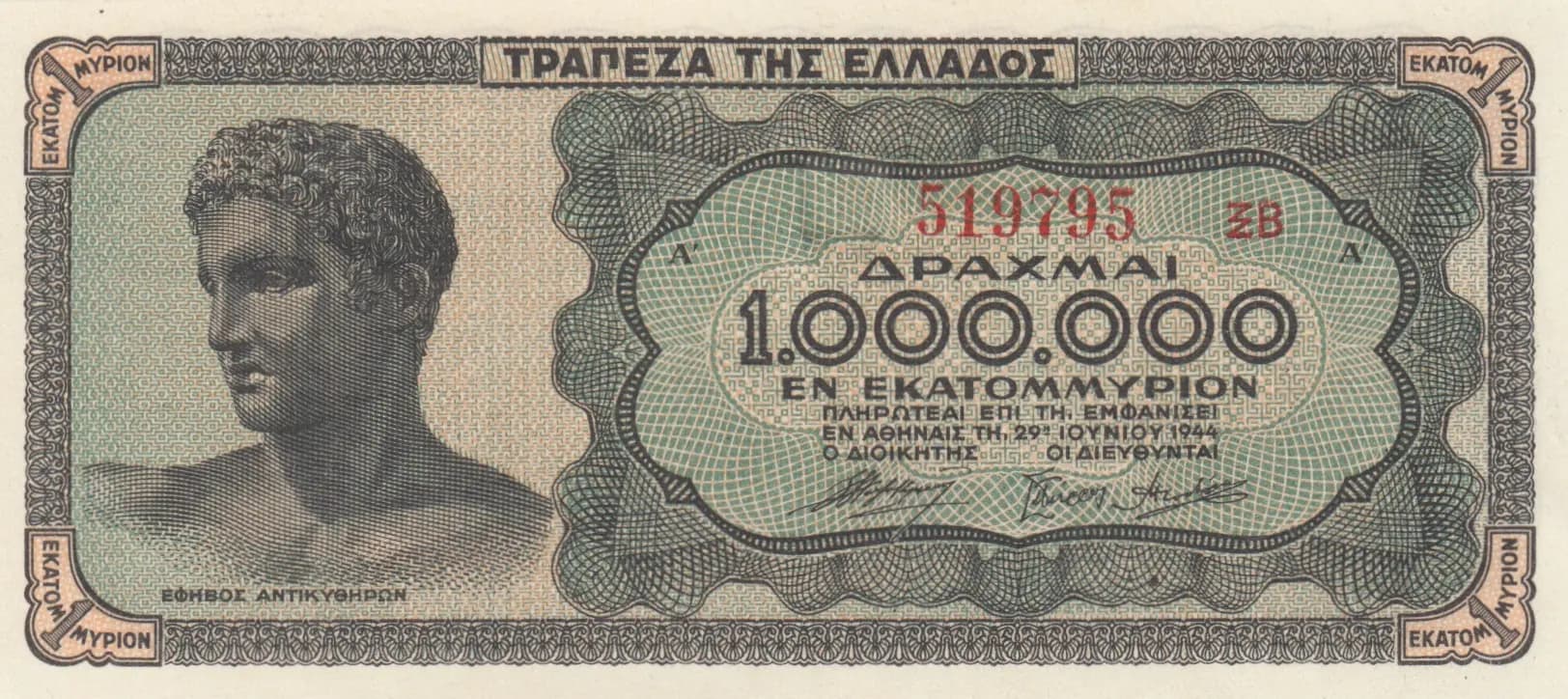
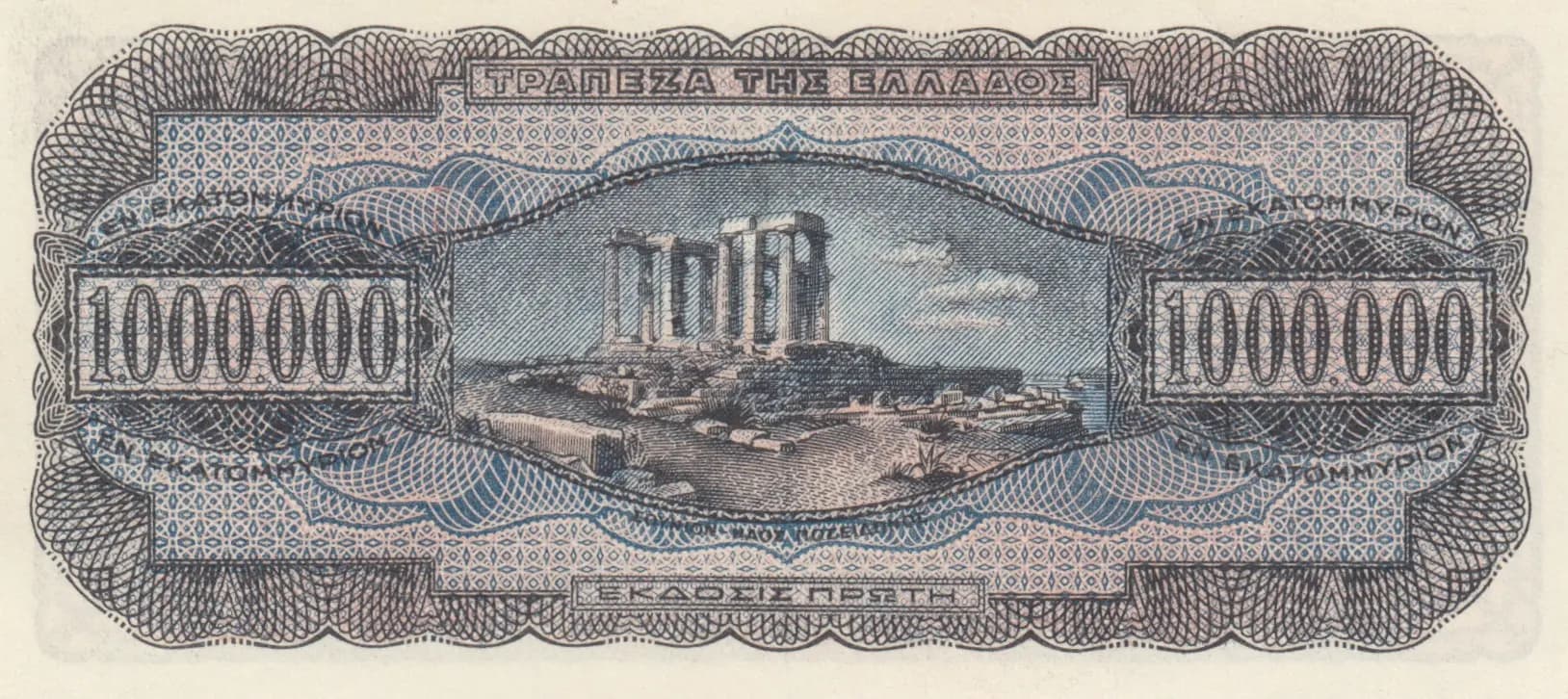
This is an exceptional example of the Greek Bank of Greece's 1,000,000 drachmai note from 1944, issued during the tumultuous final year of World War II occupation. The note features a striking classical male bust (the Ephebos of Antikythera) on the obverse rendered in green and tan tones, while the reverse showcases the ruins of the Temple of Poseidon at Sounion in blue and pink—both iconic symbols of Greek cultural heritage. In pristine uncirculated condition with crisp printing and no visible wear, this high-denomination inflation-era note represents an important piece of Greek monetary history during the Nazi occupation period.
Common. Despite its historical interest and high face value, this note is common in the marketplace. eBay sales data shows UNC examples selling for $8.50 (2025), with even premium graded examples (PMG 67) selling for $221 in 2018—prices that, while respectable, do not indicate rarity. The 2016 catalog value for UNC is listed at $4. These price levels and the availability of multiple examples in professional grading services indicate this was printed in substantial quantities. The 1944 date and hyperinflation context suggest large print runs to meet demand during the occupation period's economic crisis.
This note was issued on June 29, 1944, during Nazi occupation of Greece and represents the hyperinflationary period following the country's wartime economic collapse. The Bank of Greece chose deliberately patriotic imagery—the ancient Ephebos sculpture and the classical Temple of Poseidon—to reinforce Greek national identity and cultural continuity during foreign occupation. The use of classical Greek antiquities on the currency served as a symbolic assertion of Greek sovereignty and historical legitimacy at a moment when the nation's independence was threatened.
The obverse displays the famous Ephebos of Antikythera, an ancient Greek bronze sculpture depicting a classical male youth in profile facing left, rendered through fine engraving with classical proportions and idealized features characteristic of Hellenistic sculpture. The portrait is positioned prominently on the left side with an ornamental rectangular cartouche containing denomination text on the right. The reverse features a detailed engraved landscape depicting the Temple of Poseidon at Cape Sounion, showing standing Corinthian columns among ruins on a rocky coastal promontory, rendered with sophisticated tonal gradation through cross-hatching techniques. Both sides employ elaborate geometric border patterns and decorative frames typical of 1940s Bank of Greece currency design. The color scheme combines green and tan on the obverse with blue and pink on the reverse, creating visual distinction between the two sides.
OBVERSE: 'ΤΡΑΠΕΖΑ ΤΗΣ ΕΛΛΑΔΟΣ' (Bank of Greece) / 'ΔΡΑΧΜΑΙ' (Drachmai) / '1.000.000' (1,000,000) / 'ΕΚΑΤΟΜΜΥΡΙΟΝ' (One Million) / 'ΕΦΗΒΟΣ ΑΝΤΙΚΥΘΗΡΩΝ' (Youth/Ephebos of Antikythera) / 'ΑΘΗΝΑΙΣ ΤΗ. 29ᵉ ΙΟΥΝΙΟΥ 1944' (Athens, June 29, 1944) / 'Ο ΔΙΟΙΚΗΤΗΣ' (The Director) / 'ΟΙ ΔΙΕΥΘΥΝΤΑΙ' (The Directors) / 'Σ149795' (Serial Number with prefix) / 'ΖΒ' (Letter designations). REVERSE: 'ΤΡΑΠΕΖΑ ΤΗΣ ΕΛΛΑΔΟΣ' (Bank of Greece) / '1000000' (1,000,000 - repeated on both left and right sides).
The note was produced using traditional intaglio engraving (line engraving and steel plate printing), as evidenced by the crisp, fine-line detail work, complex cross-hatching backgrounds, and the three-dimensional quality of the portrait and landscape elements visible in the visual analysis. The multi-color printing required separate plate passes for the base color layers (green/tan and blue/pink respectively) combined with the black intaglio-engraved design. This was standard security printing practice for the Bank of Greece during this period. The printer is not specifically identified in the available documentation.
The observed example is cataloged as Pick 127 (base number) with the designation P-127a noted in PMG records. The visible serial number 'Σ149795' with letter prefix 'ΖΒ' represents one variant within the issue; multiple letter prefixes likely exist across the print run. The June 29, 1944 date is consistent across the known variety, and no significant overprints or alterations are evident in this specimen. PMG has cataloged one main variant for this Pick number, suggesting relatively uniform production standards across the issue.