5 pounds 1958 specimen
Market Prices
1 saleAbout This Note
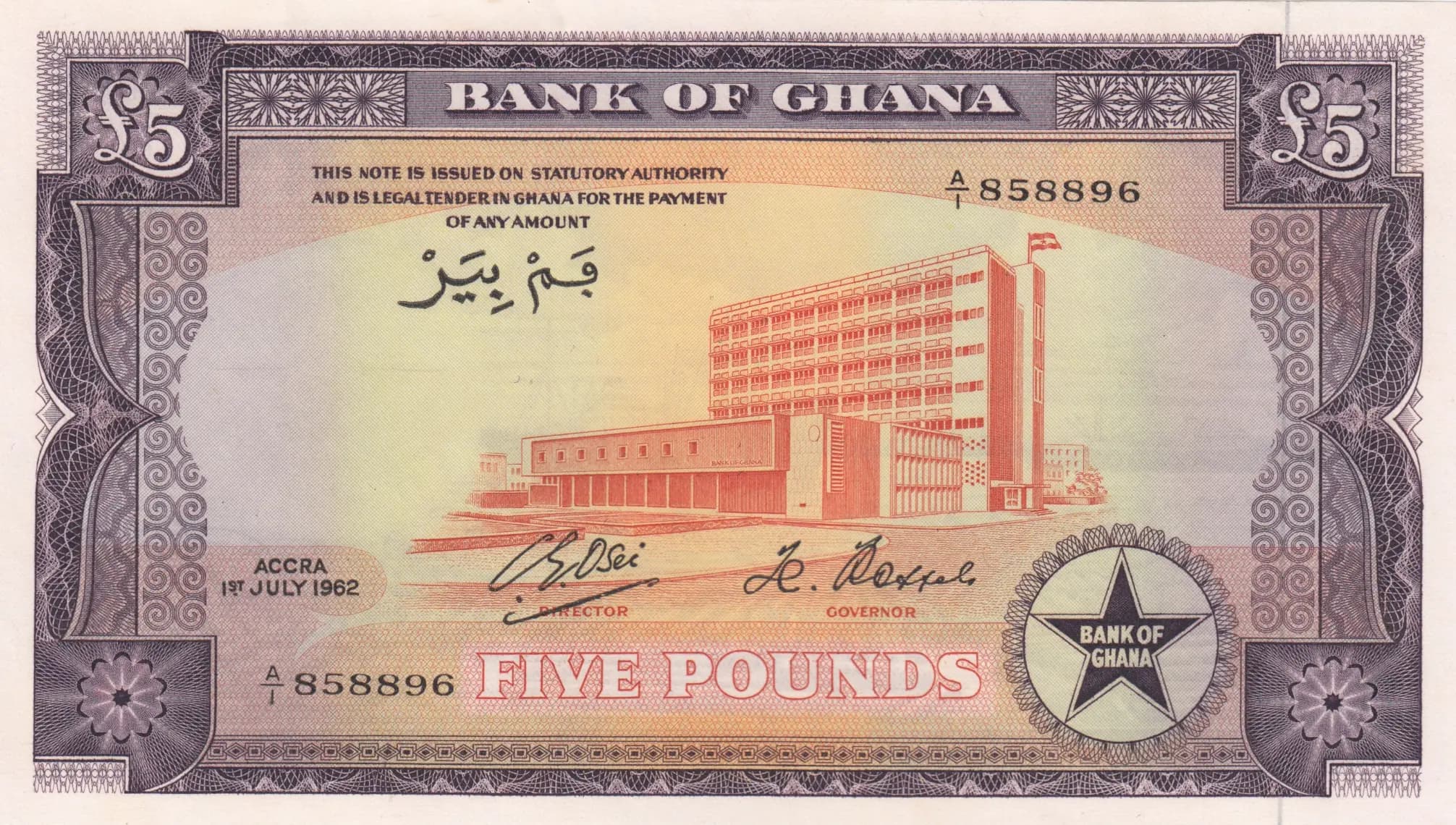
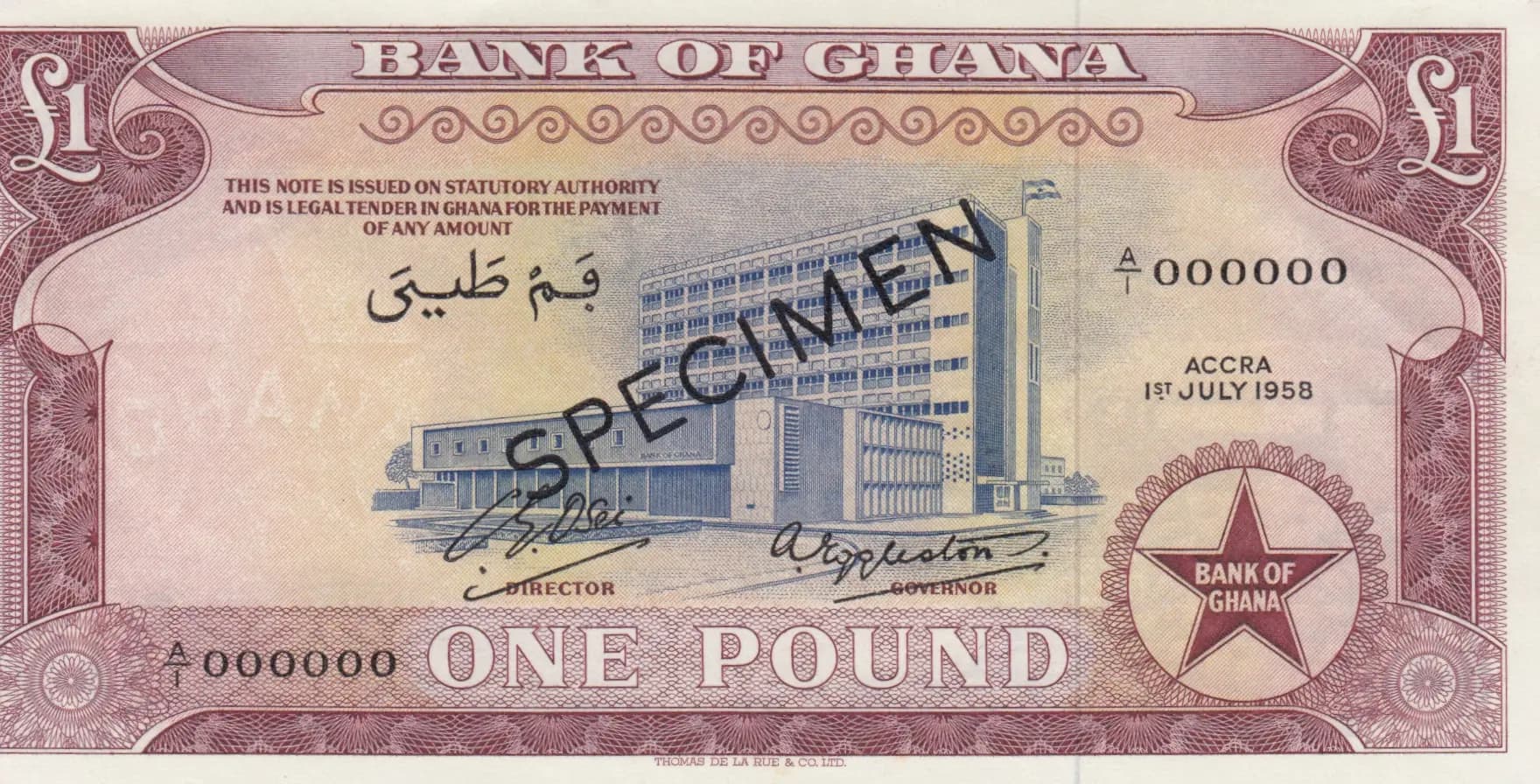
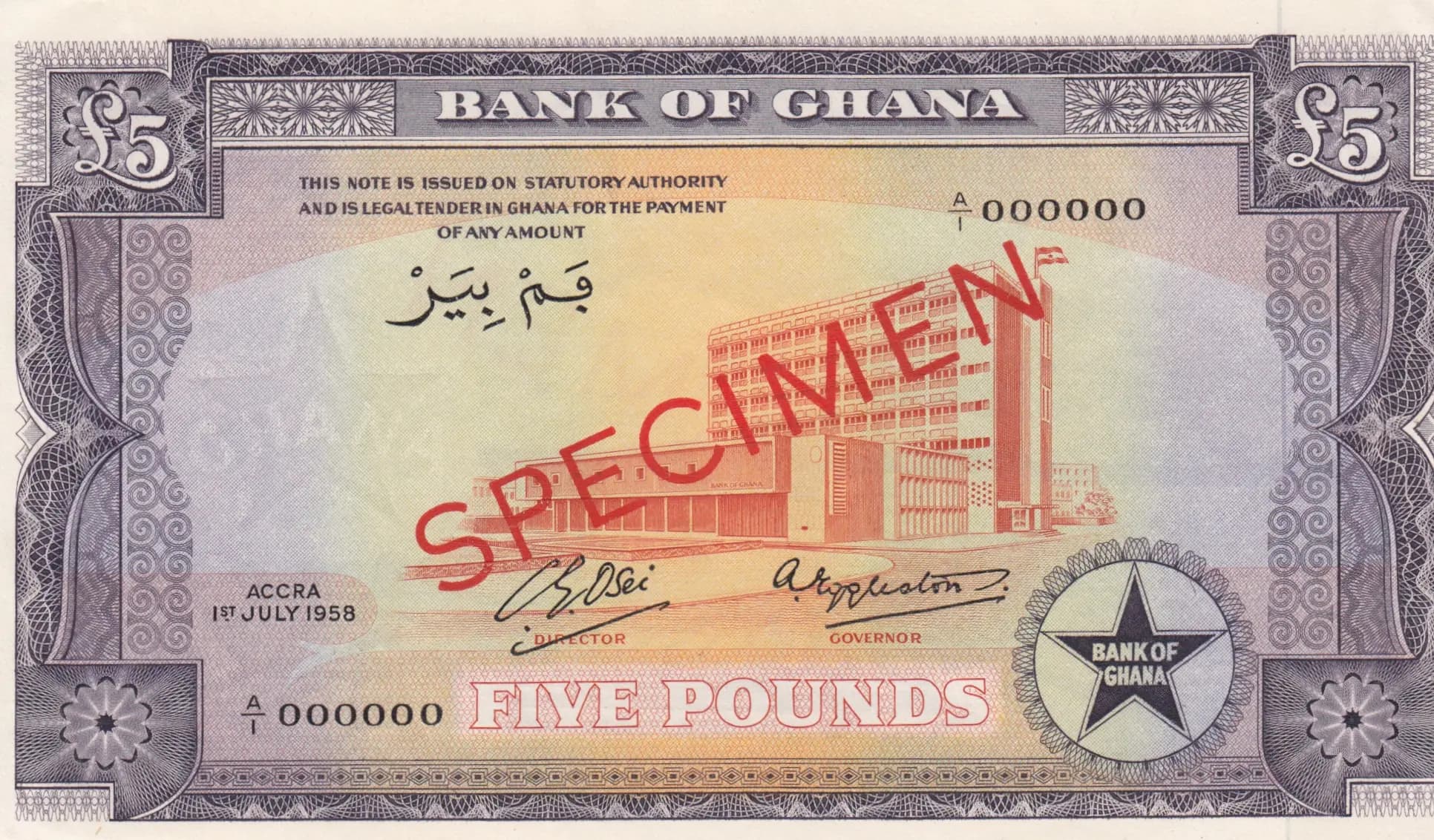
This is a Bank of Ghana £5 specimen note from 1958, the inaugural year of Ghana's central bank currency. The note displays exceptional uncirculated condition with vibrant purple, orange, and multicolored printing throughout. The 'SPECIMEN' overprint in red diagonal across both sides confirms its non-circulating status, making it a historically significant example of Ghana's first pound sterling-denominated banknotes issued immediately following independence.
Uncommon. While Bank of Ghana £5 notes from 1958-1962 are not rare in circulated grades, specimen notes (marked with the red 'SPECIMEN' overprint) represent a smaller subset of the total issue. Specimen notes were typically produced in limited quantities for central bank archives, government distribution, and presentation purposes rather than for general circulation. The 2019 catalogue value of $250 UNC for regular issues suggests specimen varieties command a modest premium, and the AU condition grade of this specimen example places it above common market finds.
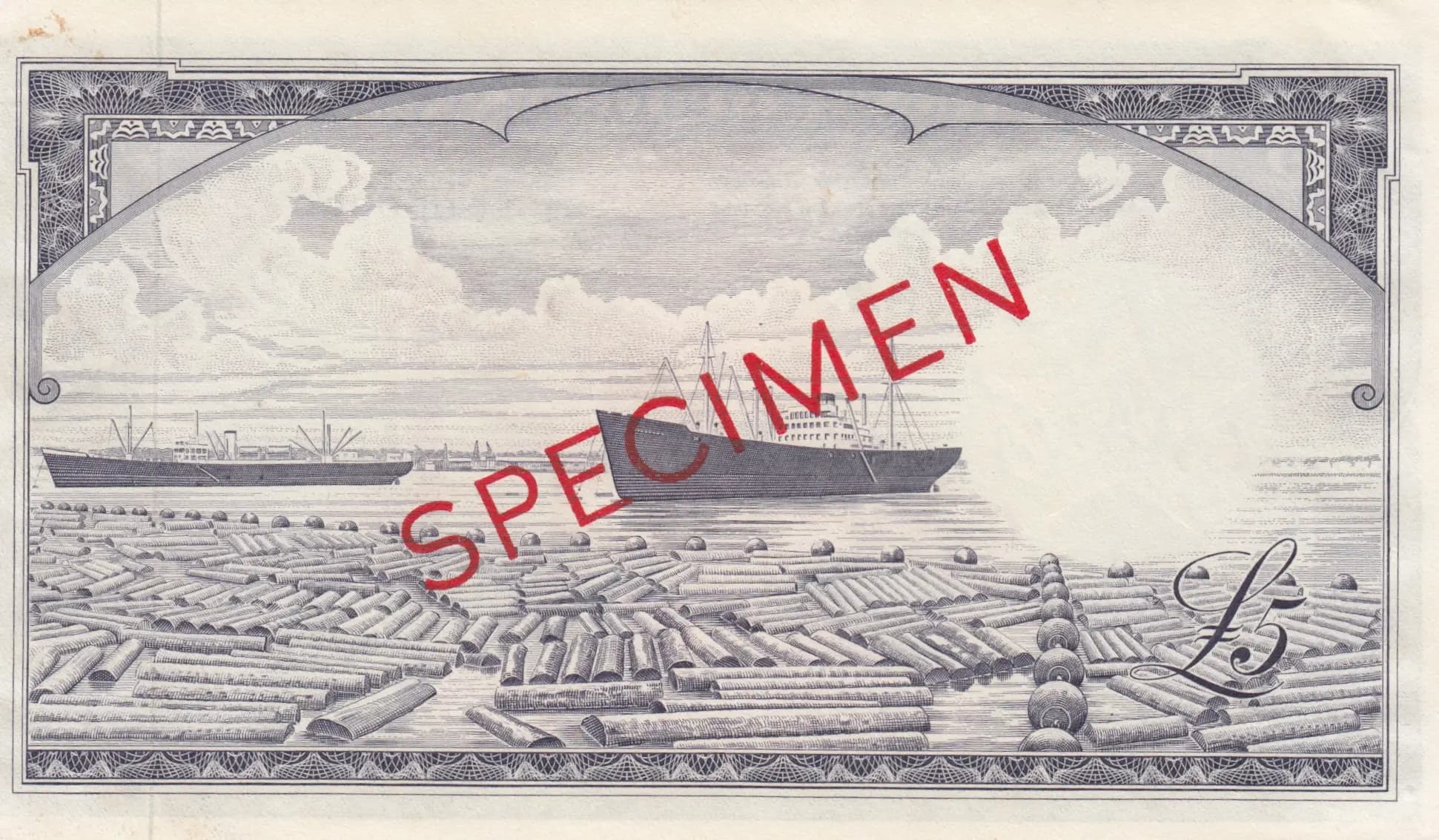
Issued on 1 July 1958, this note represents Ghana's first independent monetary policy following the country's March 1957 independence from British colonial rule. The reverse design depicting cargo ships and timber exports reflects Ghana's mid-20th century economic reliance on natural resource exports, particularly cocoa and timber, during the optimistic early years of the Nkrumah administration. The bilingual inscriptions in English and Urdu/Persian script underscore Ghana's pan-African and international commercial positioning during this formative period.
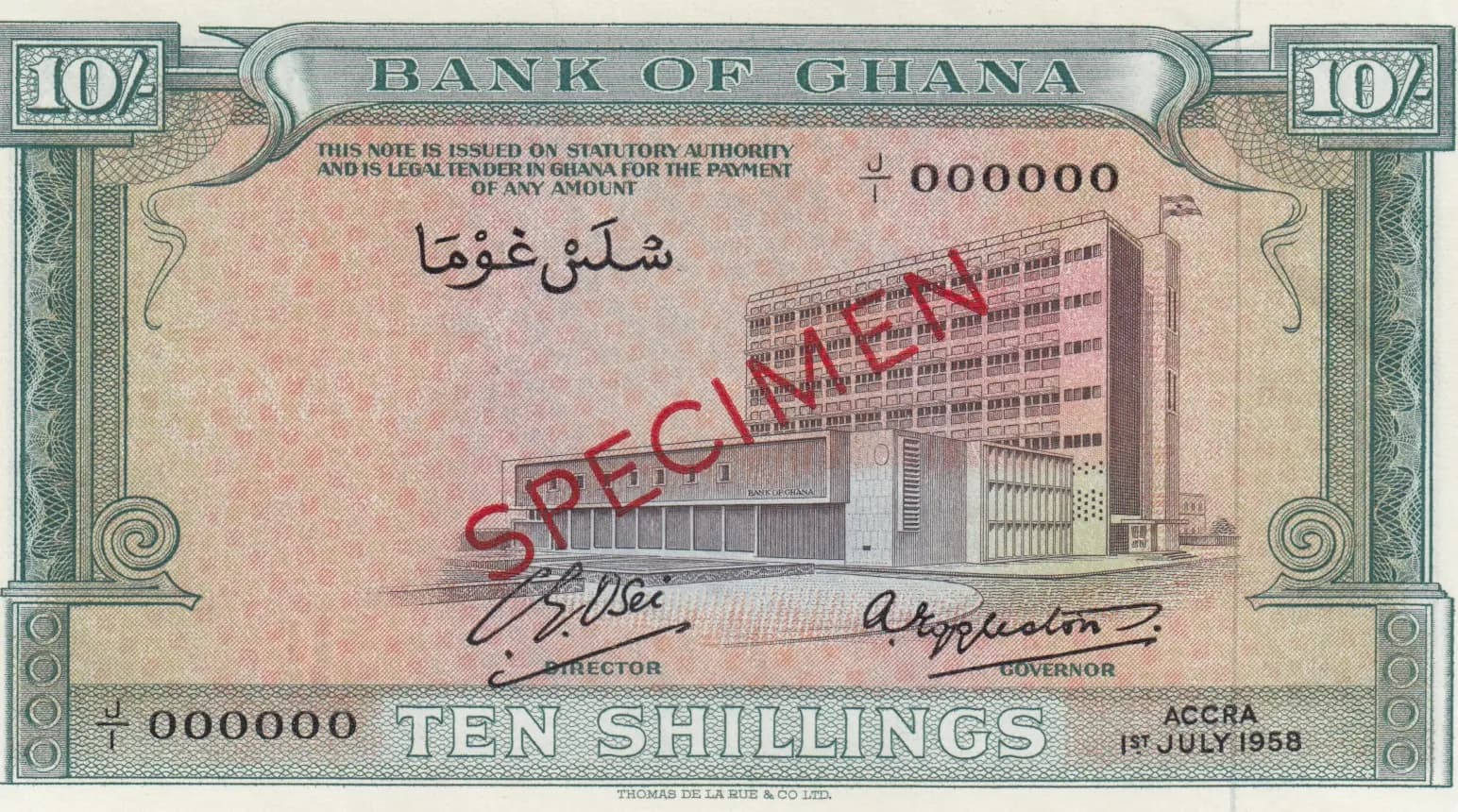
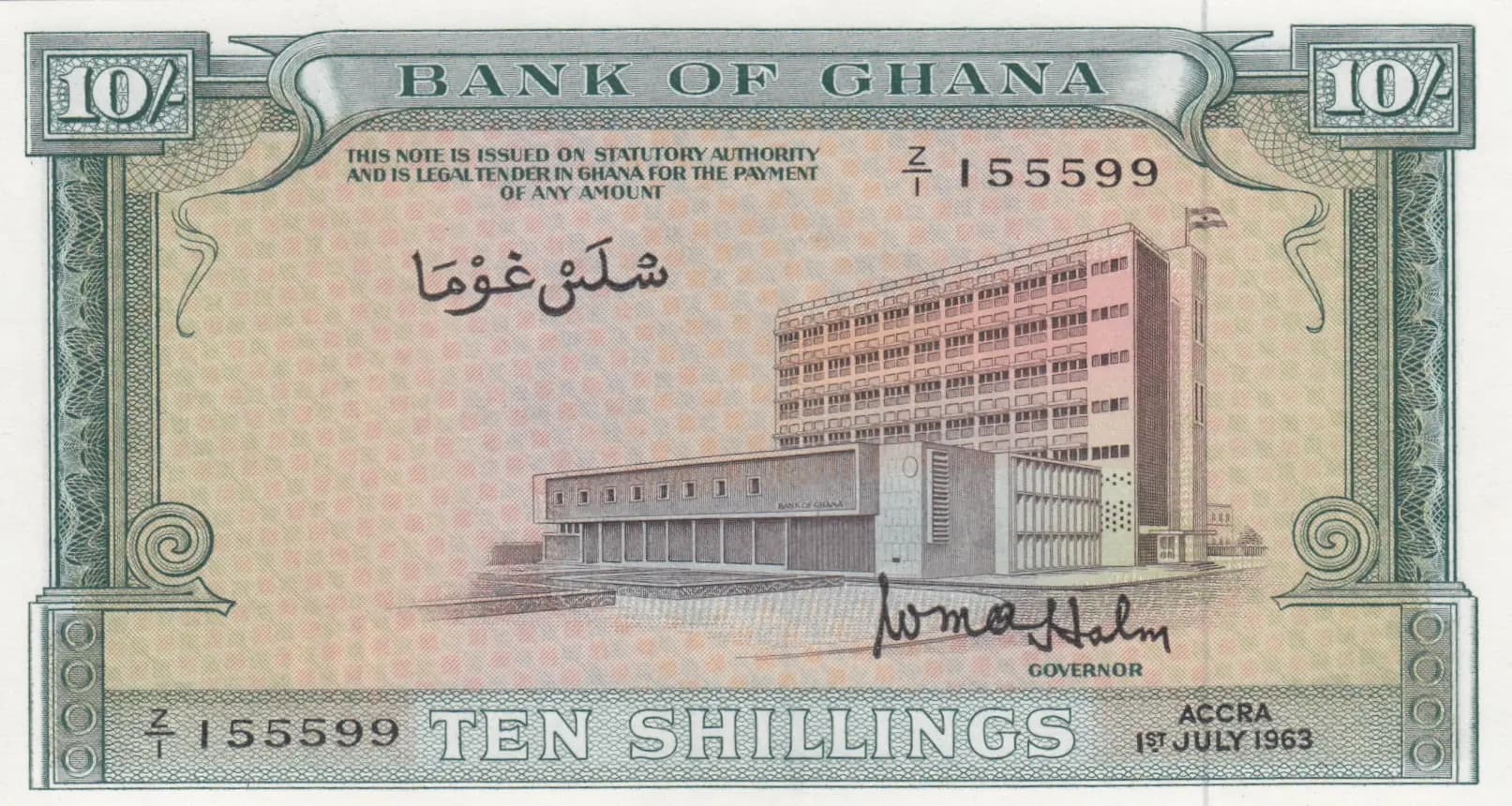
The obverse features the Bank of Ghana's headquarters building in Accra depicted in red and orange tones at center-right, a symbol of Ghana's newly established monetary authority. The building is rendered in fine detail with a flag atop, flanked by intricate decorative borders with geometric and floral patterns characteristic of 1950s banknote design. The reverse depicts a dynamic maritime export scene with multiple merchant cargo vessels in water, stacked timber logs in the foreground representing Ghana's timber exports, and a cloudy seascape. The Bank of Ghana star logo appears prominently on the obverse, serving as the central bank's primary heraldic symbol.
FRONT: 'Bank of Ghana' (English); 'This note is issued on statutory authority and is legal tender in Ghana for the payment of any amount' (English); 'پنج پونڈ' - Five Pounds (Urdu/Persian script); 'Accra 1st July 1958' (English); 'Five Pounds' (English); 'Director' and 'Governor' (signature lines in English); 'Specimen' (red overprint). BACK: 'Specimen' (red diagonal overprint); '£5' (denomination marker, English).
Intaglio engraving (line engraving), as evidenced by the fine detailed line work visible throughout both sides, particularly in the decorative border patterns, the building architecture, and the maritime scene. The visual analysis confirms sophisticated security printing techniques typical of British-trained security printers of the era. The printer for P-3a variety is TDLR (Thomas De La Rue), the renowned British security printer.
This is identified as Pick P-3as, where the 's' suffix designates this as a specimen note (the 'as' suffix indicates specimen status in Pick catalogs). The visual confirmation of serial number A 000000 and the red diagonal 'SPECIMEN' overprint on both obverse and reverse are characteristic of specimen production. The date 'Accra 1st July 1958' on the obverse places this within the earliest issuance. PMG population data confirms P-3a (regular issue) and P-3s1 (specimen variant) exist for this denomination, with TDLR as the confirmed printer.