1 pound 1958 specimen
Market Prices
11 salesAbout This Note
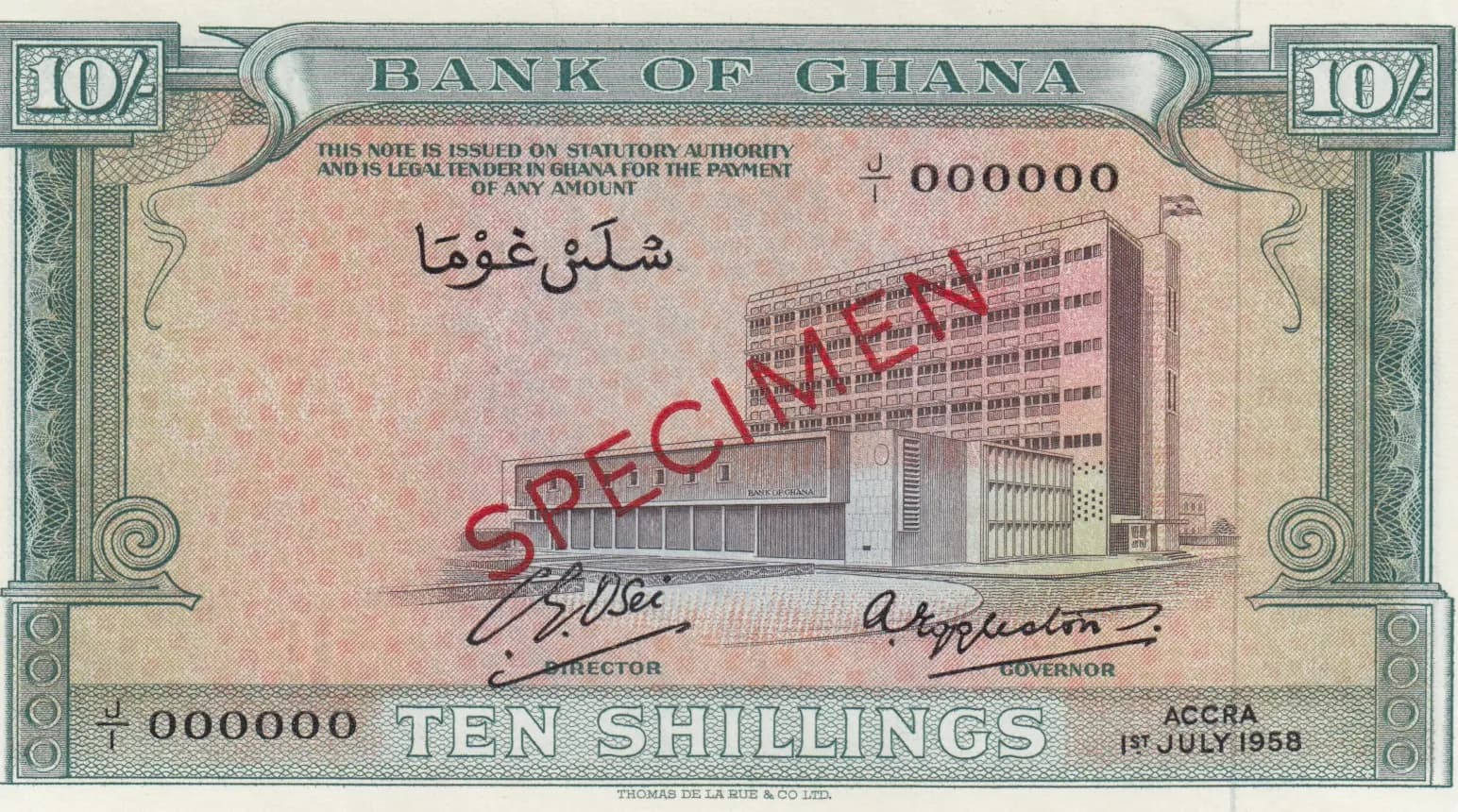
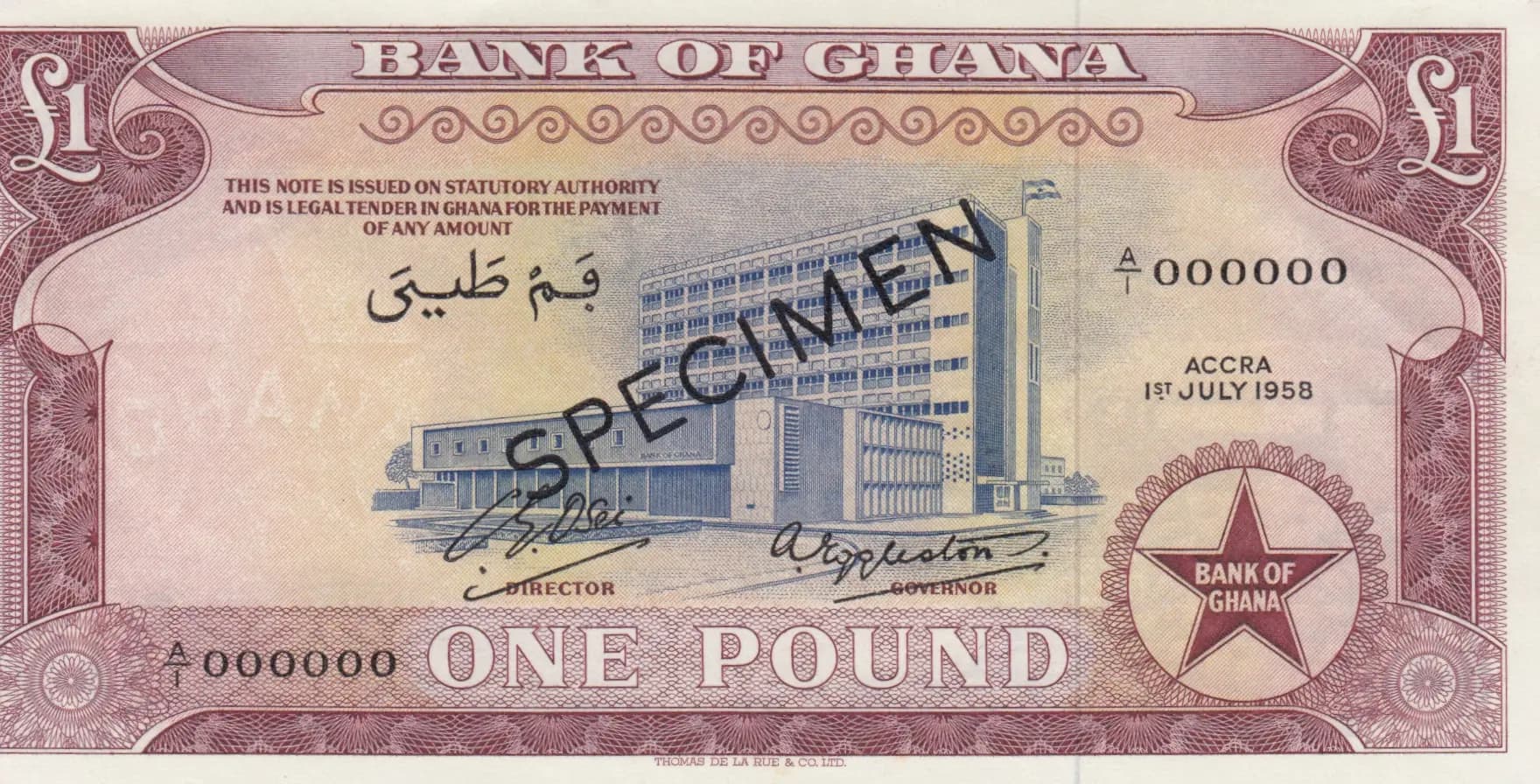
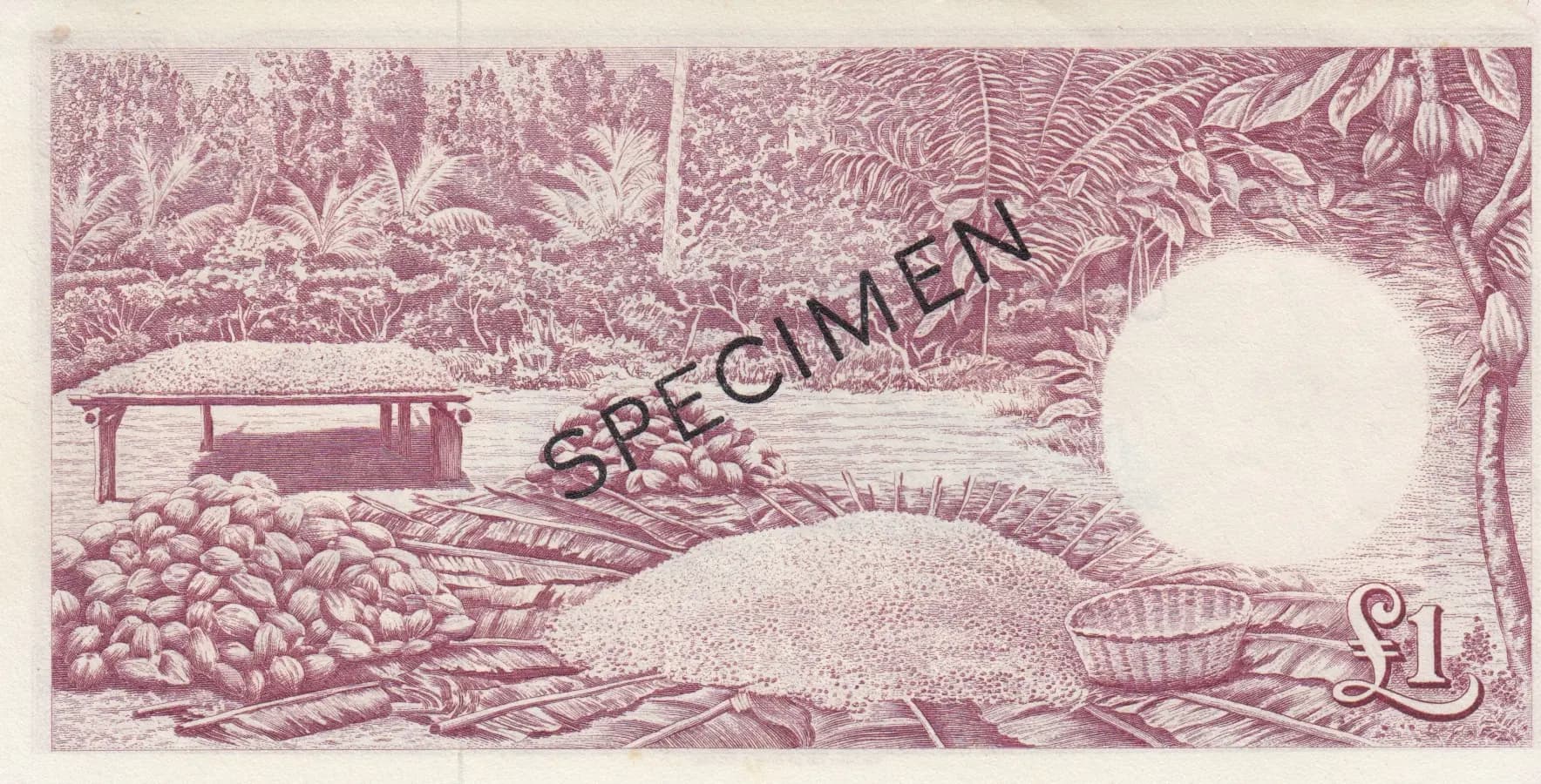
This is a 1958 Bank of Ghana £1 specimen note (Pick P-2as) in AU condition, featuring the iconic Bank of Ghana building in Accra on the obverse and a detailed agricultural scene of cocoa harvesting on the reverse. The note displays exceptional preservation with no visible wear, creasing, or damage, and carries the diagonal 'SPECIMEN' overprint indicating it was produced for distribution to banks and reference purposes rather than circulation. The mauve and cream color scheme with fine engraving work exemplifies the security printing standards of Thomas De La Rue & Co. Ltd., making it a significant example of Ghana's early post-independence currency.
Common. This is a specimen note from the first issue of the Bank of Ghana's currency (1958-1962), and specimen notes were produced in substantial quantities for distribution to commercial banks, government agencies, and archival purposes. eBay market data shows examples regularly selling in the $12-68 range across various condition grades (VF to PMG 65), with AU and UNC examples typically selling between $20-60, indicating robust supply and consistent collector demand at moderate price levels. The absence of any documented scarcity in the PMG population report and the regular appearance in auctions confirm this as a commonly available variety.
Issued on 1st July 1958, just one year after Ghana's independence from British rule on 6 March 1957, this note represents the newly sovereign nation's assertion of monetary authority through the establishment of the Bank of Ghana. The Bank of Ghana building depicted in the center symbolizes the institutional foundation of the nation's financial independence, while the reverse design celebrating cocoa harvesting reflects Ghana's economic foundation as a major cocoa producer, central to the country's export economy and colonial legacy. The inclusion of Arabic script alongside English reflects Ghana's position in the broader African and Islamic context of the post-colonial period.
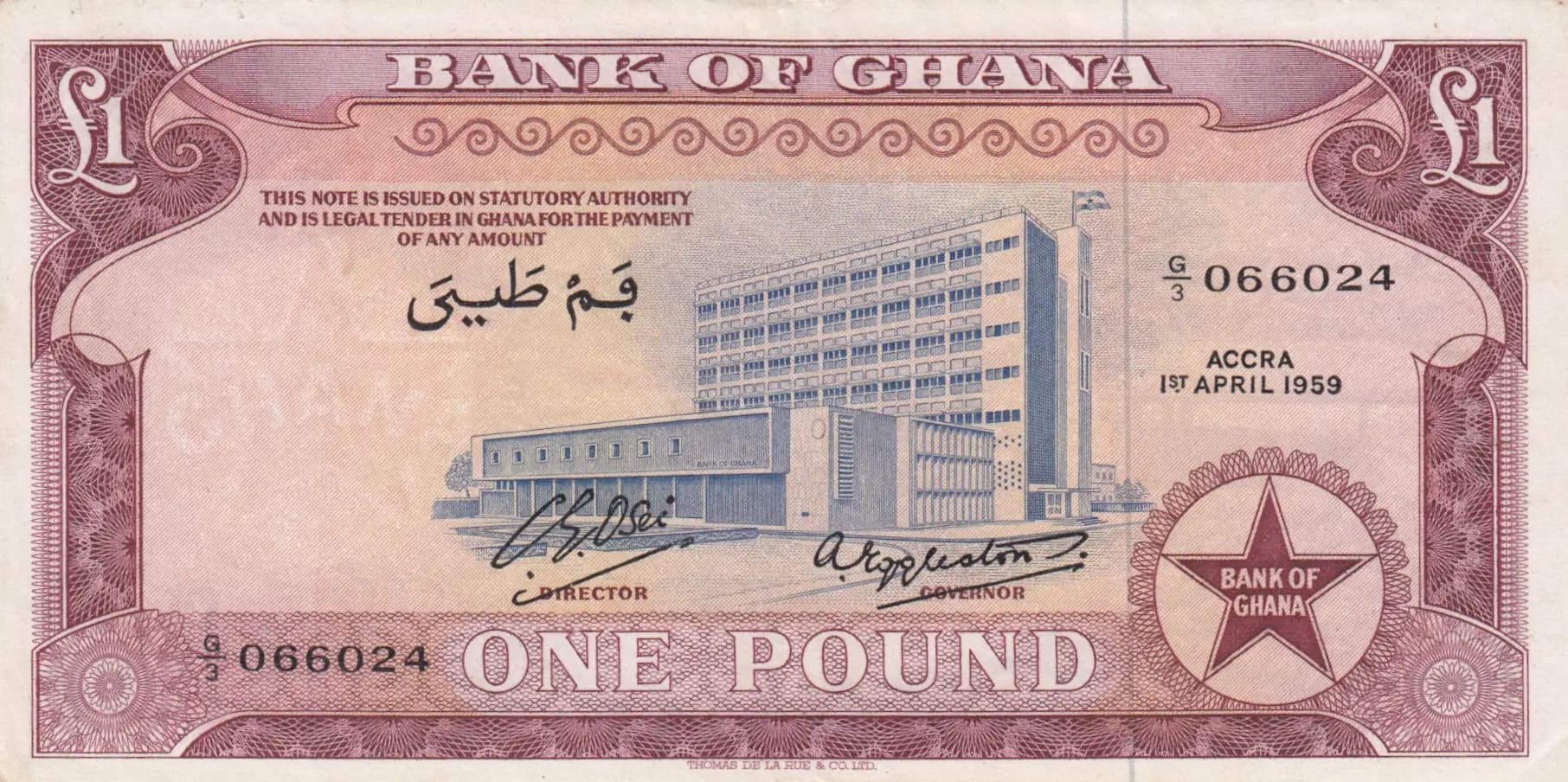
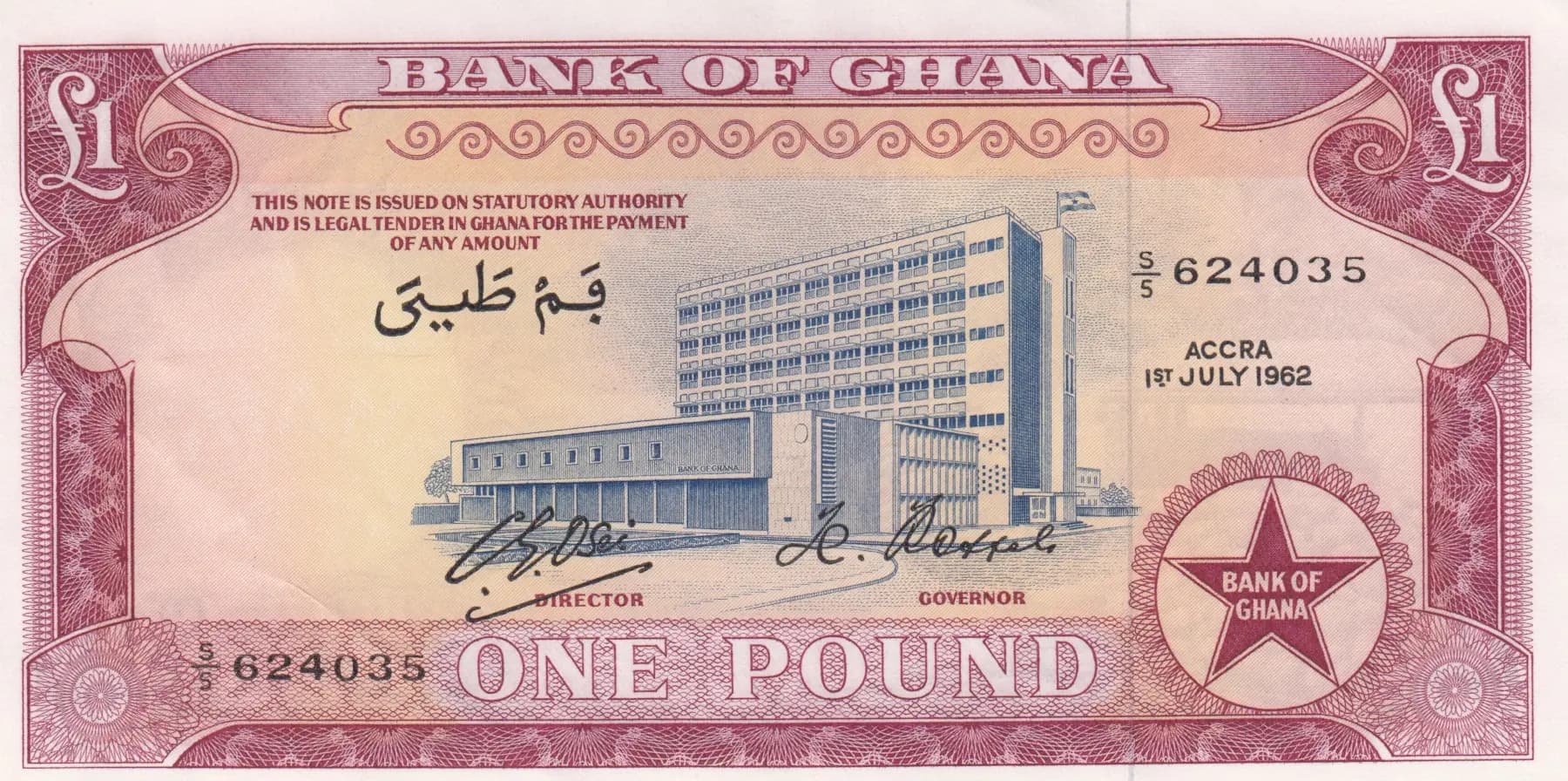
The obverse features the Bank of Ghana headquarters building in Accra as the central focal point, rendered in blue-grey with architectural detail showing a multi-story modern institutional structure typical of 1950s colonial-era government architecture. The building is framed by ornamental border elements with repeating scroll and spiral motifs in the mauve color scheme. The reverse depicts a tropical agricultural scene representing Ghana's cocoa industry, showing cocoa pods on plants, harvest baskets, a shelter or processing hut, and lush tropical vegetation including palm trees and dense forest backdrop, with what appears to be a water feature in the distance. Both sides incorporate the Bank of Ghana star emblem in red on a cream background. The overall design palette of mauve/purple and cream with fine guilloche patterning serves both aesthetic and security purposes.
FRONT: 'BANK OF GHANA' (institutional identifier); 'THIS NOTE IS ISSUED ON STATUTORY AUTHORITY AND IS LEGAL TENDER IN GHANA FOR THE PAYMENT OF ANY AMOUNT' (legal tender declaration); Arabic inscription (One Pound denomination); 'ACCRA' (place of issue); '1ST JULY 1958' (issue date); 'SPECIMEN' (specimen designation); 'DIRECTOR' and 'GOVERNOR' (signature titles); 'ONE POUND' (denomination in words); 'A 000000' (specimen serial number); 'THOMAS DE LA RUE & CO. LTD.' (printer attribution). REVERSE: 'SPECIMEN' (specimen designation); '£1' (pound sterling symbol denomination marker).
Intaglio engraving (line engraving), printed by Thomas De La Rue & Co. Ltd. (TDLR), one of the world's premier security printers. The intricate fine line engraving patterns visible throughout the background, detailed guilloche border work, and complex shading created through engraving techniques are characteristic of high-security currency production. The multi-color printing process utilized the mauve/purple, blue-grey, red, and cream inks visible in the design, applied through the engraved plate process standard for banknote production of this era.
This is specifically identified as Pick P-2as, the specimen variant (denoted by 's' suffix) of the £1 note. The 's' designation indicates this is a specimen overprint rather than a regular circulation note. The note carries the standard 'SPECIMEN' diagonal overprint with zero serial number (A 000000), typical of specimen notes prepared for official distribution. Other known varieties of the £1 note from this issue include P-2a, P-2b, P-2c, and P-2d, which represent different signature combinations and/or printer varieties, all printed by TDLR. The 1st July 1958 date is the standard issue date for this series.