1 pound 1962
Market Prices
14 salesAbout This Note
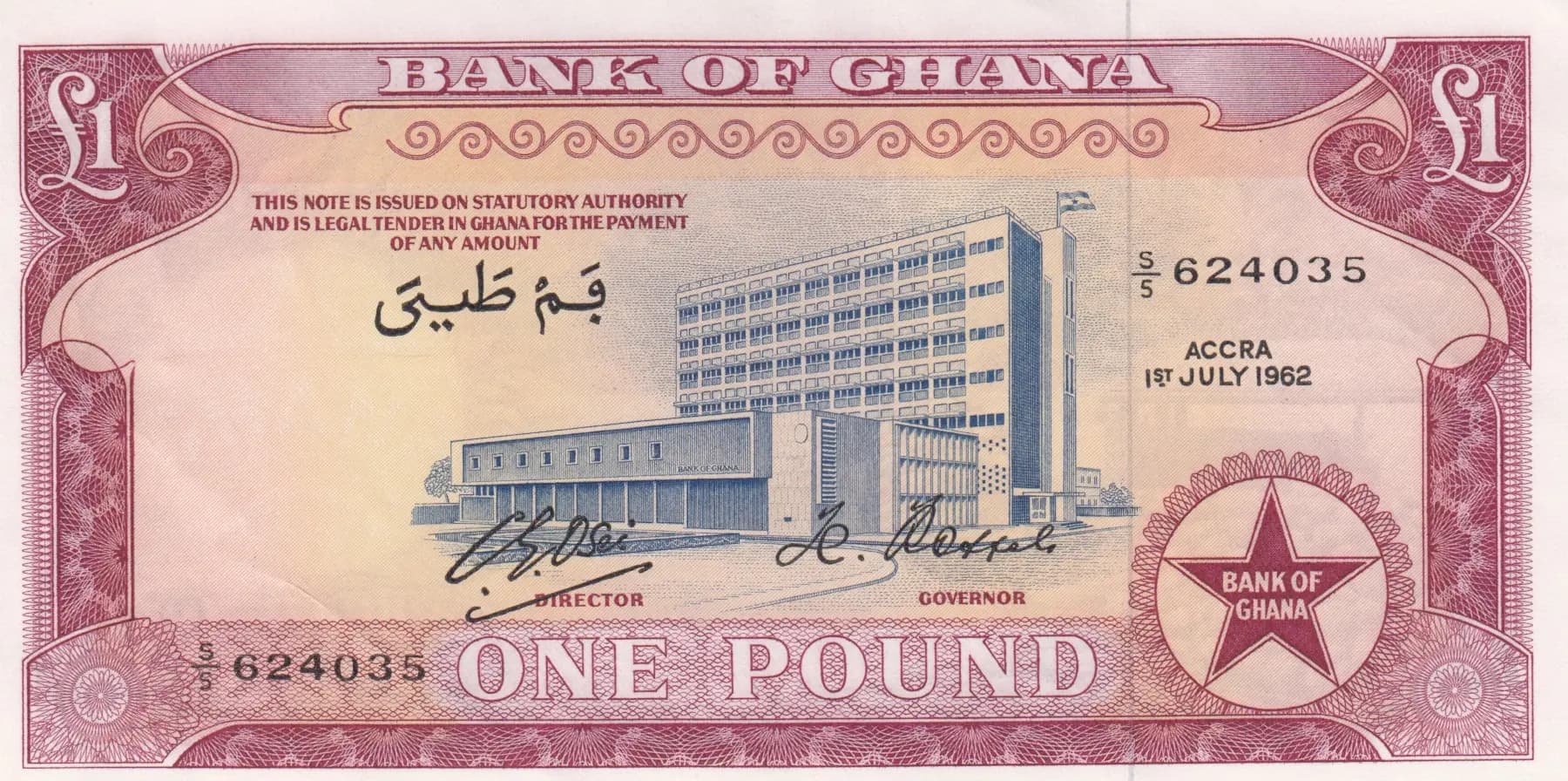
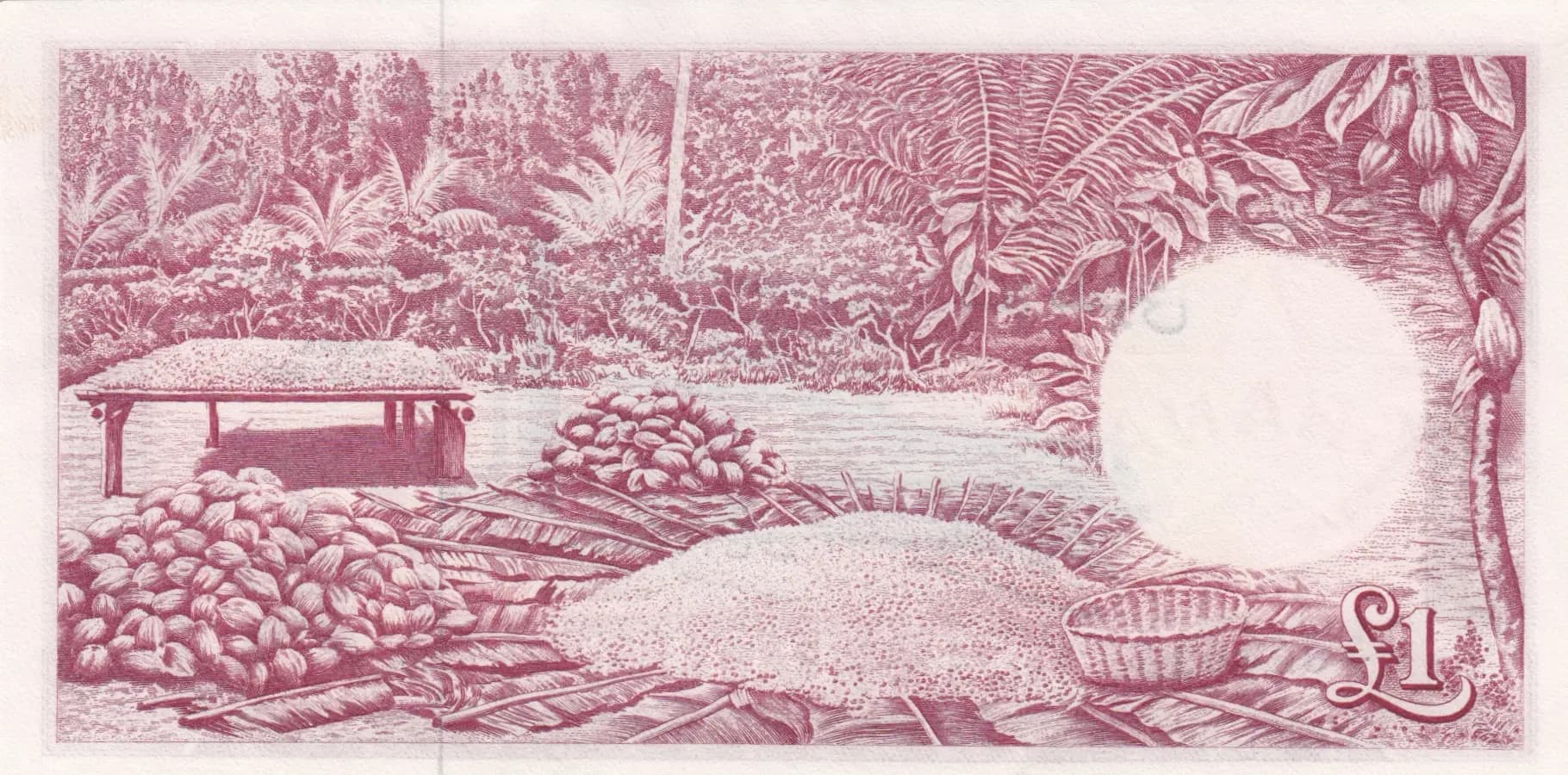
A Bank of Ghana One Pound note from 1st July 1962, graded AU, representing Ghana's early post-independence currency. The note exhibits the characteristic burgundy and blue color scheme with exceptional clarity and preservation, showing no signs of circulation wear. The obverse features the modernist Bank of Ghana headquarters building in Accra, while the reverse depicts a detailed agricultural scene of cacao cultivation, reflecting Ghana's economic foundation as a major cocoa producer.
Common. This note represents a regular issue of the 1958-1962 Ghanaian pound series with substantial print runs. eBay market data shows consistent sales ranging from $5-$143.50 across various grades, with AU/AUNC condition examples selling in the $24-$57 range (2018-2022 data), indicating robust collector availability. Catalogue 2019 values of $25 for UNC condition further confirm this as a standard circulation-issue note without rarity premium. Multiple printer variants (P-2a through P-2s) exist, suggesting high-volume production.
Issued in 1962, this note commemorates Ghana's transition to the Ghanaian pound currency system following independence from British colonial rule in 1957. The Bank of Ghana headquarters building depicted on the obverse symbolizes the newly sovereign nation's financial independence and modern aspirations. The reverse's focus on cacao pods and tropical agriculture underscores Ghana's primary export economy and natural wealth during this pivotal period of nation-building.
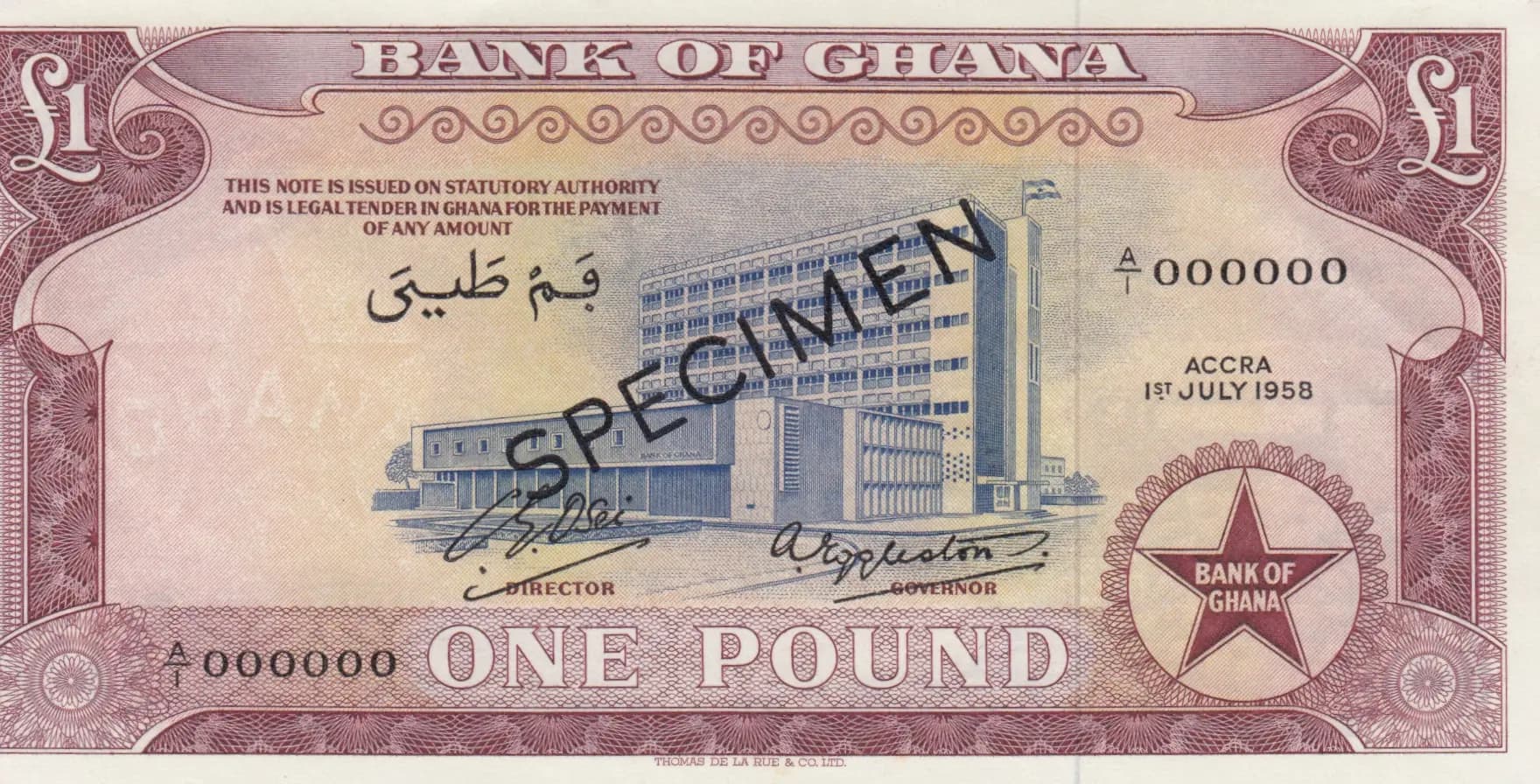
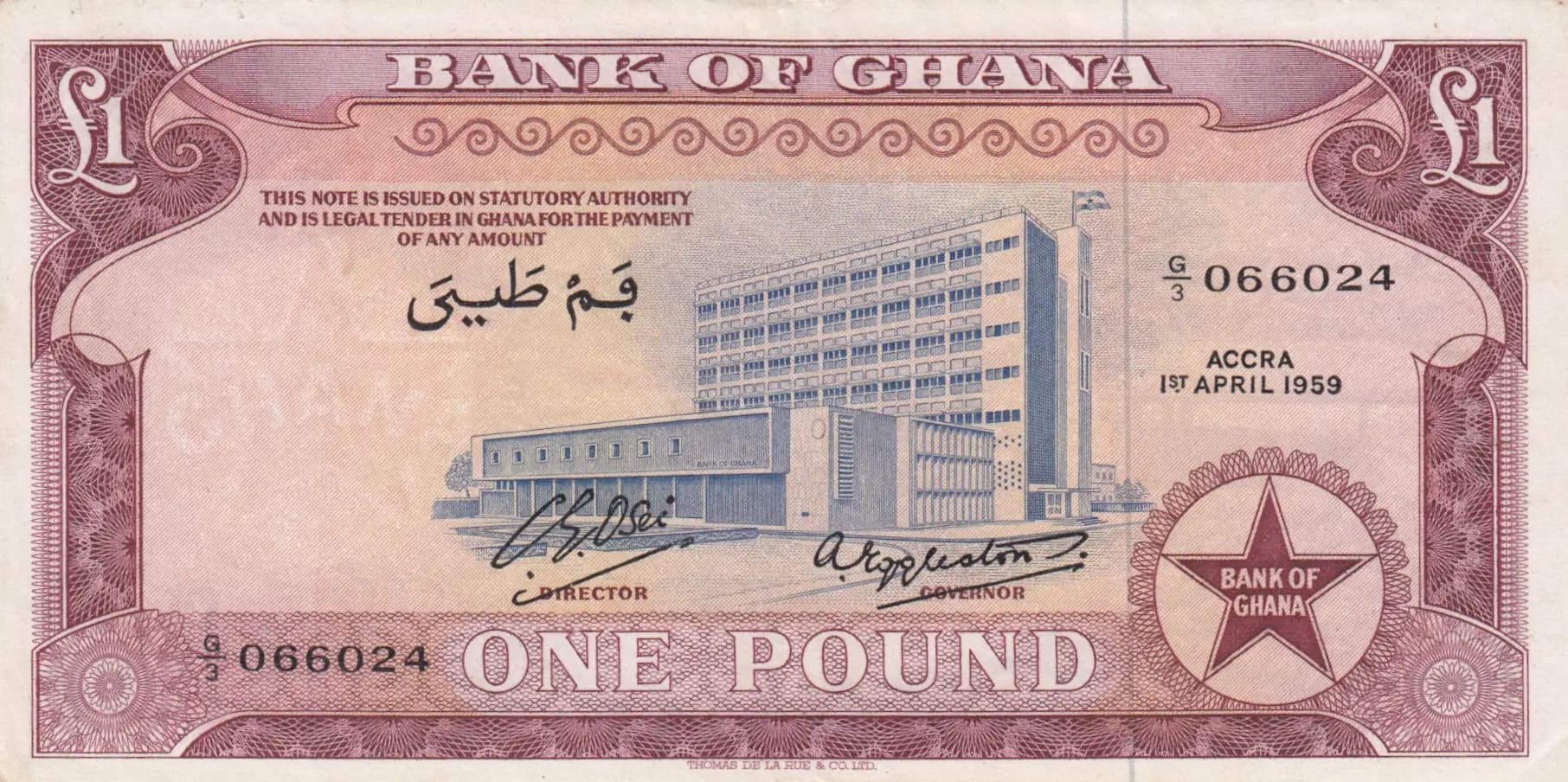
The obverse features an architectural centerpiece depicting the Bank of Ghana's headquarters building in Accra, a modernist multi-story office structure rendered in blue and beige tones, symbolizing Ghana's financial independence and contemporary development. The note is framed by an ornate burgundy/maroon border with decorative spiral patterns in all four corners, reflecting classical banknote design aesthetics. The reverse presents an engraved tropical agricultural scene centered on cacao pods in harvest—shown in piles on the left and middle—with a thatched shelter structure, baskets, banana plants, and dense forest vegetation, illustrating the economic significance of cocoa cultivation to Ghana's economy. A star emblem containing 'BANK OF GHANA' text appears in the lower right corner of the obverse. Serial numbers appear in both upper right and lower left positions.
Front side: 'BANK OF GHANA' (issuing authority); 'THIS NOTE IS ISSUED ON STATUTORY AUTHORITY AND IS LEGAL TENDER IN GHANA FOR THE PAYMENT OF ANY AMOUNT' (legal tender declaration); Arabic text 'قم طليقي' (One Pound in Arabic transliteration); 'ACCRA' (city of issue); '1ST JULY 1962' (issue date); 'DIRECTOR' and 'GOVERNOR' (signature titles); 'ONE POUND' (denomination in English); Serial number 'S/5 6240035'. Reverse side: '£1' (denomination marker in lower right corner).
Intaglio engraving (line engraving and steel plate printing), characteristic of Banco Tornquist De La Republica (TDLR) production. The fine detail work, intricate cross-hatching, spiral corner patterns, and complex shading throughout both sides demonstrate the precision of steel plate engraving. The high-quality reproduction of architectural and botanical detail confirms professional security printing techniques standard for Commonwealth currency of the 1960s era.
This note is catalogued as Pick P-2d, specifically the variant printed by TDLR (Banco Tornquist De La Republica). The Pick catalog recognizes multiple varieties of the £1 1962 note (P-2a, P-2b, P-2c, P-2d, and P-2s), primarily distinguished by printer identification. The observed serial number 'S/5 6240035' may correspond to a specific printing run or sheet sequence, though individual serial numbers rarely distinguish significant varieties. The 1st July 1962 date is consistent with the final year of pound currency circulation before Ghana's 1965 transition to the cedi system, making this a late-issue variant of the pound series.