1 pound 1959
Market Prices
6 salesAbout This Note
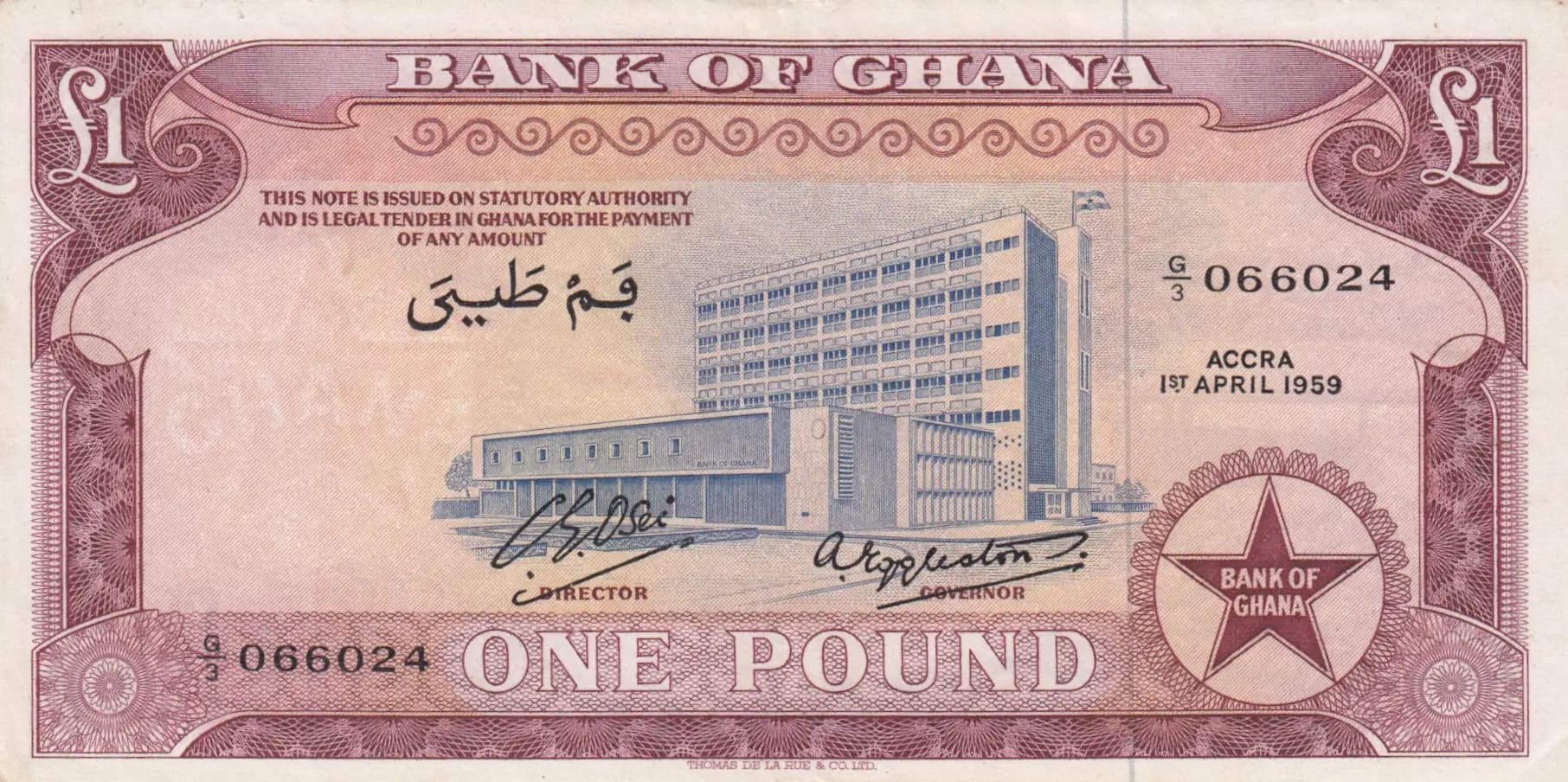
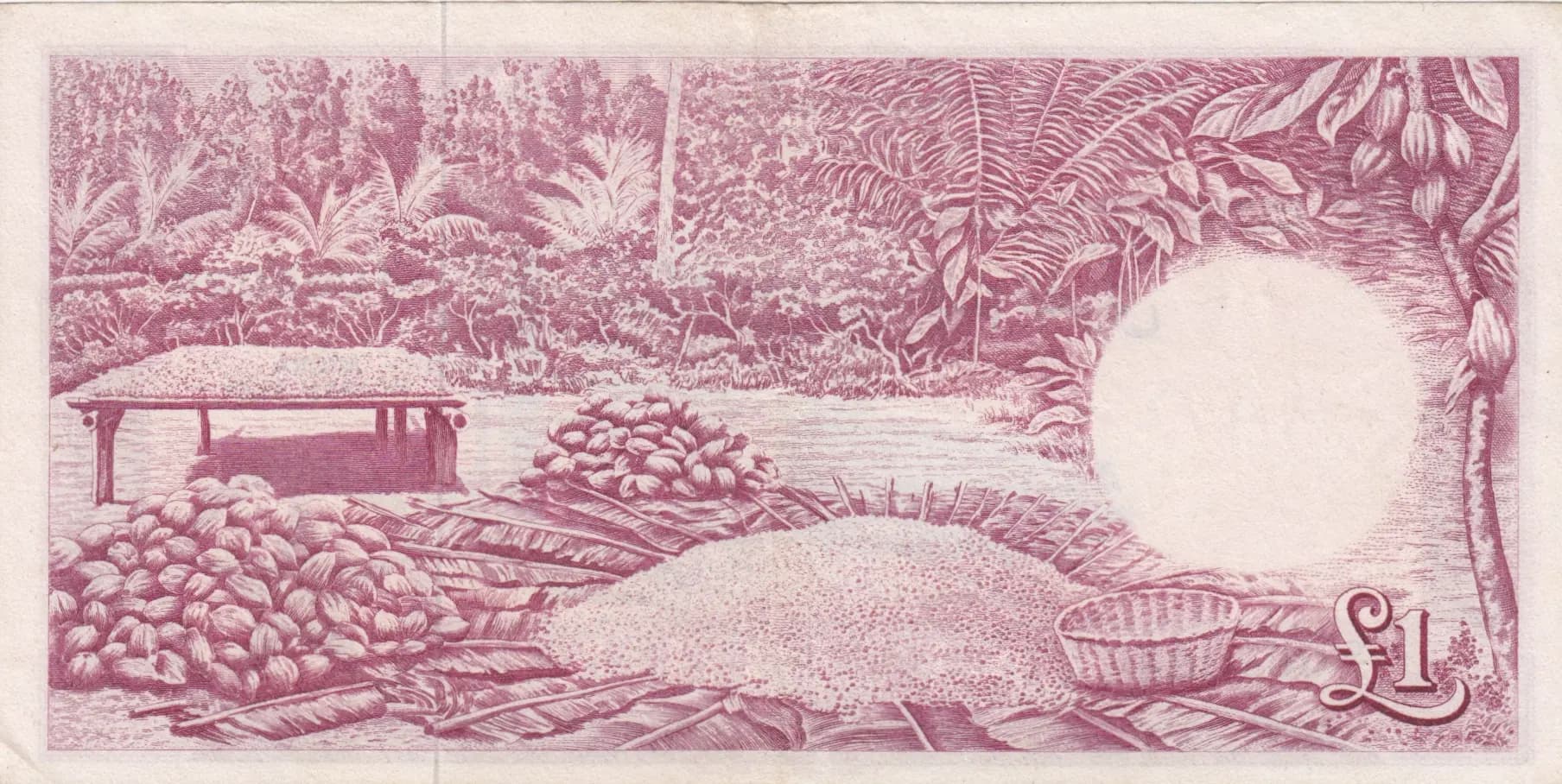
This is a Bank of Ghana £1 note from 1959, the first year of issue following Ghana's independence. The note displays the iconic Bank of Ghana building in Accra on the obverse in purple and mauve tones, with the reverse showing a detailed engraved scene of cacao pods and tropical agricultural activity. In VF condition, this note exhibits expected circulation wear including creasing, foxing, and light staining, while retaining good overall clarity and color saturation—a typical example of this historically significant early Ghanaian currency.
Common. This note represents a regular-issue circulation denomination from Ghana's first currency series (1959-1962). The eBay price data confirms common status: VF examples have sold consistently between $13.40 and $23.81 over the past decade, averaging around $20—well within the range typical of common banknotes from this era. No print run restrictions, recalls, or scarcity factors apply to this Pick number variant.
Issued on 1st April 1959, this £1 note marks Ghana's transition to independent currency following the establishment of the Bank of Ghana. The obverse depicts the Bank of Ghana's headquarters building in Accra, symbolizing the nation's new financial sovereignty, while the reverse celebrates Ghana's economic foundation through detailed imagery of cacao pods—reflecting the country's historical reliance on cocoa exports as its primary wealth source during the post-colonial period.
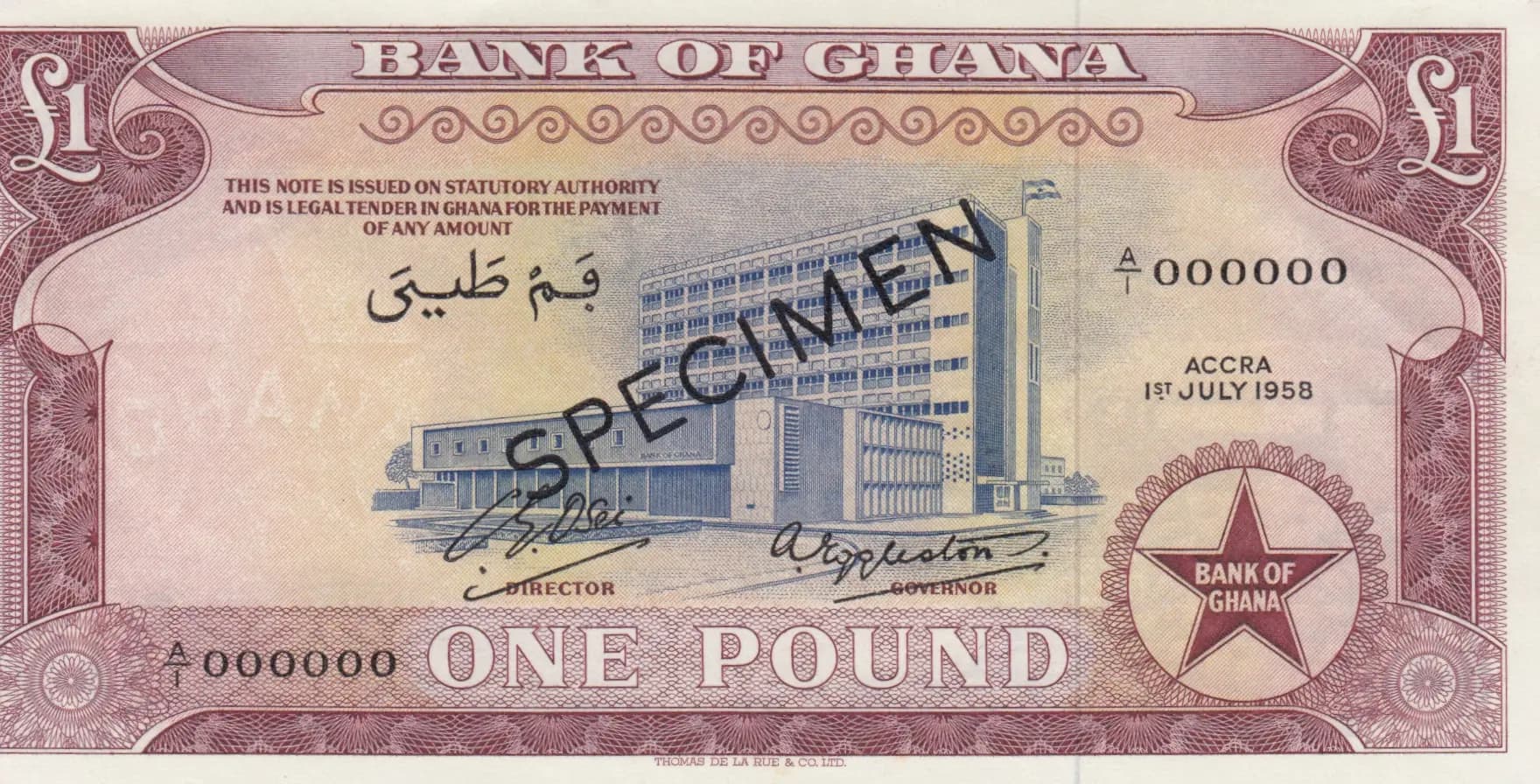
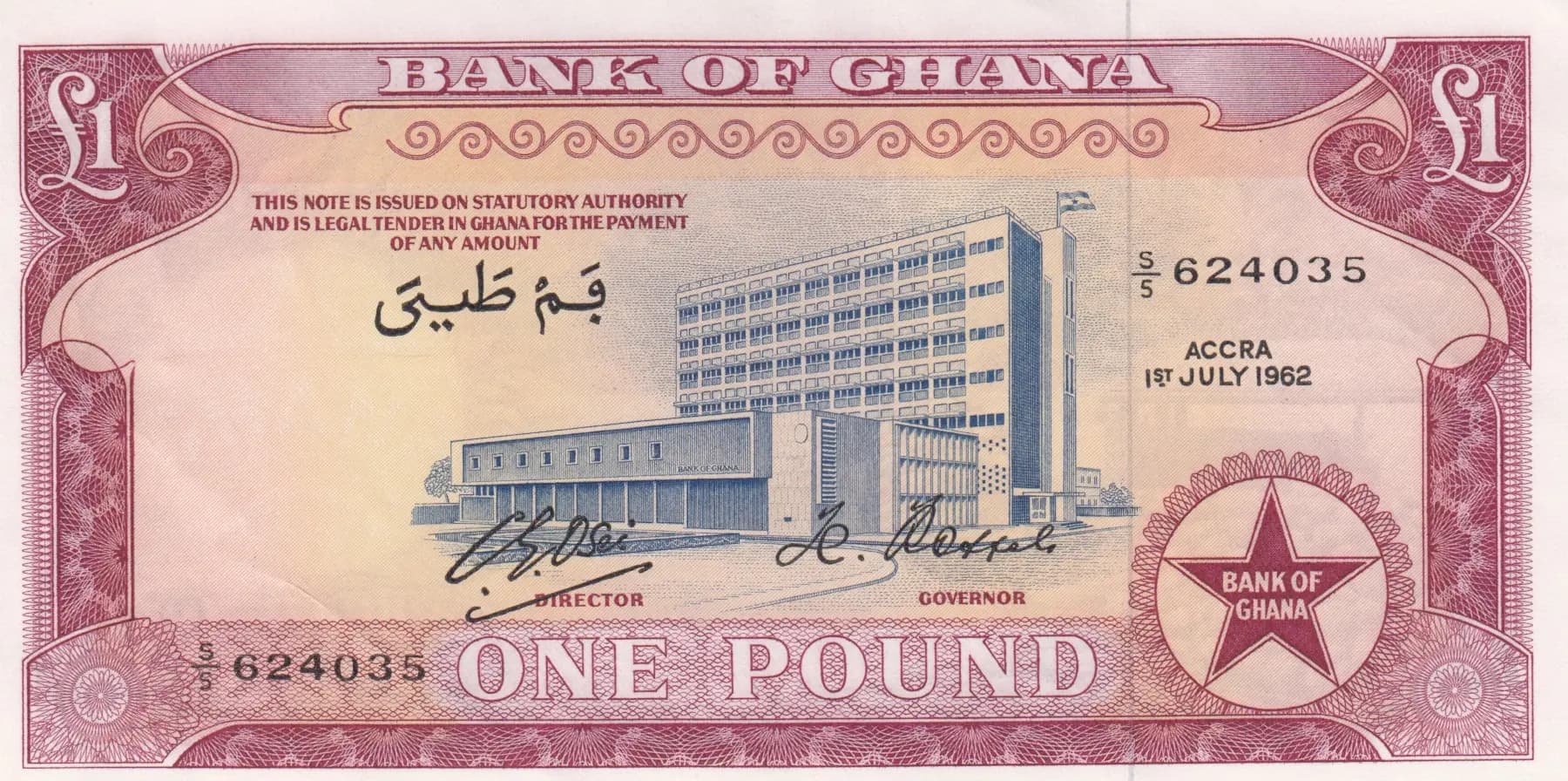
The obverse features an ornate border in purple and mauve with decorative spiral geometric patterns in all four corners, containing a central vignette of the Bank of Ghana's multi-story institutional building complex located in Accra, with a smaller ancillary structure to its left. Two authorized signatures (Director and Governor) appear below the building image. The reverse presents an intricately engraved tropical agricultural scene depicting cacao pods in substantial heaps in the foreground, a thatched-roof processing shelter in the middle distance, a woven basket of produce to the right, and lush tropical vegetation including palm trees and dense forest foliage throughout. A circular watermark vignette appears in the center-right of the reverse. The note employs a cream/beige base paper with the denomination displayed as 'ONE POUND' and '£1' respectively.
Front Side: 'BANK OF GHANA' (institution name); 'THIS NOTE IS ISSUED ON STATUTORY AUTHORITY AND IS LEGAL TENDER IN GHANA FOR THE PAYMENT OF ANY AMOUNT' (legal tender declaration); '1ST APRIL 1959' (issue date); 'ONE POUND' (denomination); 'ACCRA' (place of issue); Serial number 'G/3 0660024' (appears twice—top right and bottom left); 'DIRECTOR' and 'GOVERNOR' (signature labels). Back Side: '£1' (denomination marker). Note: Arabic text 'فم طبيعي' appears on the obverse but its context on this note is unclear—likely a design or transliteration element rather than instructional text.
Intaglio engraving (recess printing), which is evidenced by the fine, detailed line work visible throughout both sides—particularly the intricate spiral border patterns, the architectural detail of the Bank building, and the botanical precision of the cacao pods and tropical vegetation. The crisp serif typography and the depth of the engraved security features confirm professional central bank-grade production. Printer: TDLR (De La Rue), the renowned British security printer identified in catalog records for this Pick number.
Identified as Pick P-2b, which denotes a £1 note issued by the Bank of Ghana with TDLR as the printer. The PMG population report confirms multiple variants exist within the P-2 base number (P-2a, P-2b, P-2c, P-2d, P-2s), though distinguishing characteristics between these variants are not detailed in available sources. The serial number prefix 'G/3' and the issue date of 1st April 1959 are consistent with the earliest production run of this denomination.