10 cedis 1973 specimen
Market Prices
About This Note
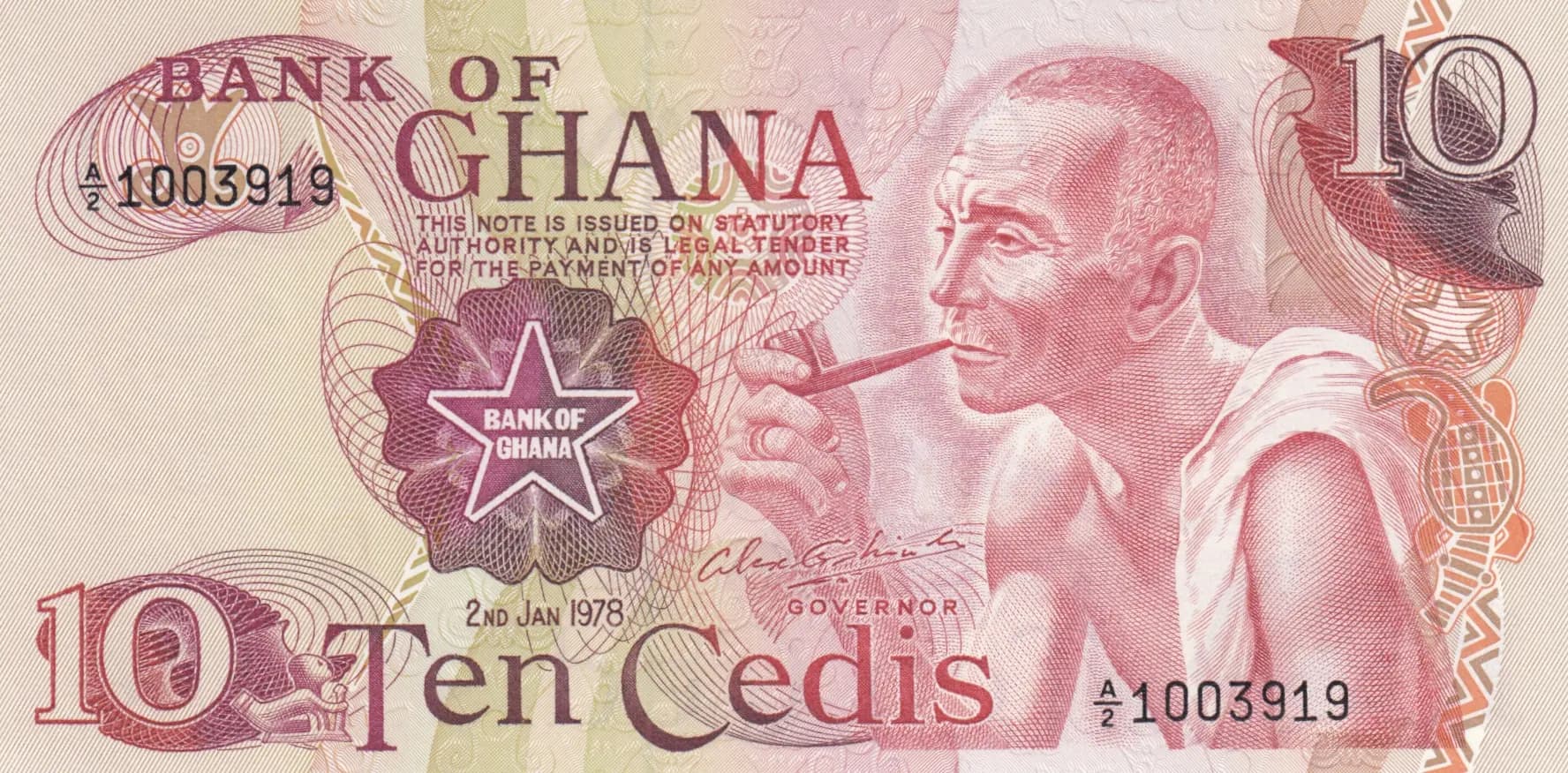
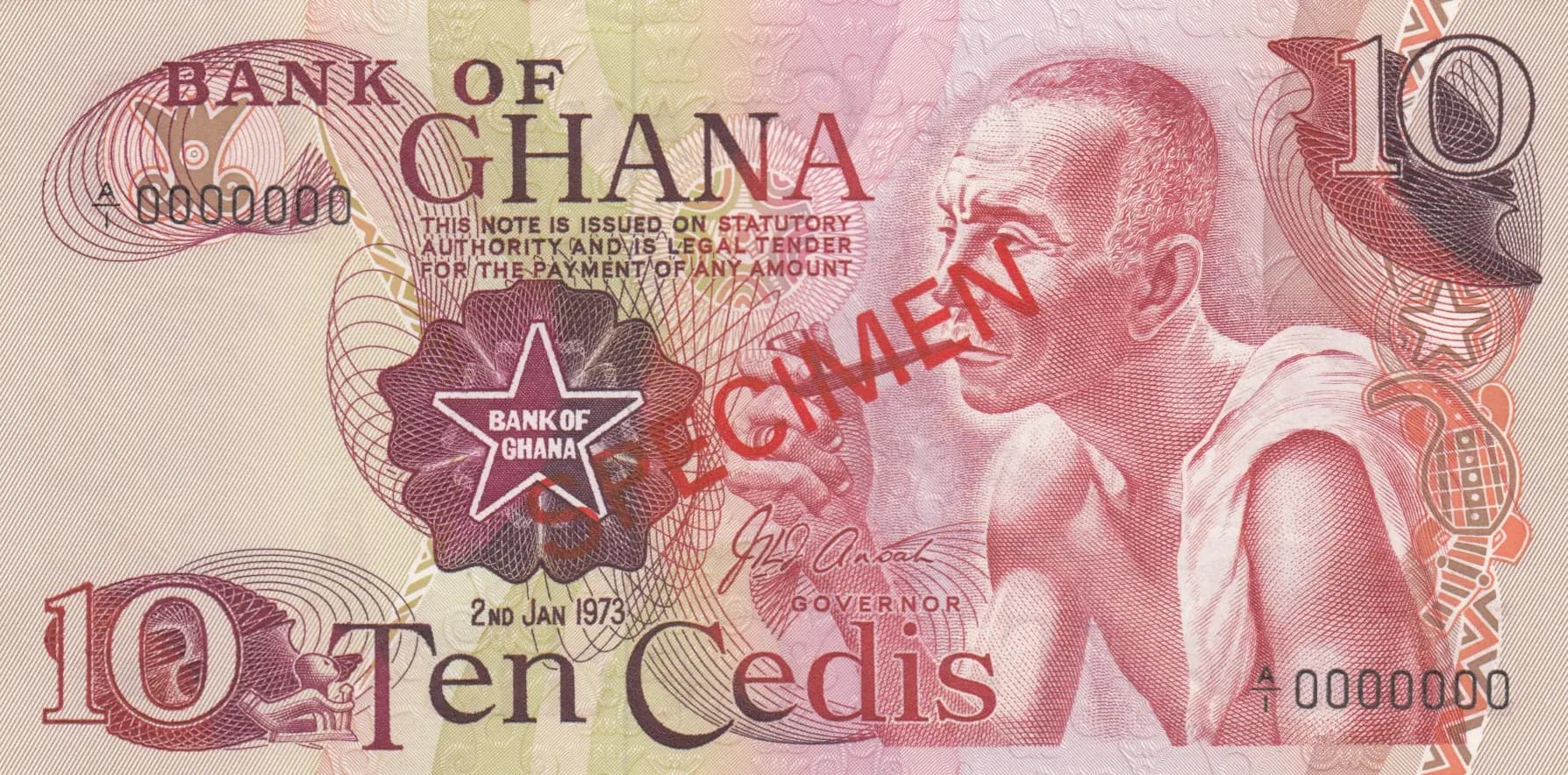
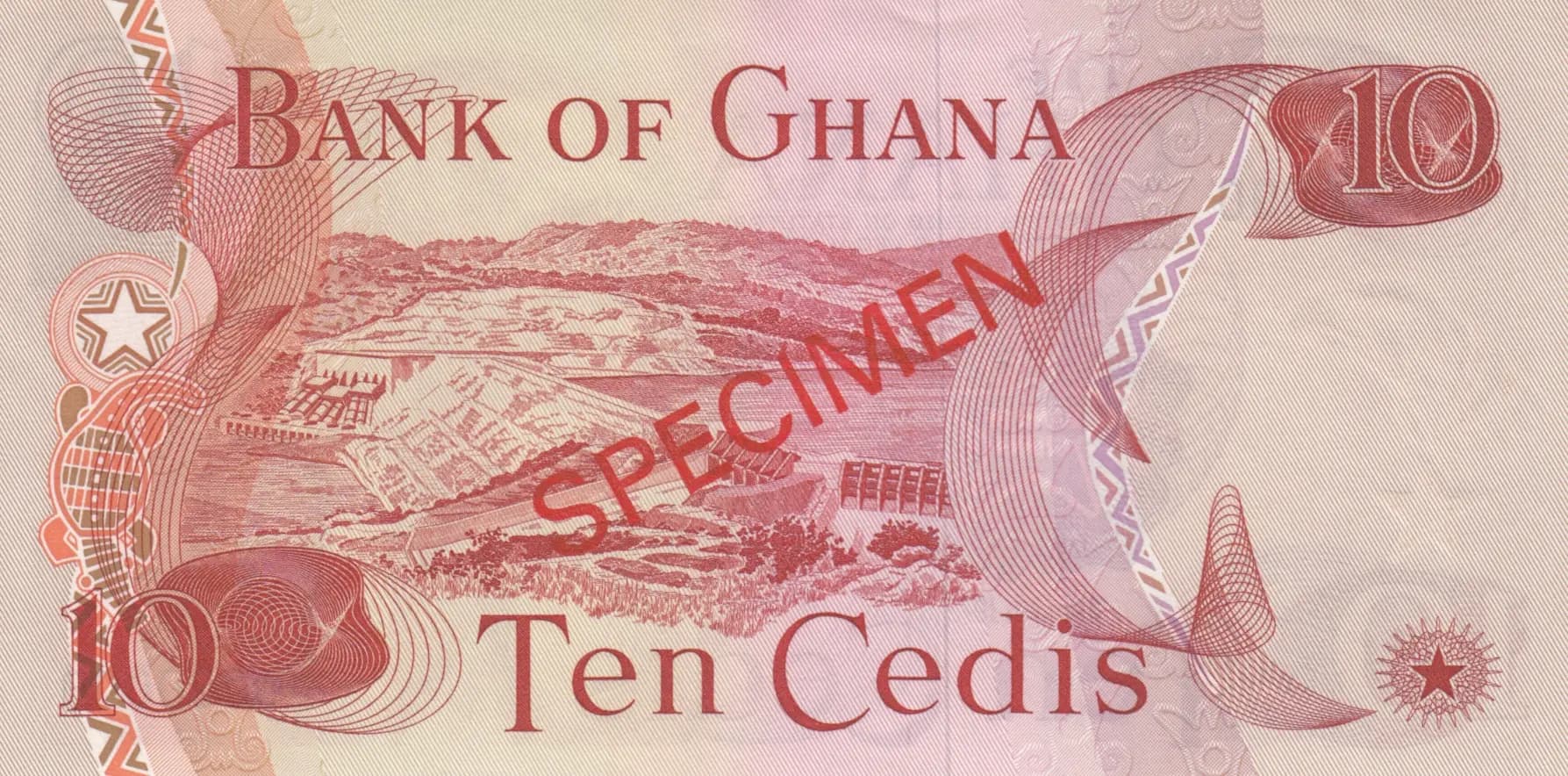
This is a pristine specimen example of Ghana's 1973 10 Cedis banknote (Pick P-16as), featuring the iconic portrait of a distinguished gentleman in profile on the obverse and the Akosombo Dam on the reverse. The note displays crisp, uncirculated condition with no signs of wear, creases, or foxing, and is marked with the diagonal 'SPECIMEN' overprint characteristic of presentation or archival examples. The vibrant pink-to-cream gradient background and fine engraved detail work exemplify the quality Bank of Ghana currency production from this period.
Common. Market data from eBay sales shows consistent pricing in the $4.49–$39.99 USD range for uncirculated examples, with catalog values from 2019 listing UNC specimens at $10 USD. Multiple sales listings and PMG population reports indicating several catalogued variants (P-16CS1, P-16cs, P-16f, P-16s) suggest adequate circulation among collectors. This denomination and issue year were produced in sufficient quantities to remain readily available in the collector market.
Issued on 2nd January 1973, this banknote represents Ghana's currency during the early post-independence period under the Bank of Ghana's statutory authority. The reverse features the Akosombo Dam on the Volta Lake, one of Africa's most significant engineering achievements and a symbol of Ghana's modernization and hydroelectric development. The portrait on the obverse likely represents a Ghanaian national figure or leader significant to the nation's early independence era.
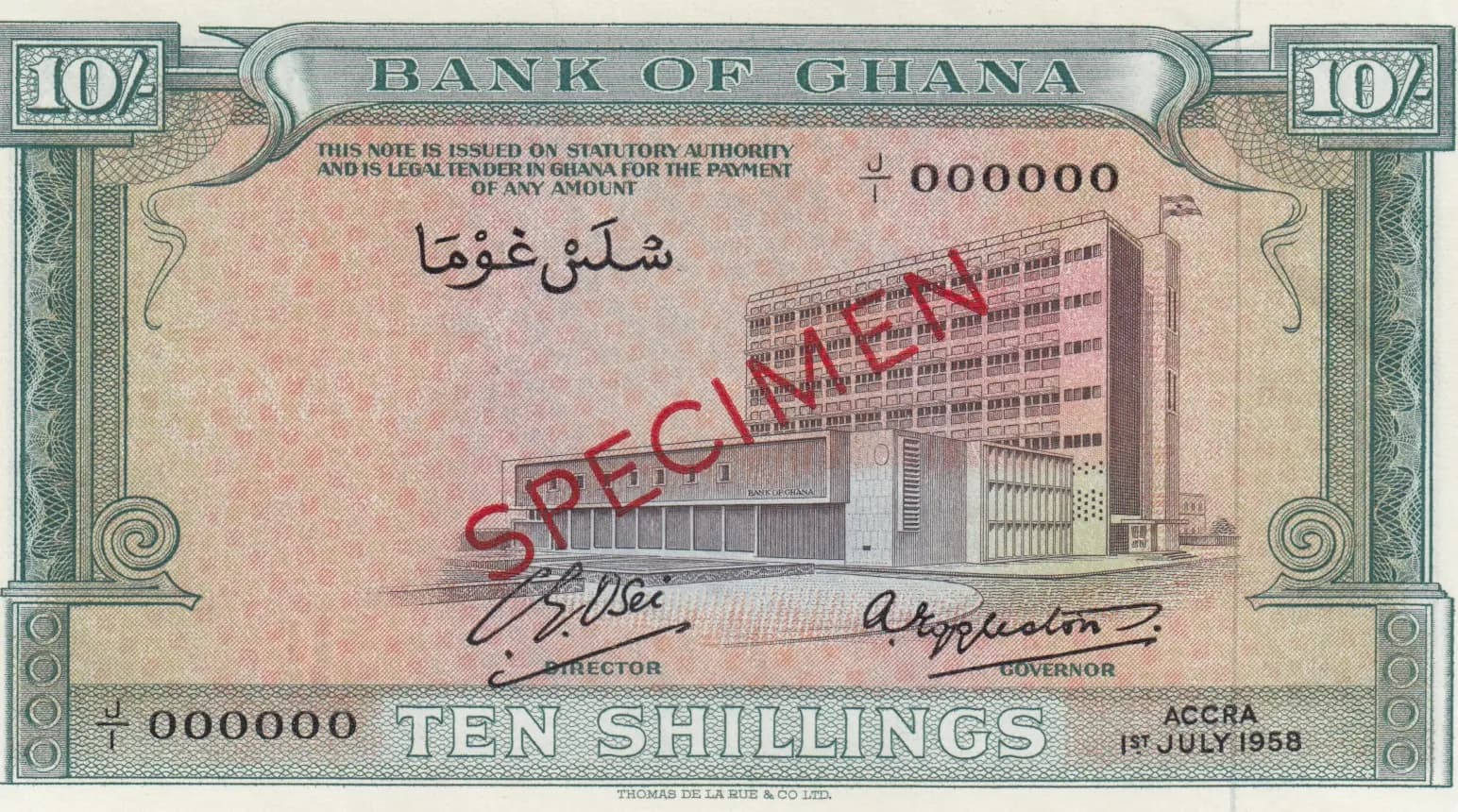
The obverse presents a dignified portrait of a man in right-facing profile, positioned center-right, rendered in fine line engraving with maroon/dark red coloring against a pink-to-cream gradient background. A prominent star emblem containing 'BANK OF GHANA' text anchors the left side, flanked by decorative concentric circular elements and geometric border patterns. The reverse depicts the Akosombo Dam landscape with industrial/architectural structures and mountainous terrain, executed with the same fine engraving technique. Both sides feature denomination numerals '10' positioned top-right and bottom-left, with 'Ten Cedis' spelled out. The guilloche pattern work throughout provides anti-counterfeiting security through intricate detail layering. Serial numbers appear in the format shown as 000000 on the specimen.
FRONT SIDE: 'BANK OF GHANA' — Bank of Ghana; 'THIS NOTE IS ISSUED ON STATUTORY AUTHORITY AND IS LEGAL TENDER FOR THE PAYMENT OF ANY AMOUNT' — This note is issued on statutory authority and is legal tender for the payment of any amount; '2ND JAN 1973' — 2nd January 1973; 'GOVERNOR' — Governor; '10' and 'Ten Cedis' — denomination markings; 'SPECIMEN' — specimen overprint marking. BACK SIDE: 'BANK OF GHANA' — Bank of Ghana; '10' and 'Ten Cedis' — denomination markings; 'SPECIMEN' — specimen overprint marking.
Intaglio engraving (recess printing), a traditional security printing method combining fine line engraving with guilloche pattern backgrounds. The printer for this issue is identified in PMG population data as TDLR (Thomas De La Rue), one of the world's premier banknote security printers. The multi-layered engraved security features and precise color registration on both sides are characteristic of De La Rue's high-security currency production standards of the 1970s.
This note is catalogued as Pick P-16as, denoting a specimen example (the 's' suffix indicates specimen status). The serial number prefix shown as A/1 in reference data may indicate a specific printing batch. Known varieties for this base Pick number include P-16CS1, P-16cs, P-16f, and P-16s variants, likely differing by printer designation or printing sequence. The specimen overprint is a key identifier distinguishing this from regular circulation issues (P-16 base). The issue date of 2nd January 1973 and the Bank of Ghana Governor's signature line are consistent across the series.