10 cedis 1978
Market Prices
60 salesAbout This Note
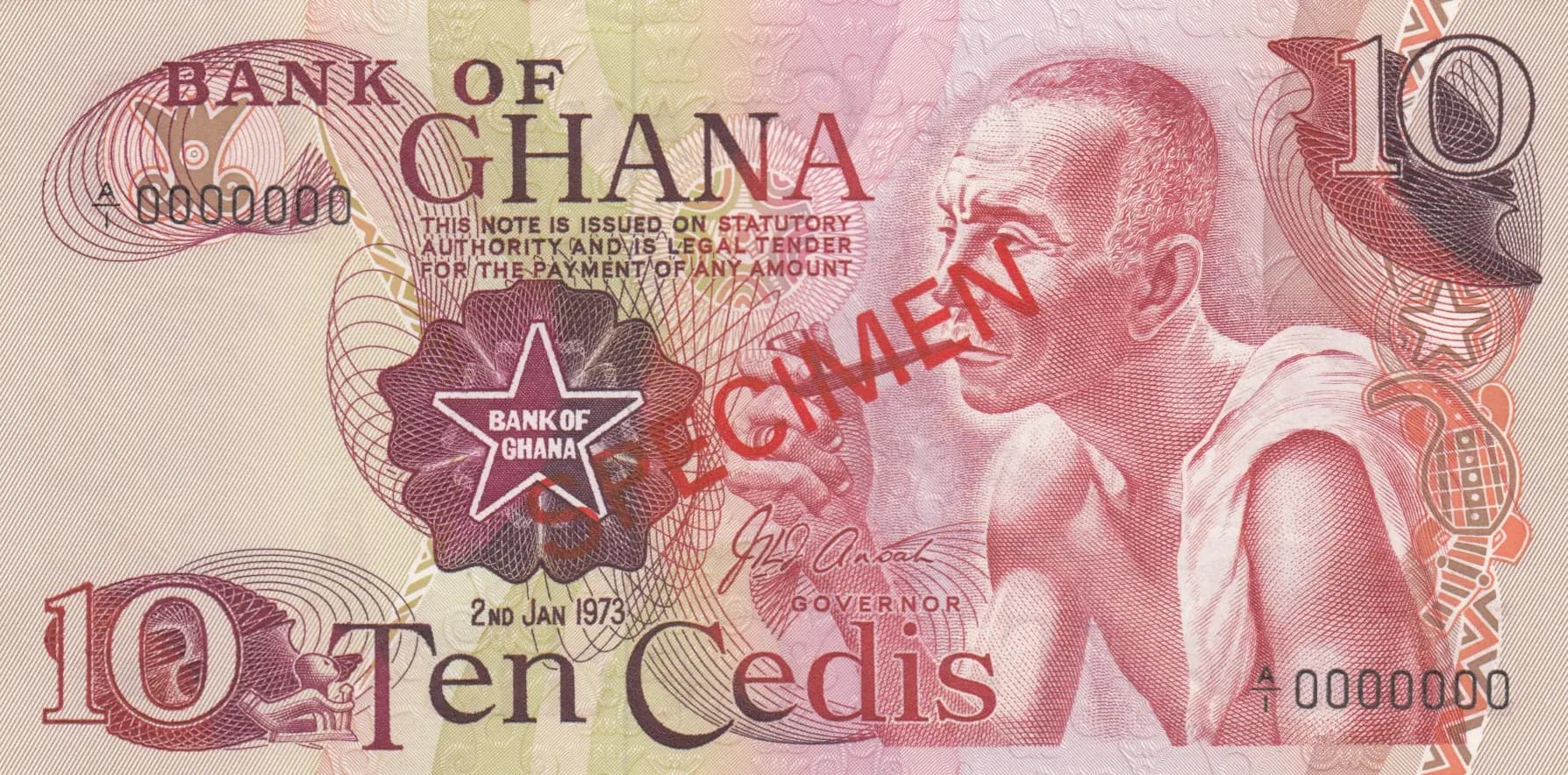
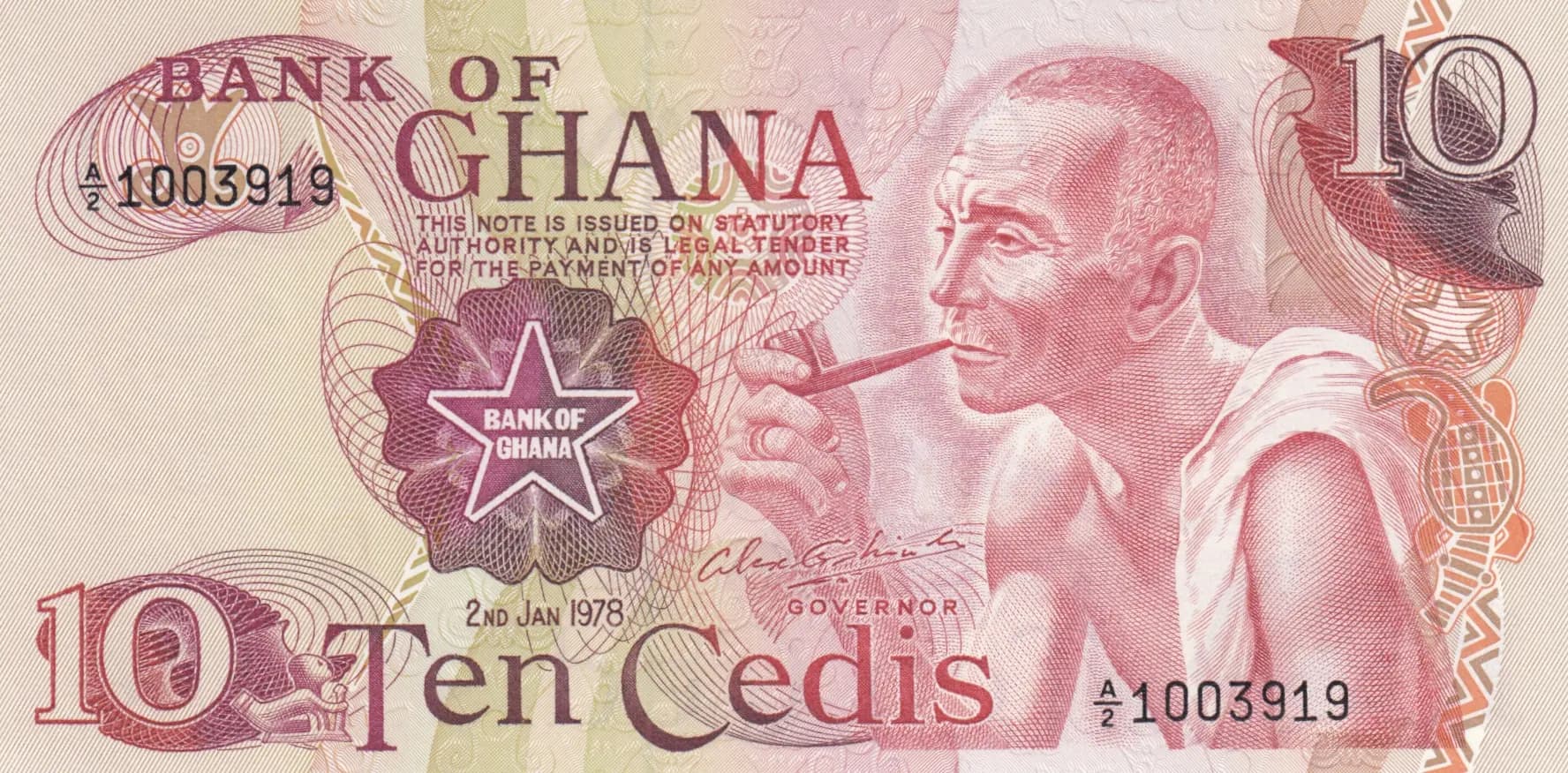
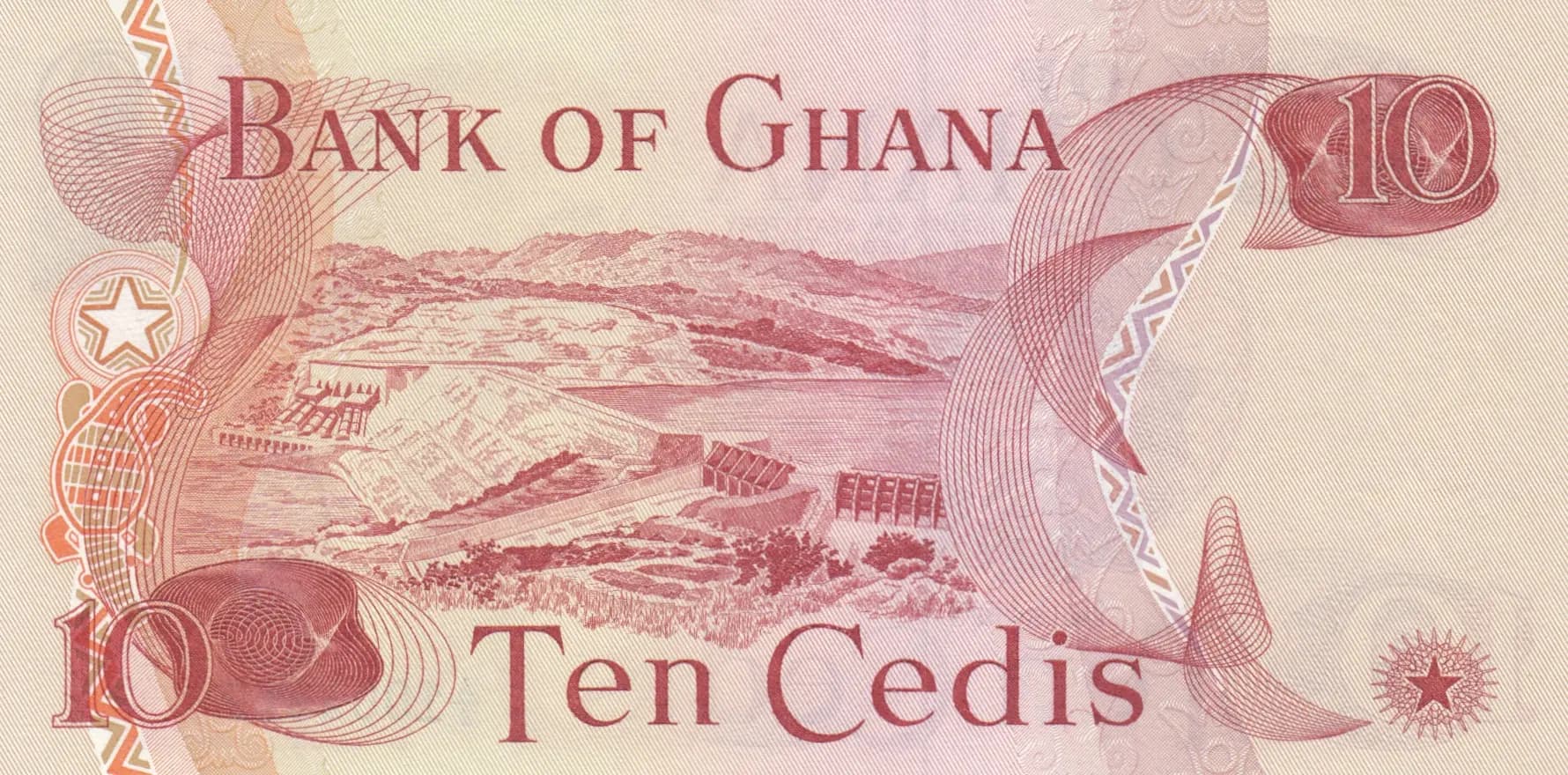
This is a Ghana 10 Cedis banknote from January 2, 1978, graded UNC (uncirculated), representing the later issue of this denomination. The note features vibrant burgundy, pink, and cream coloring with an intricate fine-line engraved design throughout. The obverse displays a portrait of an elderly man in profile facing right, while the reverse depicts agricultural or industrial development in a hillside landscape—likely representing Ghana's development during the post-independence era. The note exhibits pristine condition with no signs of circulation.
Common. The eBay market data shows consistent sales activity ranging from $0.55 to $5.50 for UNC specimens over more than a decade, with most UNC examples selling between $1.25 and $4.25. The 2019 catalogue value of $6 UNC aligns with observed market prices. High-grade certified examples (PMG 66) command premiums ($14.99–$17.38), but raw UNC notes are frequently available and trade at modest prices, indicating substantial print circulation. This is a standard regular issue from Ghana's 1970s currency production with no known recall, short print run, or scarcity factors.
Issued by the Bank of Ghana in 1978, this banknote reflects Ghana's economic period under military rule, following the 1966 coup and during the transition toward civilian governance. The reverse design, showing agricultural and industrial development in a terraced landscape, symbolizes Ghana's focus on modernization and economic development during this transitional period. The date of January 2, 1978, places this note within a period of currency stabilization efforts by Ghana's central banking authority.
The obverse (front) features a prominent profile portrait of an elderly gentleman positioned center-right, rendered in the classical engraved style typical of central bank currency. He appears to be a historical or political figure significant to Ghana. The background employs intricate geometric and fine-line patterns in pink, burgundy, and cream tones, creating anti-counterfeiting complexity. The Bank of Ghana's national emblem—a star within a decorative shield—appears on the left side. The reverse depicts a landscape of agricultural development with terraced fields or rows of crops on hillside terrain, with buildings or structures visible in the middle distance, representing Ghana's modernization efforts. Both sides feature large decorative denomination numerals '10' at opposite corners with 'Ten Cedis' inscribed. The color palette of burgundy, pink, cream, and pale yellow is consistent across both sides, unified by fine engraved line work.
Front side: 'BANK OF GHANA' (issuing authority), 'THIS NOTE IS ISSUED ON STATUTORY AUTHORITY AND IS LEGAL TENDER FOR THE PAYMENT OF ANY AMOUNT' (legal tender declaration), '2ND JAN 1978' (issue date), 'GOVERNOR' (signature line identifier), 'Ten Cedis' (denomination in words), Serial numbers 'A1003919' and 'A21003919', Large denomination numeral '10'. Back side: 'BANK OF GHANA' (issuing authority), 'Ten Cedis' (denomination in words), Denomination numerals '10' at top right and bottom left corners.
Intaglio engraving (line engraving), executed by Thomas De La Rue and Company (TDLR), the primary security printer for this Pick number variant (P-16f). The fine-line patterns, geometric backgrounds, portrait detail, and overall design complexity are characteristic of high-security intaglio banknote production. The intricate texturing and color gradients visible throughout the note are consistent with professional security printing standards of the 1970s.
This note is catalogued as Pick P-16f, with the printer identified as TDLR (Thomas De La Rue and Company). The PMG population report indicates four variants exist for the 10 Cedis 1978 base Pick number (P-16CS1, P-16cs, P-16f, and P-16s), differing by printer or security features. The specimen observed displays the standard P-16f variety characteristic of TDLR production. Serial number format visible (A1003919 and A21003919) is consistent with Ghanaian banknote numbering conventions of this period. No significant overprints or signature variations are evident in the observed images.