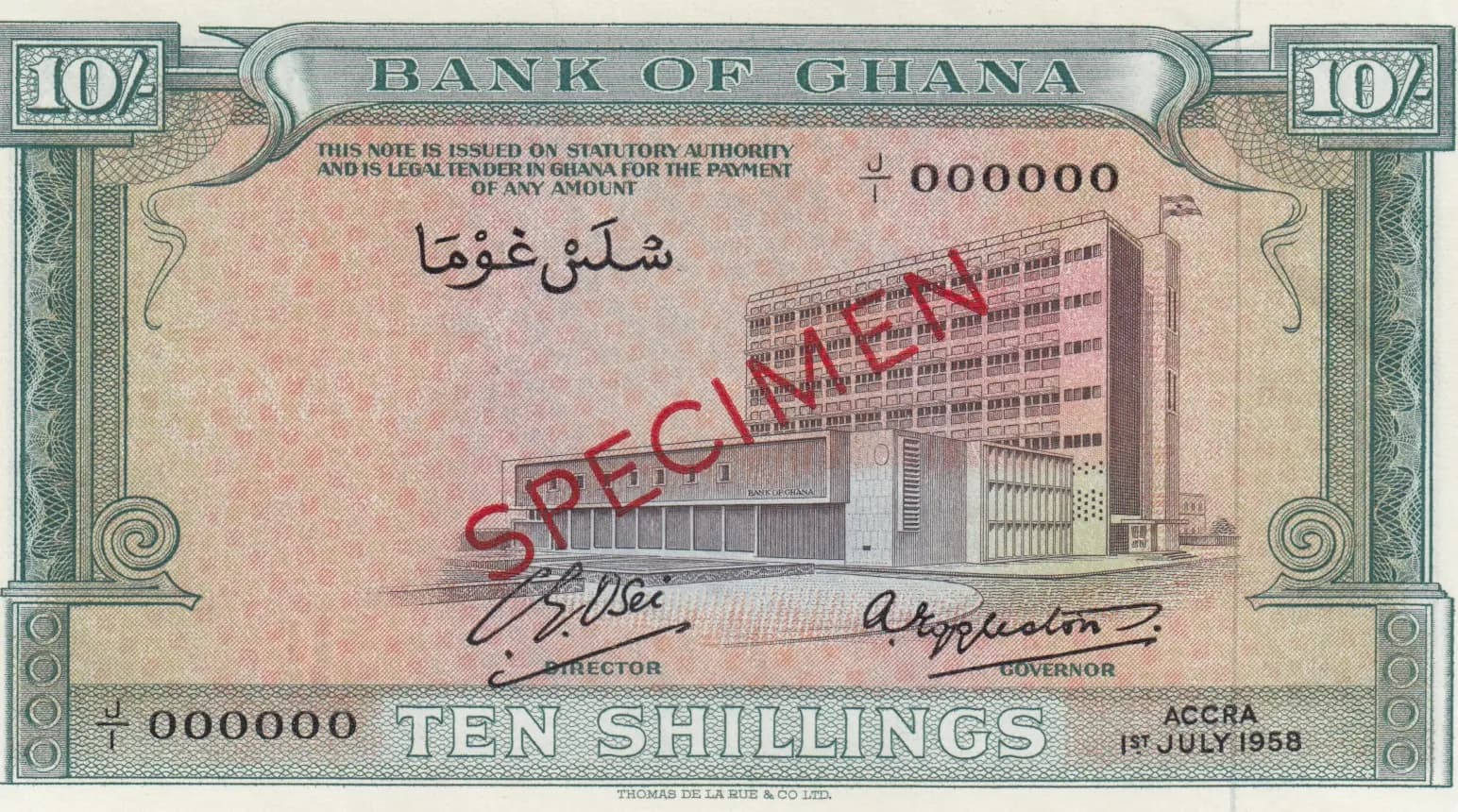
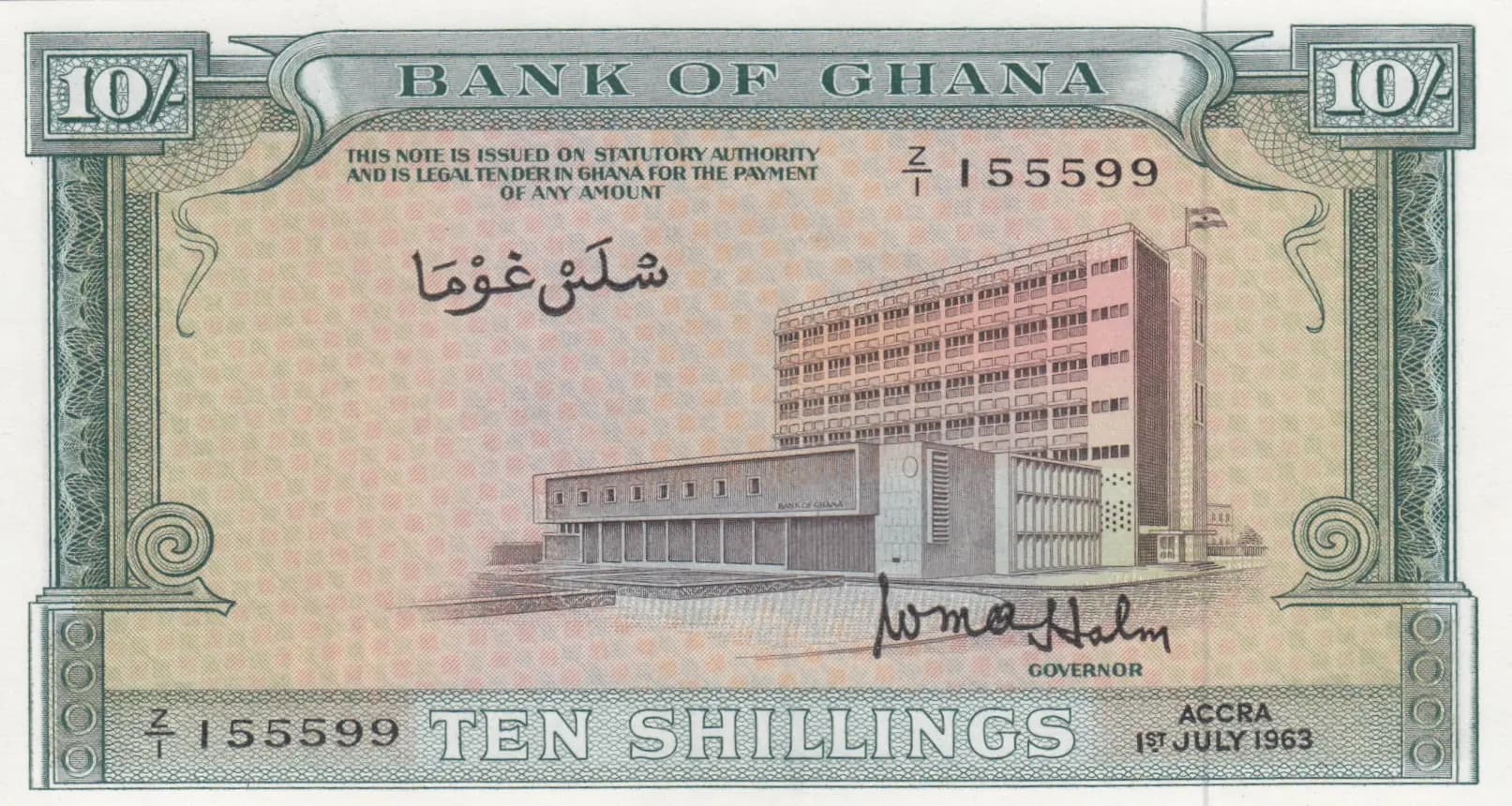
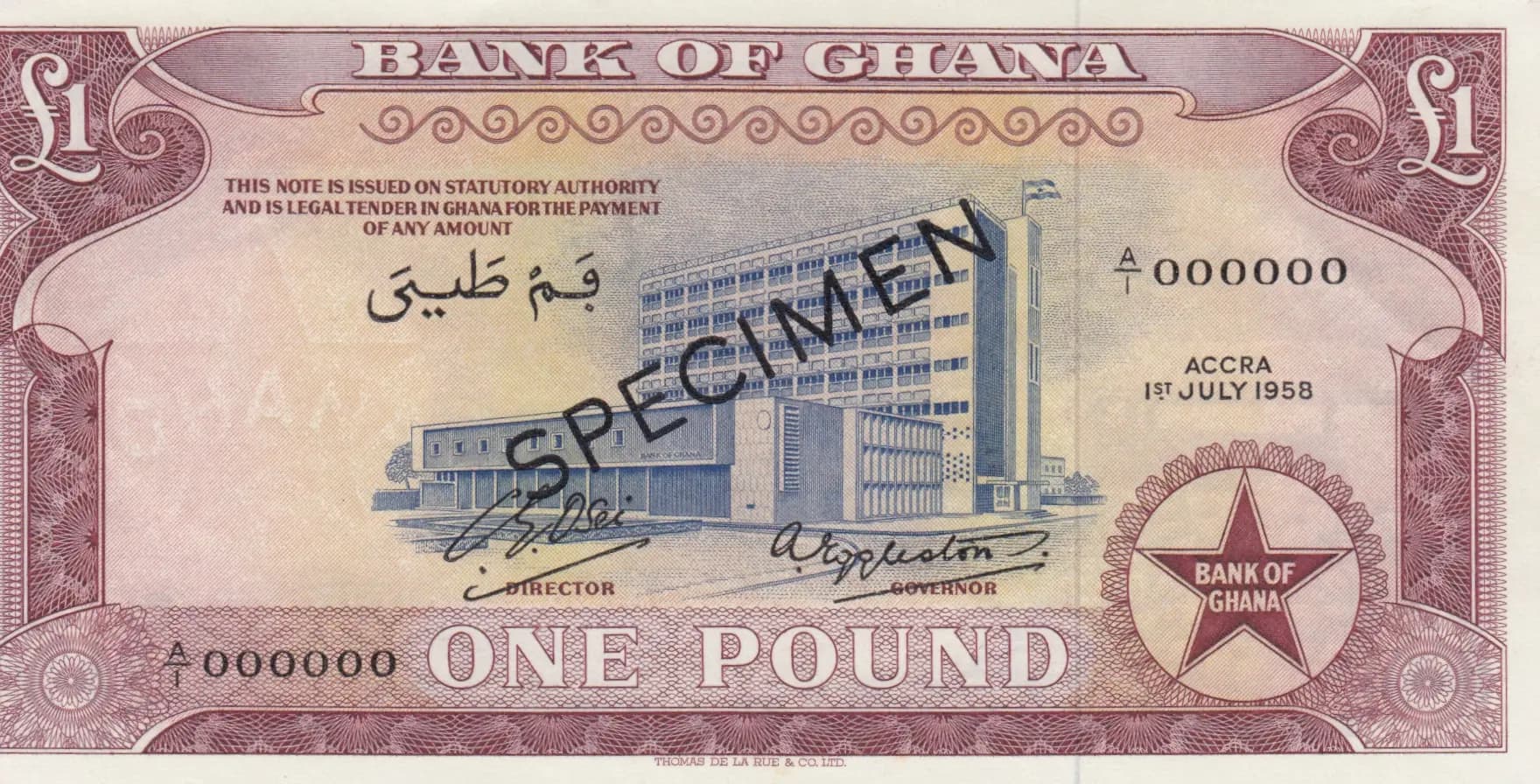
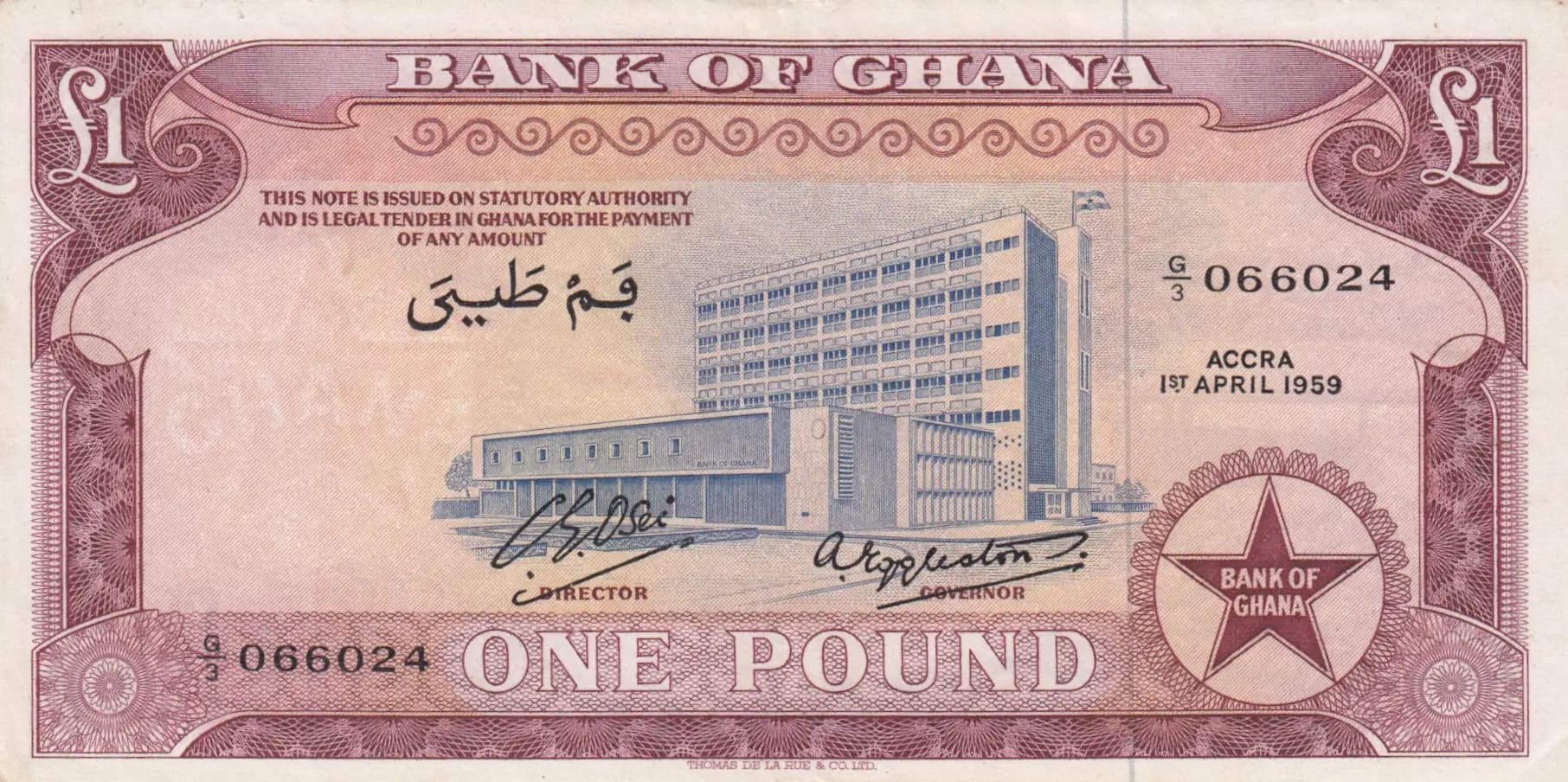
10 cedis 1967
Market Prices
About This Note
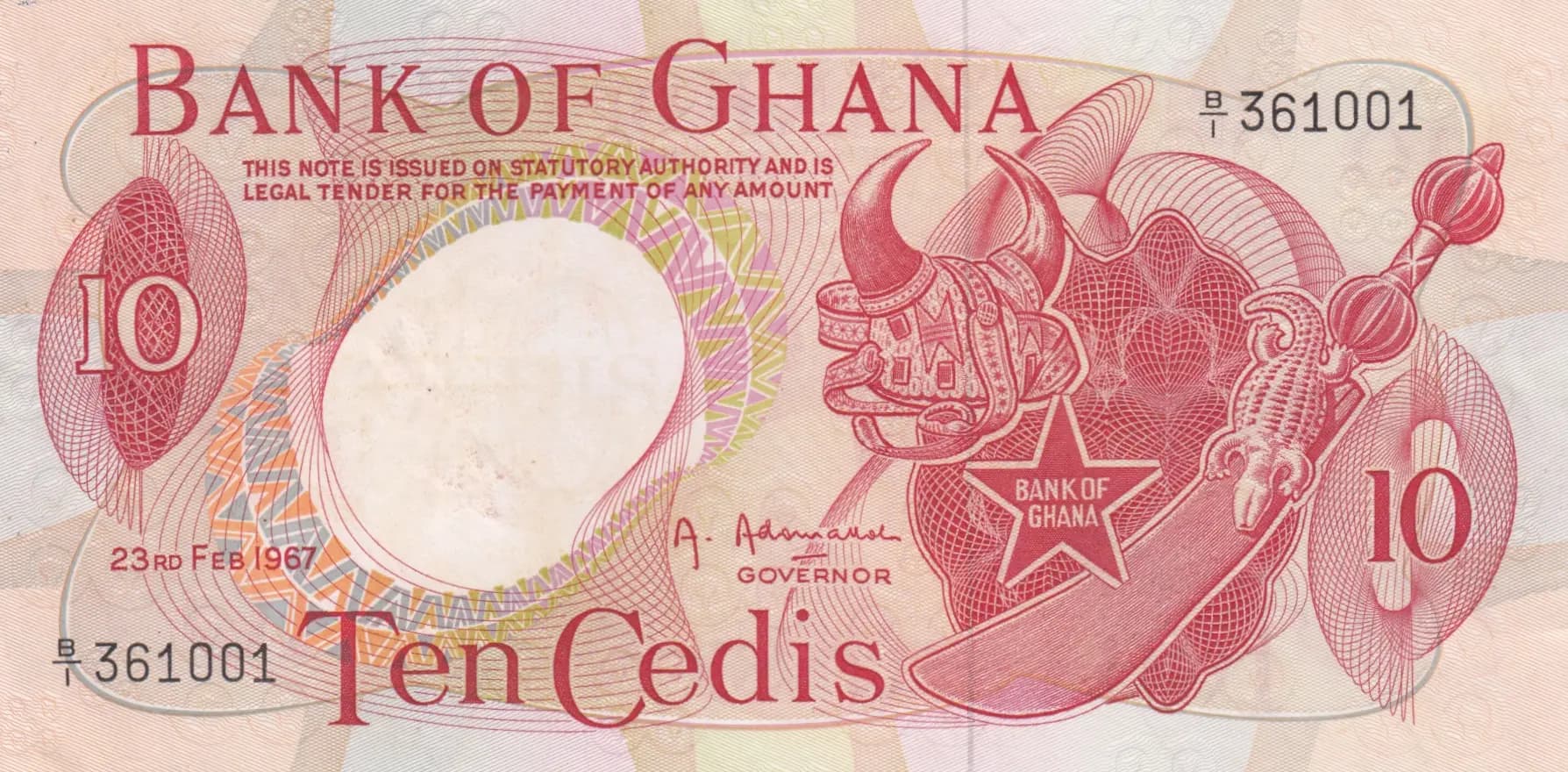
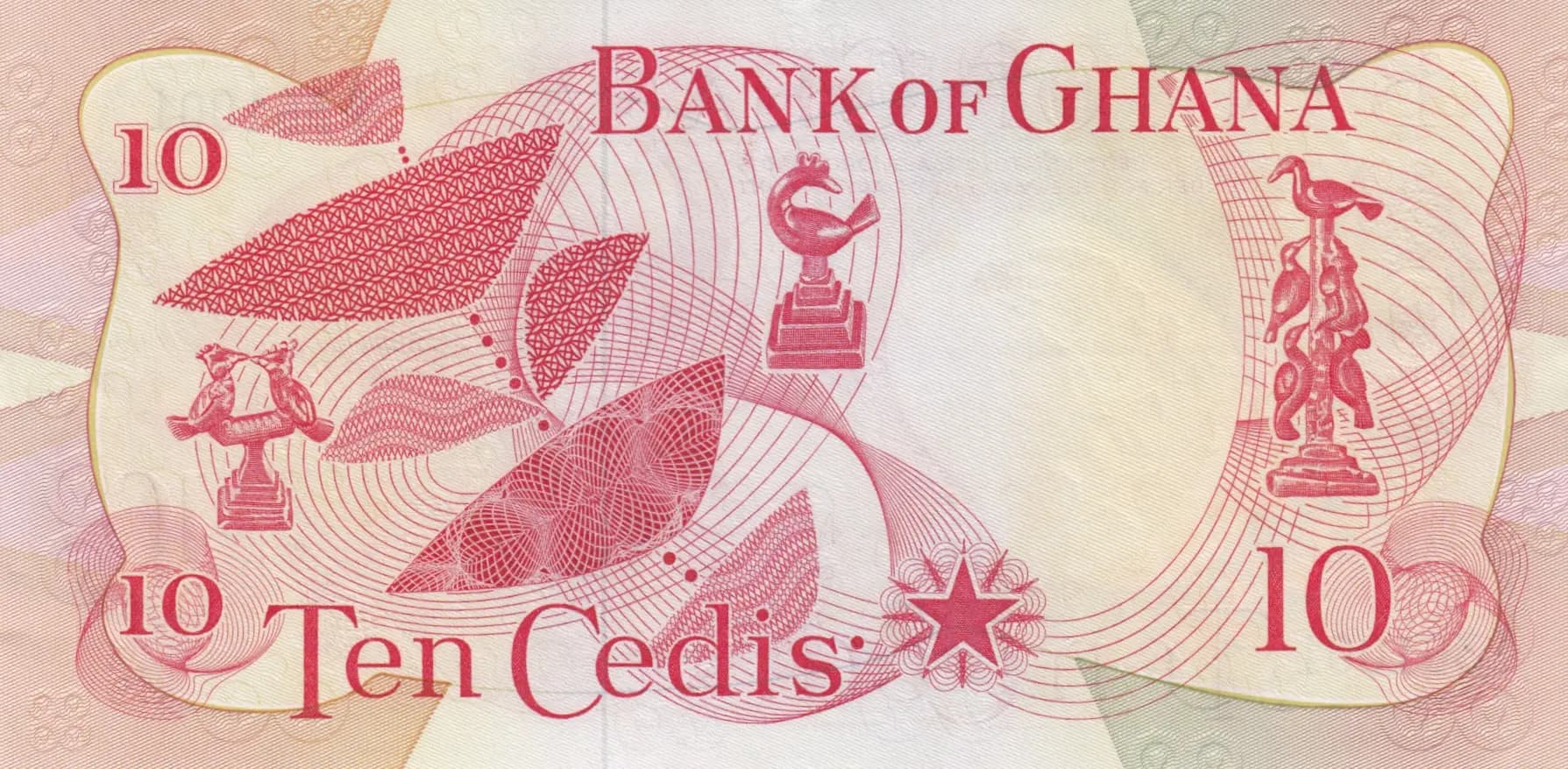
A handsome example of Ghana's early post-independence currency, this 10 Cedis note from 23 February 1967 displays the vibrant red and multicolored engraving characteristic of Bank of Ghana's first series. The note presents in AU condition with light foxing consistent with age, featuring Ghana's coat of arms prominently on the obverse and traditional African sculptural monuments on the reverse—symbols of national pride during the early years of the first Ghanaian Republic.
Common. The eBay price tracking data shows AU specimens trading in the $24.99–$120.00 range, with UNC examples generally between $4.49–$260.00 (the higher prices likely reflecting exceptional examples or dealer markups). The 2019 catalog value for AU is not separately listed, but VF is valued at $17.50 and UNC at $60, consistent with a commonly circulated note from the early 1967 issue. No evidence of limited print run or recalls exists for Pick number P-12a.
This 1967 issue marks Ghana's transition period following the 1966 coup that deposed Kwame Nkrumah. The note's iconography—featuring Ghana's coat of arms with the eagle and star, and African cultural monuments on the reverse—reflects the government's effort to establish national identity and legitimacy through numismatic symbolism. The date of 23 February 1967 places the issue within the National Liberation Council's reorganization of Ghana's monetary and political institutions.
The obverse features a classical layout with a large circular medallion containing the denomination '10' on the left side, a central oval portrait space (left vacant on this series), and Ghana's coat of arms on the right—depicting an eagle above a shield with a star, flanked by ornamental scrollwork. The reverse displays two indigenous African sculptural monuments positioned on pedestals in the central design area, one featuring a bird or eagle motif (possibly representing traditional Akan or other Ghanaian cultural artifacts) and another featuring a traditional African figure or totem. Both sides are framed by elaborate decorative guilloche patterns and fine-line engravings in red/pink on a cream background, with the denomination prominently displayed in all four corners.
Front: 'BANK OF GHANA' (issuing authority); 'THIS NOTE IS ISSUED ON STATUTORY AUTHORITY AND IS LEGAL TENDER FOR THE PAYMENT OF ANY AMOUNT' (legal tender declaration); '10' and 'Ten Cedis' (denomination in numeric and word form); '23RD FEB 1967' (issue date); 'A. Amoaku' and 'GOVERNOR' (central bank official signature and title); 'B Z361001' (serial number). Back: 'BANK OF GHANA' (issuing authority); '10' (denomination in all four corners); 'Ten Cedis' (denomination in word form).
Intaglio engraving (copperplate/steel-plate engraving), as evidenced by the fine-line detail work, complex guilloche patterns, and the intricate cross-hatching visible throughout. The printer for P-12a is not definitively identified in standard references, though De La Rue and Thomas De La Rue Limited (TDLR) are associated with variants in this series (specifically P-12s). The quality of engraving and security features suggests production by a major international security printer active in the 1960s.
This note is identified as P-12a, the first major variety of the 1967 10 Cedis issue. Governor A. Amoaku's signature appears, consistent with early issues of this series. Serial number format B Z361001 indicates a standard numbering sequence. Related variants cataloged by Pick include P-12b and P-12c (issued 1969 and 1970 respectively), which likely feature different signatures or design modifications. The P-12s variant was printed by TDLR. No overprints or unusual serial number characteristics are visible on this specimen.