1 cedi 1973 specimen
Market Prices
3 salesAbout This Note
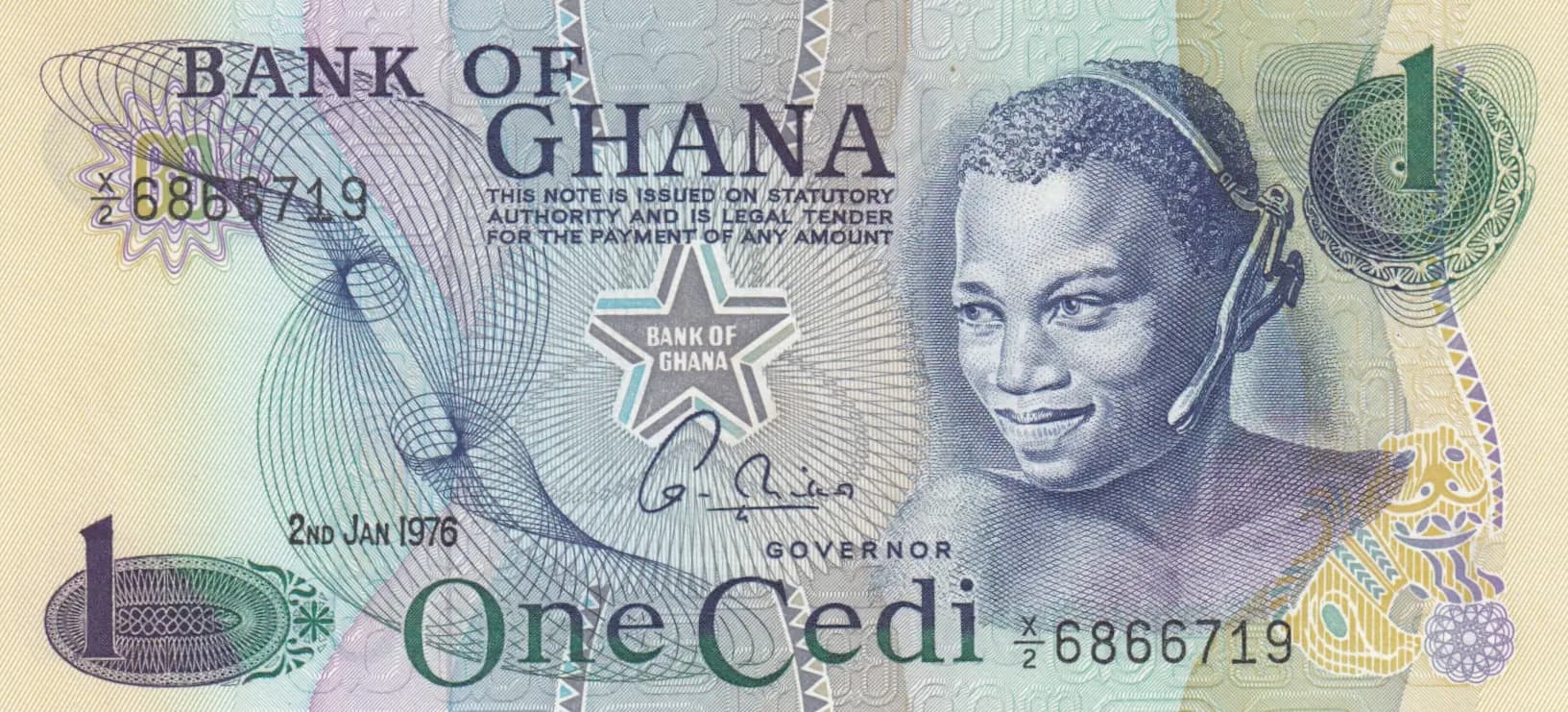
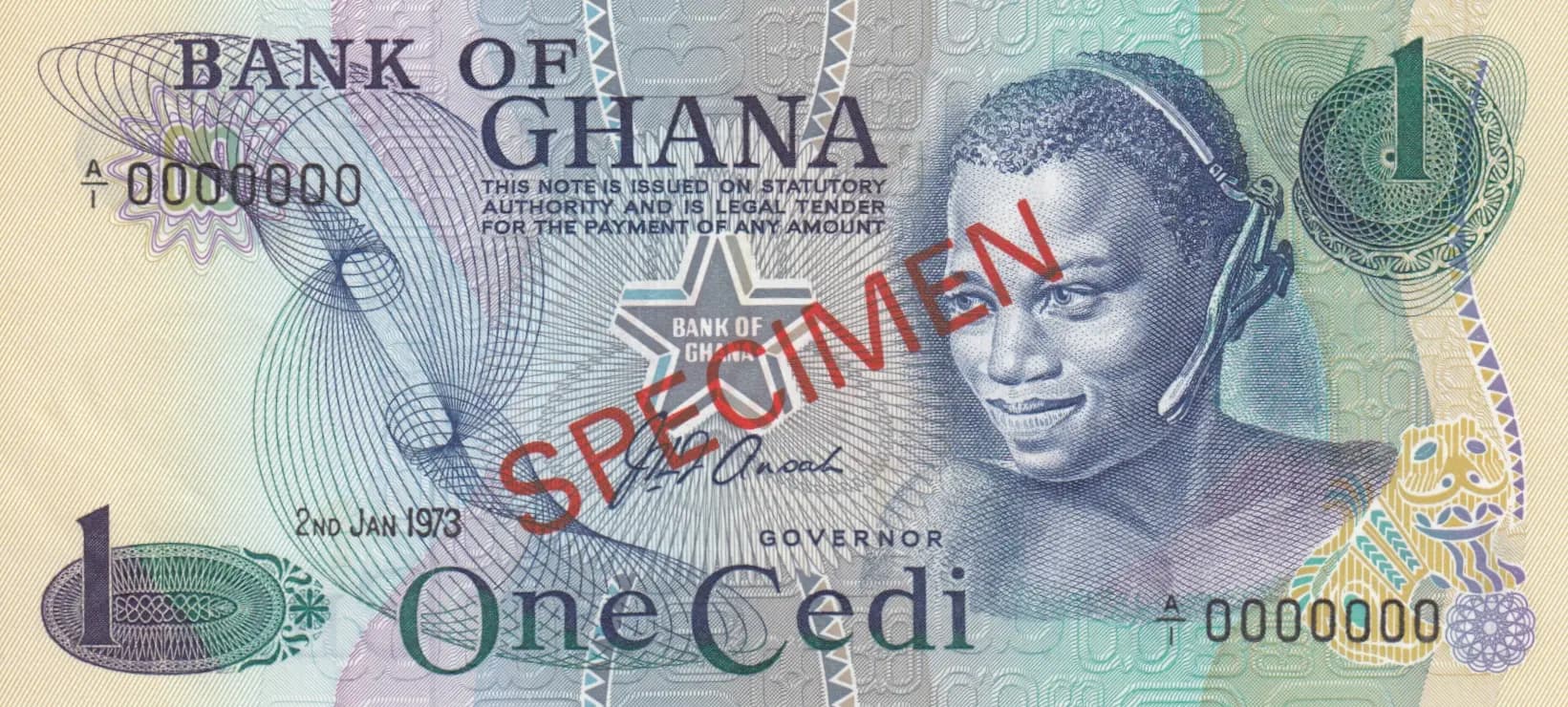
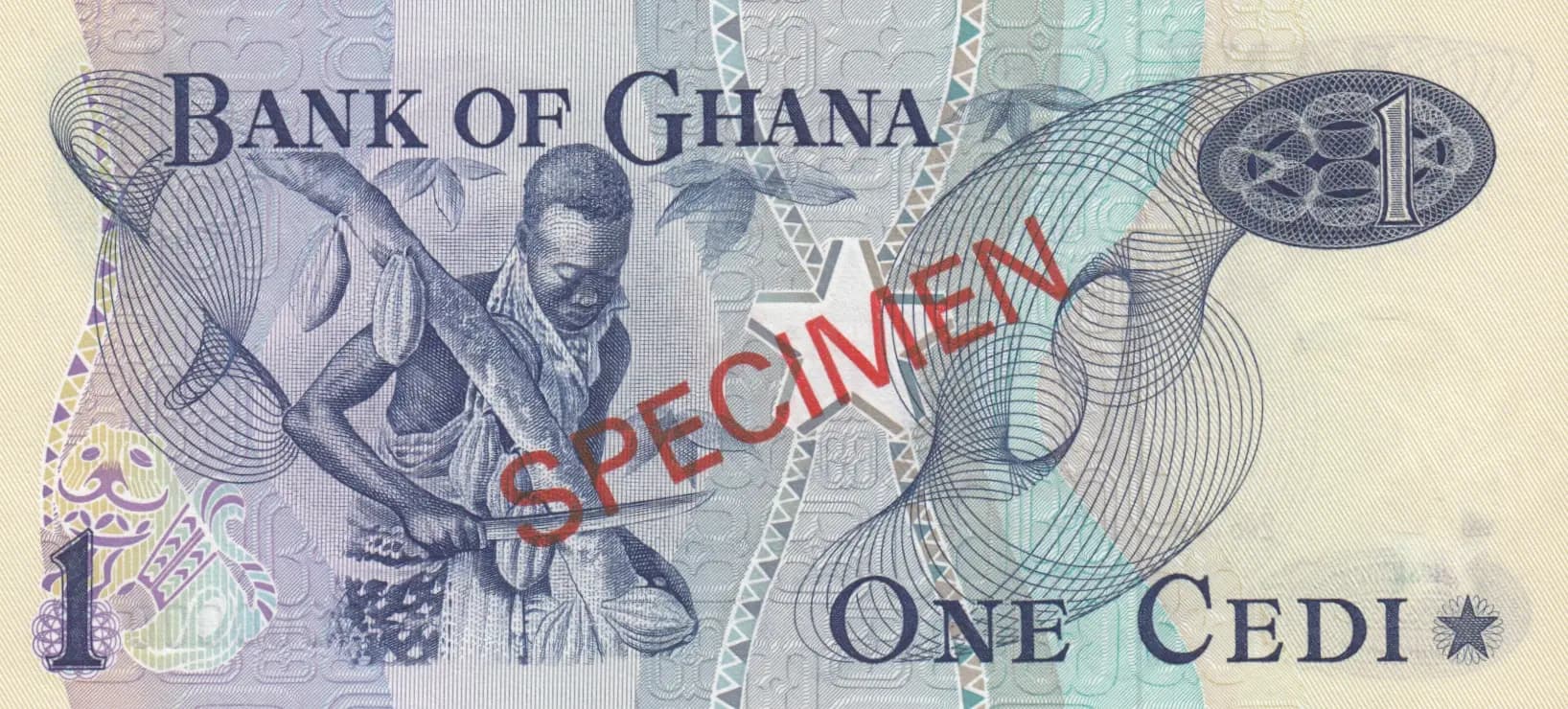
This is a pristine UNC specimen note of Ghana's 1 cedi from 1973, issued by the Bank of Ghana on 2nd January 1973. The note displays exceptional condition with vibrant multicolored intaglio printing in purple, blue, green, and yellow, featuring a dignified portrait of a man wearing headphones on the obverse and a woman engaged in agricultural/cocoa work on the reverse. The prominent red diagonal 'SPECIMEN' overprint and all-zero serial numbers (A 0000000) confirm this as a pre-release specimen example, making it a desirable item for collectors of African currency and Bank of Ghana material.
Common. As a regular-issue denomination from a major African central bank with a 1973-1978 circulation period, this note was produced in substantial quantities. The eBay price history shows typical specimen and circulated examples trading at modest prices ($1.60-$3.69 for lower grades, $9 catalogue value for UNC). While specimen notes command a premium over circulated examples, this particular note type does not appear in scarce or rare territory based on available market data and PMG population reports showing multiple catalogued variants.
This note was issued during Ghana's early post-independence period under the presidency of Colonel Ignatius Kutu Acheampong, following the 1972 military coup. The reverse imagery depicting cocoa harvesting reflects Ghana's economic dependence on cocoa exports, which remained a primary revenue source throughout the 1970s. The professional portraiture and sophisticated security printing demonstrate Ghana's commitment to establishing a modern, credible monetary system during this politically turbulent decade.
The obverse features a formal portrait of a distinguished man positioned on the right side wearing modern headphones, surrounded by ornate guilloche patterns in multiple colors. The Bank of Ghana's star-shaped emblem appears prominently with institutional text. The reverse depicts a woman in profile or three-quarter view engaged in cocoa pod harvesting—a direct reference to Ghana's primary agricultural export. Both sides employ intricate geometric borders and decorative elements typical of 1970s intaglio banknote design. The color palette of purple, blue, green, and yellow creates visual distinction and security through complexity.
Front Side: 'BANK OF GHANA' (issuing authority), 'THIS NOTE IS ISSUED ON STATUTORY AUTHORITY AND IS LEGAL TENDER FOR THE PAYMENT OF ANY AMOUNT' (legal tender declaration), 'SPECIMEN' (specimen overprint), 'GOVERNOR' (signature line), '2ND JAN 1973' (issue date), 'One Cedi' (denomination in words), 'A 0000000' (serial numbers, both positions). Back Side: 'BANK OF GHANA' (issuing authority), 'SPECIMEN' (specimen overprint), 'ONE CEDI' (denomination in words with star symbol).
Intaglio engraving (line engraving combined with multicolor surface printing), characteristic of high-security banknote production. The PMG population report indicates TDLR (Thomas De La Rue) as the printer for variant P-13s, a renowned security printer. The detailed guilloche patterns, fine line work, and multicolor registration visible in the specimen indicate professional offset or rotogravure combined with traditional intaglio techniques.
This is identified as Pick P-13as (the 's' indicating specimen status). The printer is TDLR (Thomas De La Rue). This note is an 'a' series specimen variant with all-zero serial numbers (A 0000000), characteristic of pre-release specimen examples prepared for central bank approval and international circulation samples. The issue date is confirmed as 2nd January 1973. The red 'SPECIMEN' diagonal overprint and the nature of the serial numbering definitively distinguish this from regular circulation issues (P-13c, P-13d). No signature variants are discernible from the visual analysis provided.