1 cedi 1967
Market Prices
5 salesAbout This Note
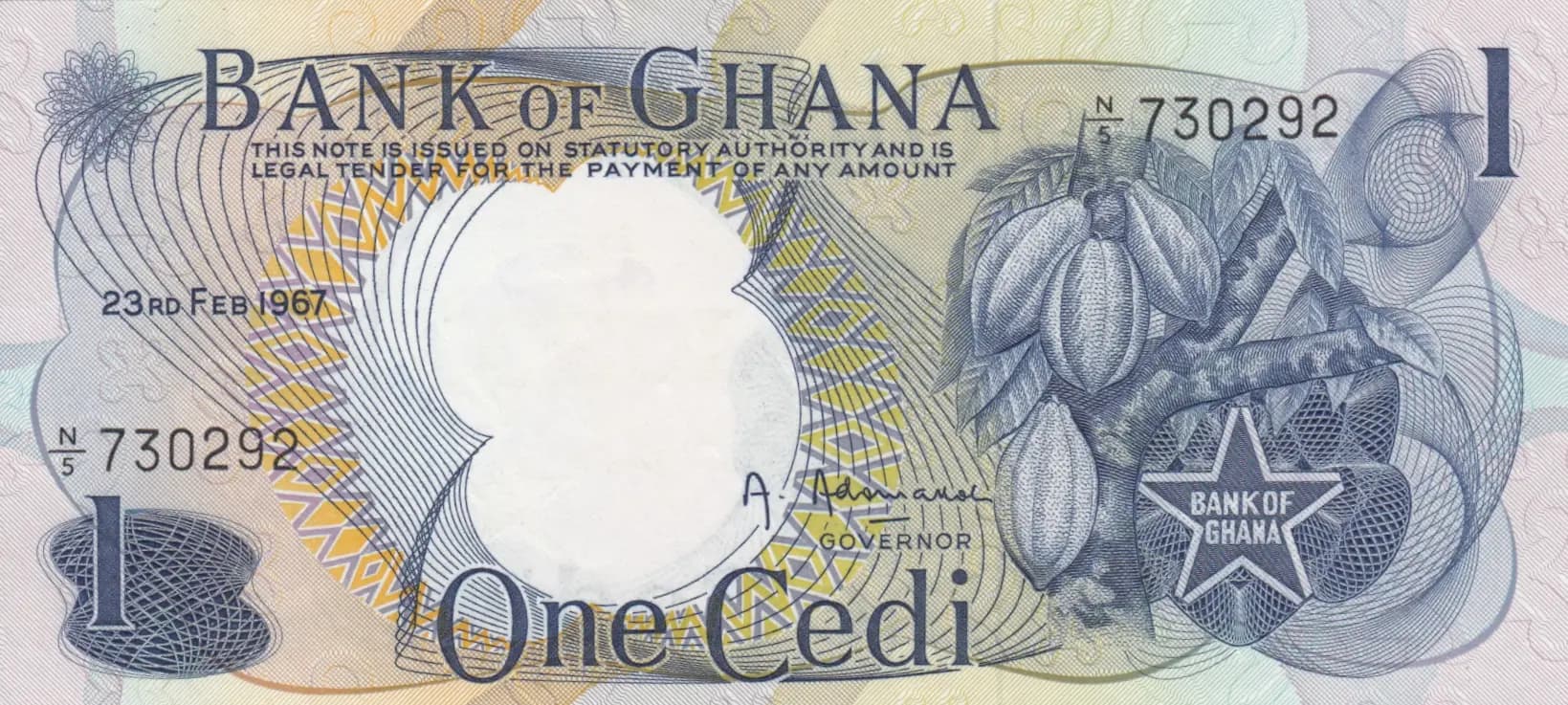
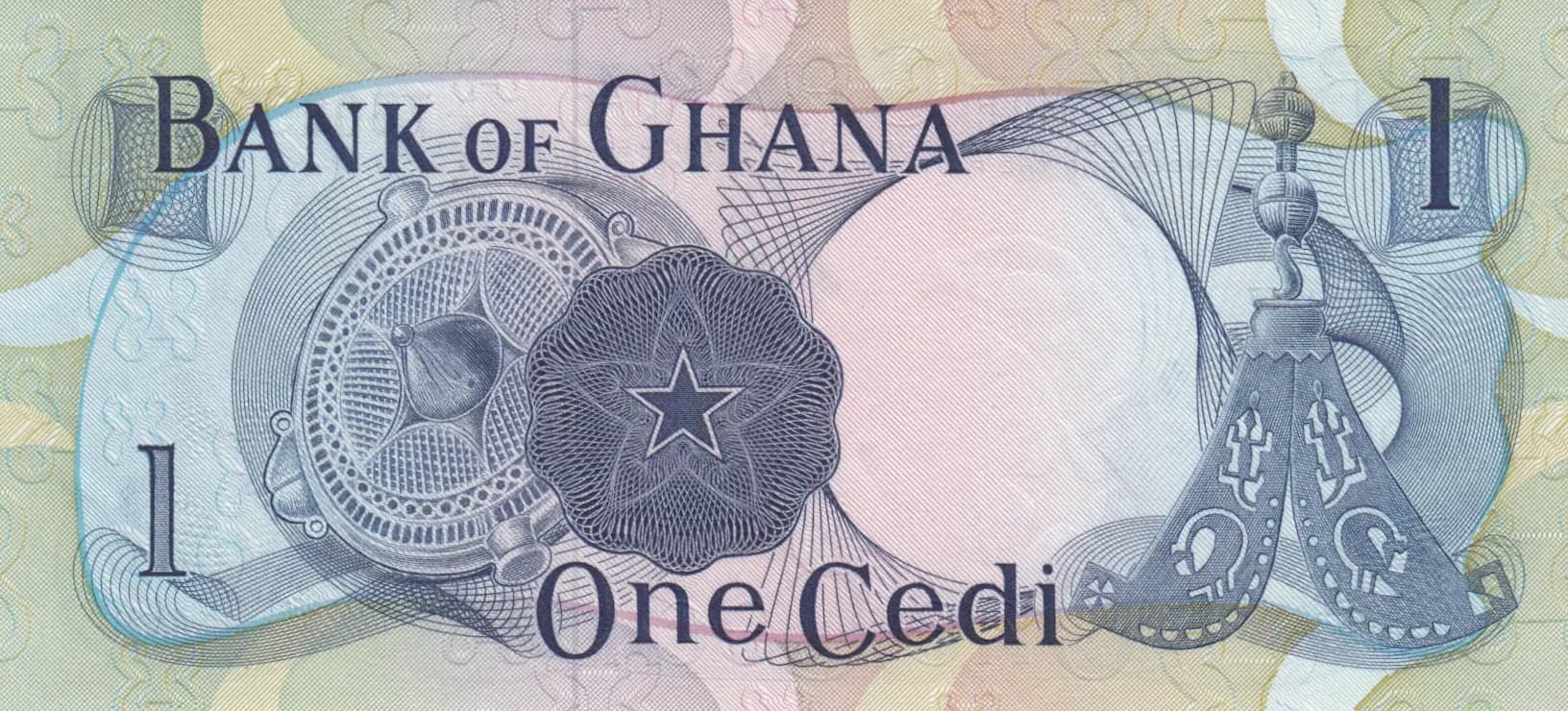
This is an exceptional example of Ghana's inaugural 1 cedi banknote from 1967, presented in uncirculated condition with sharp printing and vibrant color. The note showcases the Bank of Ghana's early design aesthetic, featuring beautifully engraved cacao pods on the obverse and traditional Ghanaian ceremonial symbols on the reverse, reflecting the nation's agricultural heritage and cultural identity. This Pick-10a variant is a foundational piece of Ghanaian numismatic history, issued during the early years of the Bank of Ghana's operations.
Common. The 1967-1971 date range indicates a substantial print run for regular circulation. eBay market data shows consistent sales in the $5-$21 range across multiple grades (VF, AUNC, PMG 66), with catalogue values listing UNC at $10 (2019), all indicative of adequate supply in the collector market. No evidence of scarcity, recall, or limited printing exists for this Pick-10a variant.
Issued on February 23, 1967, this banknote represents Ghana's economic sovereignty following independence, with the cacao imagery honoring the nation's primary export commodity that drove its economy. The ceremonial sword and shield depicted on the reverse symbolize Ghana's cultural heritage and traditional governance structures, while the eagle-head watermark emphasizes national identity. This inaugural series established the Bank of Ghana's design philosophy of celebrating both natural resources and cultural patrimony.
The obverse features an ornate composition with fine guilloche-style geometric patterns in blue-gray and gold tones framing a blank oval (watermark area). The right side displays a detailed engraved illustration of cacao pods with leaves, commemorating Ghana's agricultural foundation. The reverse employs similar decorative engraving techniques with blue-green and mauve tones, presenting a circular medallion design on the left and a traditional Ghanaian ceremonial sword and shield on the right, representing the nation's cultural and martial heritage. Both sides incorporate the Bank of Ghana's star emblem and feature intricate line-work security patterns typical of 1960s currency design standards.
Front side: 'BANK OF GHANA' (issuing authority); 'THIS NOTE IS ISSUED ON STATUTORY AUTHORITY AND IS LEGAL TENDER FOR THE PAYMENT OF ANY AMOUNT' (legal tender declaration); '23RD FEB 1967' (issue date); 'One Cedi' (denomination in words); 'GOVERNOR' (signature line designation); 'N730292' and '730292' (serial number). Back side: 'BANK OF GHANA' (issuing authority); 'One Cedi' (denomination in words); '1' (numerical denomination).
Intaglio engraving (steel plate printing), evidenced by the sharp, fine-line guilloche patterns, precise detail work in the cacao and ceremonial object illustrations, and the distinctive color gradations visible in the background. The multi-color printing was achieved through sequential plate passes, producing the characteristic layered color effects from blue and gold on the obverse to blue-green and pink-mauve on the reverse. This was standard practice for Commonwealth-associated nations' security printers of the era.
This note is identified as Pick-10a, the first variant in the 1 cedi series. The PMG population report indicates at least four catalogued variants exist (P-10c, P-10d, P-10d*, P-10s), likely representing differences in signatures, security features, or sequential date ranges within the 1967-1971 issue period. The observed serial number N730292 and issue date of 23RD FEB 1967 confirm this as an early printing from the initial release. Specific signature variants would require comparison with known signatories of the Bank of Ghana's early governors to identify precisely.