500 000 mark 1923
Market Prices
34 salesAbout This Note
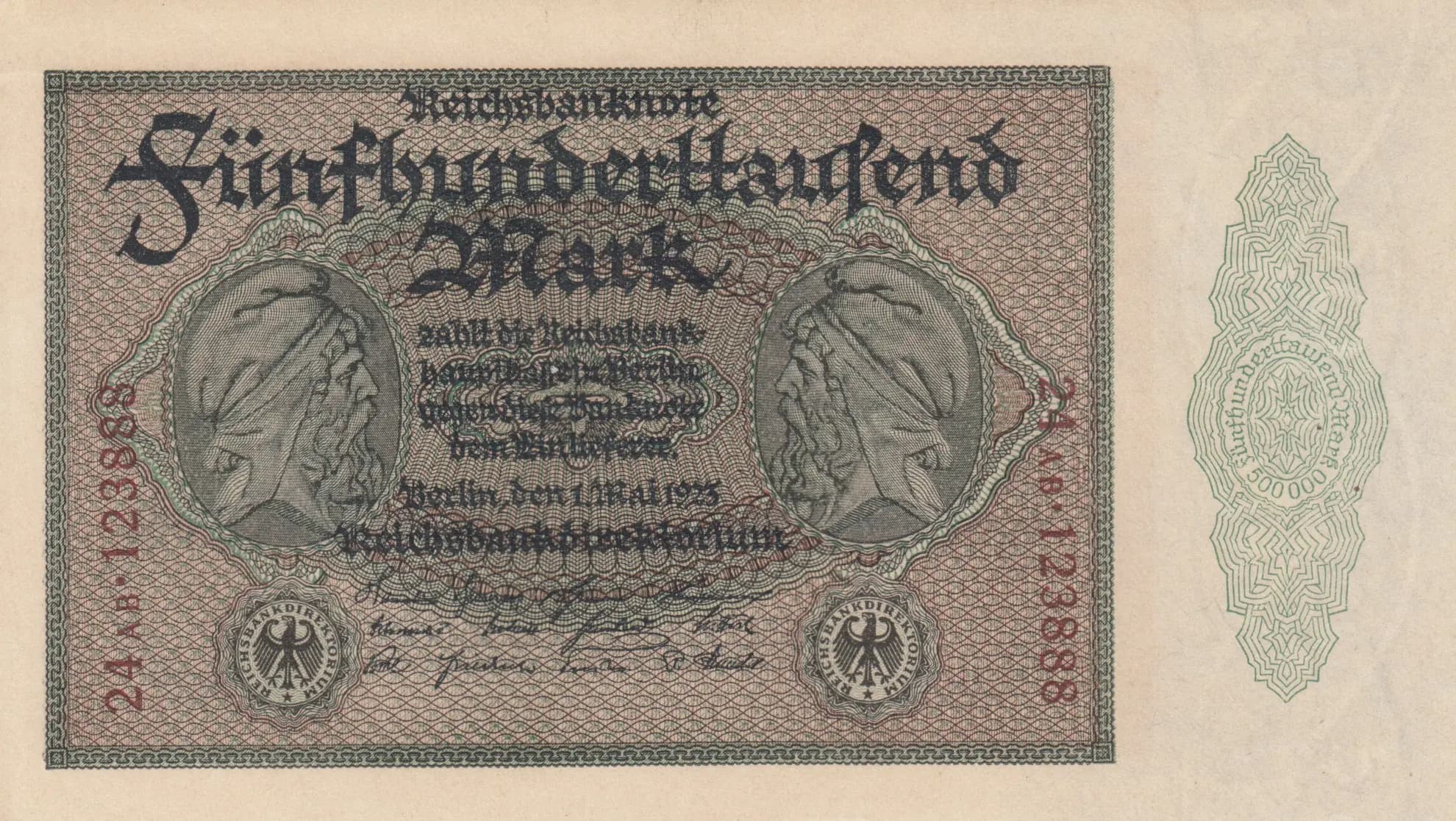
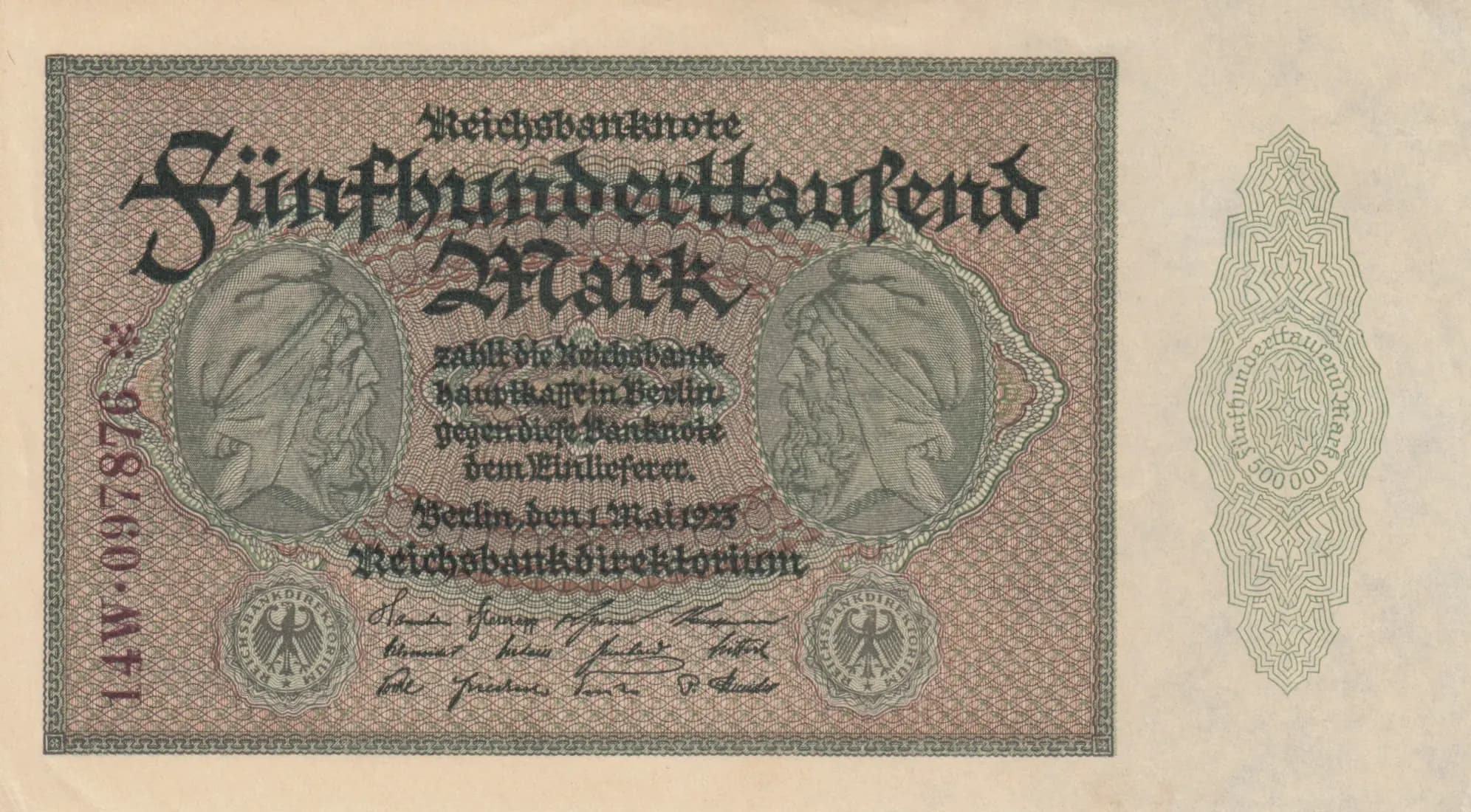
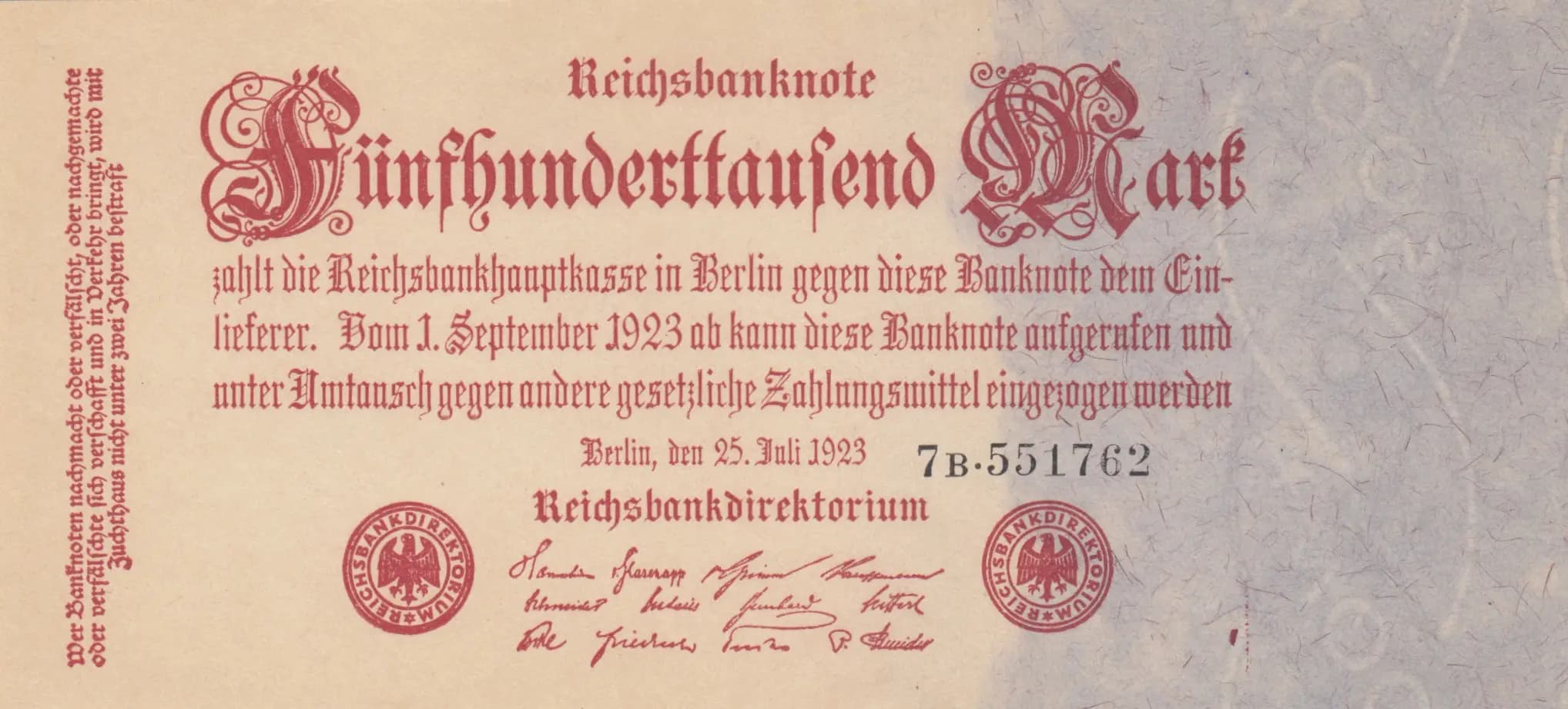
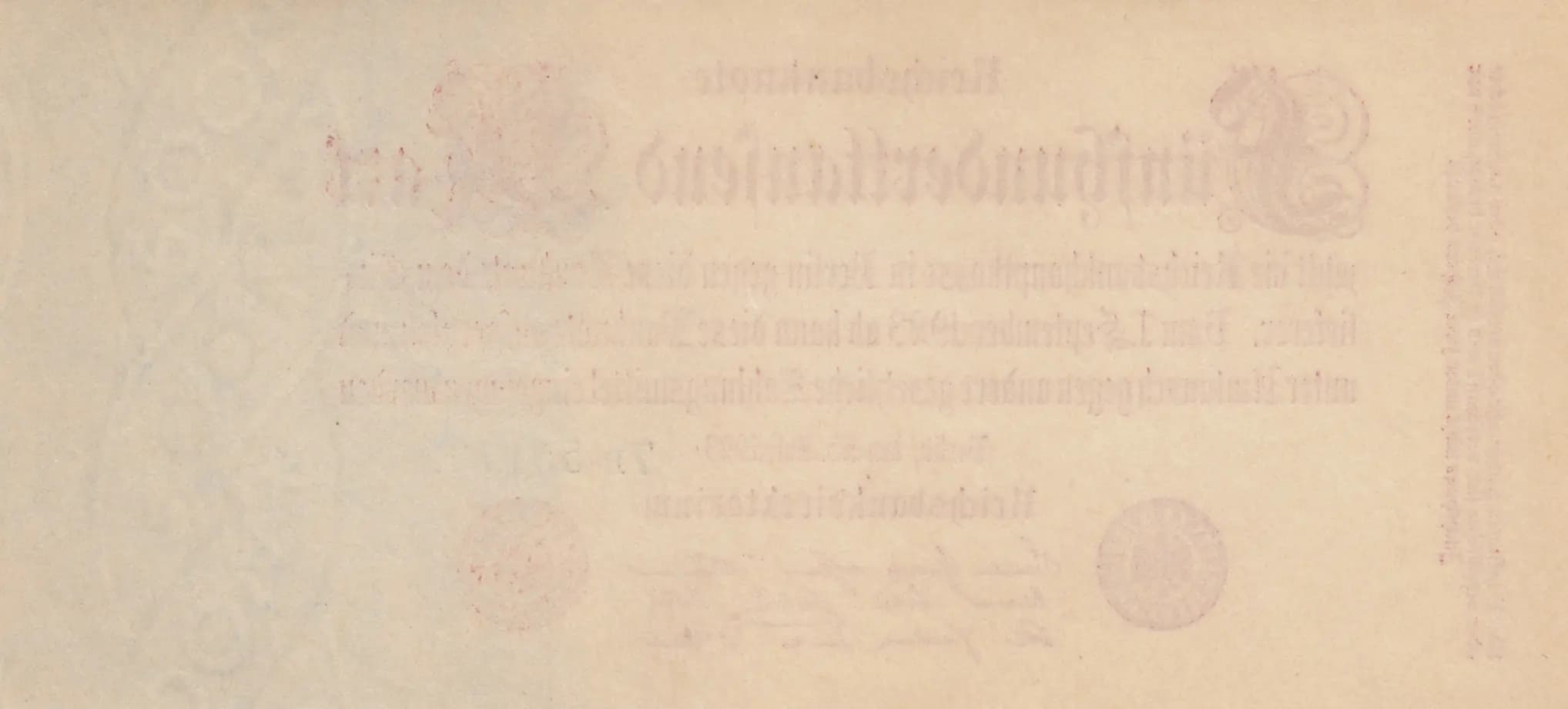
This is a German Reichsbanknote for 500,000 Mark dated 25 July 1923, representing the height of the Weimar hyperinflation crisis. The note exhibits the characteristic ornate Gothic typography and dual imperial eagle seals typical of emergency currency from this period. While the obverse displays crisp printing with clear serial number 7B.551762 and official signatures, the note shows significant age-related deterioration including foxing, discoloration, and oxidation consistent with a century-old document stored in variable conditions; the reverse is largely blank with faint watermark impressions visible through heavy patina.
Common. This 500,000 Mark note from July 1923 was produced in large quantities as an emergency denomination during the hyperinflation crisis and survives in considerable numbers today. eBay market data strongly supports this assessment: raw examples in various conditions have sold consistently between $0.99 and $12.50 over the past decade, with certified examples (PMG) in grades 63-66 commanding $13-$67, indicating robust supply and modest collector demand. Even high-grade certified specimens (PMG 66-67) have sold in the $60-$151 range, which is modest for premium grades. The 2016 catalogue value of $15 UNC aligns with typical pricing for common hyperinflation notes. Millions of these notes were circulated and subsequently saved by collectors, ensuring ongoing availability.
Issued during the catastrophic hyperinflation of 1923, this banknote represents the Reichsbank's desperate attempt to maintain monetary function as the Mark collapsed in value. The July 1923 date places it in the final months before the introduction of the Rentenmark in November, when denominations reached astronomical levels—by August, the Reichsbank was issuing notes for billions and trillions of marks. The note's legal text references redemption provisions and the threat of recall from 1 September 1923, reflecting the government's awareness that these emergency notes would soon become worthless.
The obverse of this emergency hyperinflation note features a distinctly Weimar-era design emphasizing official authority and security through ornamental typography rather than figurative imagery. The note lacks portrait vignettes, instead relying on two circular seals bearing the Reichsbank's imperial eagle emblem and decorative wreaths positioned at lower left and right. The dominant visual element is the denomination 'Fünfhunderttausend Mark' rendered in large, elaborate Gothic lettering characteristic of German monetary design of the period. Berlin is referenced as the location of the issuing authority (Reichsbankhaupitkasse). The design employs fine line work, decorative borders, and intricate ornamental letterforms as security features. The reverse appears to have been left largely blank, a common practice for emergency currency to expedite production. The cream-to-tan coloration with red/crimson and brown/sepia tones reflects both the original printing and extensive aging.
FRONT: 'Reichsbanknote' (Reichsbank Note) — main title; 'Fünfhunderttausend Mark' (Five Hundred Thousand Mark) — denomination in large Gothic lettering; 'Berlin, den 25. Juli 1923' (Berlin, 25 July 1923) — official date of issue; 'zahlt die Reichsbankhaupitkasse in Berlin gegen diese Banknote dem Einlieferer. Vom 1.September 1923 ab kann diese Banknote aufgerufen und unter Umtausch gegen andere gesetzliche Zahlungsmittel eingezogen werden' (The Reichsbank main office in Berlin pays against this banknote to the deliverer. From 1 September 1923 onwards this banknote can be called in and withdrawn in exchange for other legal tender) — redemption clause; 'Reichsbankdirektorium' (Reichsbank Directorate) — issuing authority; 'Die Präsidenten und Direktoren' (The Presidents and Directors) — followed by official signatures; Serial number '7B.551762'; Left margin contains legal text regarding counterfeiting penalties (partially visible). BACK: No legible printed text; faint circular watermark impressions only.
This note was produced using letterpress and/or intaglio printing techniques typical of 1923 Reichsbank currency. The crisp impressions of the ornamental Gothic typefaces, the fine line work visible in the decorative borders, and the clear strike of the imperial eagle seals all indicate traditional relief or intaglio printing methods. The Reichsbank contracted with established security printers for these emergency denominations; the Giesecke+Devrient company and the Reichsbank's own printing facilities were primary producers of 1923 hyperinflation notes. The production speed required by the crisis may have necessitated simplified security features compared to pre-war issues, relying on ornamental typography and official seals as primary anti-counterfeiting measures.
Serial number prefix '7B' indicates this note is from a specific printing batch or series. The official date of 25 July 1923 is standard for this Pick number. Known varieties for P-92 include different serial number prefixes (indicating different printing runs) and potentially varying signature combinations, though the visual analysis confirms the standard signature block reading 'Die Präsidenten und Direktoren' (The Presidents and Directors). No overprints, color variations, or exceptional varieties are apparent in this example. The note represents the standard issued type without the recall overprints that appeared on some hyperinflation denominations in later months.