500 000 mark 1923
“2 serial #”
Market Prices
34 salesAbout This Note
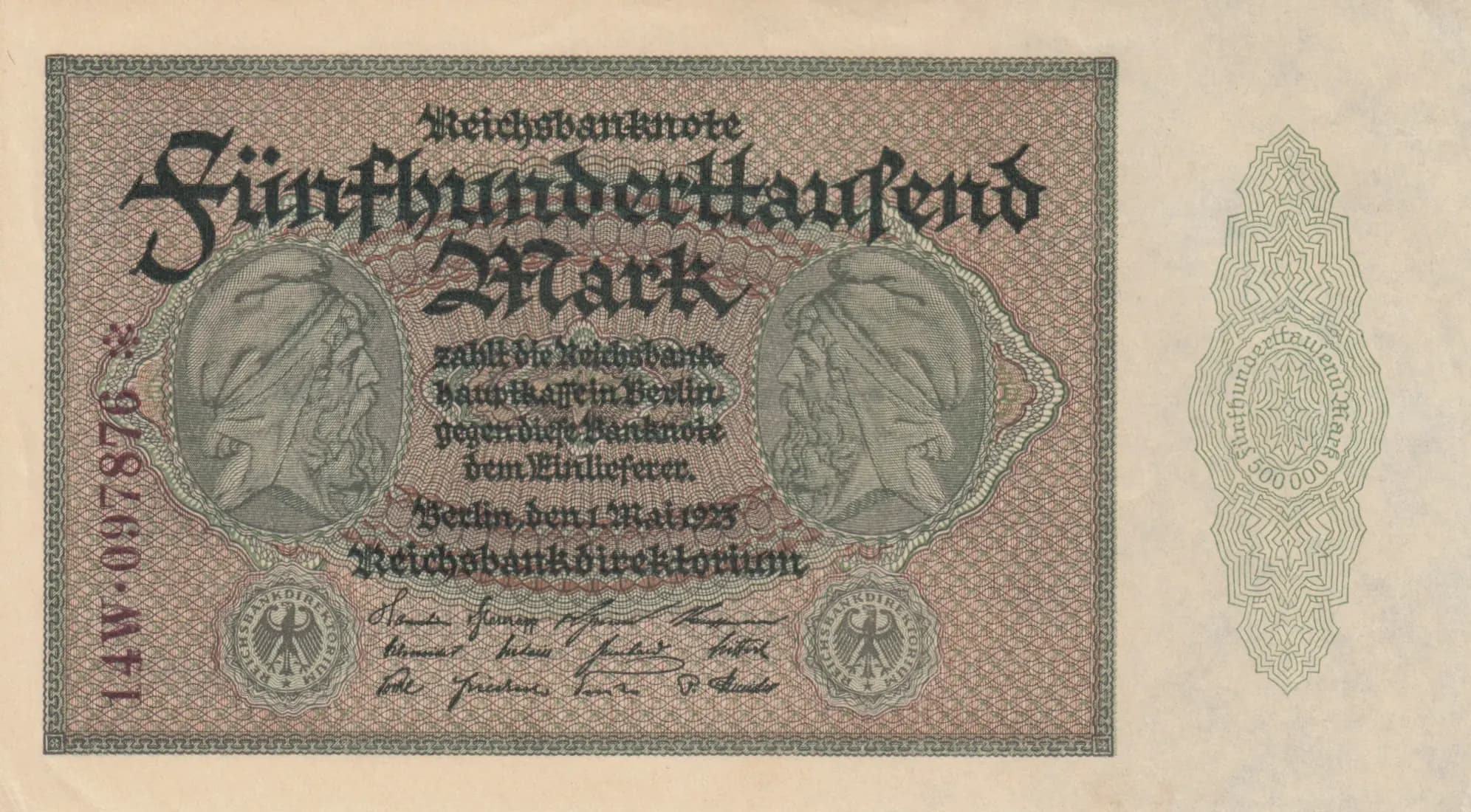
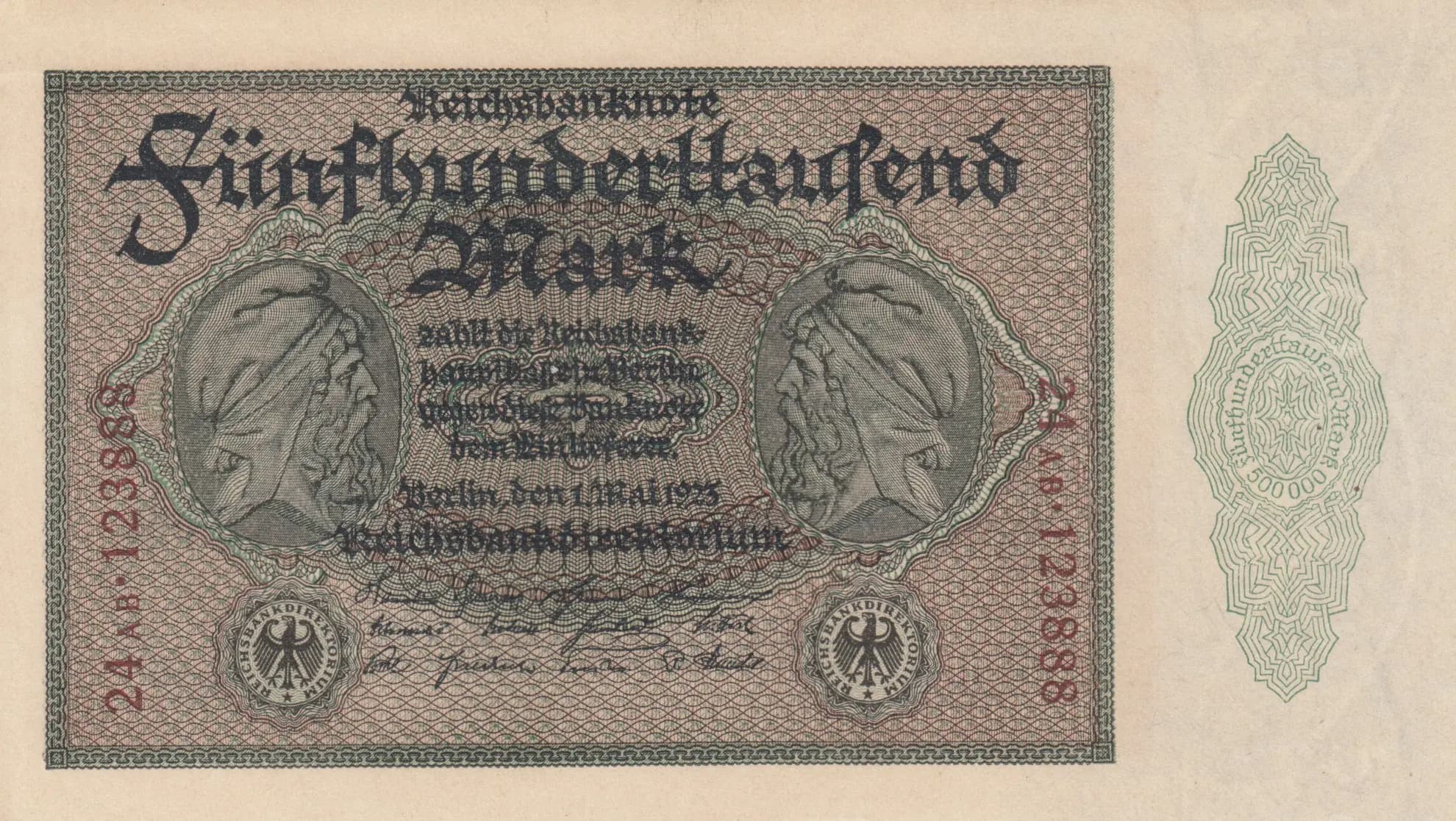
This 500,000 Mark banknote from the Reichsbank (May 1, 1923) represents a fascinating artifact of Germany's hyperinflation period, issued during the economic crisis that would culminate in the currency reform of November 1923. The note displays the characteristic design elements of late Weimar hyperinflation currency: dual male portrait medallions in profile, ornate geometric borders, and bold denomination numerals on the reverse. In AU condition with two serial numbers as noted, this example shows age-appropriate patina and minimal wear, making it a well-preserved specimen of this historically significant issue.
Common. The eBay price history provided shows consistent sales in the $0.99 to $81.80 range, with most raw examples selling below $15 and even PMG-graded specimens (PMG 65-67) typically fetching $20-$60. These prices indicate strong collector interest but abundant supply. The 500,000 Mark was issued in large quantities during the May 1923 circulation period, and millions of examples survive today. While these notes are historically important and interesting to collectors, they are not scarce in the numismatic market.
Issued during the peak of the German hyperinflation crisis of 1923, this banknote exemplifies the Reichsbank's desperate monetary expansion to finance government spending and war reparations. The note's ornate design with imperial eagles and German Gothic script reflects the formal authority the central bank attempted to maintain even as the mark's purchasing power collapsed. By May 1923, denominations had already reached hundreds of thousands of marks, and within six months, the currency would be replaced by the Rentenmark, making all hyperinflation-era notes like this historical documents of economic chaos.
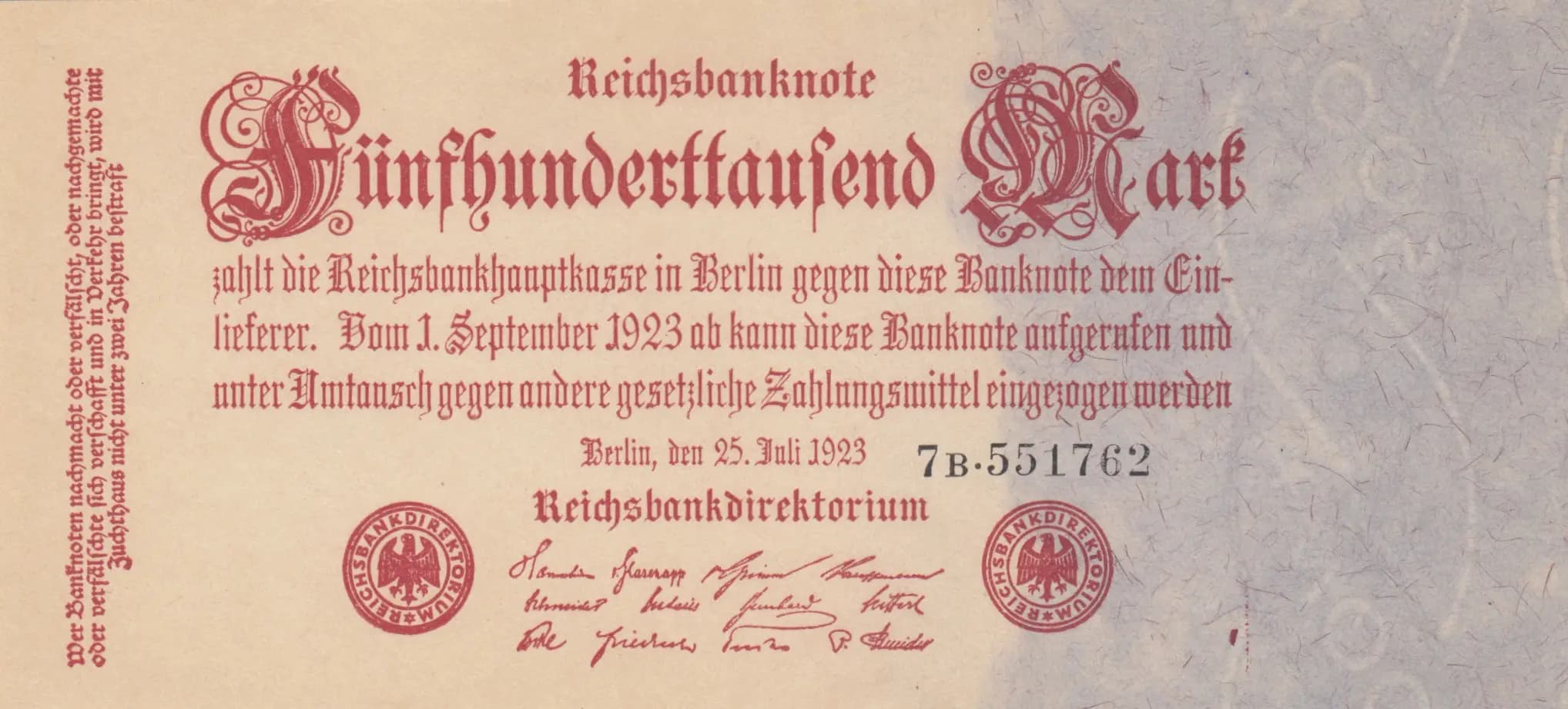
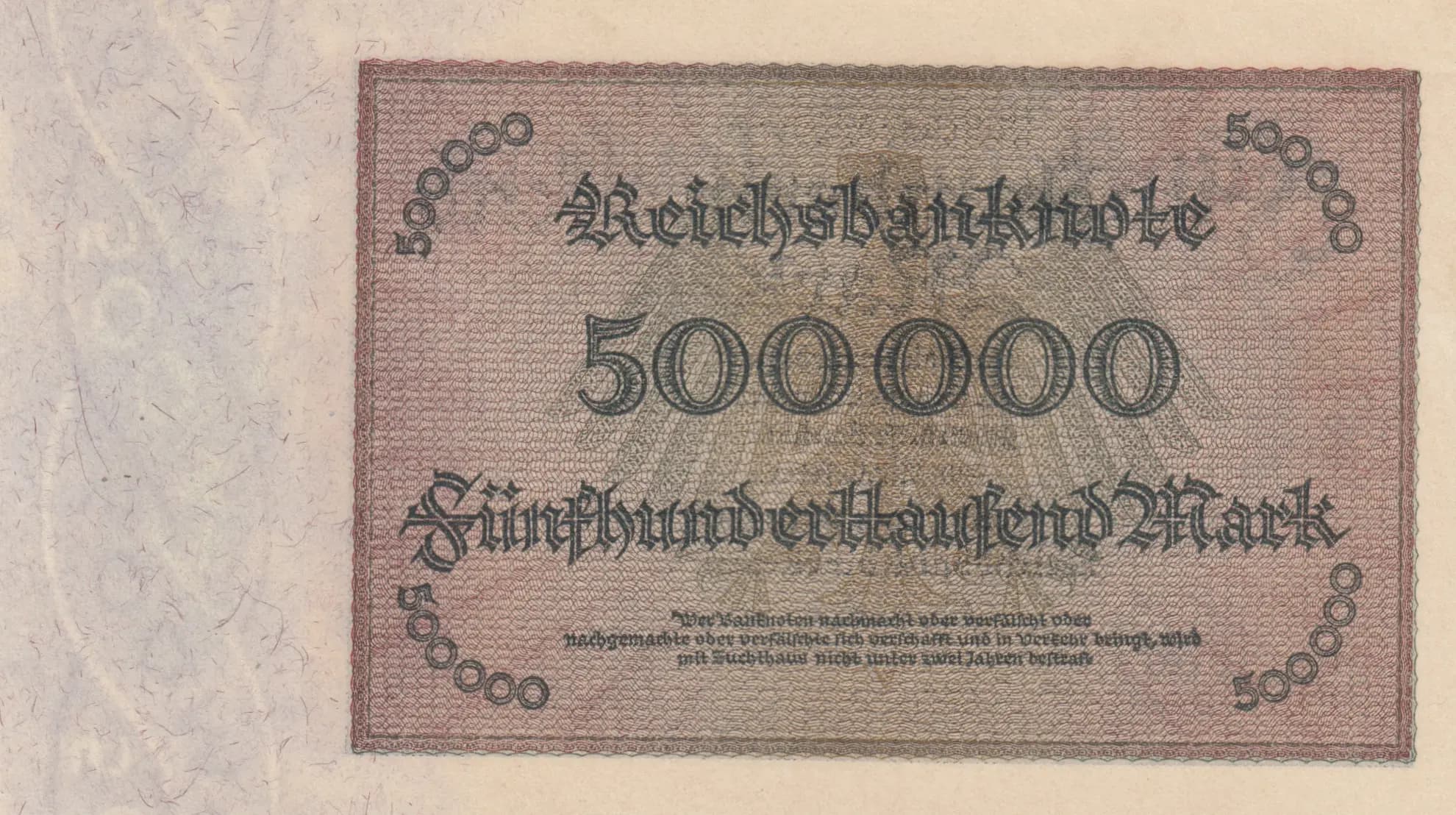
The front features two symmetrical male portrait medallions in profile facing right, positioned in the left and center areas of the note. These profiles represent the formal iconography of Weimar-era banknotes, though the specific historical figure depicted is not individually named on this hyperinflation issue. The design incorporates German imperial eagles in decorative circular seals at the bottom corners, representing the authority and legitimacy of the Reichsbank despite the currency's collapsing value. Ornate geometric border patterns with fine crosshatch security background fill the composition in a predominantly beige and tan palette with green and reddish-brown accents. The reverse shifts to a mauve and reddish-brown color scheme, prominently displaying the large numerals '500000' in the center, with decorative corner elements featuring repeating number patterns. The overall design reflects the elaborate security printing techniques characteristic of pre-hyperinflation German banknote design, maintained even as denominations became absurdly large.
FRONT SIDE: 'Deutsches Reich' (German Empire) | 'Reichsbanknote' (Reichsbank Note) | 'Gutschein' (Voucher/Certificate) | 'Millionen Mark' (Million Mark). BACK SIDE: 'Reichsbanknote' (Reichsbank Note) | '500000' (numerical denomination) | 'Fünfhunderttausendt Mark' (Five Hundred Thousand Mark) | Extended authorization text: 'Die Reichsbank ist berechtigt, ohne die schrift oder die Unterschrift auszugeben und ohne Rückerstattung über diese noten zu verfügen...' (The Reichsbank is authorized to issue these notes without written signature and to dispose of them without reimbursement, recognizing that in the money market [conditions warrant such action]...).
Intaglio (steel engraving/copperplate) printing, the standard security printing method for German Reichsbank notes of this period. The fine geometric crosshatch patterns, intricate border designs, and layered decorative elements visible throughout both sides indicate deep-relief intaglio work typical of the Reichsbank's official printers. The sharp detail preservation in the portrait medallions and eagle emblems further confirms intaglio production. This note was produced by the Reichsbank's authorized printing facilities, likely the Giesecke & Devrient company or the Reichsdruckerei (Reich Printing Office), which handled many high-security hyperinflation issues.
Pick catalog P-88b; watermark denomination '500M' as noted in PMG population data. The catalog notation '2 serial #' in the collector notes suggests this particular example displays two serial numbers, possibly indicating a printing variety or dual-numbering variant common to some Reichsbank hyperinflation issues. The May 1, 1923 issue date places this within the peak hyperinflation circulation period. No specific signature varieties or overprint variants are noted in the visual analysis, suggesting this is a standard regular-issue example of the P-88b type.