500 000 000 mark 1923
Market Prices
2 salesAbout This Note
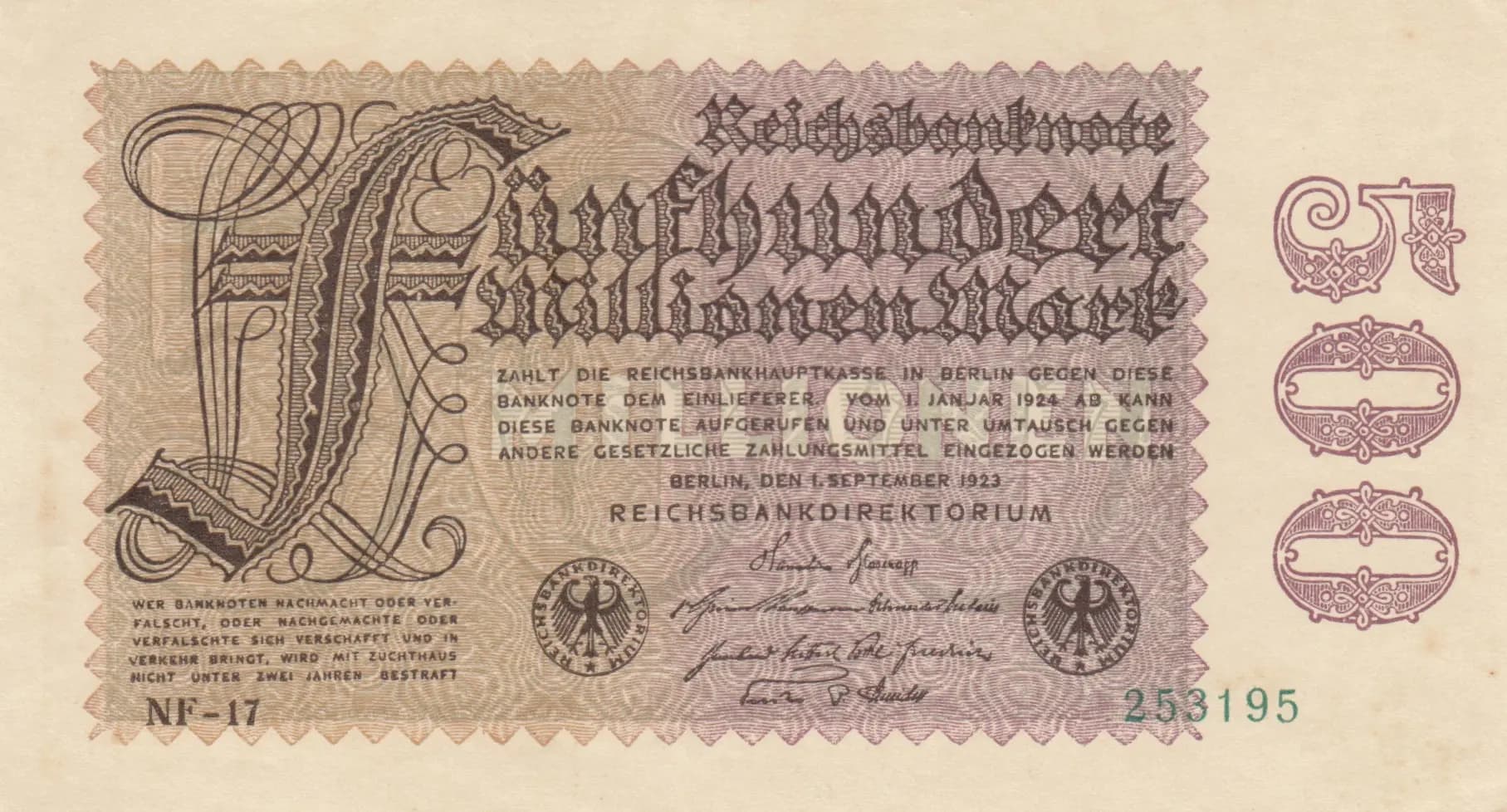
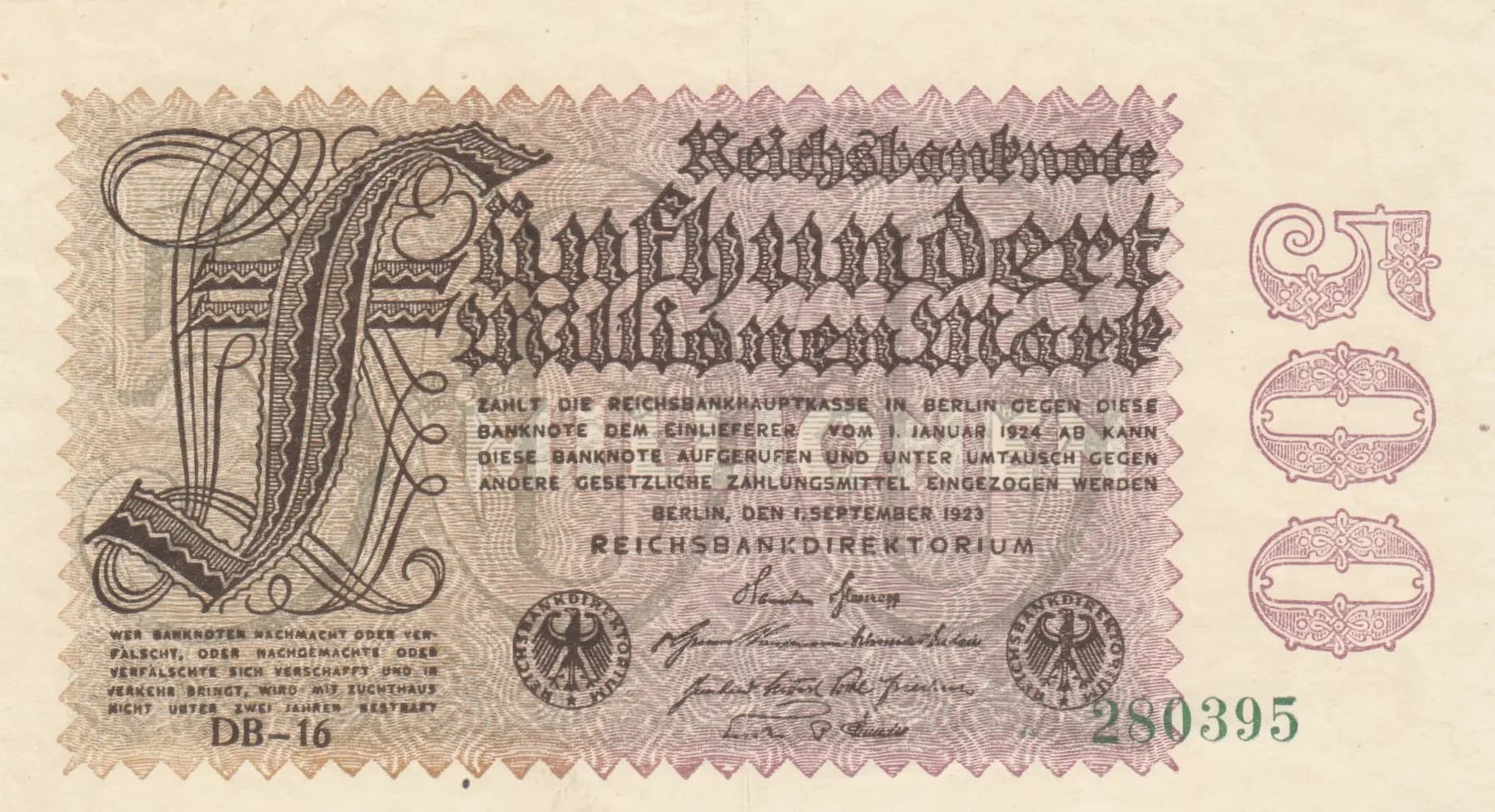
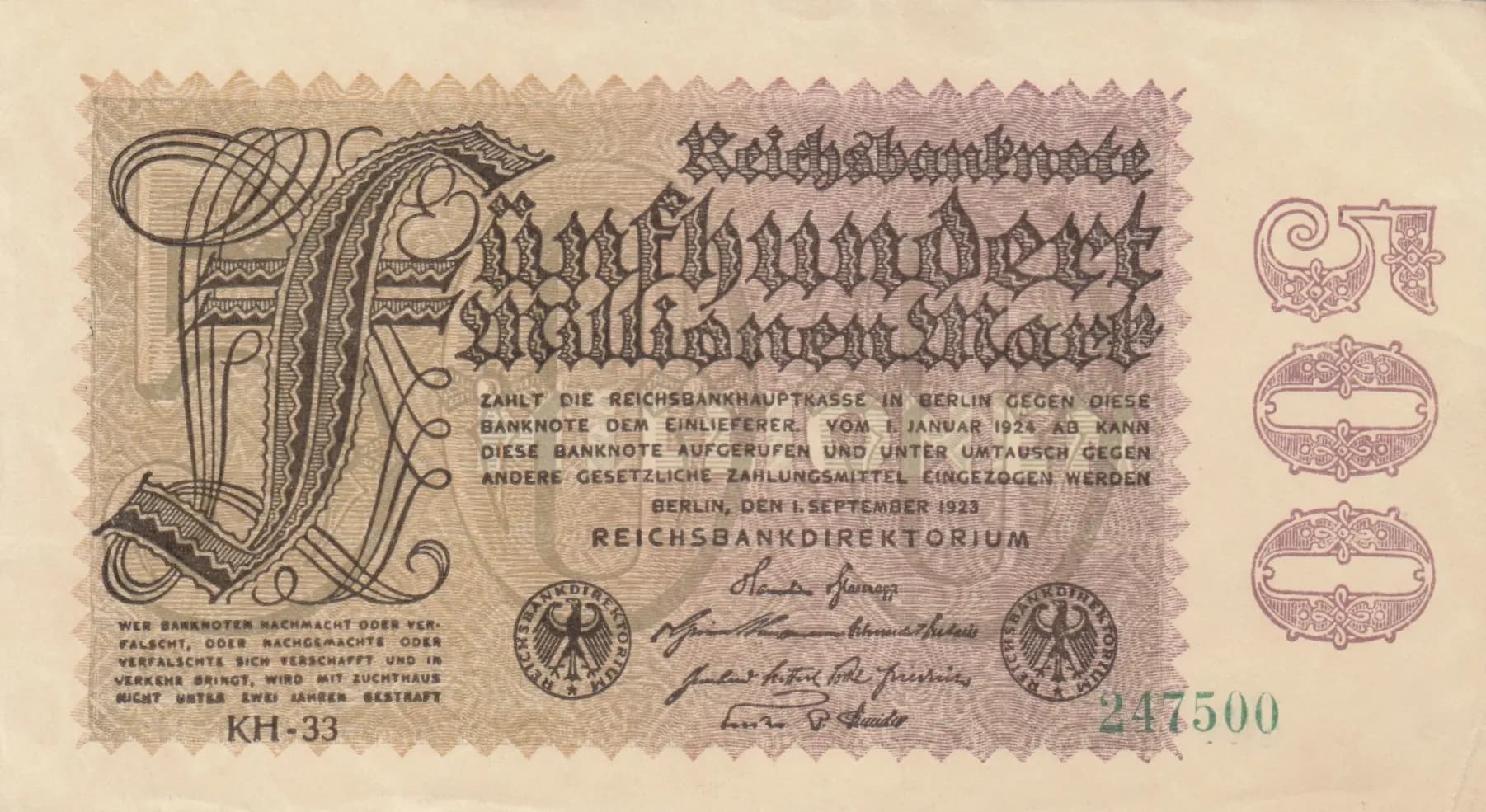
This is a German 500 Million Mark note from the height of the 1923 hyperinflation crisis, issued by the Reichsbank on September 1, 1923. The note displays the characteristic ornate engraved design typical of German banknotes of this era, with elaborate Gothic scrollwork, multiple Imperial German Eagle seals, and three decorative oval frames on the obverse. In EF condition, this example shows moderate age-related wear including creasing and foxing consistent with circulation during the tumultuous final months of the Weimar hyperinflation period.
Common. The eBay price data provided (EF sold for $0.99 in 2017, catalog values from 2016 listing EF at $5) and the historically high print runs of German hyperinflation notes indicate this is a readily available note to collectors. Hyperinflation-era denominations were printed in enormous quantities because the currency was needed in vast volume and quickly became obsolete. These notes survive in significant quantities in the collector market.
This banknote represents one of the most dramatic episodes in monetary history—the German hyperinflation of 1923—when the Reichsmark's value collapsed so rapidly that denominations escalated from millions to billions to trillions within months. The official seals of the Reichsbankdirektorium and the precise printing of 'Berlin, den 1. September 1923' attest to the Reichsbank's desperate attempts to maintain monetary authority even as the currency became virtually worthless. The prominent warning about counterfeiting and the redemption clause stating the note could be called in after January 1, 1924, reflect the government's recognition that this currency experiment was unsustainable.
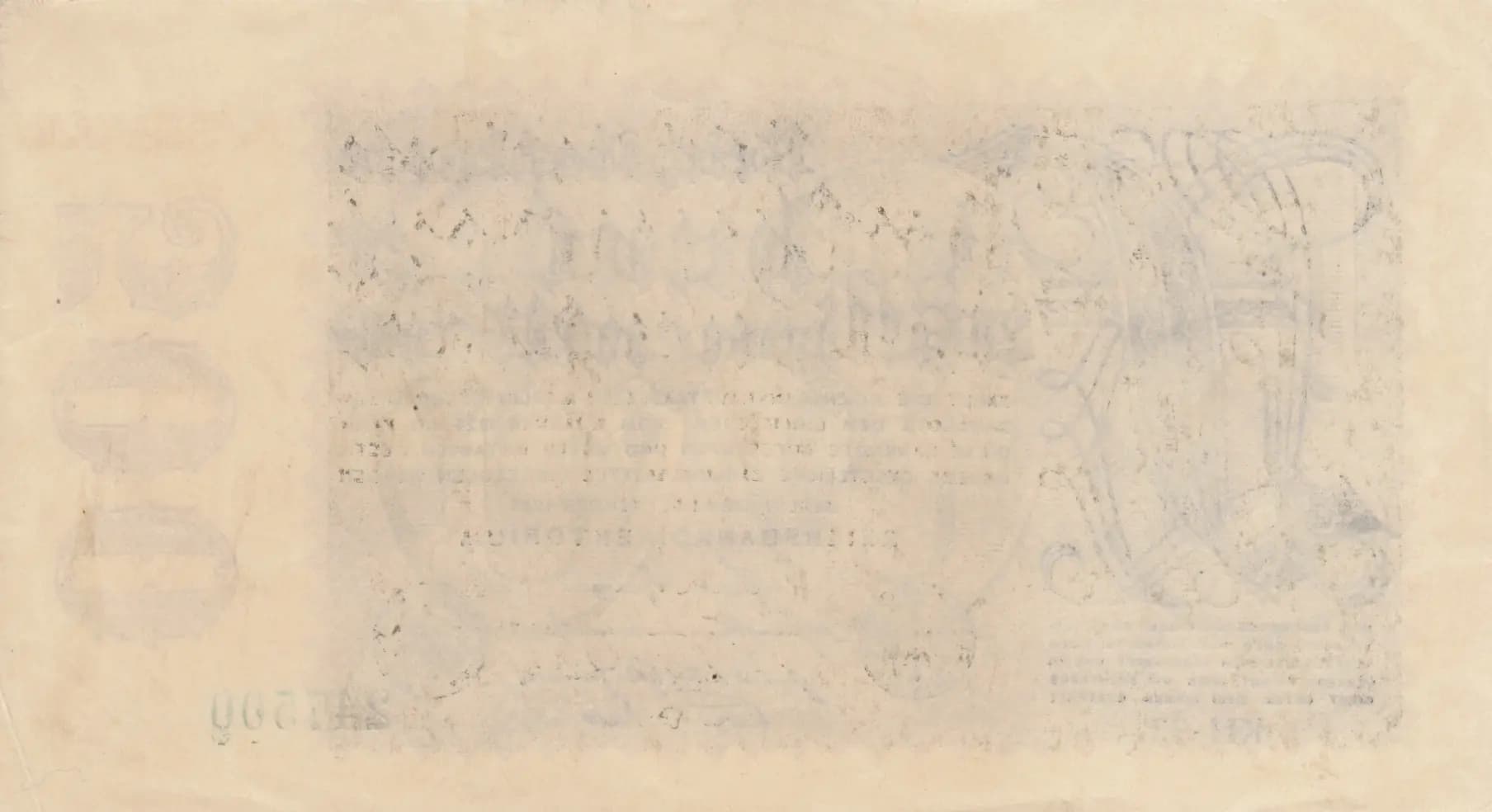
The obverse features a classical German Imperial design executed in fine engraved style. The left margin displays elaborate Gothic-style scrollwork and geometric ornamental patterns typical of high-security banknote design of the period. The center upper portion contains the denomination and issuer text in Gothic typeface. The right side is anchored by three stacked oval ornamental frames, characteristic of German Reichsbank notes of this era. Two Imperial German Eagle seals (representing Prussian/Imperial authority) flank the signature area in the lower center, flanking the handwritten signatures of Reichsbank officials. A serial number appears on the right margin. The color scheme of tan/beige with brown, sepia, and purple/mauve tinting is typical of German hyperinflation-era currency. The reverse is blank or uniface, as indicated by the catalog data and visual analysis showing only faint watermark patterns. The watermark noted as 'S in stars. M' provides an additional security feature.
FRONT SIDE: 'Reichsbanknote' (Reichsbank Note); 'Zehn Milliarden Mark' (Ten Billion Mark) — note: visual analysis indicates 500 Millionen Mark per catalog data; 'ZAHLT DIE REICHSBANKHÄUPTASSE IN BERLIN GEGEN DIESE BANKNOTE DEM EINLIEFERER. VOM 1.JANUAR 1924 AB KANN DIESE BANKNOTE AUFGERUFEN UND UNTER UMTAUSCH GEGEN ANDERE GESETZLICHE ZAHLUNGSMITTEL EINGEZOGEN WERDEN' (Pays the Reichsbank main cash office in Berlin against this banknote to the deliverer. From January 1, 1924 onwards this banknote can be called in and exchanged against other legal means of payment); 'BERLIN, DEN 1. SEPTEMBER 1923' (Berlin, September 1, 1923); 'REICHSBANKDIREKTORIUM' (Reichsbank Directorate); 'KH-33' (plate identifier); Serial number '247500'; 'WER BANKNOTEN NACHMACHT ODER VERFÄLSCHT, ODER NACHGEMACHTE ODER VERFÄLSCHTE SICH VERSCHAFFT UND IN VERKEHR BRINGT, WIRD MIT ZUCHTHAUS NICHT UNTER ZWEI JAHREN BESTRAFT' (Whoever counterfeits or forges banknotes, or obtains counterfeit or forged notes and puts them into circulation, will be punished with imprisonment for not less than two years). REVERSE SIDE: Blank or faint watermark patterns only.
Steel engraving on specialized banknote paper, the standard security printing method for Reichsbank notes during this period. The fine line work, cross-hatching, and intricate decorative patterns visible in the visual analysis are characteristic of high-quality intaglio engraving. The multiple Imperial seals and signature spaces were applied using the same engraved plates. The note was likely printed by one of the primary German security printers authorized by the Reichsbank (such as Giesecke & Devrient or similar), though specific attribution would require additional research into the printer's marks for this Pick number.
This example corresponds to Pick catalog P-110f, with date 1.9.1923 (September 1, 1923) and plate identifier KH-33. The serial number visible in the analysis is 247500. Varieties of this issue may exist based on different signature combinations (officials serving on the Reichsbankdirektorium changed during this period), printing dates within the same denomination series, or different plate numbers. The 'f' designation in the Pick number likely indicates this is a specific variety within the 500 Million Mark series, possibly distinguished by signature variants or minor design differences from earlier varieties in the same denomination.