5 000 000 mark 1923
Market Prices
13 salesAbout This Note
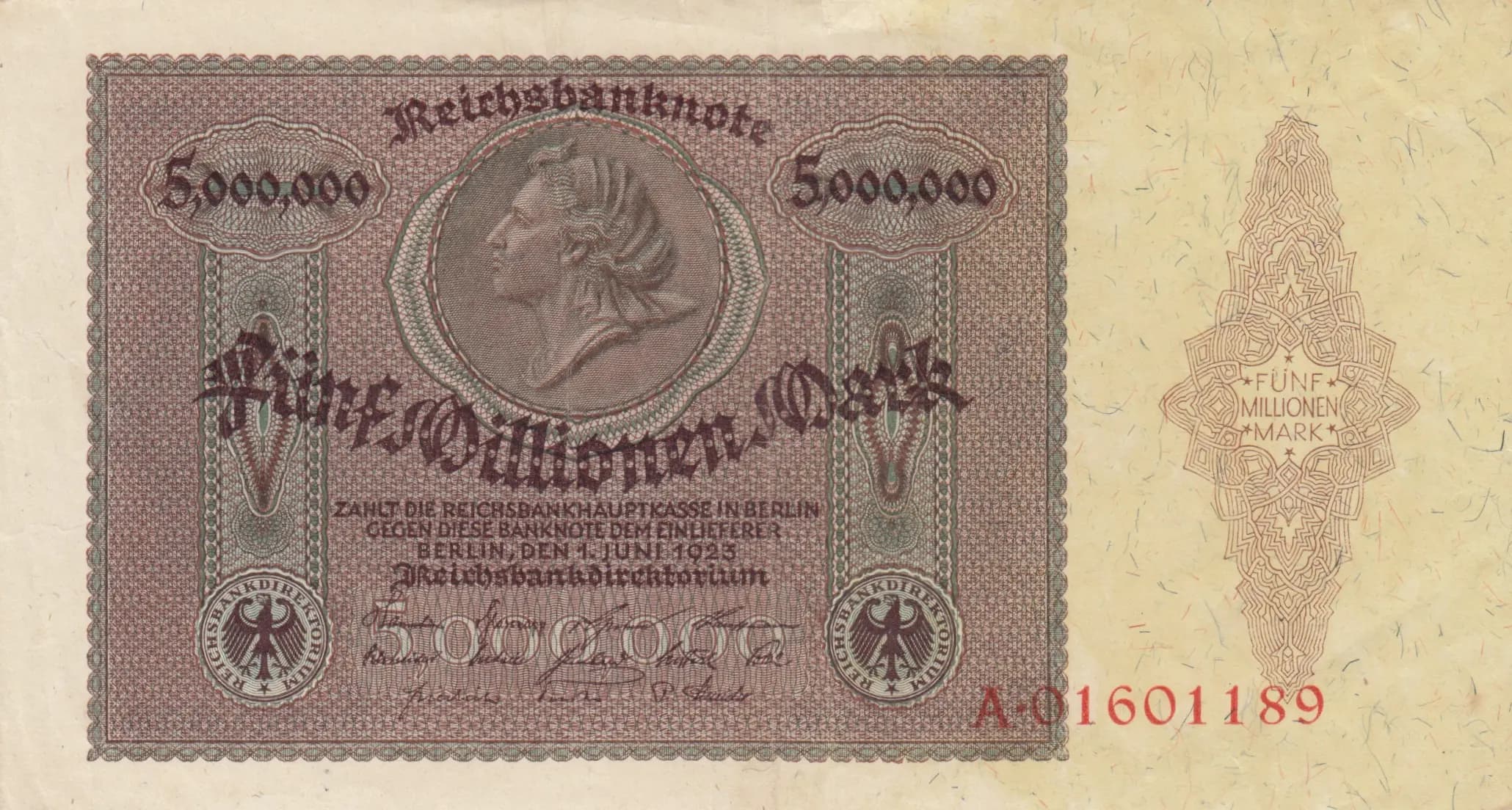
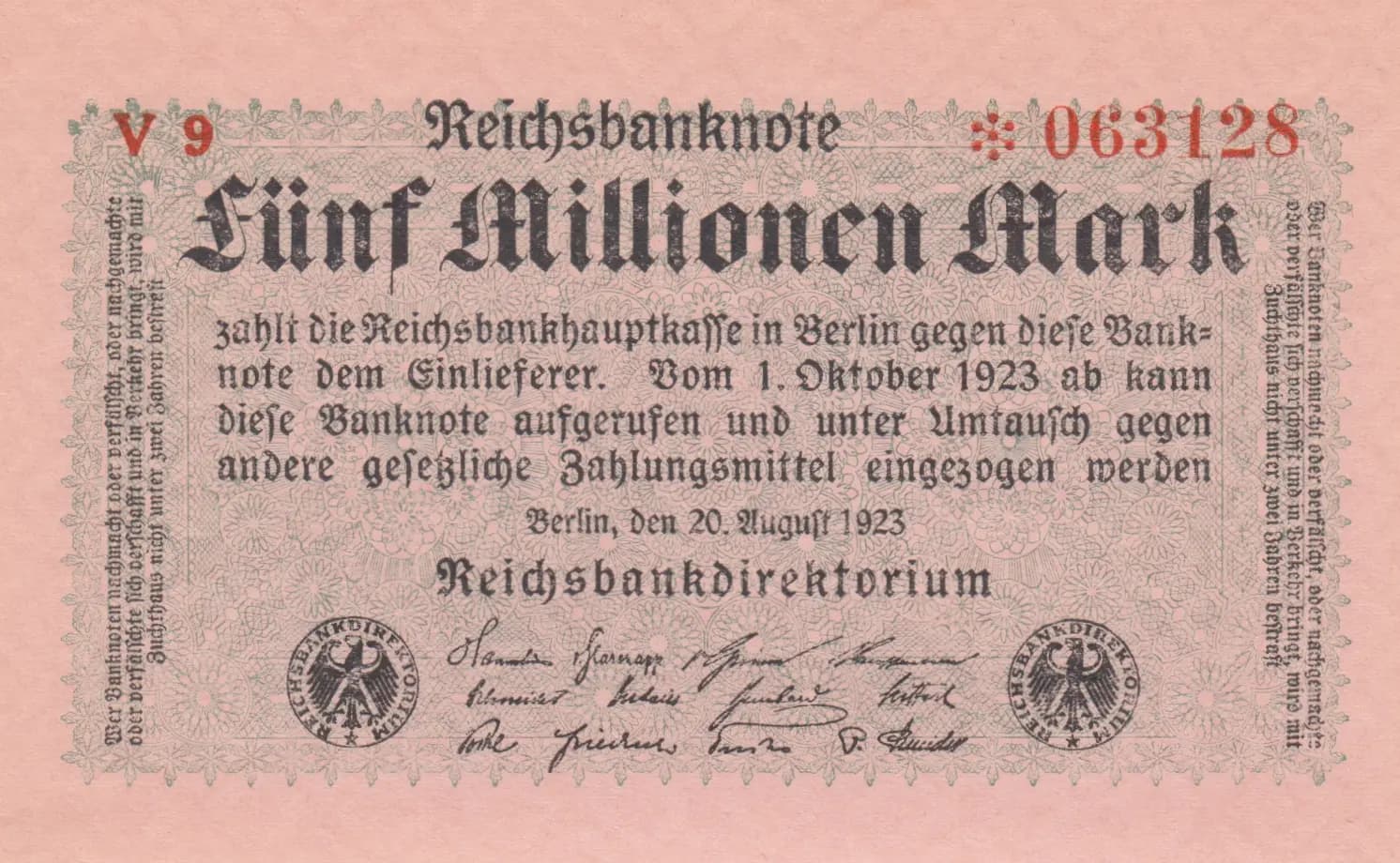
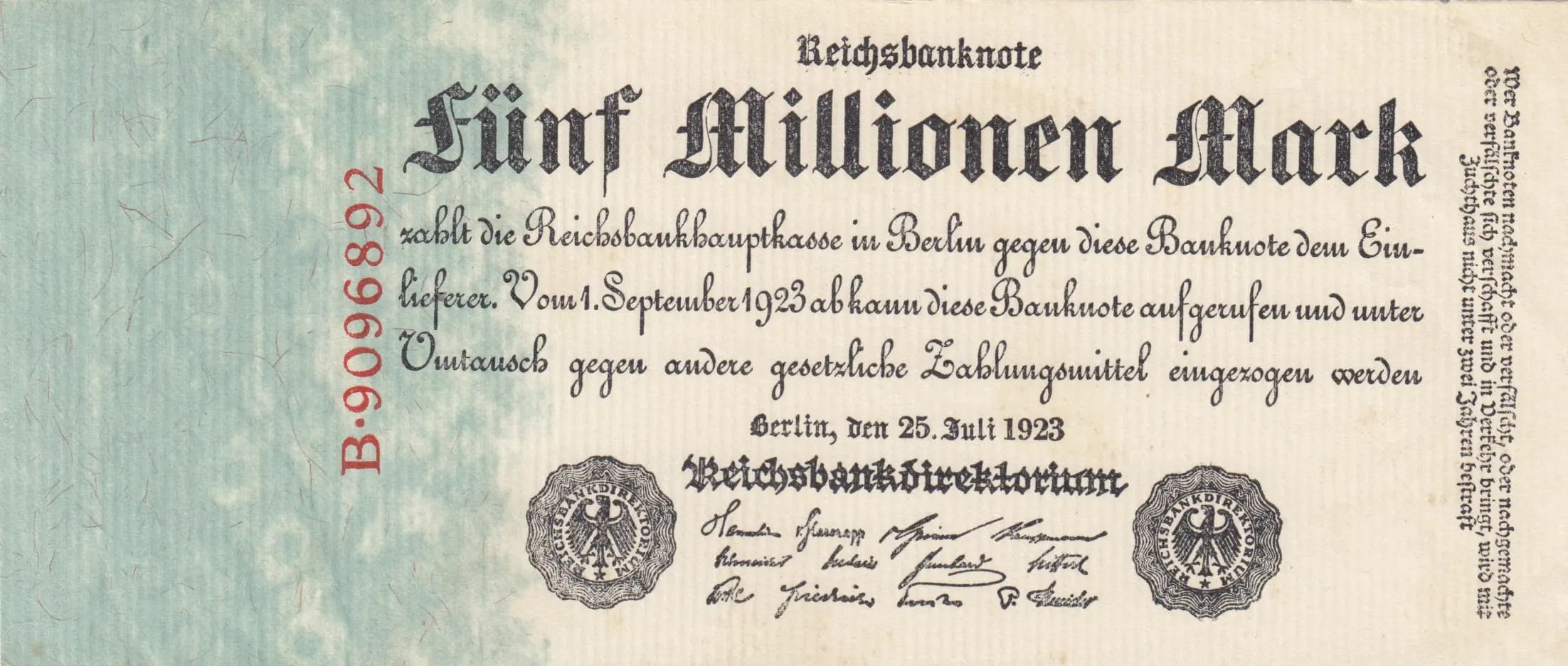
This is a German 5,000,000 Mark hyperinflation-era banknote issued by the Reichsbank on July 25, 1923, graded in AU condition. The note displays the characteristic ornate Gothic typography and dual imperial eagle seals typical of Weimar Republic currency, with a distinctive light greenish-blue and cream color scheme. Despite visible aging with foxing and a vertical crease, the note retains good overall eye appeal and represents a fascinating artifact from one of history's most severe currency collapses.
Common. While this is a hyperinflation-era note with historical significance, the 5,000,000 Mark denomination was issued in massive quantities during July-August 1923 as inflation reached its peak. eBay market data confirms common status: VF examples routinely sell for $1-2, and even PMG 66 graded notes have sold for $33-77, indicating healthy supply in the market. AU condition examples are moderately more valuable than circulated specimens but remain affordable and readily available to collectors.
Issued during the peak of German hyperinflation in July 1923, this note exemplifies the desperate monetary measures taken by the Reichsbank as the Mark collapsed in value. The official seals bearing the German imperial eagle (Reichsadler) and the formal banking language reflect the Reichsbank's attempt to maintain authority and legitimacy even as astronomical denominations became necessary for everyday transactions. The inscription noting the note's withdrawal effective September 1, 1923, captures the chaos of the period when currency was being called in and redenominated almost continuously.
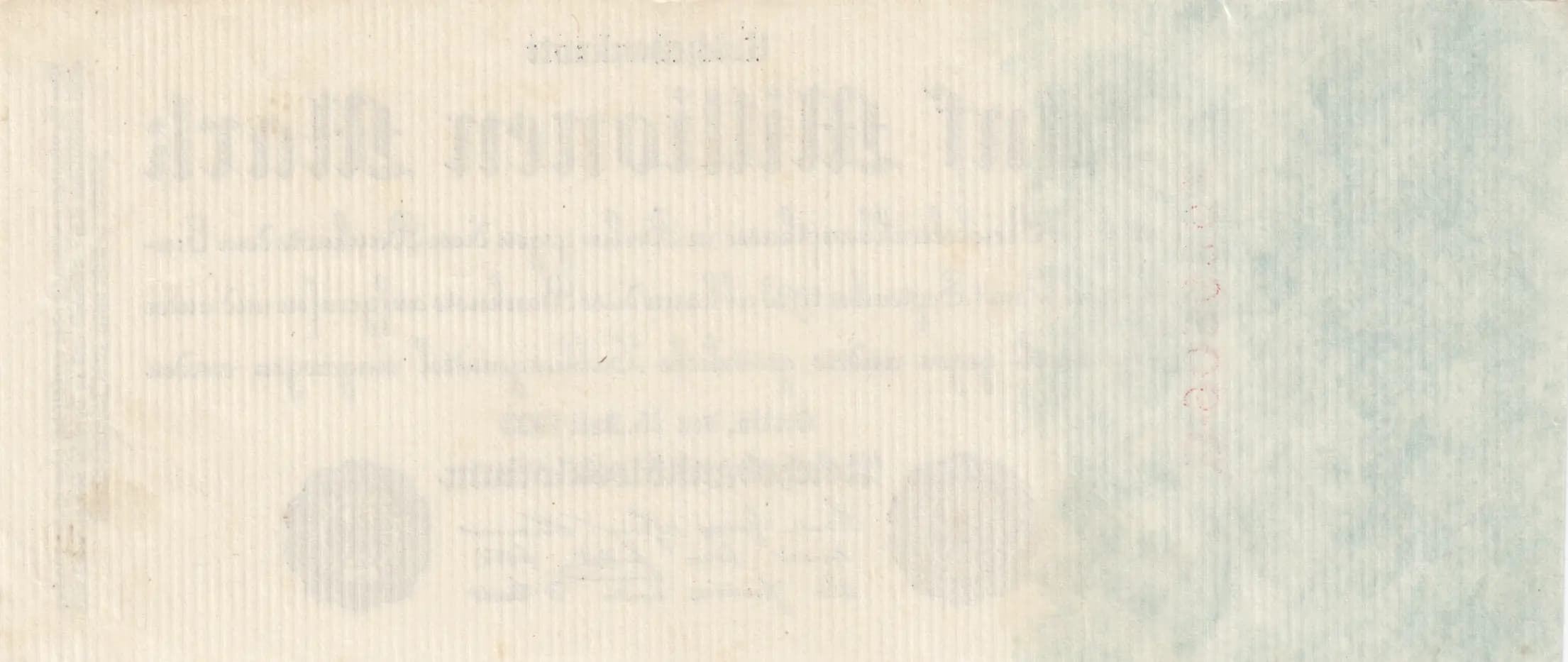
The obverse features a classical hyperinflation-era design centered on typography and official authority symbols rather than portraiture. Two circular seals containing the German imperial eagle (Reichsadler) with shield are positioned at the bottom of the note, serving as the primary decorative and security elements. The denomination 'Fünf Millionen Mark' is rendered in prominent Gothic lettering at the top center. Ornamental border designs frame the note in an elaborate style typical of 1920s German banknotes. The color scheme employs light greenish-blue and cream tones on aged paper. The reverse is largely blank with minimal printing, a common feature of Weimar hyperinflation notes where production speed was prioritized over elaborate design.
FRONT: 'Reichsbanknote' (Reichsbank Note); 'Fünf Millionen Mark' (Five Million Mark); 'zahlt die Reichsbankhauptkaße in Berlin gegen diese Banknote dem Einbringer. Vom 1. September 1923 ab kaum diese Banknote aufgerufen und unter Umtausch gegen andere gesetzliche Zahlungsmittel eingezogen werden' (The Reichsbank main office in Berlin pays against this banknote to the bearer. From September 1, 1923 this banknote can be called in and will be withdrawn in exchange for other legal tender); 'Berlin, den 25. Juli 1923' (Berlin, July 25, 1923); 'Reichsbankdirektorium' (Reichsbank Directorate); Serial number 'B.906892'. BACK: No visible inscriptions present.
Intaglio printing (engraved plate printing), the standard security printing method for German Reichsbank notes of this period. The ornate borders, detailed eagle seals, and crisp typography are characteristic of intaglio work. The red serial number appears to have been applied separately, possibly through letterpress or additional overprinting.
Serial number B.906892 is noted on this specimen. Varieties of this Pick-95 note are primarily distinguished by serial number prefixes and ranges. The 'B' prefix indicates a specific printing batch from the Reichsbank. This particular note represents the standard July 25, 1923 issue with no known special varieties, overprints, or emergency variations documented for this specific serial range.