100 000 000 mark 1923
Market Prices
7 salesAbout This Note
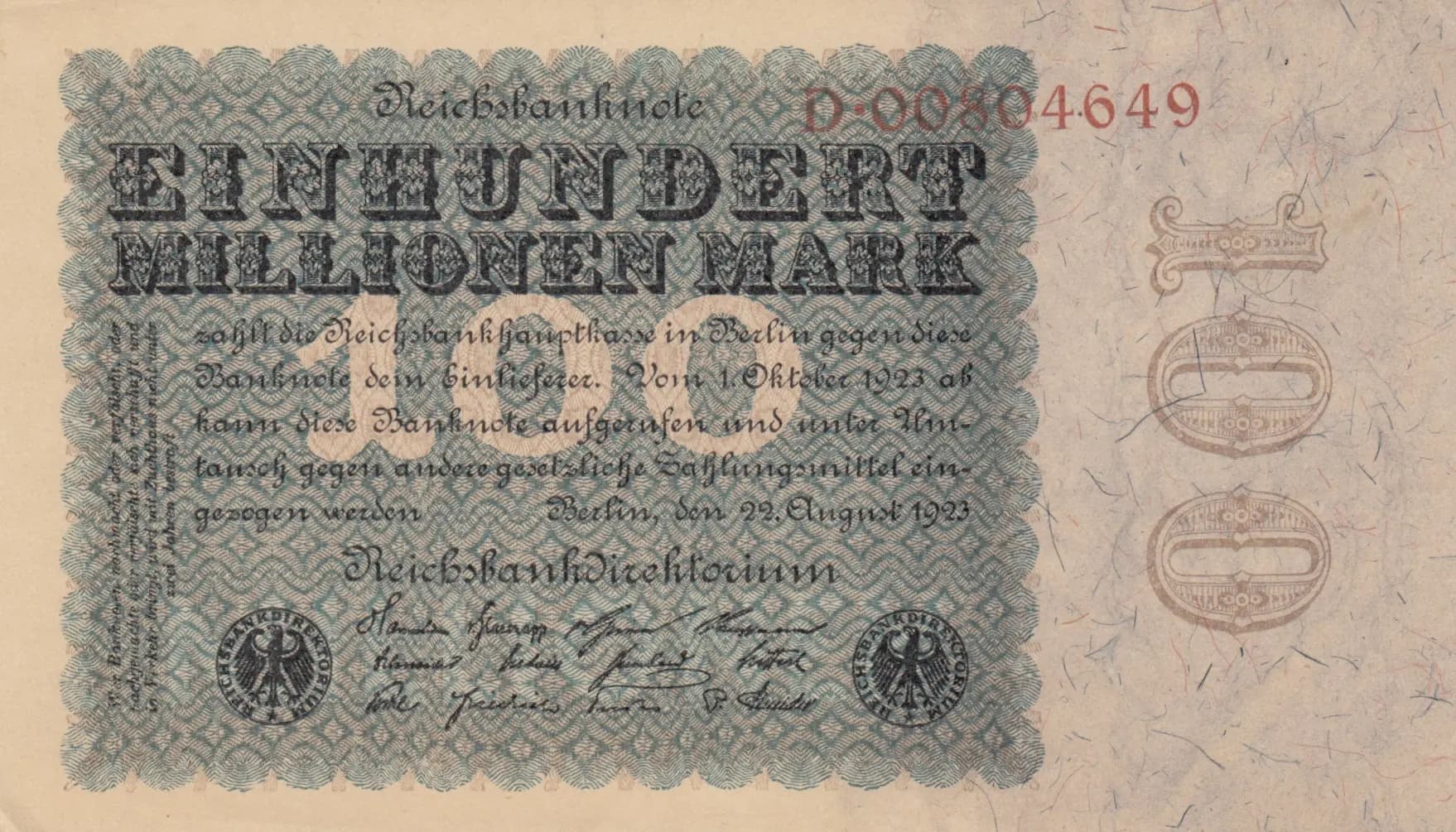
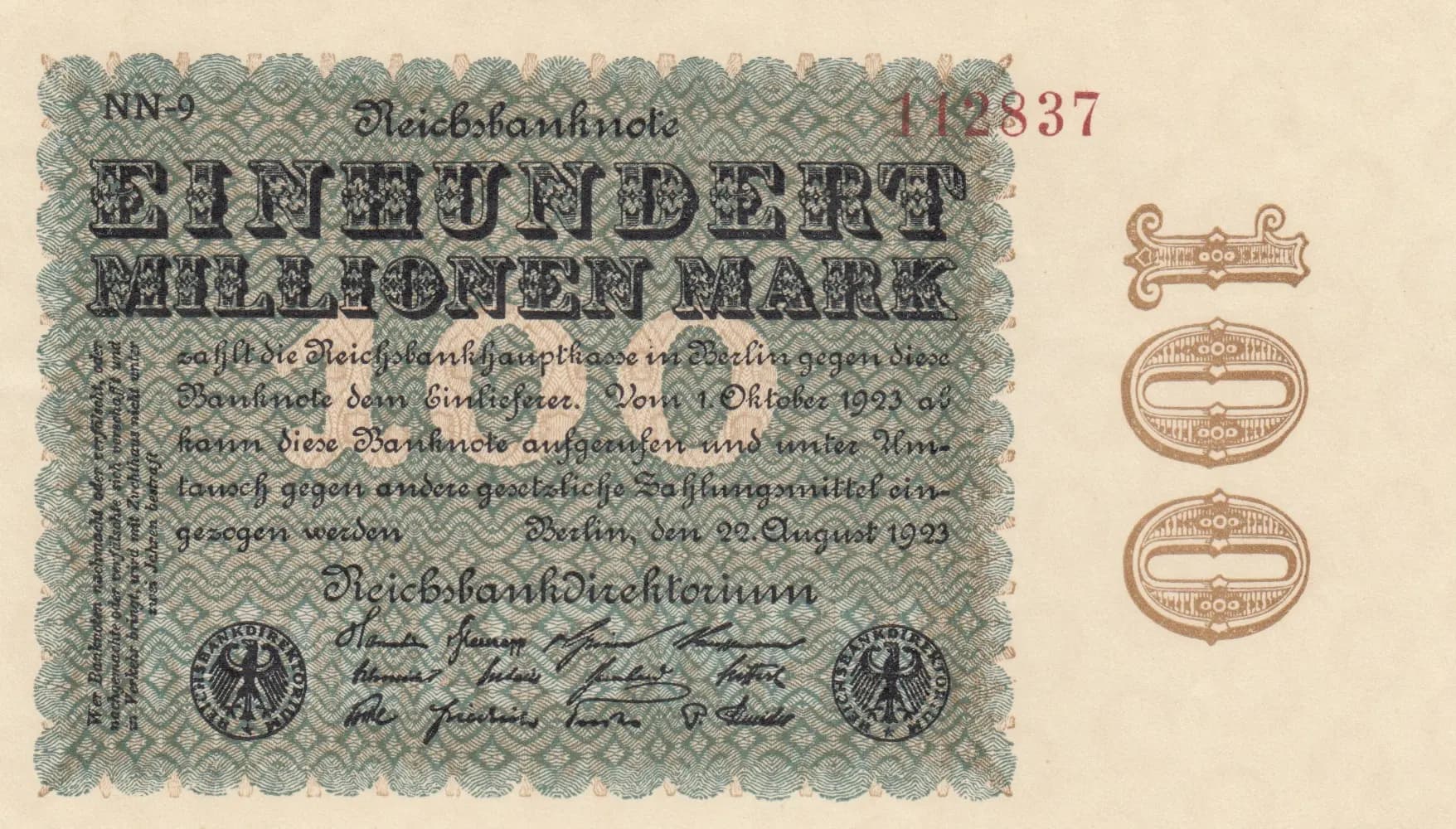
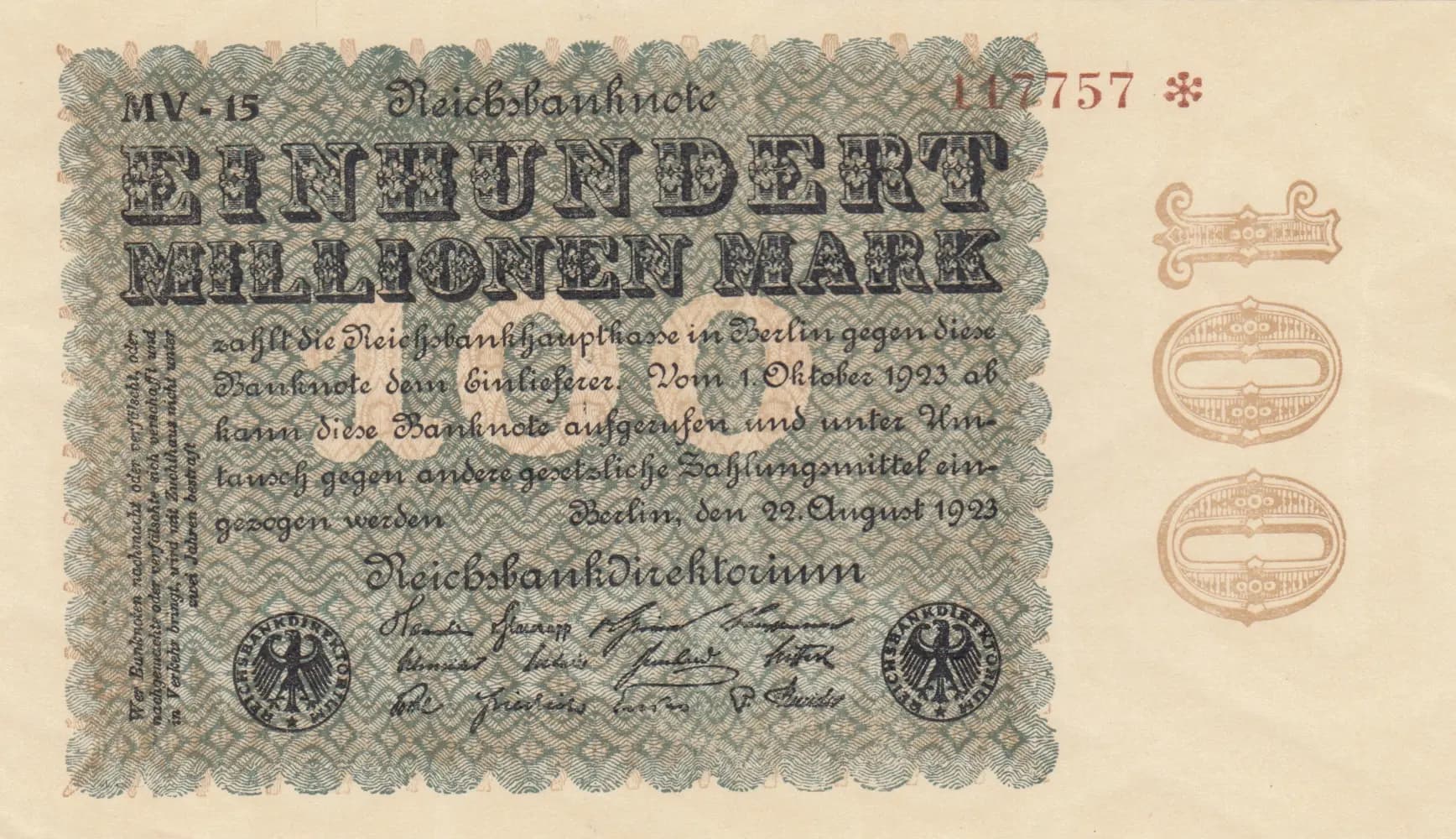
This 100 Million Mark note from August 22, 1923, represents a critical moment during Germany's hyperinflation crisis, issued by the Reichsbank mere weeks before currency stabilization in October 1923. The note displays the characteristic ornate design of Weimar-era currency with formal Germanic typography, decorative oval medallions, and official seals, though the specimen shows significant age-related foxing and discoloration consistent with its century-old provenance. In AU condition, this note retains strong visual appeal with preserved printing clarity despite visible aging.
Common. eBay market data shows consistent sales between $1–$22 across multiple condition grades from 2010–2025, with most sales in the $1–$10 range. The 2016 catalog values ($4 VG, $10 VF, $20 UNC) further confirm this note remains readily available in the secondary market. The 100 Million Mark denomination was issued in substantial quantities during the August–September 1923 period as hyperinflation accelerated, and many examples survived. The AU specimen shown here is desirable for condition but not scarce in absolute terms.
This denomination emerged during the peak of the German hyperinflation of 1923, when the Mark's value collapsed to astronomical levels—by August 1923, the exchange rate had reached millions of marks per US dollar. The Reichsbank's prominent eagle seals and formal 'Reichsbankdirektoren' signatures underscore the institution's desperate attempts to maintain monetary authority as the currency became nearly worthless. The ominous notation that the note could be withdrawn and exchanged after October 1, 1923, foreshadowed the currency reform that would replace the Mark with the Rentenmark within weeks, making these ultra-high denomination notes ephemeral artifacts of economic collapse.
This uniface note (printed on obverse only) exemplifies the formal security printing of Weimar-era Reichsbank currency. The design features a symmetrical layout with a central text block containing the denomination and institutional information flanked by three ornamental oval medallions on the right side, likely containing watermark elements (G/D in stars and E per catalog reference). The entire note is framed by intricate cross-hatch engraving patterns and decorative borders typical of intaglio security printing. Two eagle seals bearing German imperial insignia appear at the bottom corners, representing official authorization by the Reichsbank directorate. The color scheme—black primary text on a blue-green and olive-brown underprint—was selected for its resistance to photomechanical copying. No portraits or named landmarks appear; the symbolic authority derives entirely from formal typography and heraldic devices.
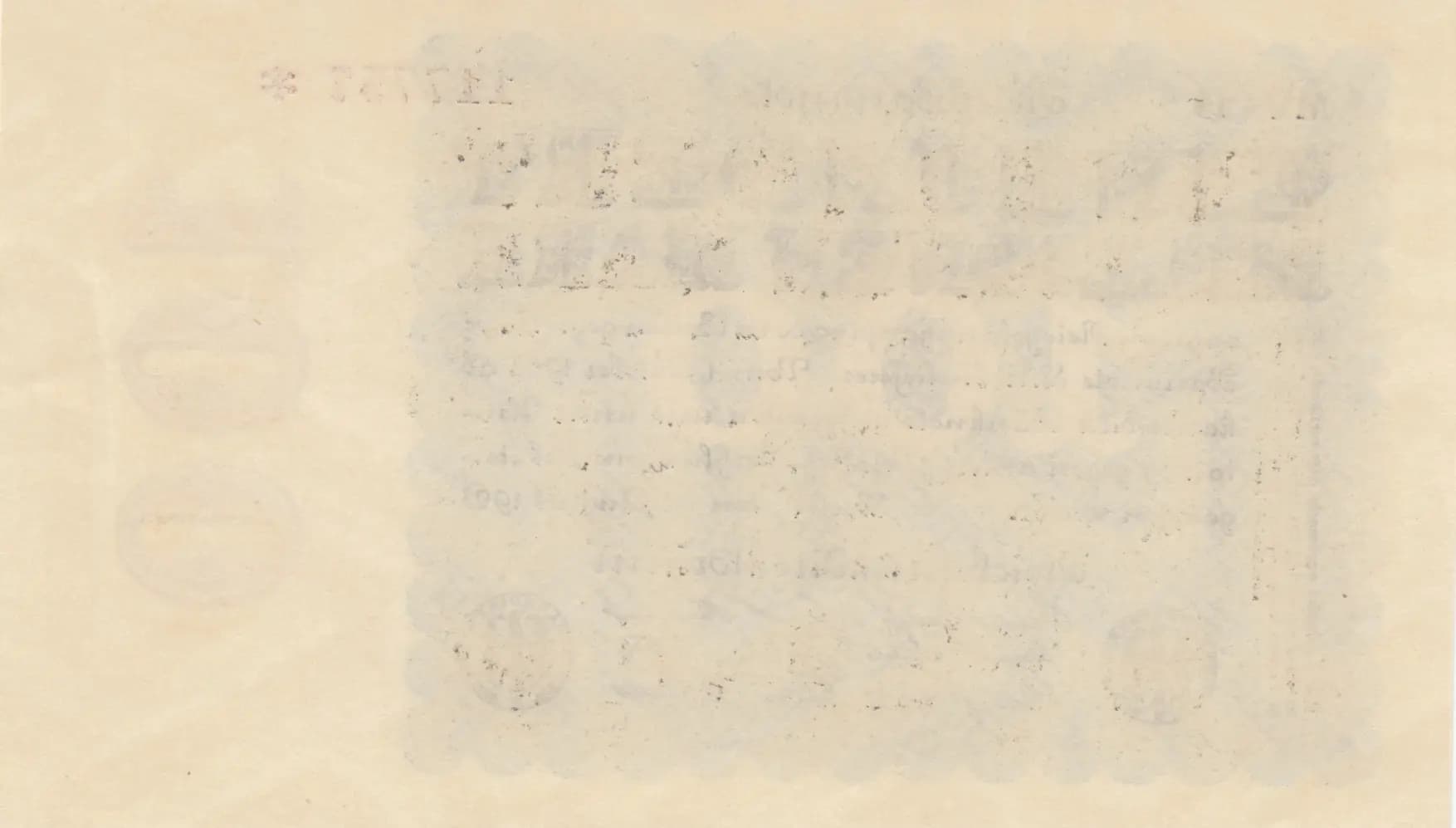
FRONT SIDE: Main denomination: 'EINHUNDERT MILLIONEN MARK' (One Hundred Million Mark). Institutional designation: 'Reichsbanknote' (Reich Bank Note). Series marking: 'MV.15'. Serial number: 'L117757'. Issue date: 'Berlin, den 22. August 1923' (Berlin, August 22, 1923). Authority: 'Reichsbankdirektoren' (Reich Bank Directors). Legal notice: 'auf Zahlstelle Reichsbankhauptasse in Berlin gegen diese Brandmarke Sein Gültigesetz. Vom 1. Oktober 1923 ab kann diese Banknote aufgerissen und unter Umtausch gegen andere gesetzliche Zahlungsmittel eingezogen werden' (At the payment office of the Reichsbank main branch in Berlin against this mark. From October 1, 1923 onward, this banknote may be torn up and withdrawn in exchange for other legal tender). REVERSE SIDE: Minimal or faint text, details illegible in provided images.
Intaglio engraving on security paper, executed by the Reichsbank's contracted security printer. The note exhibits the hallmark characteristics of deep-impression intaglio printing: the ornamental cross-hatch background pattern, intricate border work, and three-dimensional quality of the eagle seals all demonstrate steel plate engraving techniques. The two-color underprint (blue-green and olive-brown) indicates multipass printing, with security elements designed to resist forgery through complexity rather than modern security threads or holograms typical of later issues.
This specimen is catalogued as Pick P-107d with series marking 'MV.15' and serial number 'L117757'. The PMG population report identifies P-107b as a Watermark Type D variant, suggesting multiple watermark types exist within this denomination. The observed watermark configuration (G/D in stars, E) and the MV.15 series designation are consistent with the P-107d classification. The August 22, 1923 date places this note within the final month of the hyperinflation period before the October 1 withdrawal deadline, making it representative of the last Reichsbank mark emissions before currency reform.