100 000 000 mark 1923
Market Prices
18 salesAbout This Note
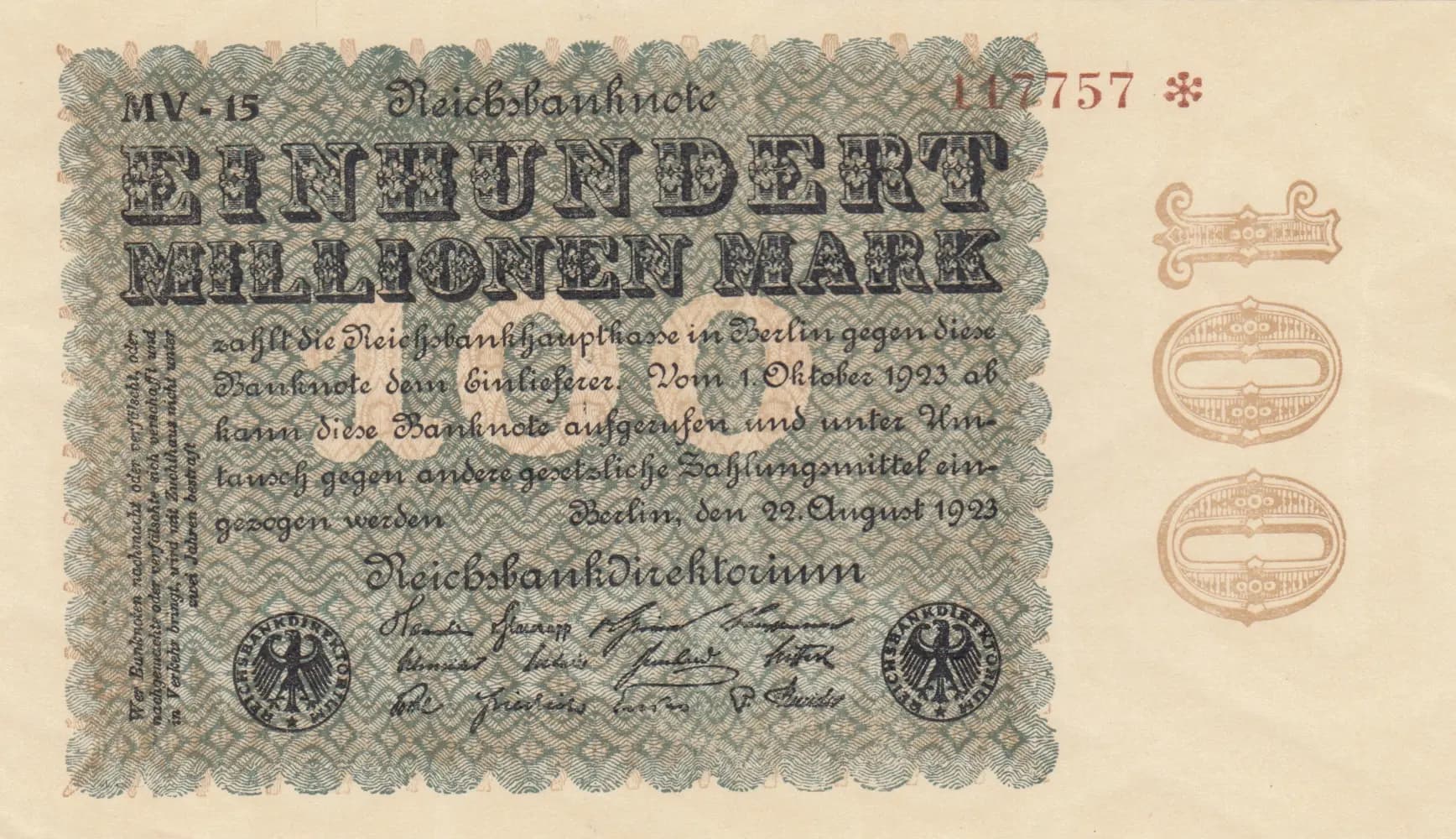
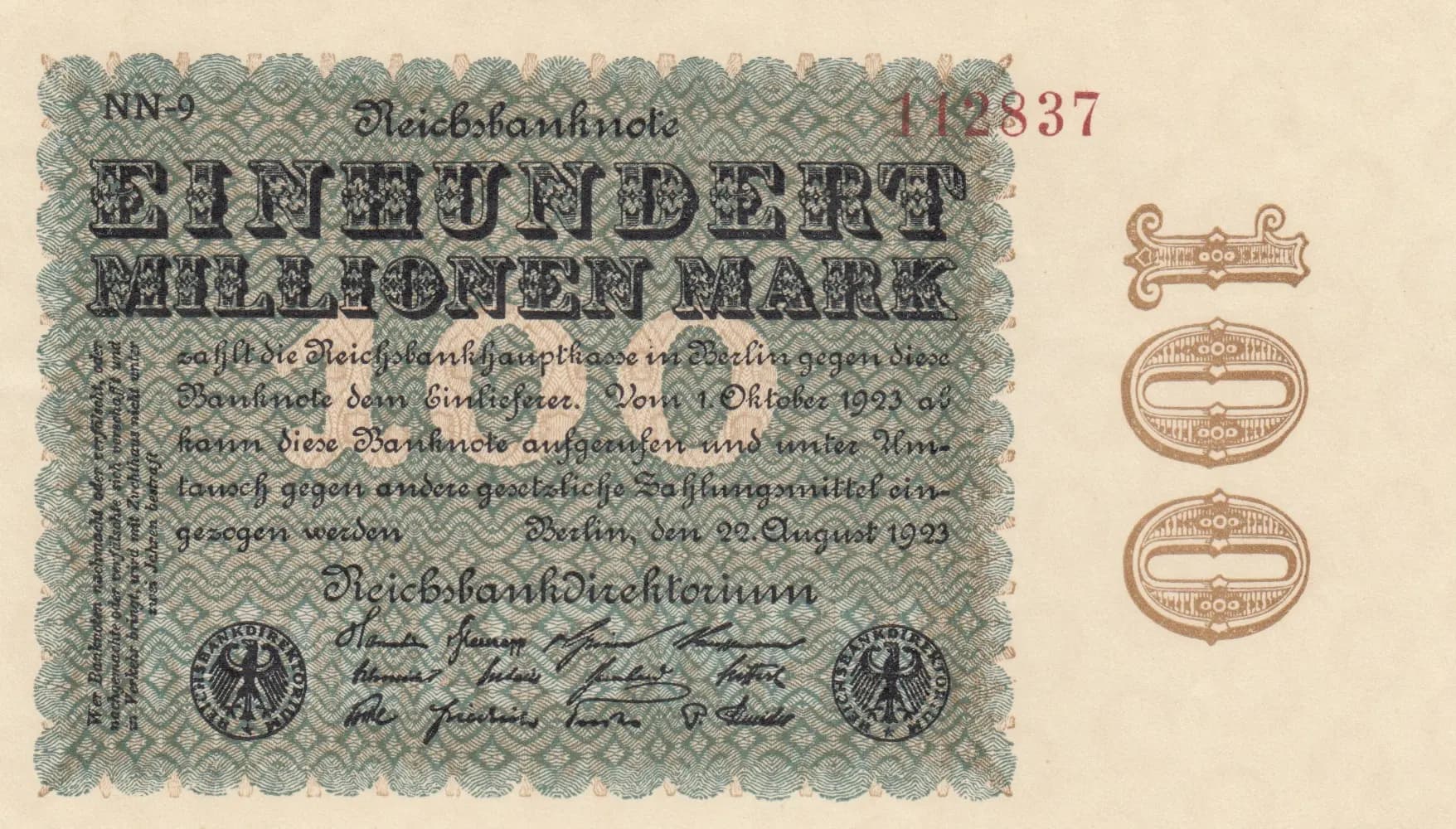
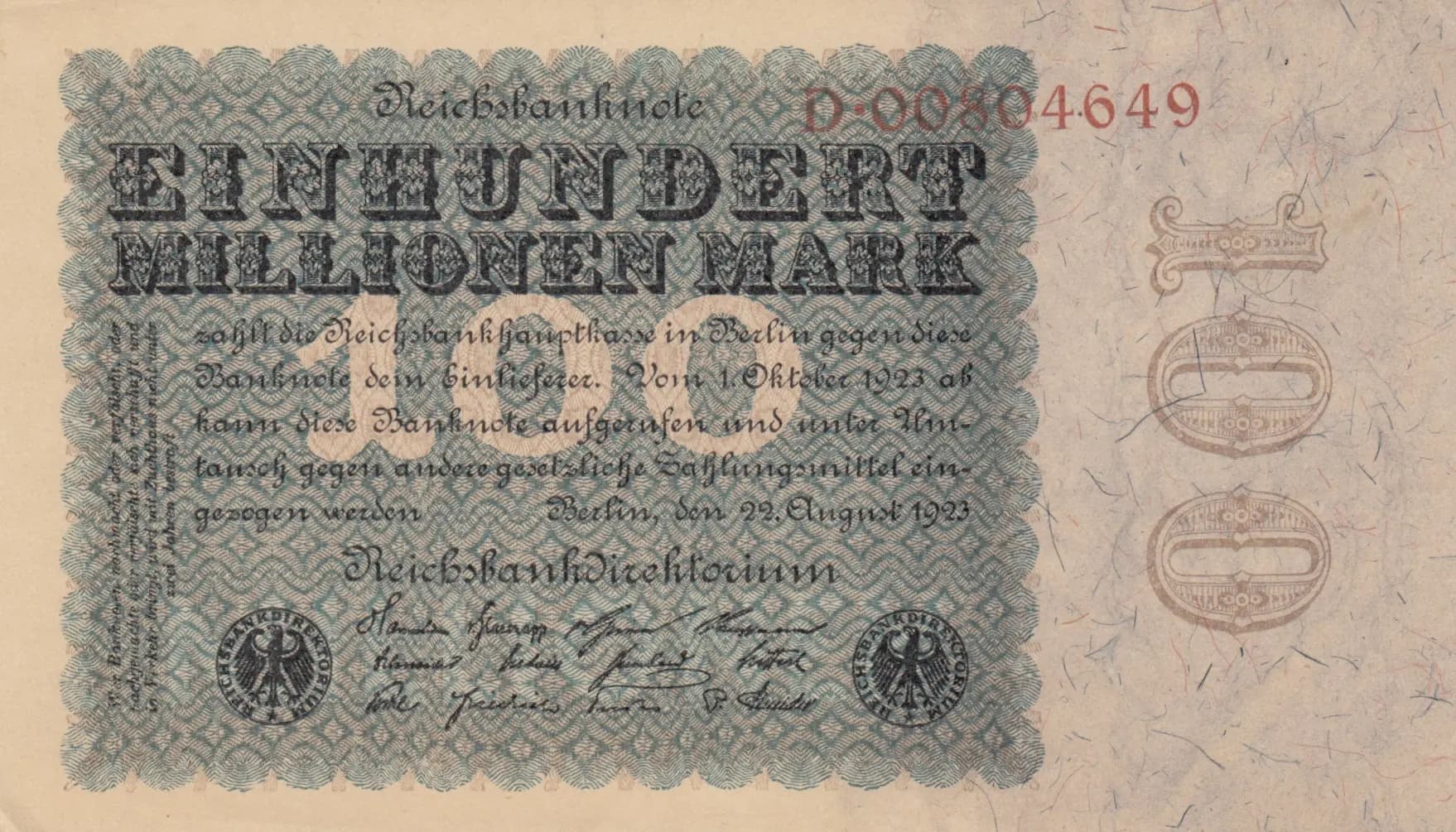
This is a German Reichsbank 100 Million Mark note from August 1923, issued during the height of the Weimar hyperinflation crisis. The note exhibits AU (About Uncirculated) condition with visible aging characteristics including foxing, creasing, and light discoloration across both sides, consistent with a century-old banknote that has seen modest handling. The uniface design features distinctive ornate geometric crosshatch borders in green/teal tones with formal Gothic typography and dual circular seals bearing German eagle emblems, making it a historically significant example of emergency currency from this tumultuous period.
Common. This Pick-107a variety was part of a large emergency issue during the hyperinflation crisis of August 1923. eBay market data shows consistent sales across multiple grade levels, with AU-condition notes and lower grades selling for $10-$30, and even UNC examples trading for under $20. The catalog value (2016) lists UNC at only $10. The high print run necessary to meet the currency demands of the hyperinflation period, combined with the relatively modest prices these notes command today despite their historical significance, confirms this is a common issue. Availability in the market remains steady, and collectors can readily acquire examples across multiple condition grades.
This note was issued on August 22, 1923, during Germany's catastrophic hyperinflation when the Mark's value was collapsing exponentially. The Reichsbank, as indicated by the official seals and 'Reichsbankdirektorium' signature block visible on the obverse, was forced to issue increasingly high denominations in a matter of weeks to keep pace with inflation. The redemption clause printed on the note (referencing October 1, 1923) reflects the temporary nature of these emergency issues, as the currency would soon be completely replaced by the Rentenmark in November 1923.
The obverse features a uniface design typical of Weimar hyperinflation notes, dominated by an intricate geometric crosshatch security pattern rendered in green/teal inks that serves both decorative and anti-counterfeiting purposes. The central area contains formal German text in Gothic/Fraktur script arranged in formal registers. Two circular seals positioned at the bottom corners display the German eagle emblem (Reichsadler), representing official Reichsbank authority. Ornamental oval cartouches appear on the right margin, depicting historical architectural elements characteristic of formal banking documents of the period. The entire note is surrounded by an ornate decorative border frame. The reverse is blank (uniface) with only watermark elements visible, a common feature of emergency hyperinflation currency designed for rapid production. The serial number appears in red ink, and the paper exhibits a tan/cream base color with a gray-tinted watermark featuring oak leaves, a traditional security element.
FRONT: 'Reichsbanknote' (Reich Bank Note) / 'EINHUNDERT MILLION MARK' (One Hundred Million Mark) / Main redemption text: 'at all Reichsbank main offices in Berlin against this banknote [redeemable]. From 1 October 1923, this banknote can be collected and exchanged for other legal tender.' / 'Berlin, den 22. August 1923' (Berlin, 22 August 1923) / 'Reichsbankdirektorium' (Reichsbank Directorate) / Serial number: 'D-00404649' / BACK: Blank/uniface with watermark only.
Intaglio (copperplate engraving) for the primary design elements, combined with letterpress for the serial numbers and text. The geometric crosshatch pattern and fine decorative borders are characteristic of intaglio production. The red serial number indicates separate printing of that element, standard for German Reichsbank notes of this era. The precision of the circular seals and ornamental details confirms professional security printing, likely by one of Germany's established banknote printers such as the Reichsdruckerei (German State Printing Office).
This note is cataloged as Pick-107a. The PMG Population Report indicates a variant P-107b exists with watermark Type D, suggesting this P-107a may use a different watermark type (likely Type C or earlier). The serial number D-00404649 indicates a standard printing with no obvious overprint or revalidation marking. No signatures are visible on this uniface note. The date 22 August 1923 is consistent with the primary issuance date for this denomination before the later redenomination in November 1923.