500 rublei 1919
Market Prices
3 salesAbout This Note
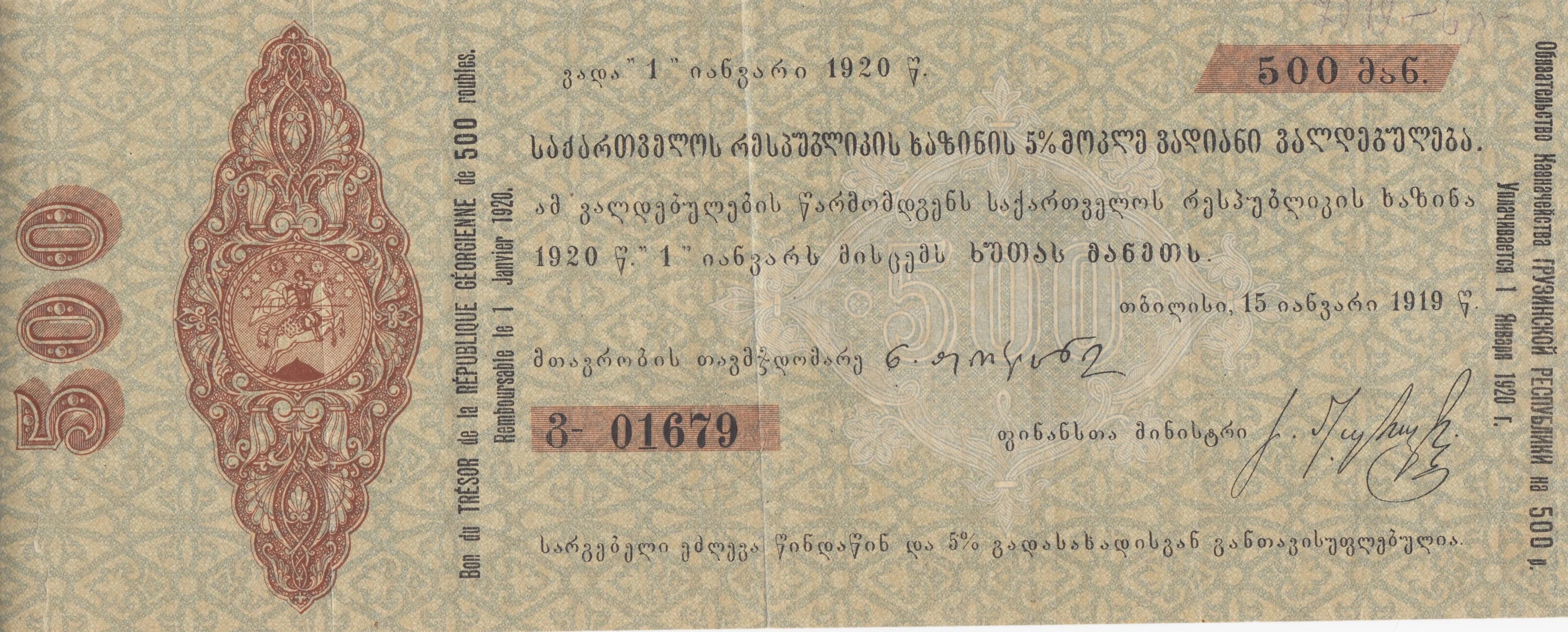
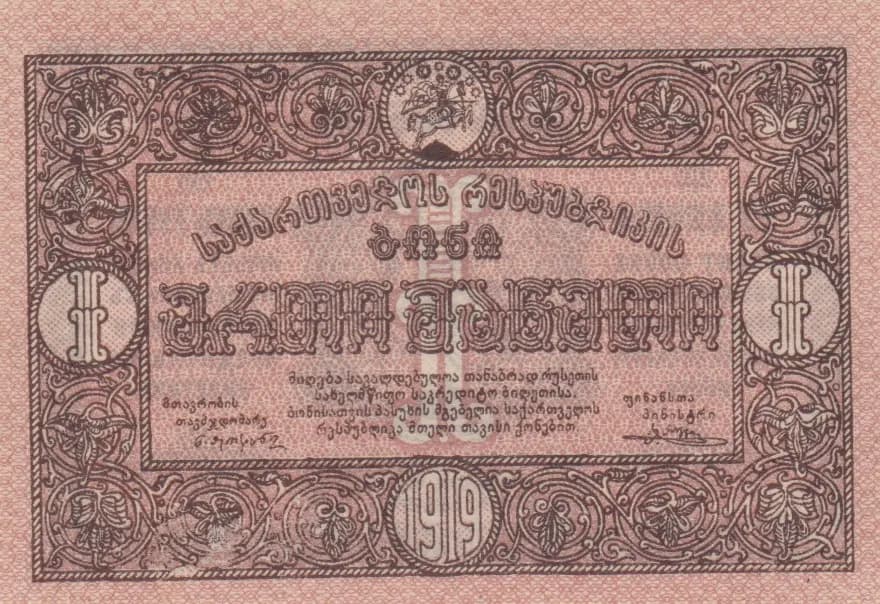
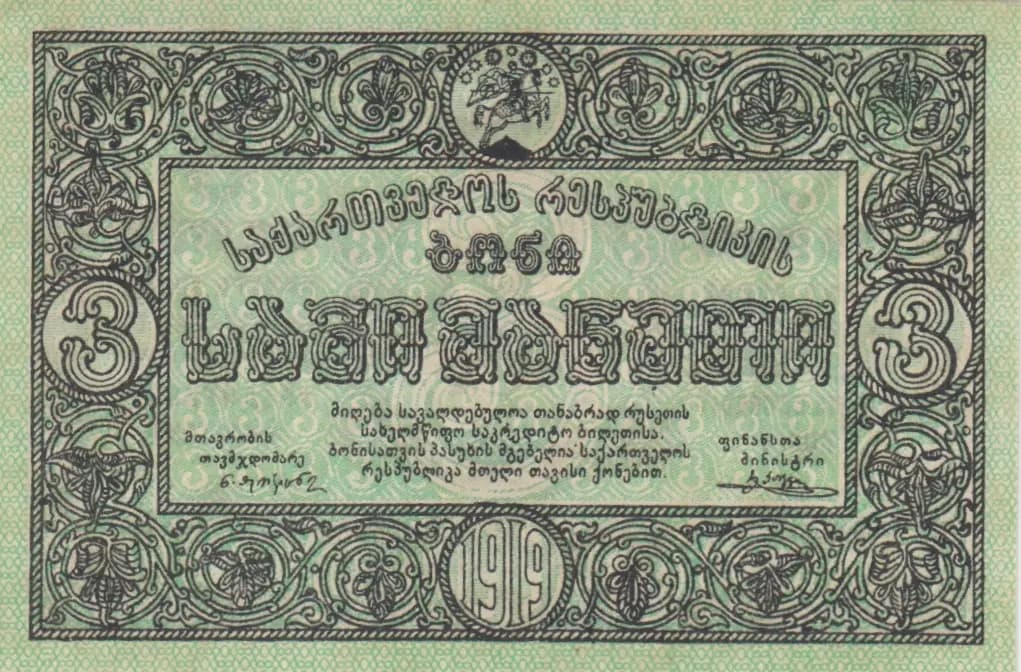
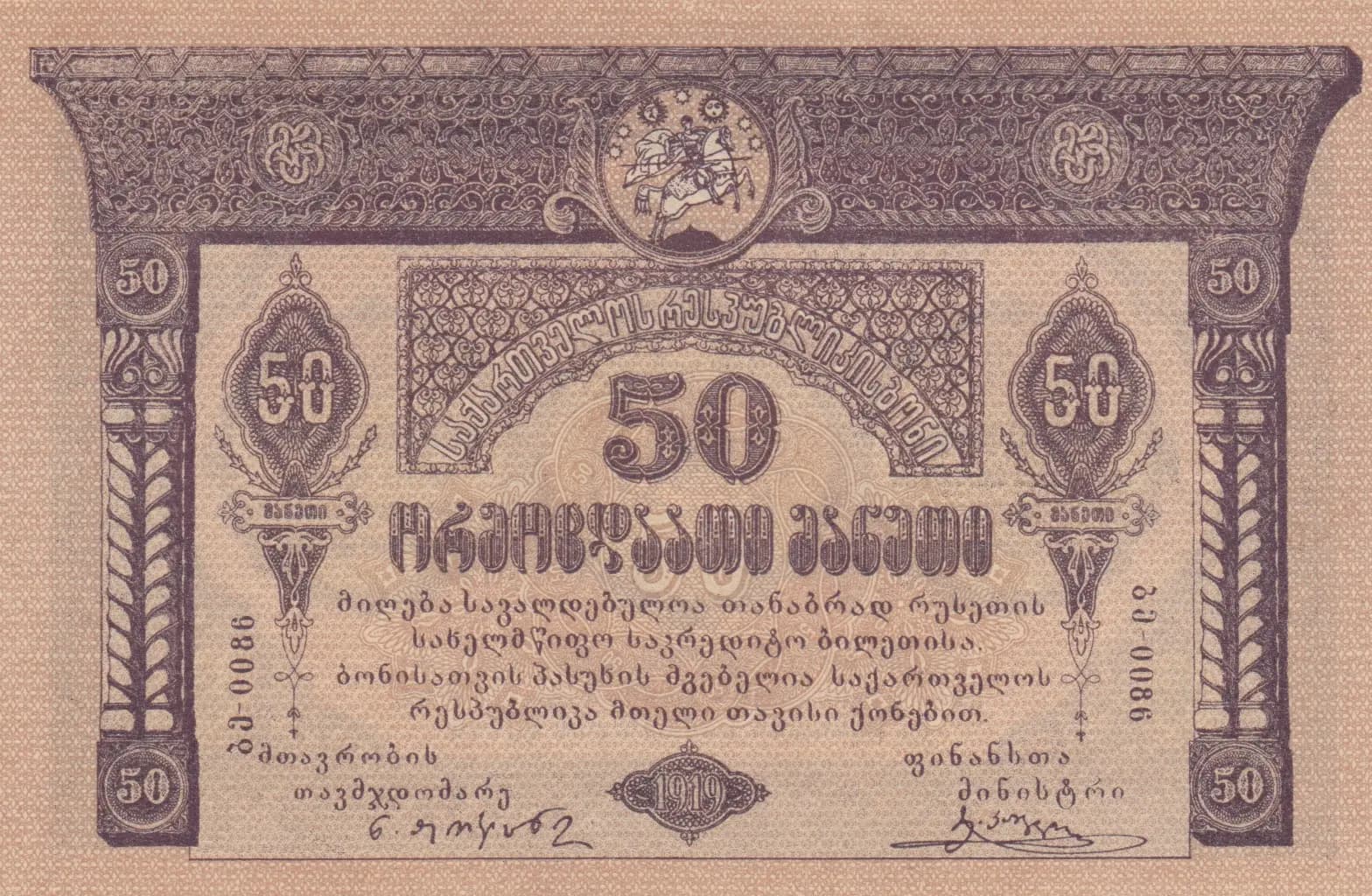
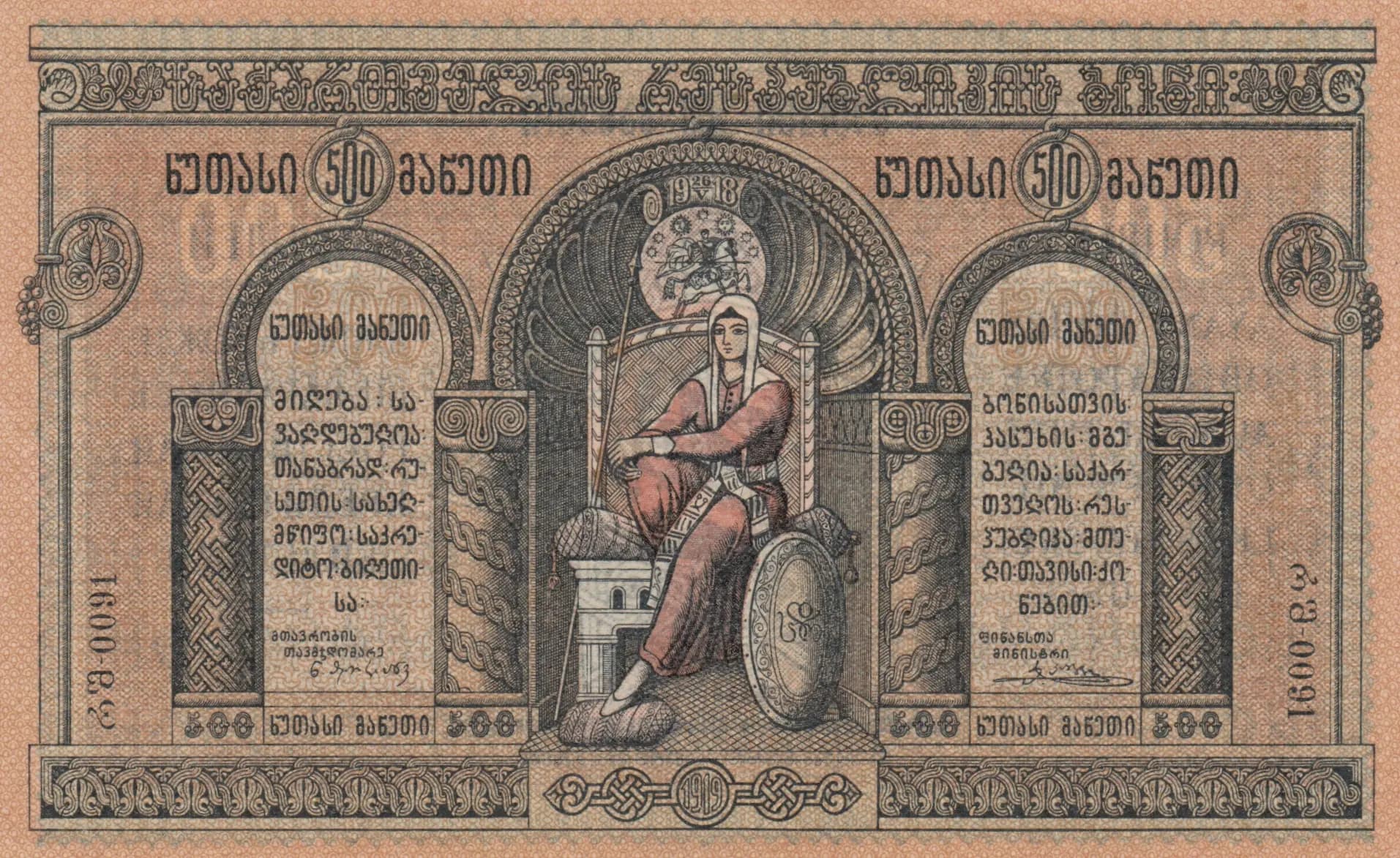
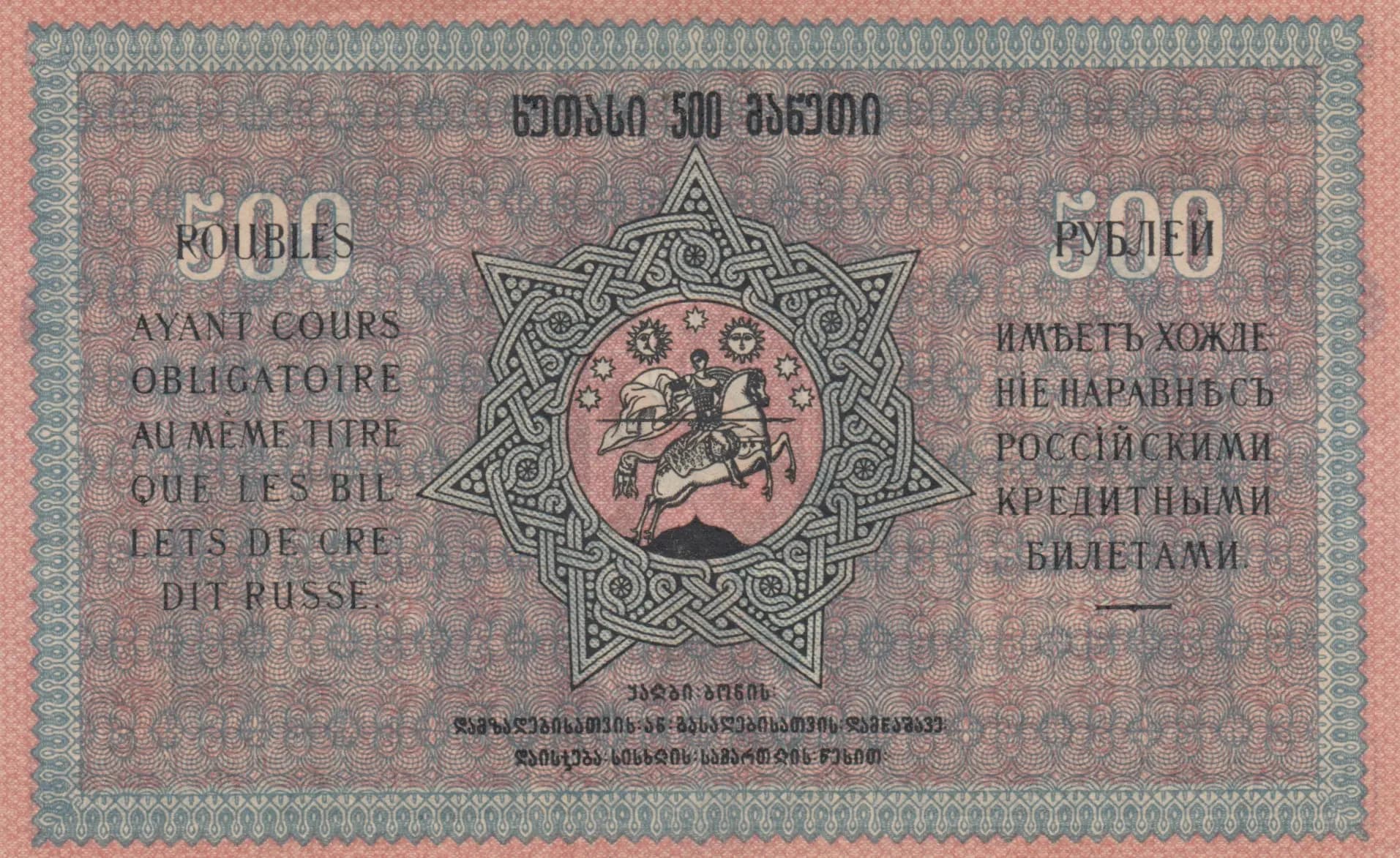
This is a Georgia 500 rublei note from 1919, issued during the brief period of Georgian independence following the Russian Revolution. The note is in uncirculated condition with crisp, clear printing throughout and no visible wear, creases, or damage. The obverse features Queen Tamara in classical dress seated on a fortified tower, while the reverse displays the heraldic St. George on horseback within an ornate star emblem, representing Georgian national identity and sovereignty.
Common. eBay market data shows recent sales in the $2–$26 range, with catalog valuations (2016) placing uncirculated examples at $15. These price levels and transaction volumes indicate a readily available note in the collector market. The Georgian Republic's 1919 issues, while historically significant, were produced in sufficient quantities to avoid scarcity. There is no evidence of restricted print runs or recalls that would elevate this to rare status.
This note was issued by the autonomous/independent Georgian Republic in 1919, a period of significant political transition following the collapse of Tsarist Russia. The imagery reflects Georgian national identity—Queen Tamara (r. 1184–1213) was one of Georgia's greatest medieval monarchs, while St. George (depicted on the reverse) is the patron saint of Georgia and a central symbol of Georgian heritage. The multilingual text (Georgian, French, and Russian) indicates an attempt to establish the note's legitimacy in international commerce and parity with Russian credit notes during this period of geopolitical uncertainty.
The obverse depicts Queen Tamara (1184–1213), Georgia's most celebrated medieval monarch, seated in classical dress upon a fortified tower or castle structure—symbolizing strength and sovereignty. She is framed within an ornate architectural composition featuring decorative arches and niches, with heraldic emblems in the upper center. The reverse features St. George, the patron saint of Georgia, mounted on horseback and enclosed within an elaborate six-pointed or multi-pointed star emblem formed by interlaced geometric patterns. This heraldic rider represents Georgia's national identity and religious heritage. The entire design employs warm beige, tan, brown, and reddish-brown tones on the obverse and mauve/pale pink tones on the reverse, with fine engraving linework and complex geometric borders throughout.
Front: Georgian text reading 'ბიულე 500 ამფიოთი' (500 rublei/maneti); date '1919'; Georgian text in circular frames (specific text not fully legible in image). Back: Georgian '500 rublei'; English 'ROUBLES'; French 'AVANT COURS OBLIGATOIRE AU MÊME TITRE QUE LES BILLETS DE CRÉDIT DU RUSSE' (Before obligatory circulation at the same rate as Russian credit notes); Russian Cyrillic 'ИМЕЕТ ХОЖДЕНИЕ НАРАВНЕ С РОССИЙСКИМИ КРЕДИТНЫМИ БИЛЕТАМИ' (Has circulation equal to Russian credit notes); Georgian text at bottom (printer or issuer information).
Intaglio engraving (line engraving), evidenced by the fine, precise linework, complex geometric patterns, and detailed portraiture observed throughout both sides. The security features—including intricate border work, geometric interlace patterns, and fine cross-hatching—are characteristic of high-quality intaglio bank note production of the period. The printer for this specific issue is not definitively identified in standard catalogs, though Georgian notes of this era were often produced by European security printers.
This note is cataloged as Pick 13b, indicating it is a known variety within the 500 rublei 1919 series. The 'b' designation suggests differentiation from a Pick 13a variety, likely based on paper type (the reference material notes 'thick or thin paper without watermark'), printer characteristics, or design details. Without access to comparison images or detailed Pick catalog specifications for variants, the specific distinguishing features of the 13b variety cannot be definitively identified from the images alone. Serial numbers or printer marks, if present, are not clearly legible in the provided images.