1000 rublei 1920
Market Prices
2 salesAbout This Note
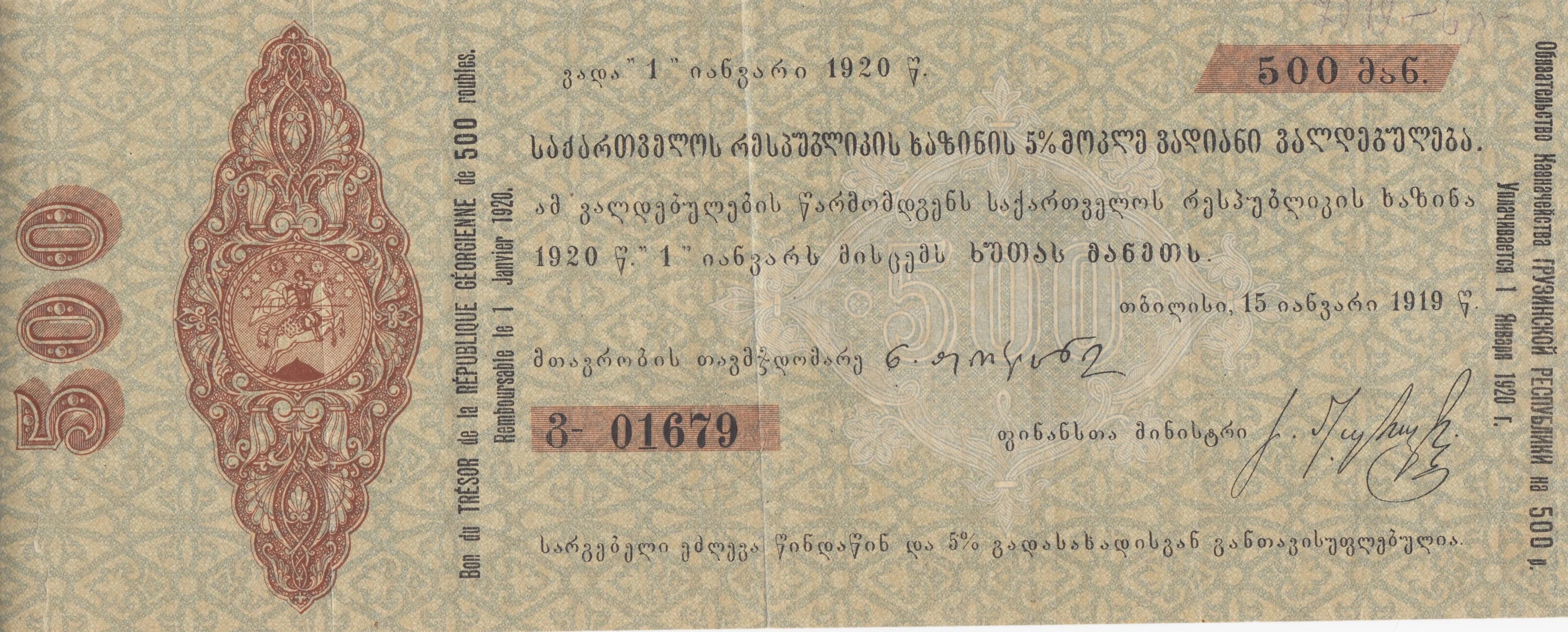
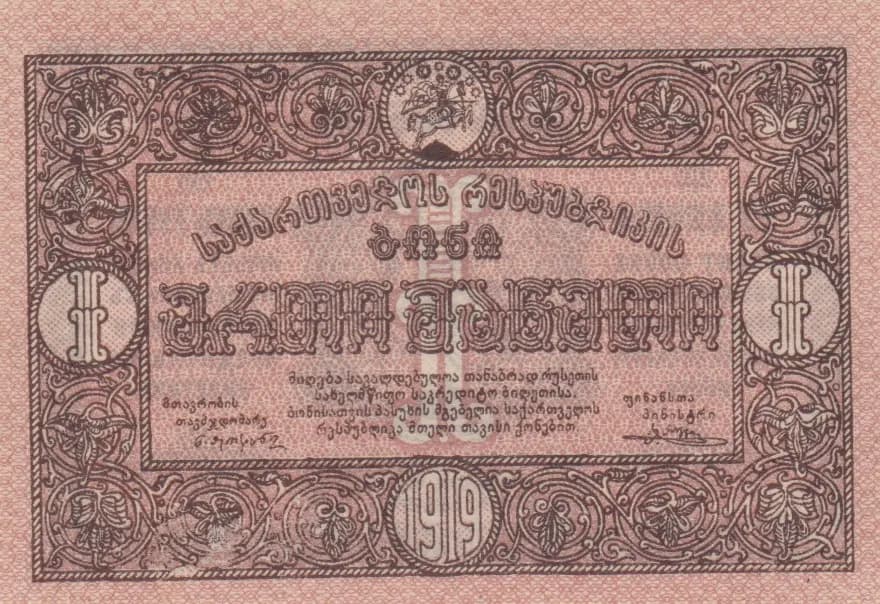
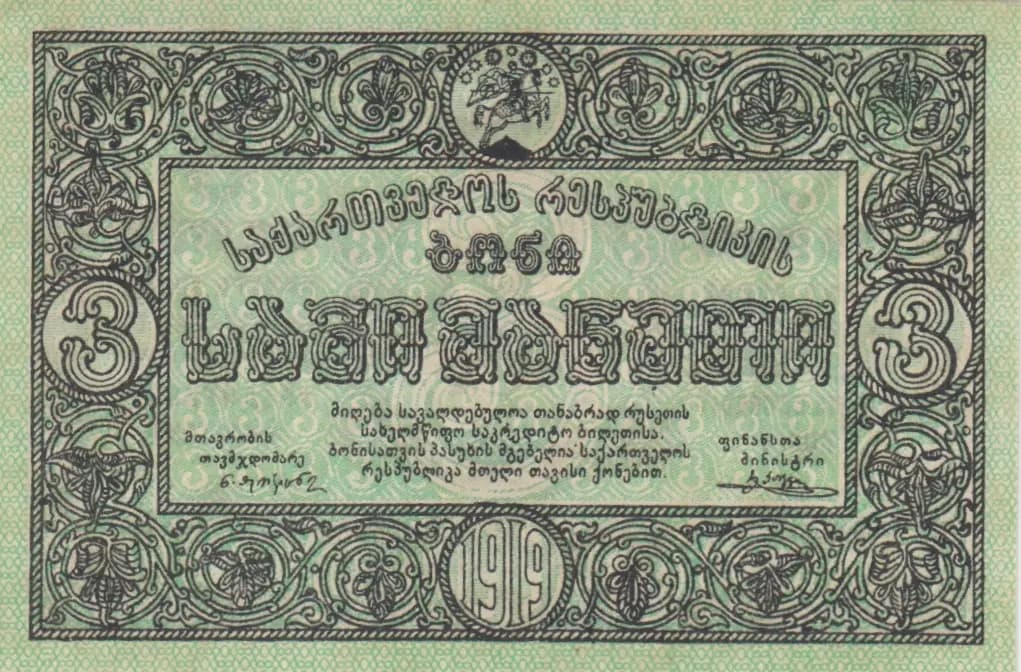
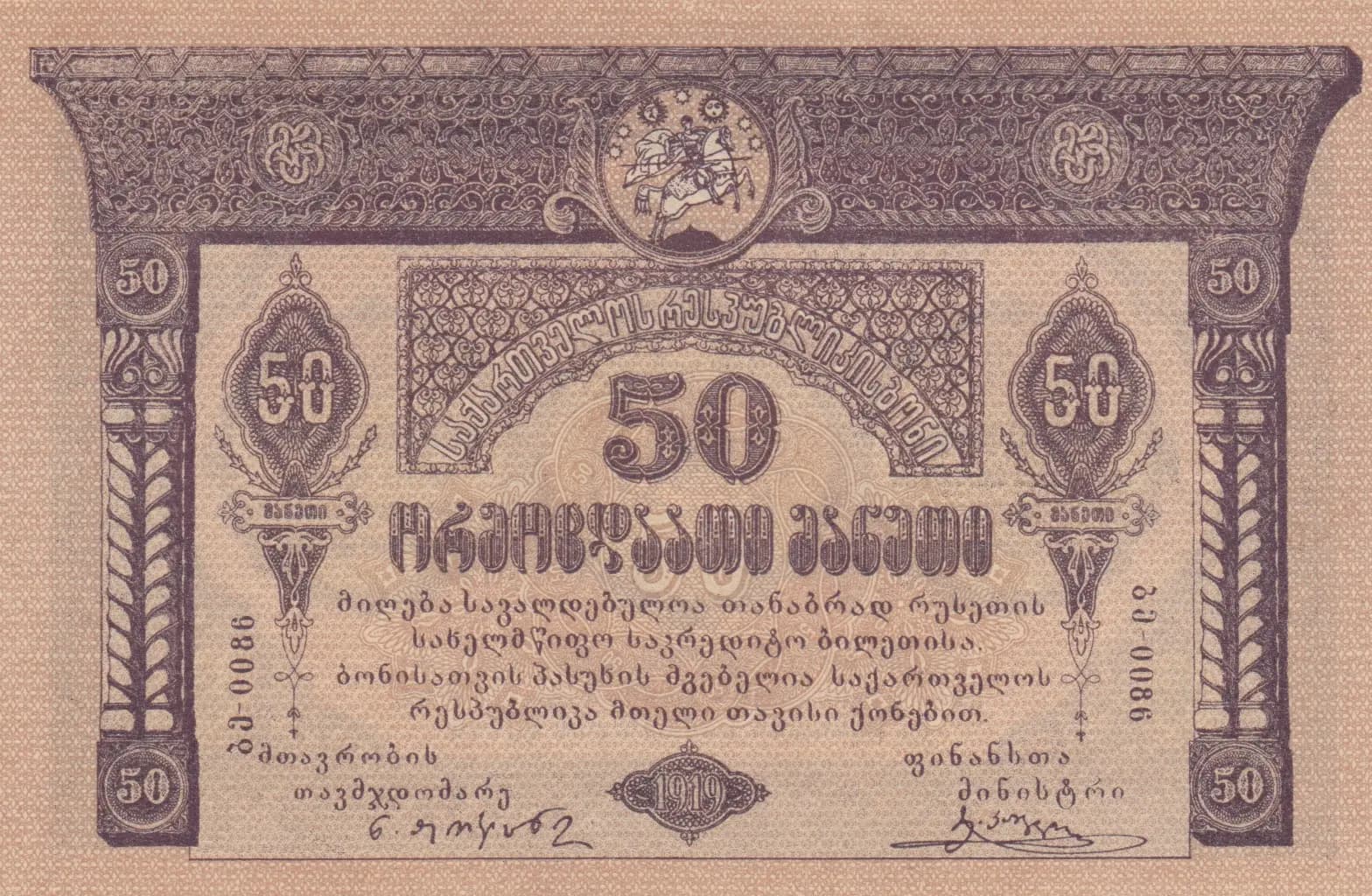
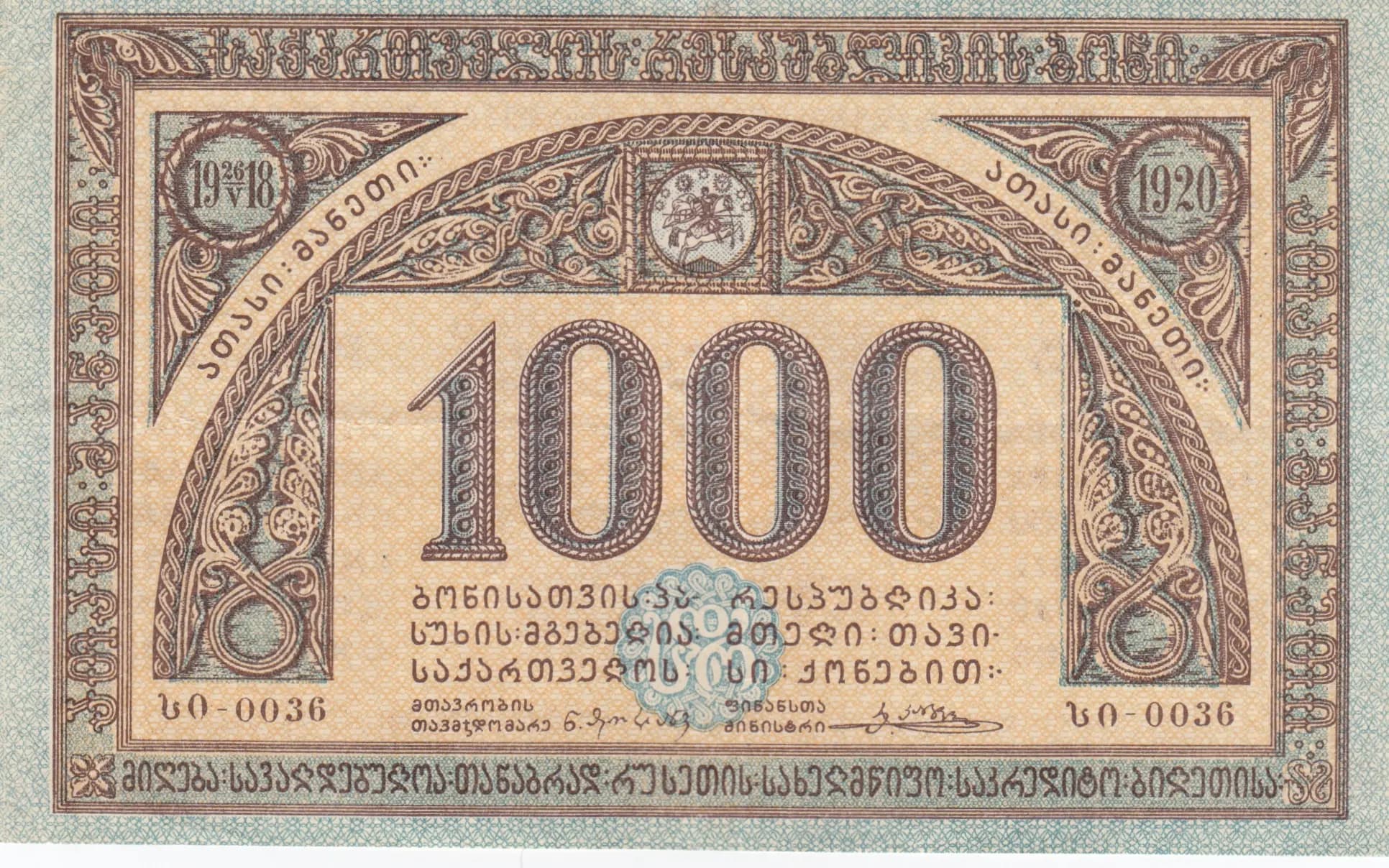
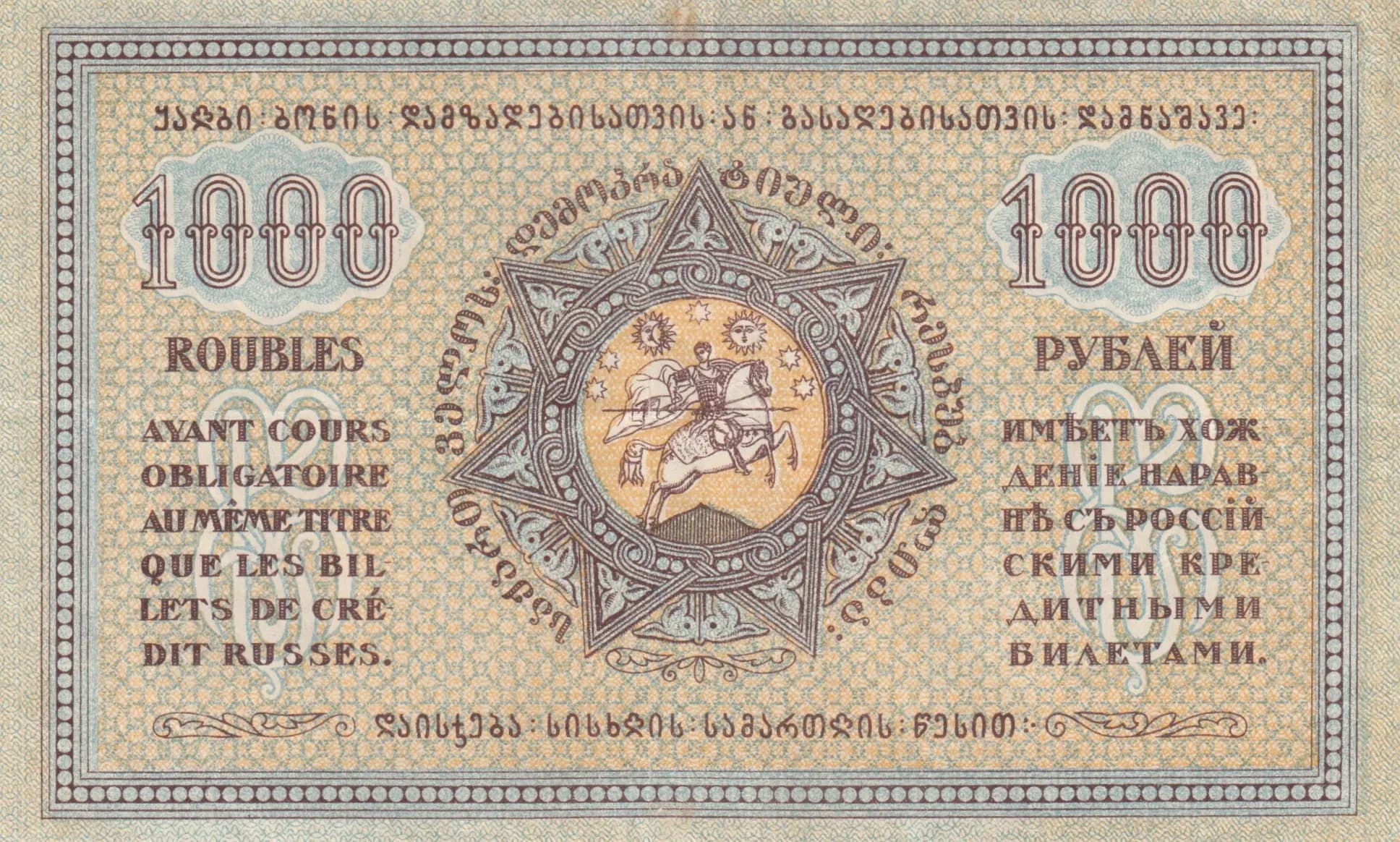
This 1000 Rublei note from the Georgian Republic (1920) presents a fine example of early Soviet-era currency from the Autonomous Republic of Georgia. The note features cream and brown coloring with ornate baroque-style decorative borders and a striking central equestrian motif on the reverse—identified as St. George on horseback, a key symbol of Georgian heraldry. In VF condition, the note exhibits expected age-related wear including creases and foxing, with visible staining particularly in the central areas, making it a well-circulated historical specimen from this brief period of Georgian monetary independence.
Common. eBay market data shows this denomination trading at modest prices ($6.50-$23.50 for circulated examples), with catalog valuations placing VF examples at approximately $10 (2016 estimate). These are standard circulation notes from a recognized legitimate issuer with no evidence of limited print runs or special rarity. The brief existence of independent Georgian currency (1920-1921) creates historical interest, but this does not translate to numismatic scarcity—examples remain readily available to collectors.
Issued in 1920 by the Georgian Republic during the brief window of independence between Russian Revolution and Soviet consolidation, this banknote represents a transitional currency when Georgia maintained its own monetary authority. The prominent equestrian figure depicts St. George—Georgia's national patron saint and heraldic symbol—reflecting the newly independent nation's assertion of national identity through its currency design. The presence of both Georgian script and Russian Cyrillic text reflects the complex political reality of the region during this period of flux.
The obverse features a large ornate central medallion containing heraldic imagery surrounded by elaborate baroque-style scrollwork and floral decorative borders. Cream/beige background with brown and dark maroon printing. The reverse showcases a dominant six-pointed star design containing a circular medallion with St. George on horseback—the traditional Georgian national symbol—rendered as an equestrian figure in classical heraldic style. The star is surrounded by intricate geometric and floral patterns in tan/beige with brown accents and pale blue/gray undertones. Denomination numerals appear in upper corners of both sides. The overall aesthetic reflects European banknote design traditions adapted for Georgian national symbolism.
Front side: Georgian script text reading 'State Bank of the Georgian Republic' (საქართველოს რესპუბლიკის სახელმწიფო ბანკი); serial identifier 'სი-0036'; denomination numerals '1000' and date '1920'. Back side: Denomination '1000' in upper corners; English/French text stating 'ROUBLES' and legal tender clause 'AVANT COURS OBLIGATOIRE A MEME TITRE QUE LES BILLETS DE CRÉDIT DITS RUSSES' (Before course, obligatory at the same rate as the so-called Russian credit bills); Russian Cyrillic equivalents 'РУБЛЕЙ' (Roubles) and legal text 'ИМЕЮТ ХОЖДЕНИЕ НАРАВНЕ С РУССКИМИ КРЕДИТНЫМИ БИЛЕТАМИ' (Have circulation equal to Russian credit bills); Georgian script text in upper and lower borders relating to legal status and authority.
Intaglio (engraved) printing, evidenced by the fine line work, detailed decorative patterns, and the quality of the baroque borders visible throughout the note. The multi-layered geometric designs and intricate decorative elements are characteristic of security printing from this era. The specific printer for Georgian notes of this period is not definitively documented in standard catalogs, though production likely occurred in Russia or under Russian supervision given Georgia's transitional political status in 1920.
Cataloged as Pick P-14b variant. The serial identifier visible in the visual analysis ('სი-0036') and the specific color combination (brown on blue and tan underprint) correspond to this variant designation. No signature varieties or dated overprints appear in the visual analysis. The note is a standard Regular Issue from the 1920 emission with no indication of rare varieties or printing errors.