100 rublei 1919
Market Prices
4 salesAbout This Note
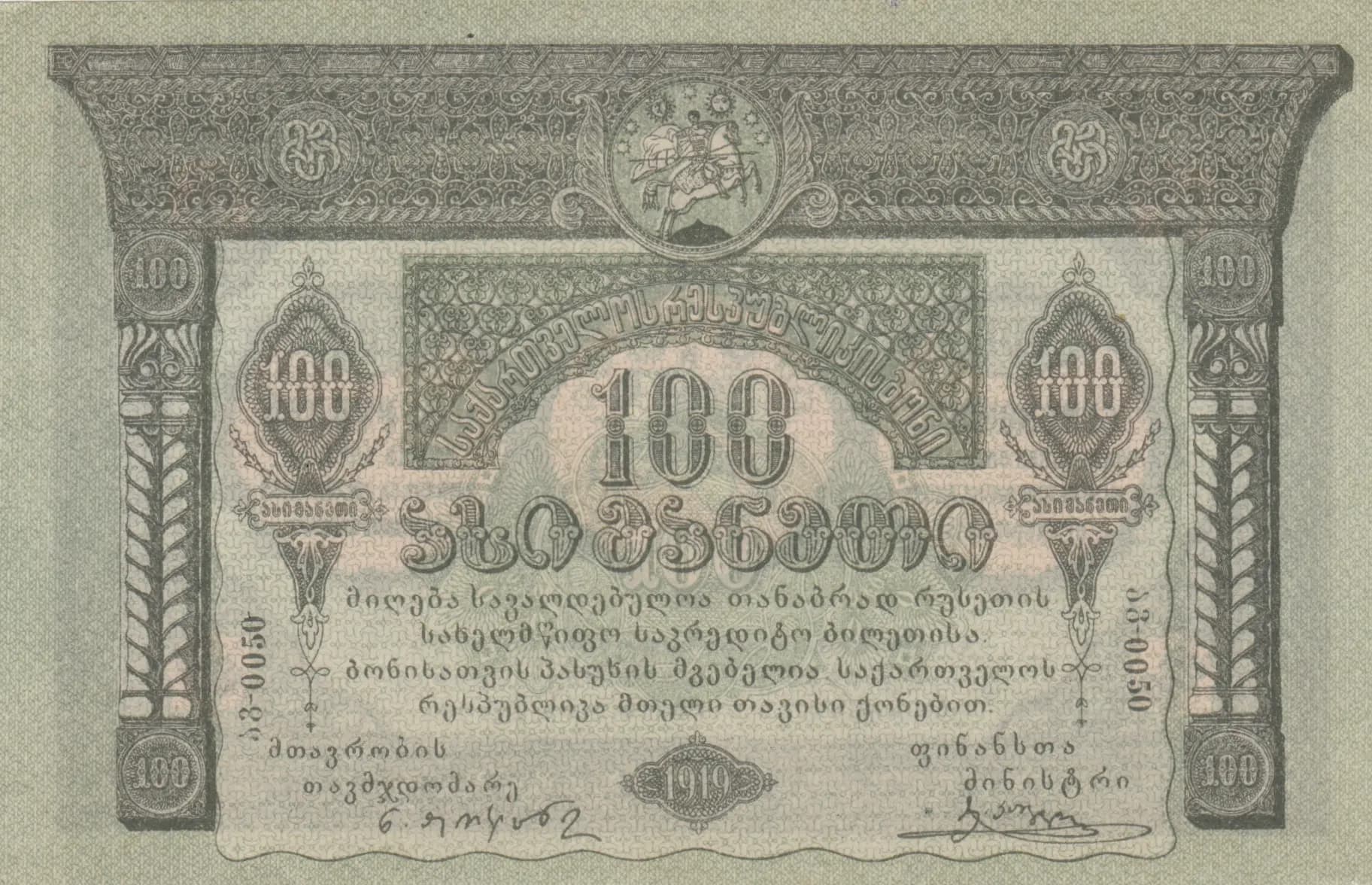
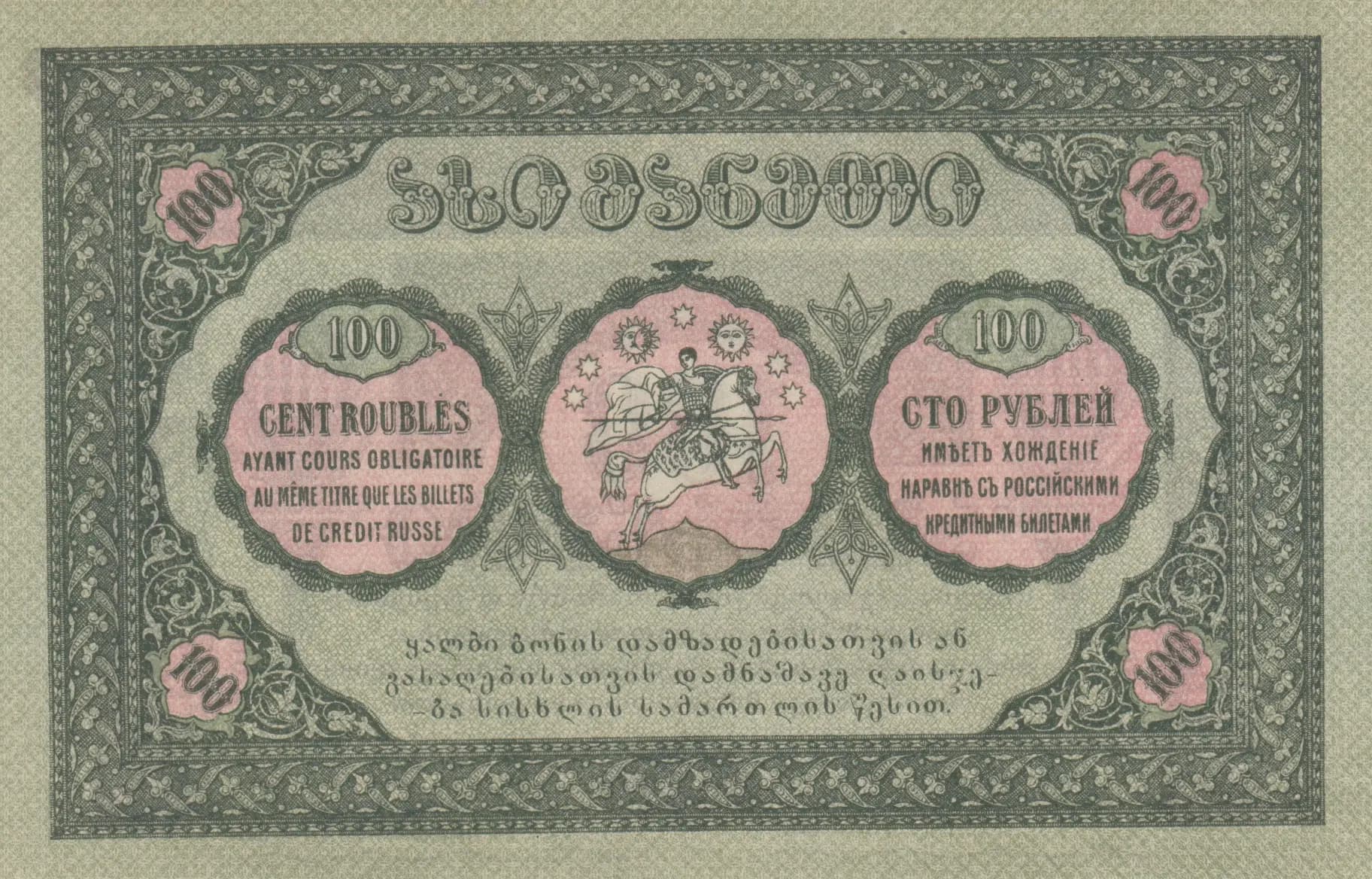
This is a beautiful example of Georgia's 100 rublei from 1919, issued during the brief period of Georgian independence following the Russian Revolution. The note showcases exceptional design work with ornate Art Nouveau-style borders, a prominent St. George on horseback motif on the reverse, and trilingual inscriptions in Georgian, Russian, and French reflecting the complex political circumstances of the era. In UNC condition, this note displays sharp printing, consistent coloration, and no visible wear, making it an attractive example for collectors of early 20th-century Caucasian currency.
Common. The eBay price tracking data shows consistent sales in the $15-58 range across multiple condition grades (VF, EF, AUNC, PMG 53) over several years, with catalog valuations from 2016 listing UNC at $15. Regular Issue designation, combined with consistent market availability and modest pricing, indicates this is a common note among collectors. While historically significant as part of Georgia's brief independence period, the note was produced in sufficient quantities to remain readily available on the secondary market.
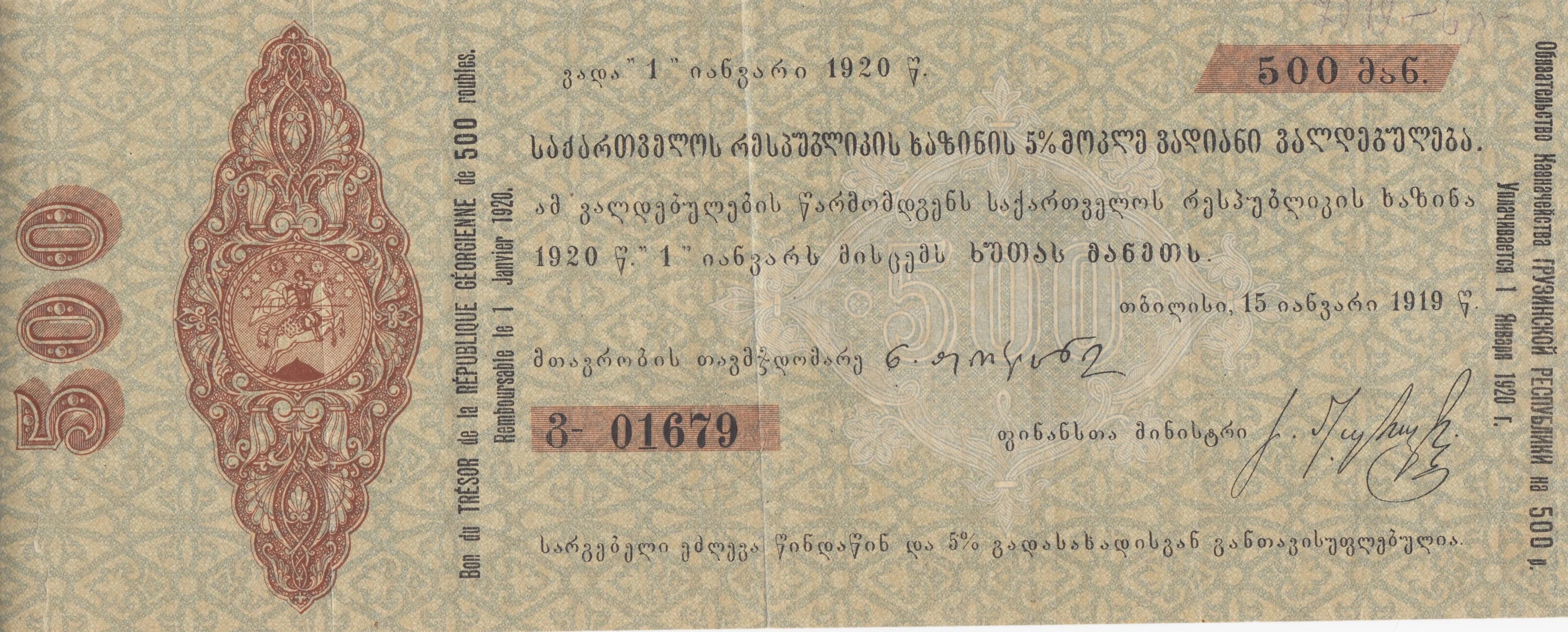
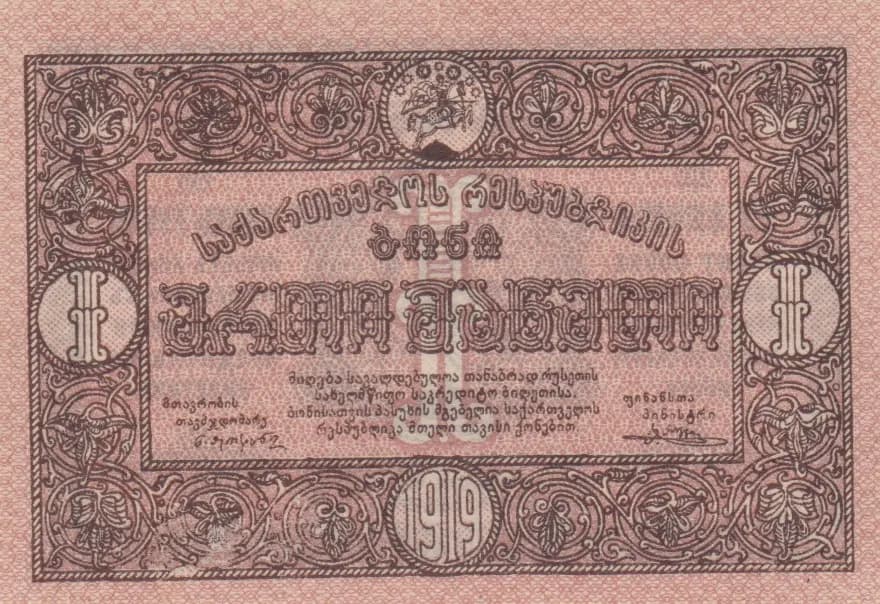
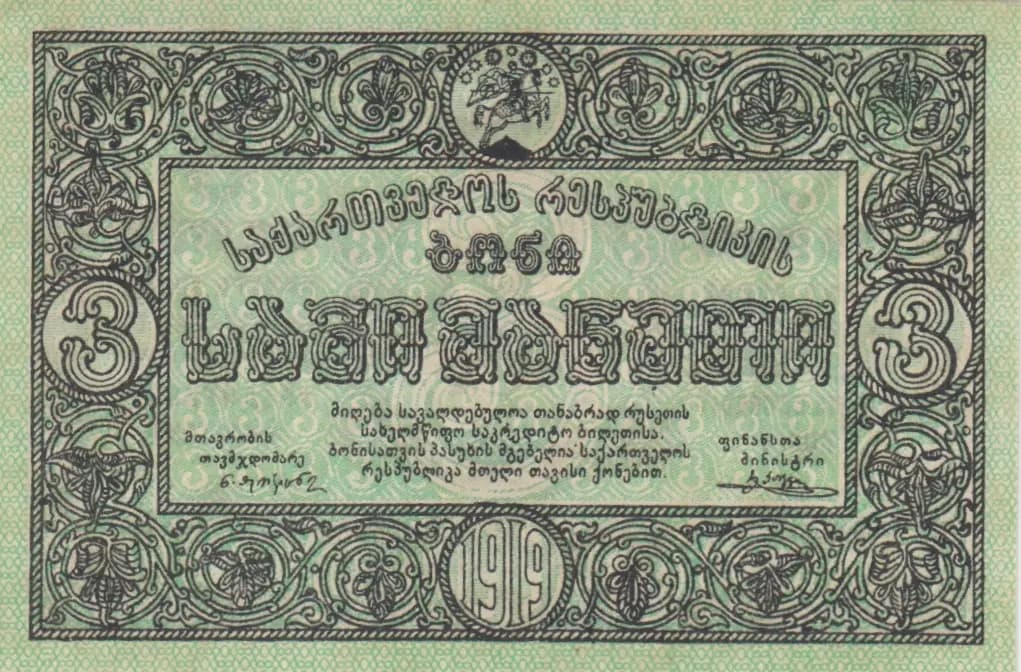
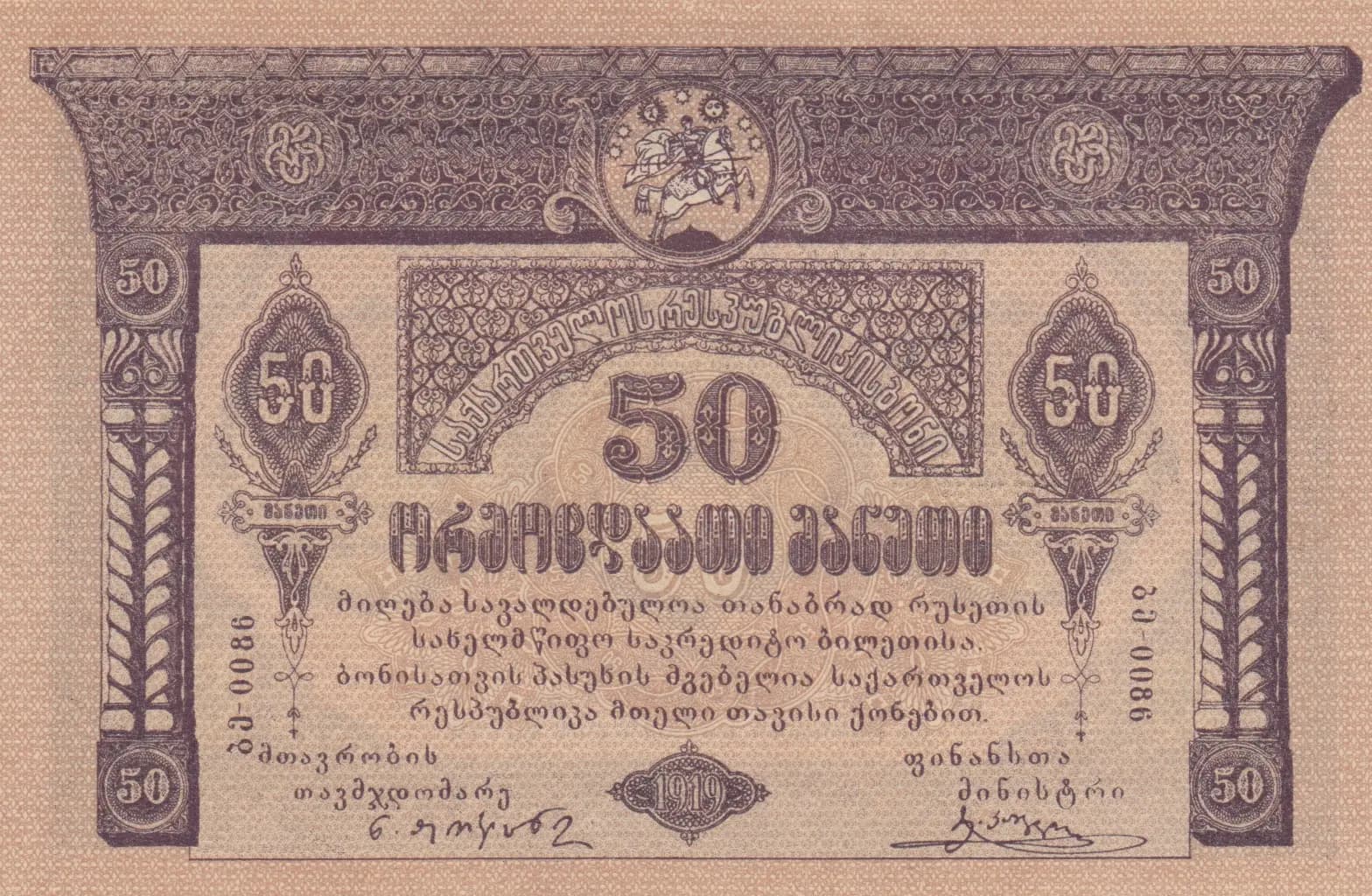
This banknote was issued by the Democratic Republic of Georgia in 1919, a period when Georgia briefly achieved independence following the Russian Revolution and the collapse of the Romanov dynasty. The trilingual inscriptions—Georgian, Russian, and French—reflect Georgia's position between Russian and Western European spheres of influence during this volatile period. The prominent depiction of St. George slaying the dragon, Georgia's national symbol, emphasizes Georgian sovereignty and national identity during this short-lived independent republic (1918-1921).
The obverse features an ornate symmetrical design dominated by intricate Art Nouveau-style floral and geometric borders with fan-like corner elements. A circular medallion at the top center depicts St. George on horseback, Georgia's national patron saint and emblem. Large denominations '100' appear in oval medallions on the left and right sides, with additional '100' numerals integrated throughout. The reverse displays three large circular rose-colored medallions arranged horizontally: the left contains French text, the center features St. George and the Dragon (the saint mounted on horseback slaying the dragon beneath), and the right contains Russian and Georgian text. Four corner circles mark the denomination '100'. The background throughout features intricate Celtic-style knotwork and geometric patterns. Color scheme consists primarily of gray, green, pink/rose, and cream tones, with the note described as having a green obverse and lilac underprint on the reverse.
FRONT: Georgian text reads 'Of Georgia' (საქართველოს) and includes the full issuing authority: 'Issued by order of the Finance Commissariat of Georgia and the Finance Minister of the Democratic Republic of Georgia' (ემიტირებული საქართველოს ფინანსის კომისარიატისა და საქართველოს დემოკრატიული რეპუბლიკის ფინანსის მინისტრის ბრძანებით). Denomination '100' appears numerically. BACK: French inscription 'CENT ROUBLES' (One Hundred Rubles) with the statement 'AYANT COURS OBLIGATOIRE AU MÊME TITRE QUE LES BILLETS DE CREDIT RUSSE' (Having compulsory circulation at the same value as Russian credit bills). Russian text 'СТО РУБЛЕЙ' (One Hundred Rubles) with 'ИМЕЮТ ХОЖДЕНИЕ НАРАВНЕ СЬ РОССИЙСКИМИ КРЕДИТНЫМИ БИЛЕТАМИ' (Have circulation equal to Russian credit bills). Georgian text: 'Of Georgia' (საქართველოს) and 'Issued by order of the Finance Committee of the Democratic Republic of Georgia' (ემიტირებული საქართველოს დემოკრატიული რეპუბლიკის ფინანსის კომიტეტის ბრძანებით).
This note was produced using high-quality intaglio (engraved) printing, evidenced by the sharp, well-defined fine line work visible in the ornamental borders, the intricate Celtic-style knotwork, and the detailed portrait of St. George on horseback. The multiple colors and layered printing (particularly the green obverse and lilac underprint on reverse) suggest multi-pass color printing typical of European security printers of the era. The precision of the background patterns and the clarity of the inscriptions in three languages indicate professional security printing, consistent with work by established European banknote printers contracted to produce currency for the brief Georgian Republic.
Pick 12 represents the standard 1919 issue. Varieties may exist relating to different signature combinations from the Finance Committee officials, or different printing sessions, but the visual analysis does not reveal specific identifying markers such as visible serial number prefixes or overprints that would definitively classify this example within a particular known variety. The note appears to be a standard printing from the regular 1919 issue cycle.