5 francs 1943
Market Prices
47 salesAbout This Note
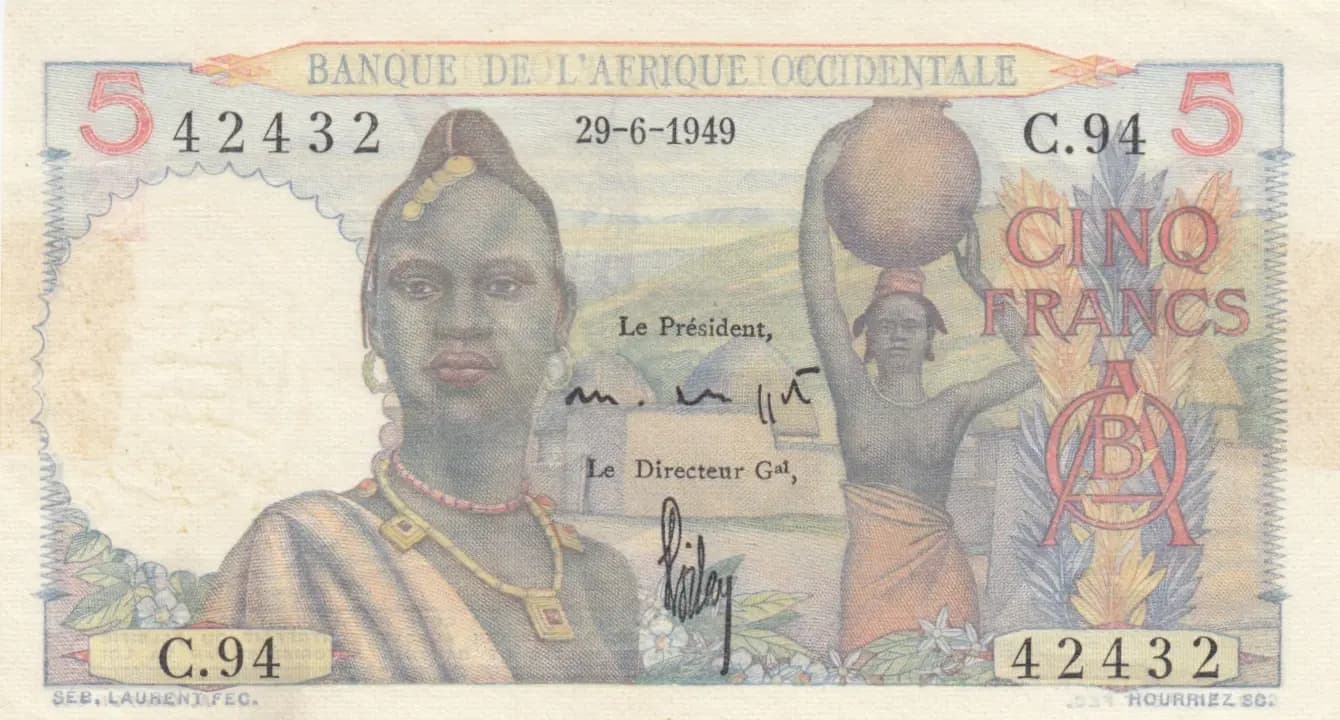
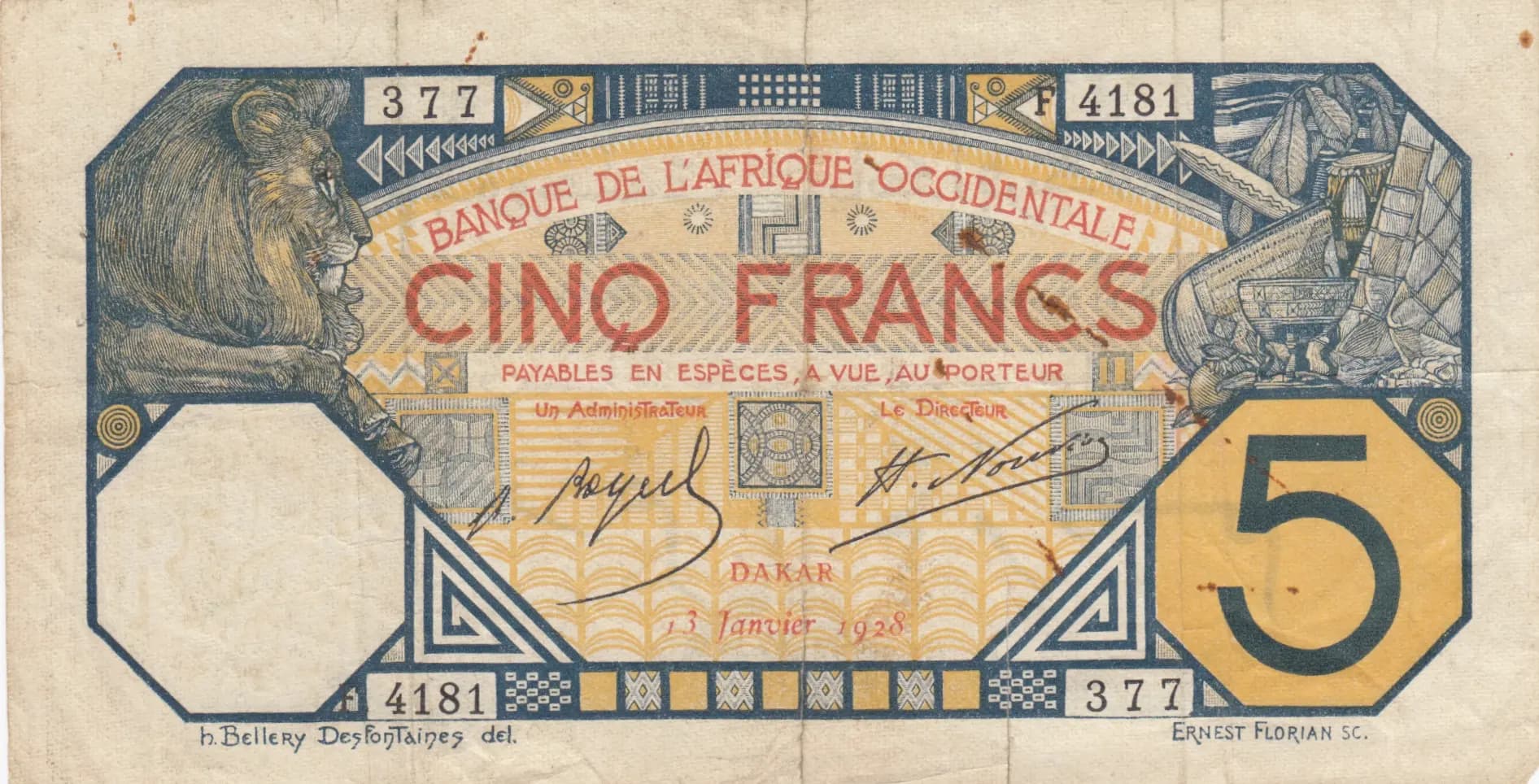
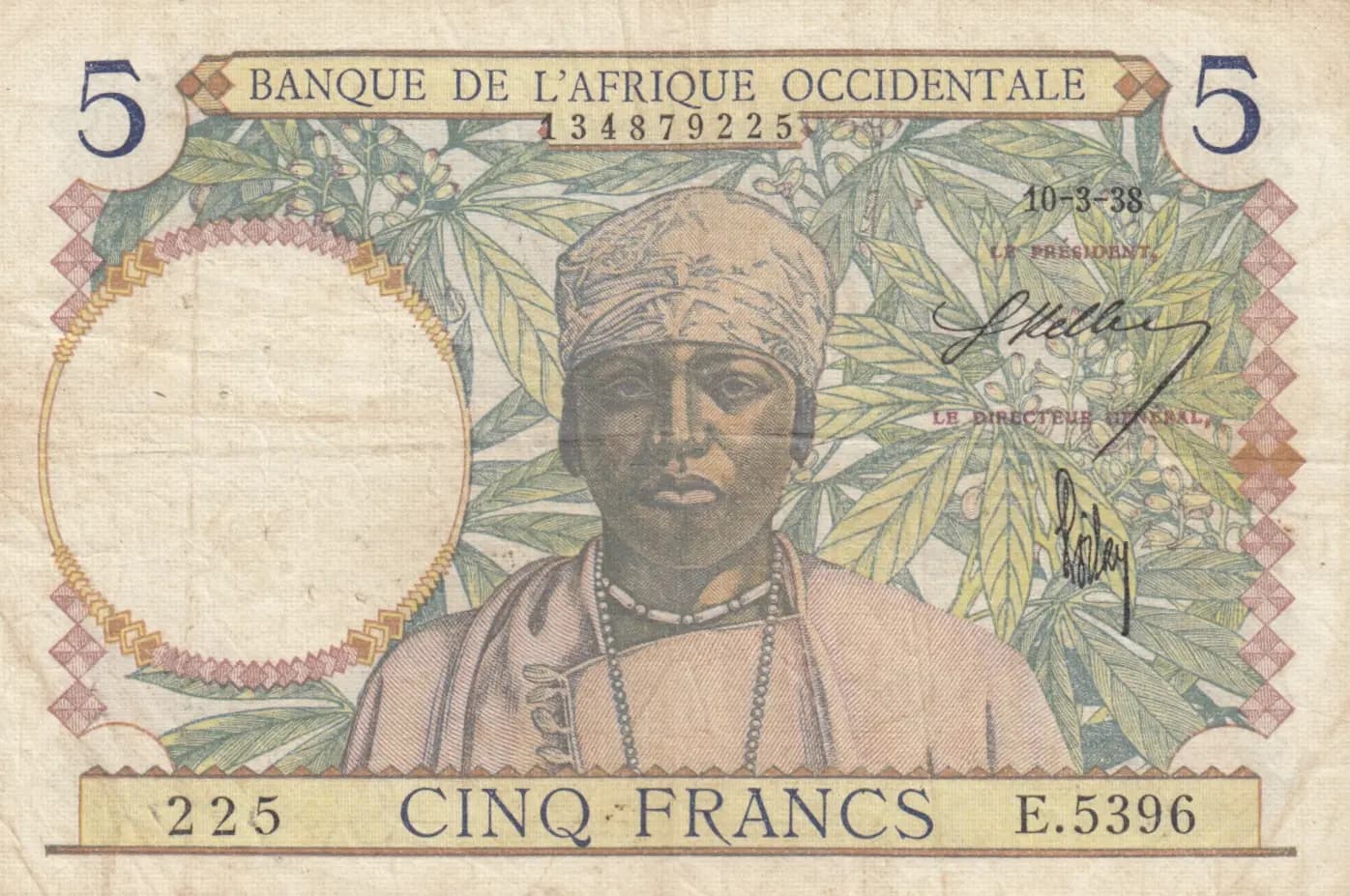
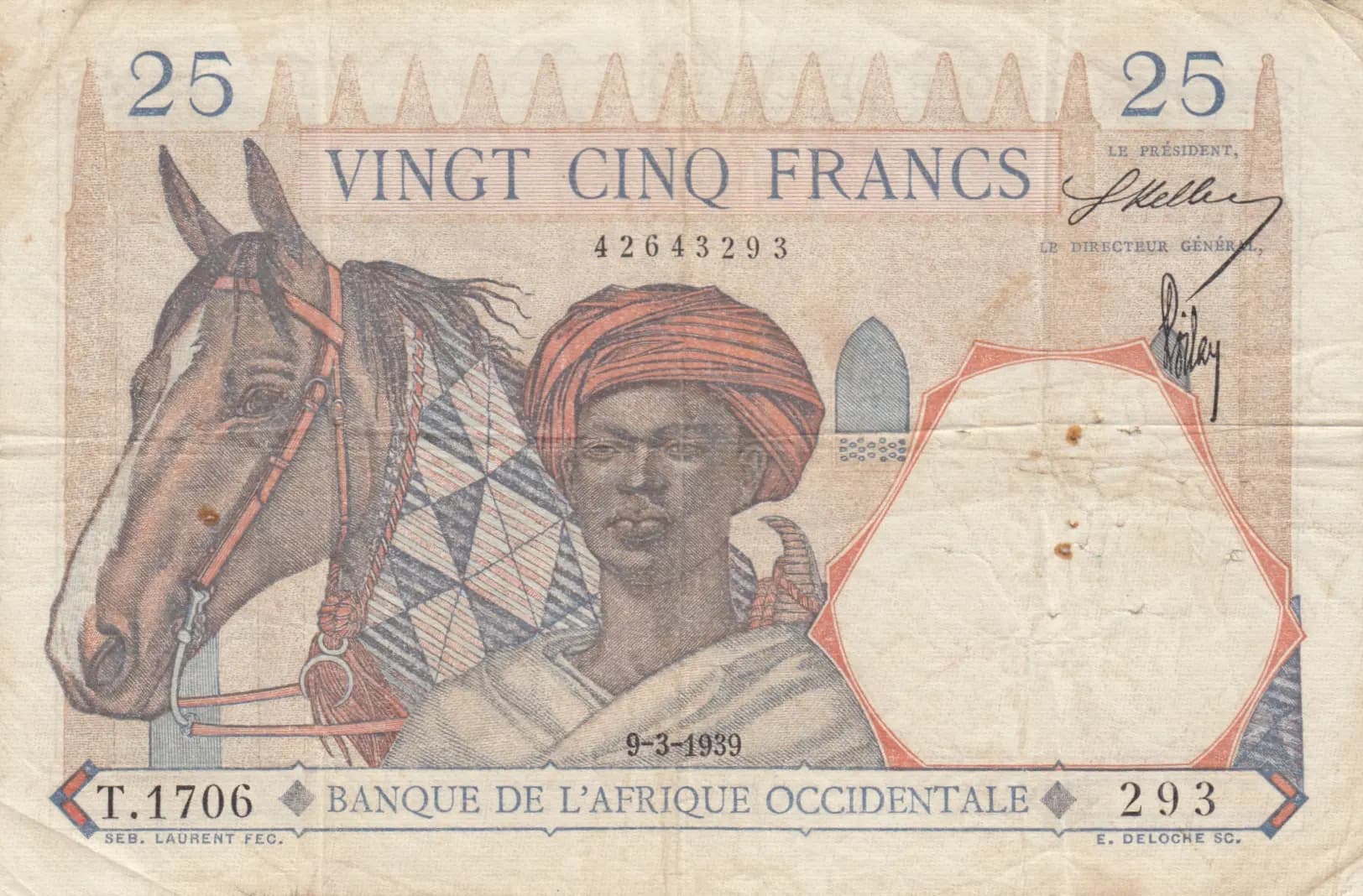
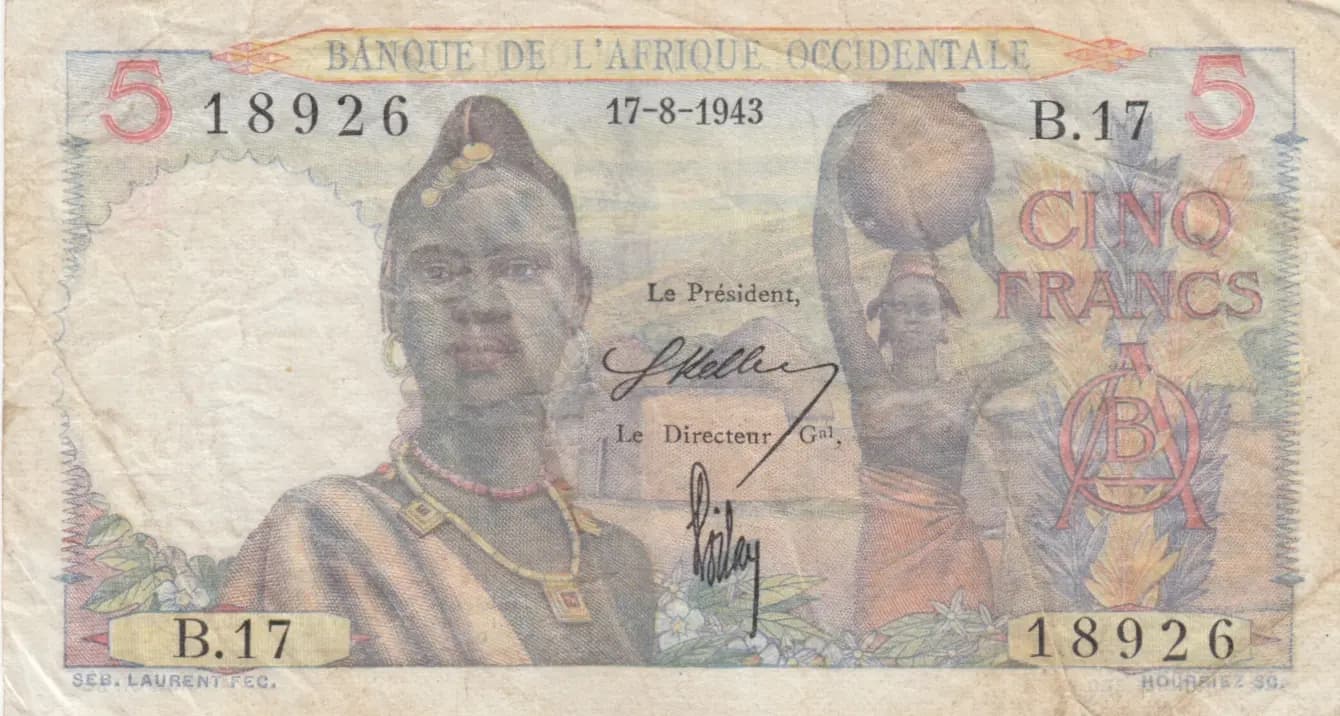
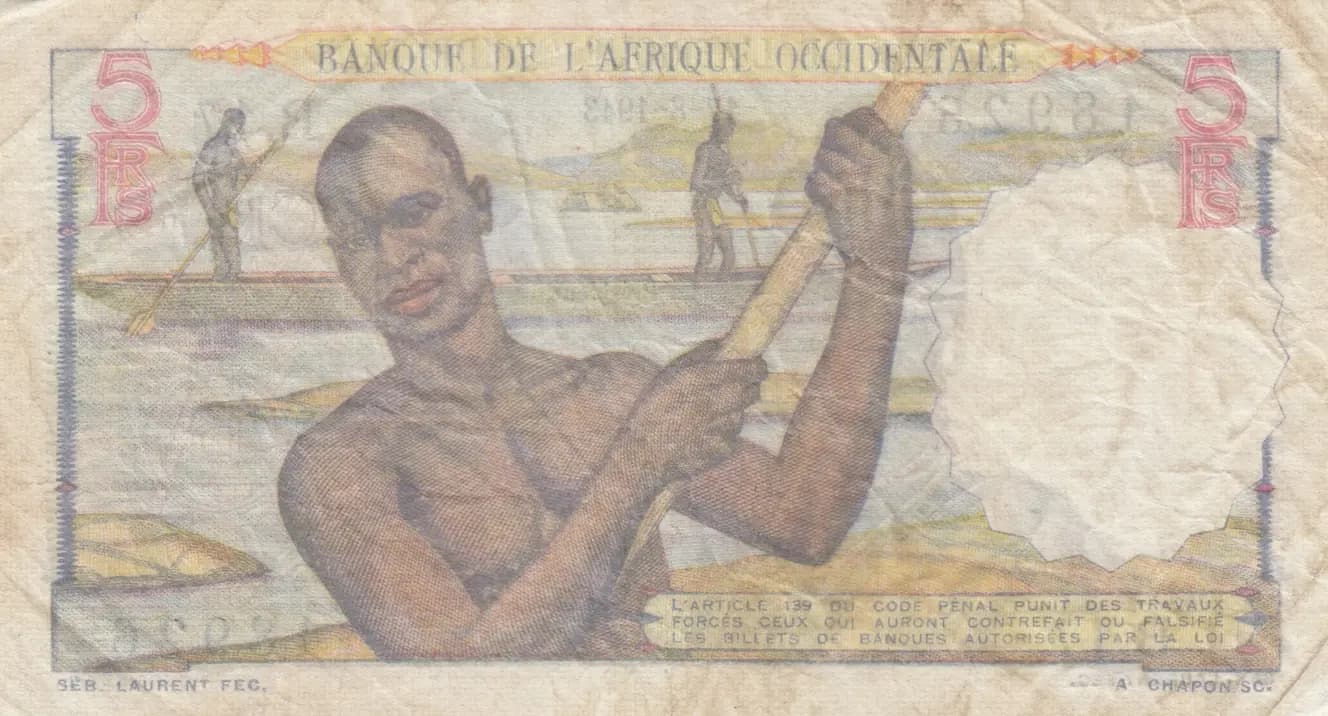
This 1943 French West Africa 5 francs note (Pick P-36) displays the characteristic colonial-era design of the Banque de l'Afrique Occidentale, featuring an African woman in traditional dress on the obverse and a laboring African man on the reverse. In Fine condition with visible creasing, foxing, and age-related discoloration, the note shows the expected wear patterns of an 80-year-old circulated banknote; the tan patina and diagonal creases are consistent with typical handling and storage. This denomination remains commonly available in the collector market with recent eBay sales of similar graded examples ranging from $5.72 to $12.51.
Common. The 1943 5 francs (Pick P-36) is a standard issue from a major French colonial bank with no documented scarcity. eBay market data confirms common availability: Fine-graded examples have sold repeatedly between $5.72 and $12.51 over a 15-year period, indicating consistent supply. Higher grades command modest premiums (UNC examples $35–$87), but the denomination itself shows no signs of rarity. The catalog value assessment (2016: $2–$7.50 range) and frequent auction activity further support common classification.
Issued during World War II on August 17, 1943, this banknote reflects the colonial administration of French West Africa under the Vichy and subsequent Free French regimes. The portraiture emphasizes the region's African population—the woman in traditional ornaments and the muscular male laborer—representing the colonial narrative of the era that focused on the economic and agricultural contributions of the colonized peoples. The Banque de l'Afrique Occidentale, established in 1901, issued currency across the French West African territories until independence in the late 1950s.
The obverse features a left-facing portrait of an African woman in profile wearing elaborate traditional hairstyle and ornamental jewelry, positioned on the left side of the note. On the right, a smaller portrait depicts an African man in semi-profile holding what appears to be a spherical object, possibly representing agricultural or mineral wealth. The reverse showcases a dynamic central vignette of a muscular African laborer in a semi-reclining pose engaged in work with tools, set against a landscape background with additional figures visible in the distance, emphasizing the economic contributions of the colonial labor force. Both sides feature ornamental borders with decorative floral and geometric elements in the corners, typical of early 20th-century French security printing. The color palette comprises beige, gray, red/pink, blue, green, brown, and purple accents on aged cream paper.
FRONT: 'Banque de l'Afrique Occidentale' (Bank of West Africa); 'CINCO FRANCS' (Five Francs); 'Le Président' (The President); 'Le Directeur Génl.' (The General Director); 'SEP. LAURENT FEC.' (Engraver: Sep. Laurent); 'BOURGEY SC.' (Printer: Bourgey); Date: '17-8-1943' (August 17, 1943); Serial number: '18926'; Note identifier: 'B.17'. BACK: 'Banque de l'Afrique Occidentale' (Bank of West Africa); Denomination: '5 FR S' (5 Francs); 'SEP. LAURENT FEC.' (Engraver: Sep. Laurent); 'A CHAPON SC.' (Printer: A. Chapon); Legal text: 'L'ARTICLE 139 DU CODE PÉNAL PUNIT DES TRAVAUX FORCÉS CEUX QUI AUROINT CONTREFAIT OU FALSIFIÉ LES BILLETS DE BANQUE AUTORISÉS PAR LA LOI' (Article 139 of the Penal Code punishes with hard labor those who shall have counterfeited or falsified banknotes authorized by law).
Intaglio engraving (taille-douce), the standard security printing method for banknotes of this era. The detailed vignettes, particularly the muscular laborer on the reverse, show characteristic fine line engraving work. Two separate printers are credited: Bourgey on the front (signature 'BOURGEY SC.' = Bourgey sculpt/engraved) and A. Chapon on the reverse ('A CHAPON SC.'), with engraver Sep. Laurent ('SEP. LAURENT FEC.' = fecit/made) responsible for the artistic design. The layered color printing and security border work indicate production by a specialized security printer, typical of French colonial currency manufacture.
This specific example carries serial number 18926 with note identifier B.17 and is dated 17-8-1943. The PMG population data indicates two catalogued variants for Pick P-36: the standard P-36 (with watermark of man's head) and P-36s. The visual analysis confirms this is the standard P-36 variant based on the described design elements. No overprints, commemorative markings, or other distinguishing varieties are evident in the images. The handwritten signatures of the President and General Director are standard authorization marks for the period and do not constitute a named variety.