15 cents 1939
Market Prices
13 salesAbout This Note
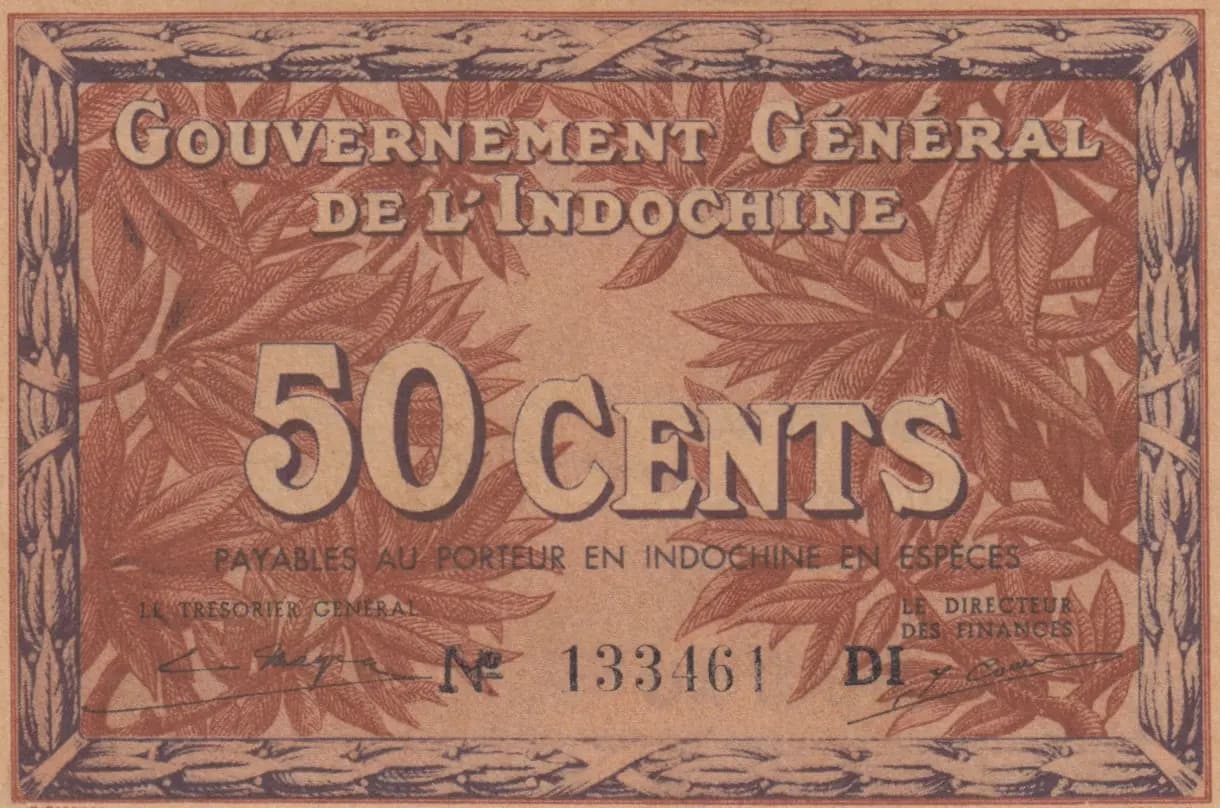
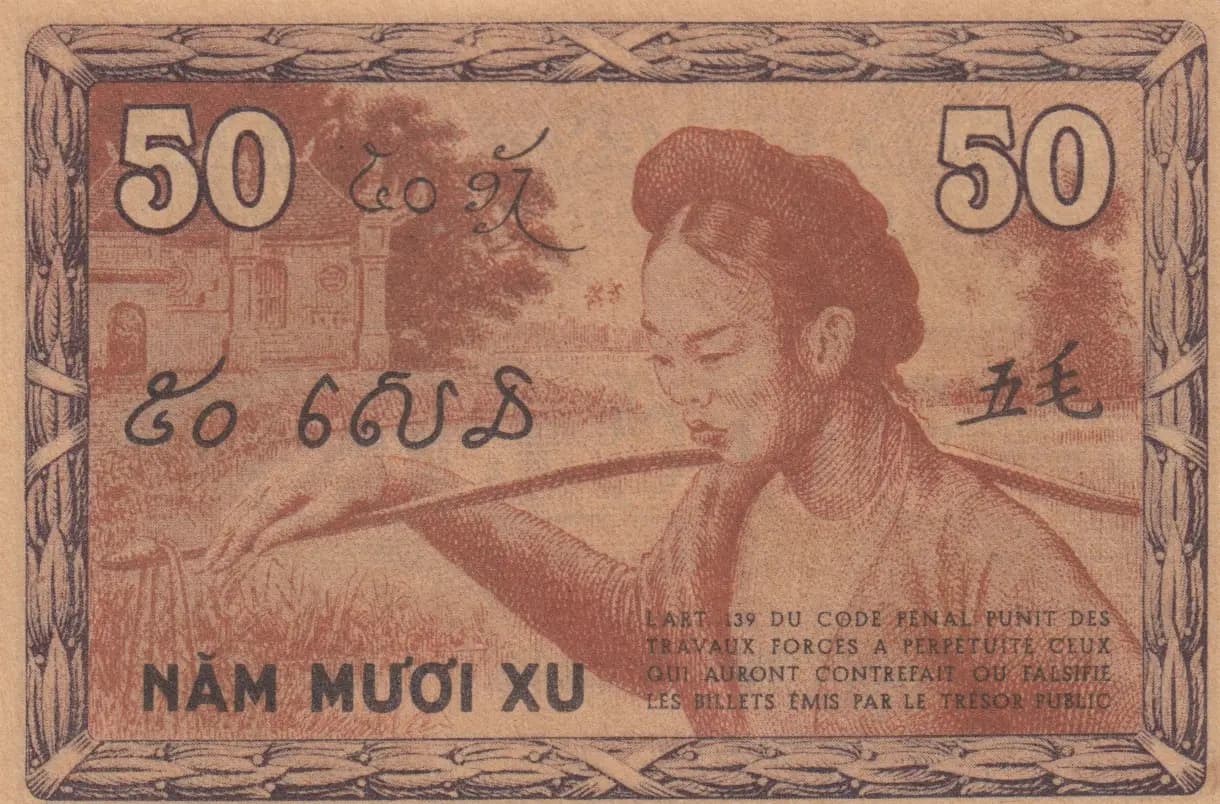
This is a French Indochina 15 cents banknote from 1939 (Pick P-87d), presented in UNC condition according to the catalog grade. The note features distinctive reddish-brown and tan coloring with ornamental botanical designs framing the denomination numerals. The reverse displays a portrait of a woman in profile facing left, characteristic of French Indochina's currency design aesthetic. Despite the UNC grade assignment, visual inspection reveals handwritten annotations and circulation marks on the reverse, suggesting the actual condition may be closer to AUNC or circulated grades.
Common. The eBay price tracking data demonstrates consistent market availability, with numerous sales across a 10-year period at modest prices ranging from $2-$54 depending on condition. Even AUNC examples regularly sell in the $20-$33 range, and the 2016 catalog value of $20 for UNC reflects a common, regularly traded note. The relatively high volume of transactions and the consistent supply across multiple condition grades indicate this is a standard issue without scarcity constraints.
This banknote was issued by the Gouvernement Général de l'Indochine during the final years before French Indochina's administrative dissolution following World War II. The bilingual French-Vietnamese inscriptions reflect the colonial administration's attempt to integrate local populations into the monetary system. The warning text referencing Article 139 of the French Penal Code and the formal treasury signatures underscore the colonial legal framework governing currency issuance in the territory.
The obverse features a classical ornamental leaf and botanical design in reddish-brown tones, with large denomination numerals centered on the note and framed by a decorative geometric border. The reverse showcases a woman's portrait in profile facing left, wearing period or traditional clothing with styled hair, positioned against a background that includes architectural elements suggesting a colonial building or governmental structure. The bilingual inscription 'NAM MUOI XU' in Vietnamese provides the denomination in the local language, reflecting the Indochinese currency's dual-language presentation philosophy. The predominant color palette of reddish-brown and cream backgrounds creates a cohesive aesthetic consistent with other French Indochina currency of the 1939 period.
FRONT: 'GOUVERNEMENT GÉNÉRAL DE L'INDOCHINE' (General Government of Indochina) / '50 CENTS' (denomination) / 'PAYABLES AU PORTEUR EN INDOCHINE EN ESPÈCES' (Payable to bearer in Indochina in specie) / 'LE TRÉSORIER GÉNÉRAL' (The General Treasurer) / 'LE DIRECTEUR DES FINANCES' (The Director of Finances) / Serial number 133461 / Printer designation 'BI'. BACK: '50' (denomination numerals) / 'NAM MUOI XU' (Fifty cents in Vietnamese) / 'L'ART. 139 DU CODE PÉNAL PUNIT DES TRAVAUX FORCÉS À PERPÉTUITÉ CEUX QUI AURAIENT CONTREFAIT OU FALSIFIÉ LES BILLETS ÉMIS PAR LE TRÉSOR PUBLIC' (Article 139 of the Penal Code punishes with hard labor for life those who would have counterfeited or falsified notes issued by the Public Treasury).
The note was produced using intaglio printing, the standard security printing method for French colonial currency. The fine detail work visible in the botanical ornamentation and portrait engraving, combined with the sharp line work evident in the border frames, are characteristic of intaglio processes employed by French security printers. The notation 'BI' on the obverse likely indicates the printing house identifier (Banque de l'Indochine or the designated security printer).
This specific note is identified as Pick P-87d, indicating it is a later variety within the 15 cents 1939 series. The serial number 133461 with the 'BI' printer designation places it within a standard production run. The visual analysis notes similarities to P-85d, suggesting it may represent a minor typographical or design variation within the broader 15 cents series. The presence of handwritten annotations on the reverse (illegible cursive and what appears to be a mark) represents post-printing alteration rather than a cataloged variety.