1 piastre 1932
Market Prices
90 salesAbout This Note
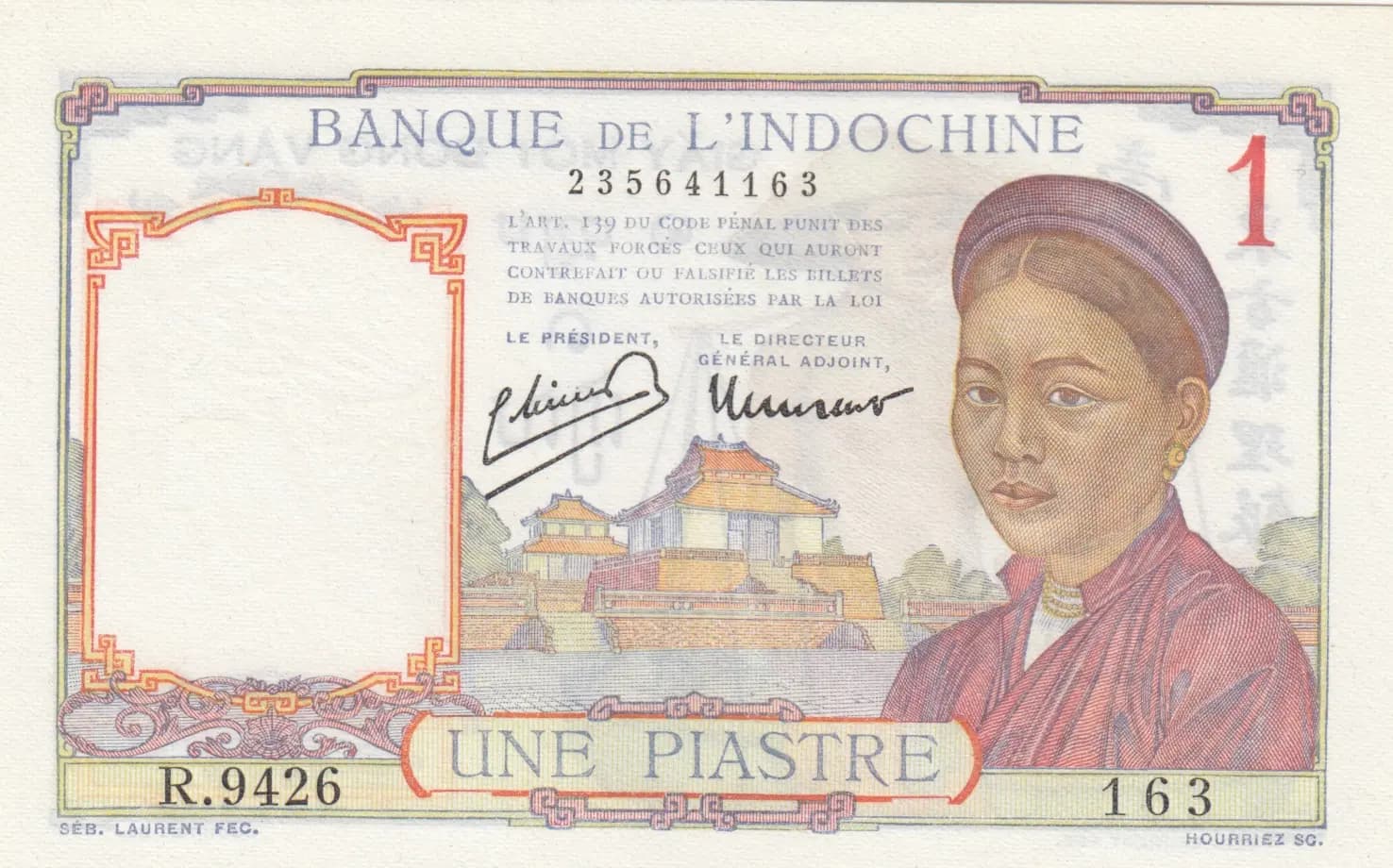
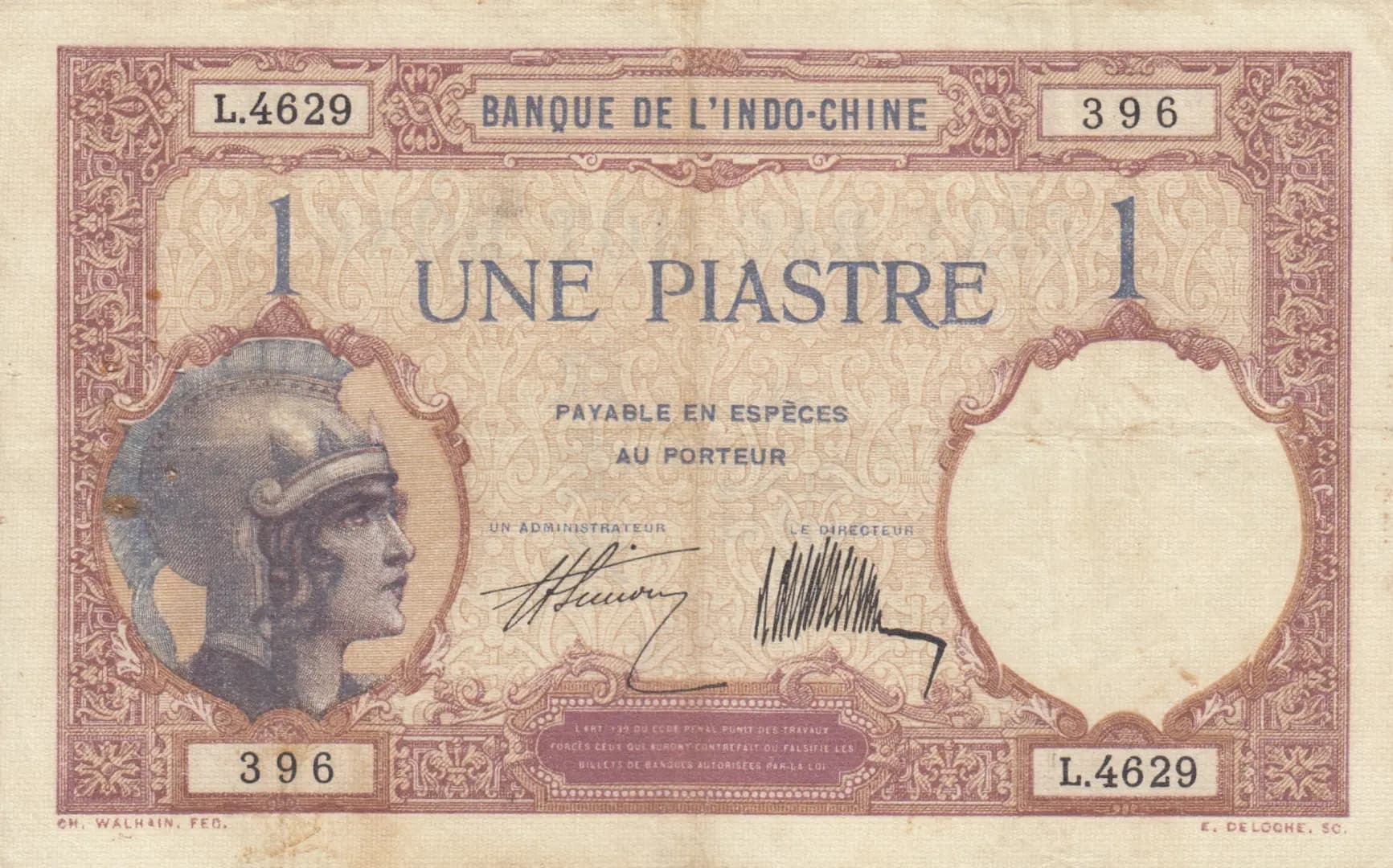
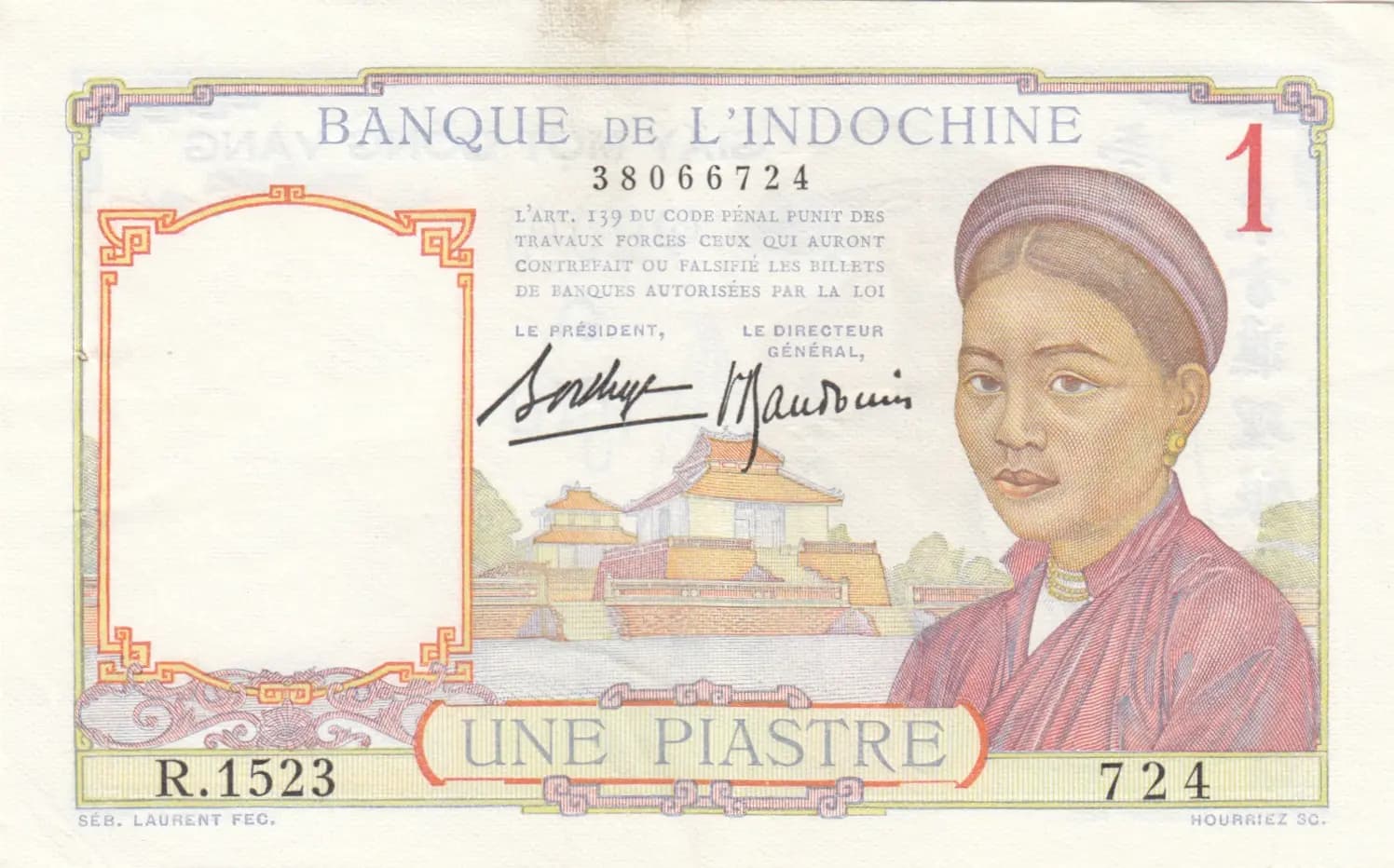
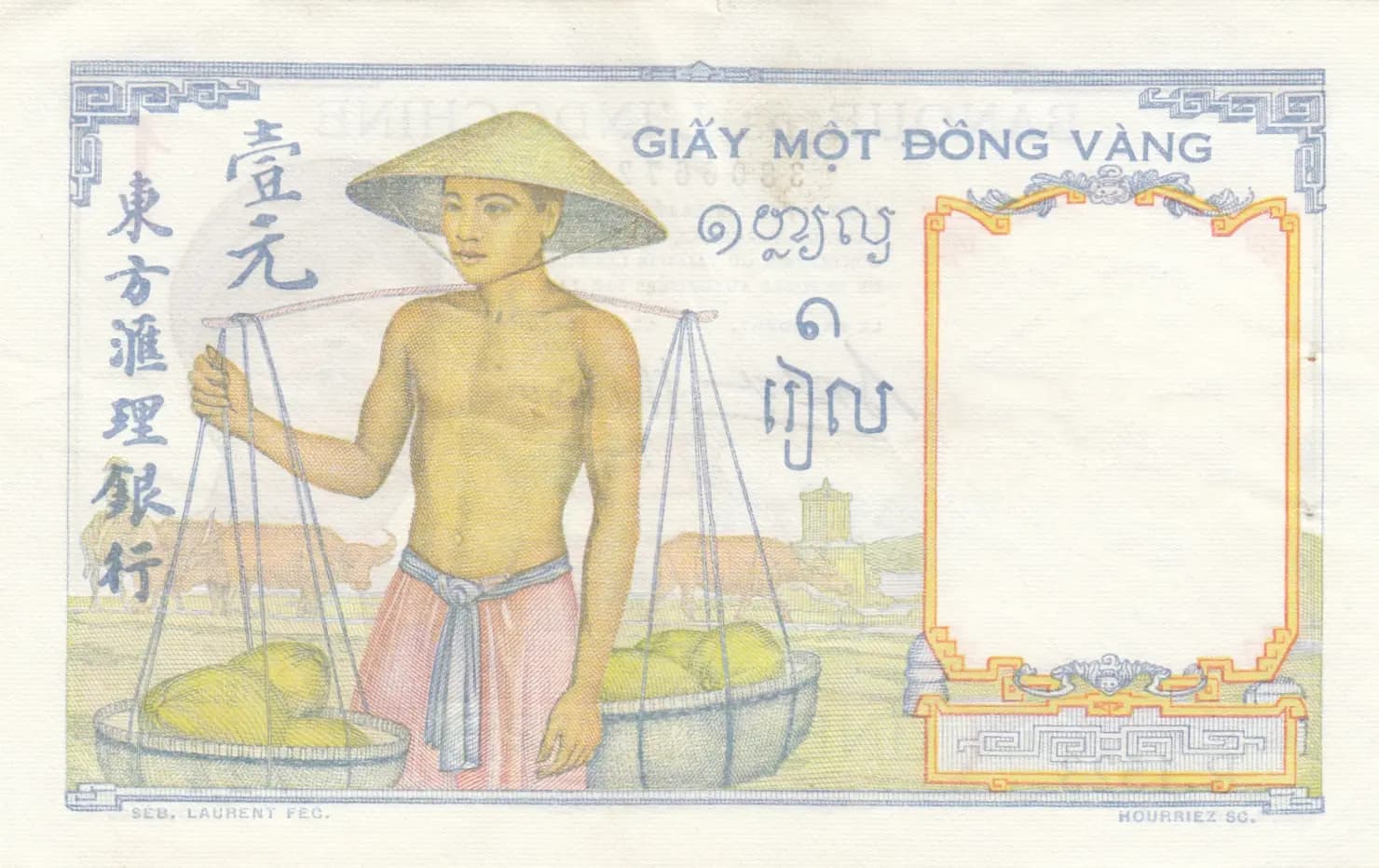
This is an EF-graded 1 piastre note from Banque de l'Indochine dated 1932 (Pick P-54b), displaying excellent condition with minimal wear and no tears or creases visible. The front features a finely engraved portrait of an Asian woman in traditional dress with a distinctive purple headwrap, framed by ornate decorative elements and a pagoda in the background. The reverse depicts a classical scene of a shirtless man with a conical hat carrying baskets on a shoulder yoke, rendered in meticulous detail characteristic of early 20th-century engraved banknote production.
Common. The extensive eBay sales data shows this note selling frequently across a wide range of grades and prices, from under $1 to over $300 for high grades. EF-graded examples have sold consistently in the $2–$8 range (2016–2026), indicating this is a widely available note in the collector market. The numerous sales transactions spanning multiple years demonstrate steady supply. Print runs for this denomination and issue were substantial, and no evidence exists of scarcity or recall.
This note was issued during the final years of the French colonial administration in Indochina, when the Banque de l'Indochine served as the primary currency authority for the region. The dual portrait imagery—a woman in traditional Vietnamese/Indochinese dress on the front and a laborer in classical pose on the reverse—reflects the colonial iconography of the period, romanticizing indigenous culture while asserting French monetary control. The inclusion of Vietnamese, Khmer, and Chinese inscriptions alongside French text demonstrates the multicultural and multilingual character of French Indochina as a colonial territory.
The front features a three-quarter portrait of a Vietnamese or Indochinese woman wearing traditional clothing with a distinctive purple/mauve headwrap, positioned on the right side of the note. She is framed within an ornate rectangular cartouche with Asian-inspired corner ornaments in orange/red. The background center displays a multi-tiered pagoda with yellow and orange roofs, symbolic of Southeast Asian architecture. The reverse depicts a male laborer (likely representing the working class or peasantry of Indochina) in classical pose, bare-chested and wearing a traditional conical straw hat, carrying two wicker baskets suspended from a wooden yoke across his shoulders—a common scene of agricultural or commercial labor in the region. Both sides feature elaborate decorative borders with geometric patterns, ornamental medallions, and fine-line engraving throughout. An ornate blank cartouche on the reverse was likely intended for additional text or heraldic elements.
FRONT SIDE: 'BANQUE DE L'INDOCHINE' (Bank of Indochina); 'UNE PIASTRE' (One Piastre); 'L'ART. 139 DU CODE PÉNAL PUNIT DES TRAVAUX FORCÉS CEUX QUI AURONT CONTREFAIT OU FALSIFIÉ LES BILLETS DE BANQUES AUTORISÉES PAR LA LOI' (Article 139 of the Penal Code punishes with forced labor those who will have counterfeited or falsifed banknotes authorized by law); 'LE PRÉSIDENT' (The President); 'LE DIRECTEUR GÉNÉRAL' (The General Director); 'Ashby / Maurin' (signatures); 'SÉB. LAURENT FEC.' (Seb. Laurent fecit—made by); 'HOURRIEZ SC.' (Hourriez sculpsit—engraved by); 'R.1523' (reference code); Serial number '38066724'. REVERSE SIDE: 'GIẤY MỘT ĐỒNG VÀNG' (Vietnamese: One Gold Dong note); '東方選理銀行' (Chinese: Oriental Financial Bank); 'ឯកសារមួយដុងលាវ' (Khmer: One Lao dong note); 'SÉB. LAURENT FEC.' and 'HOURRIEZ SC.' (same engraver/sculptor credits as front).
This note was produced using traditional hand-engraved intaglio (copperplate) printing, as evidenced by the fine line patterns, intricate detail work, and multiple color separations visible throughout both sides. The engravers Seb. Laurent and Hourriez are credited as 'fec.' and 'sc.' respectively, indicating the classical engraving tradition. The precision of the decorative borders, facial details, and architectural elements reflects the high-security standards of early 20th-century banknote production. The Banque de l'Indochine likely commissioned this work from a European security printer specializing in colonial currency.
This is Pick P-54b, the 'b' variety designation indicating a specific printing variant within the 1932 1 piastre issue. The visual analysis shows serial number 38066724 with signature combination 'Ashby / Maurin.' The note carries the engraver credits 'SÉB. LAURENT FEC.' and 'HOURRIEZ SC.' Standard reference code 'R.1523' is present. Known varieties for this issue include differences in signatures and serial number prefix designations; the specific combination observed here (Ashby/Maurin signatures with this serial block) may indicate a particular printing from the 1932–1936 period of issue.