100 piastres 1946
“old fake”
Market Prices
2 salesAbout This Note
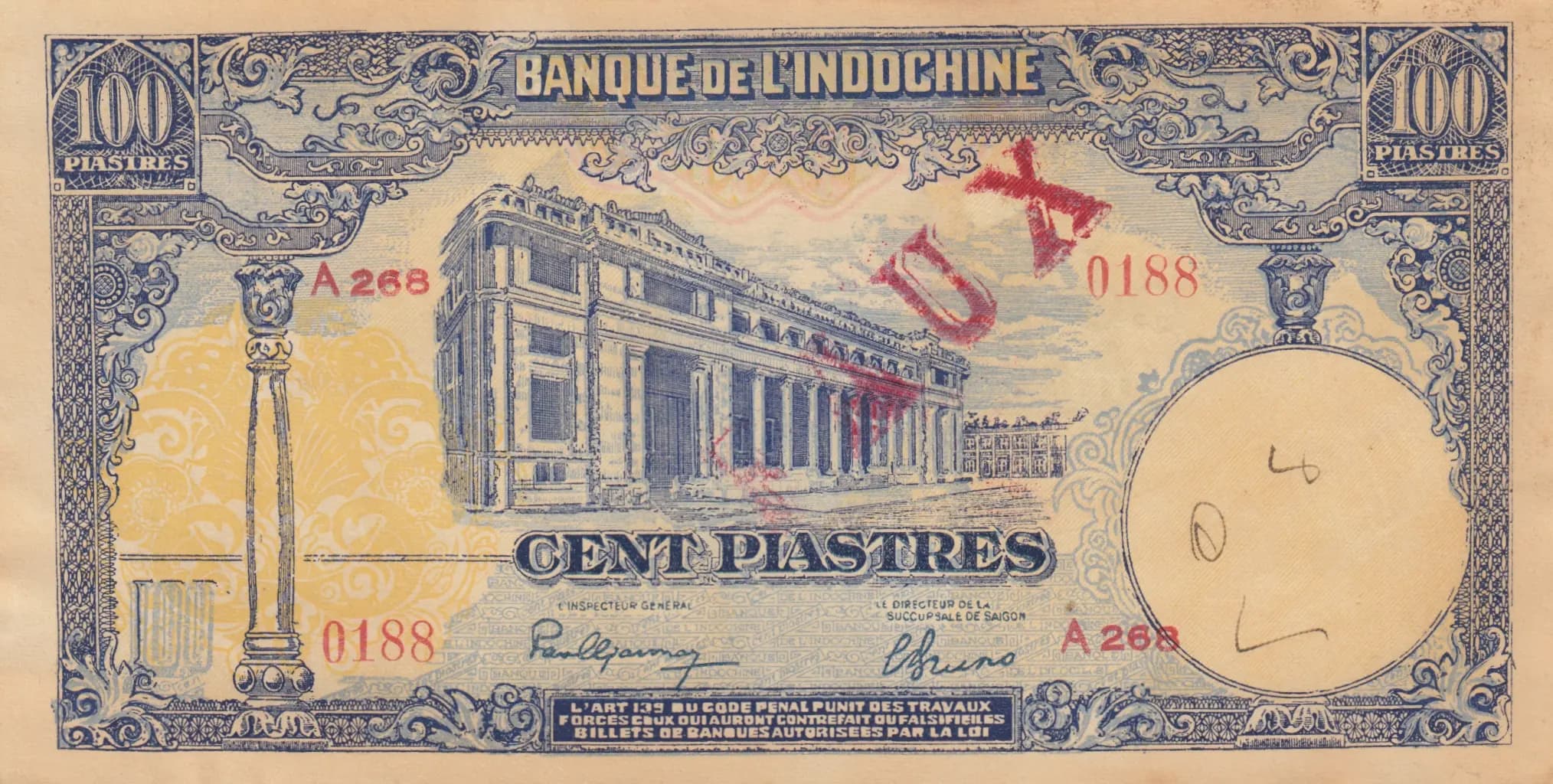
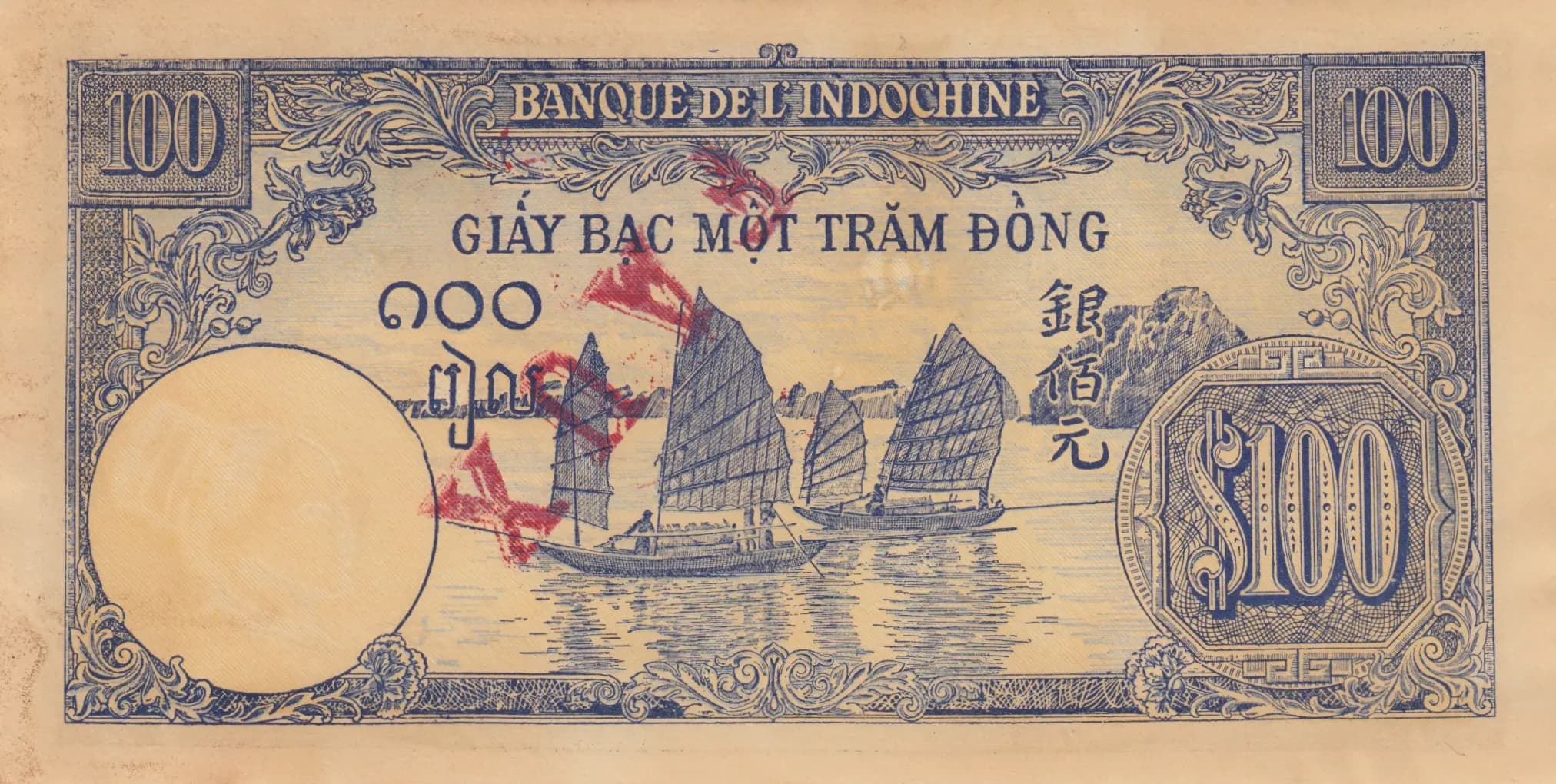
This is a contemporary counterfeit of the French Indochina 100 Piastres 1946 issue, printed on brown paper stock rather than the standard cream/white paper of genuine notes. The note displays the characteristic ornate blue decorative borders, central neoclassical bank building, and reverse design featuring traditional Asian junks and an Indochina map. Red cancellation or validation stamps are visible across the obverse, and the overall condition shows age-related patina consistent with a circulated example from this era.
Common. Despite being marked as a contemporary counterfeit, this note variety shows strong market activity with recorded eBay sales at $76 (F condition, 2015) and $152.10 (UNC condition, 2021), and catalog values ranging from $2.50 (VG) to $30 (UNC). The ready availability of this counterfeit in the market, combined with modest pricing, indicates it is common among collectors of counterfeits and Indochina currency. Counterfeits of this note were apparently produced in quantity during or shortly after the 1946 period.
The Banque de l'Indochine issued this denomination during the post-World War II period when French colonial control of Indochina was being reasserted. The note's iconography—featuring the bank building, traditional junks, coastal landscapes, and the map of Indochina—reflects the colonial economic and administrative infrastructure of French Indochina. The multilingual inscriptions in French, Vietnamese, and Chinese characters underscore the multicultural commercial nature of the region during this period of transition.
The obverse features an ornate blue decorative border with scrollwork and floral motifs framing the central design. The dominant central element is the Banque de l'Indochine headquarters building—a grand neoclassical structure with multiple columns and stories representing French colonial institutional authority. A tall commemorative monument or pillar appears on the left side. Red validation or cancellation stamps cross the face of the note. The reverse depicts traditional Asian junk-rigged sailing vessels on water with a coastal or mountainous landscape in the background, symbolizing the maritime commerce of the region. A red geographical outline map of French Indochina occupies the center, and a large ornate numeral '100' in decorative framing appears on the right side. The color palette throughout is cream/beige with dark blue ornamental elements, yellow accents, and red stamps or geographical features.
FRONT: 'Banque de l'Indochine' (Bank of Indochina); '100 Piastres' / 'Cent Piastres' (One Hundred Piastres); 'A 268' (series marking); '0188' (serial number component); 'L'Inspecteur Général' (The General Inspector); 'Le Directeur de la Succursale de Saigon' (The Director of the Saigon Branch); 'Art. 135 [du Code Pénal] punit des travaux forcés ceux qui auraient contrefait ou falsifiés les billets de banques autorisées par la loi' (Article 135 of the Penal Code punishes with forced labor those who counterfeit or falsify banknotes authorized by law). BACK: 'Banque de l'Indochine' (Bank of Indochina); 'Giấy bạc một trăm đồng' (Vietnamese: One Hundred Piaster Banknote); '100' (denomination); Chinese/Japanese characters relating to bank/currency.
This is a counterfeit note printed using lithographic or offset printing techniques, as evidenced by the multicolor application and the quality of the ornate border work visible in the images. According to catalog data, the printer is listed as TDLR (without imprint mark), and the note was produced on contemporary brown paper stock rather than the standard white or cream paper used for genuine examples. The presence of distinct color layers and the ornate decorative work indicate a period-appropriate lithographic production method rather than modern techniques.
This note is identified as Pick 79x, the 'x' designation indicating it is a counterfeit variety rather than a genuine issue. The specific variety characteristics include: contemporary brown paper stock (versus cream/white); TDLR printer attribution without imprint; red cancellation/validation stamps present; series marking 'A 268' with serial number component '0188' visible. The presence of red stamps and the brown paper are diagnostic features distinguishing this counterfeit production from both genuine issues and other counterfeits of the same denomination.