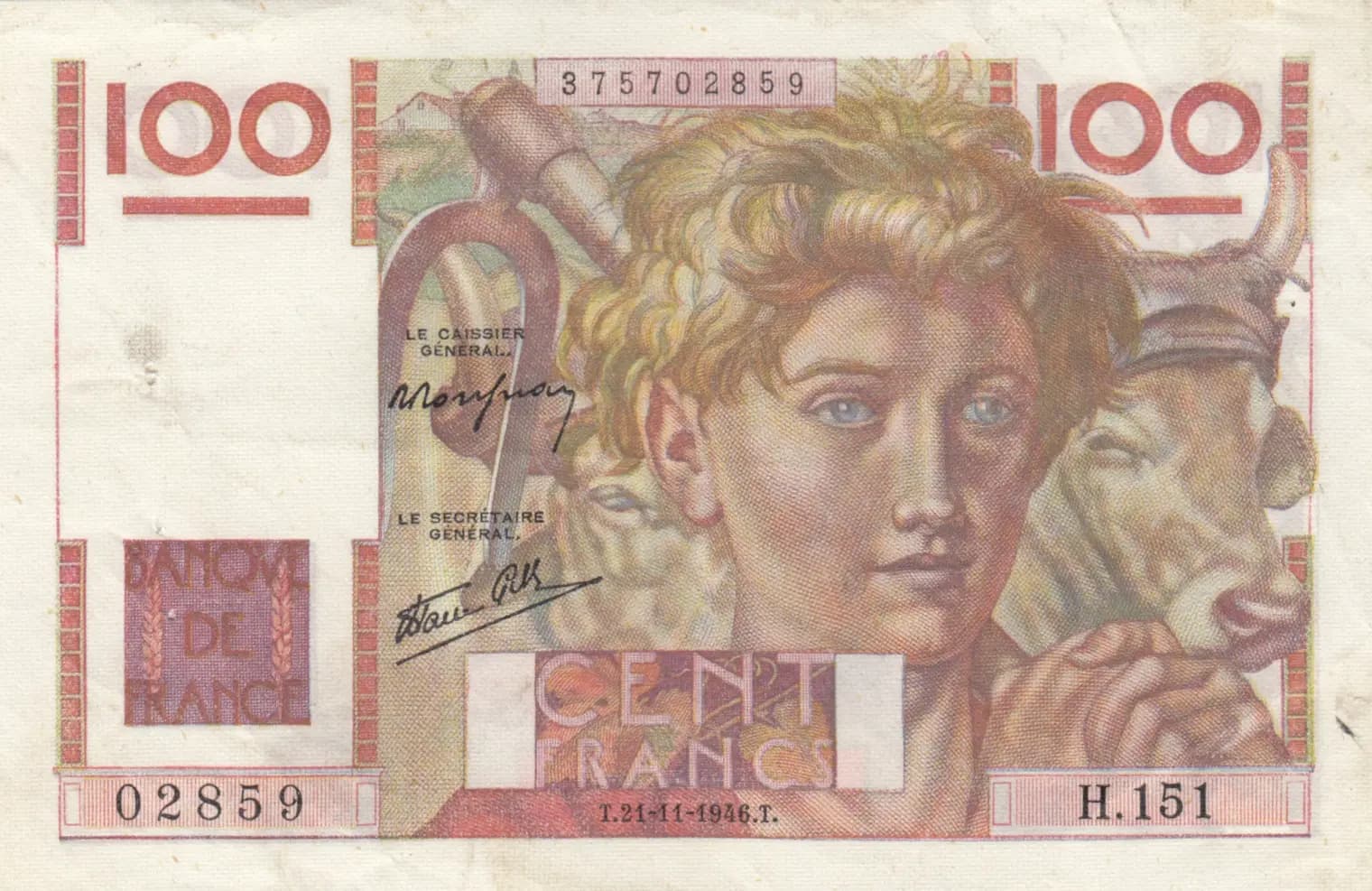
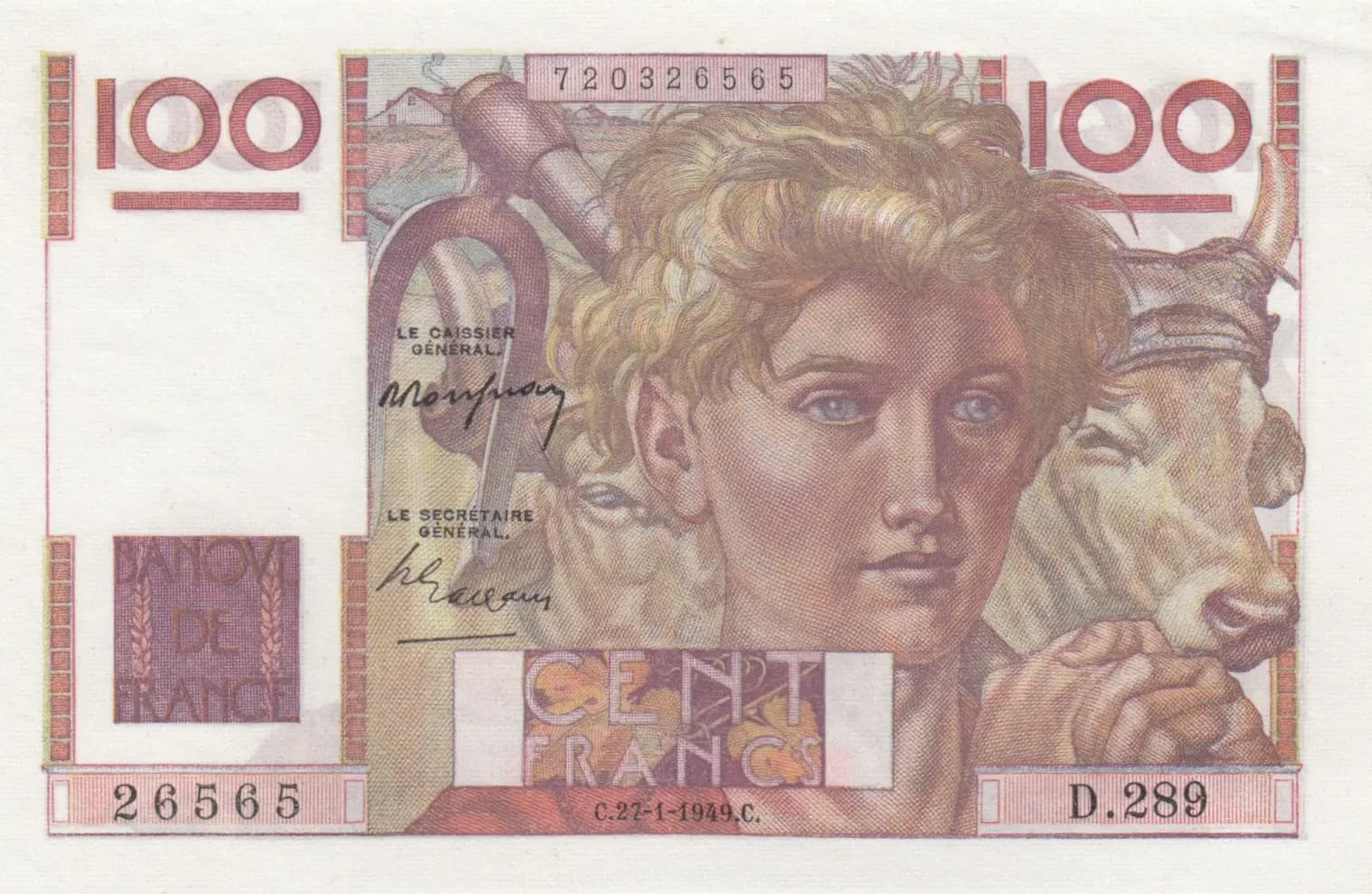
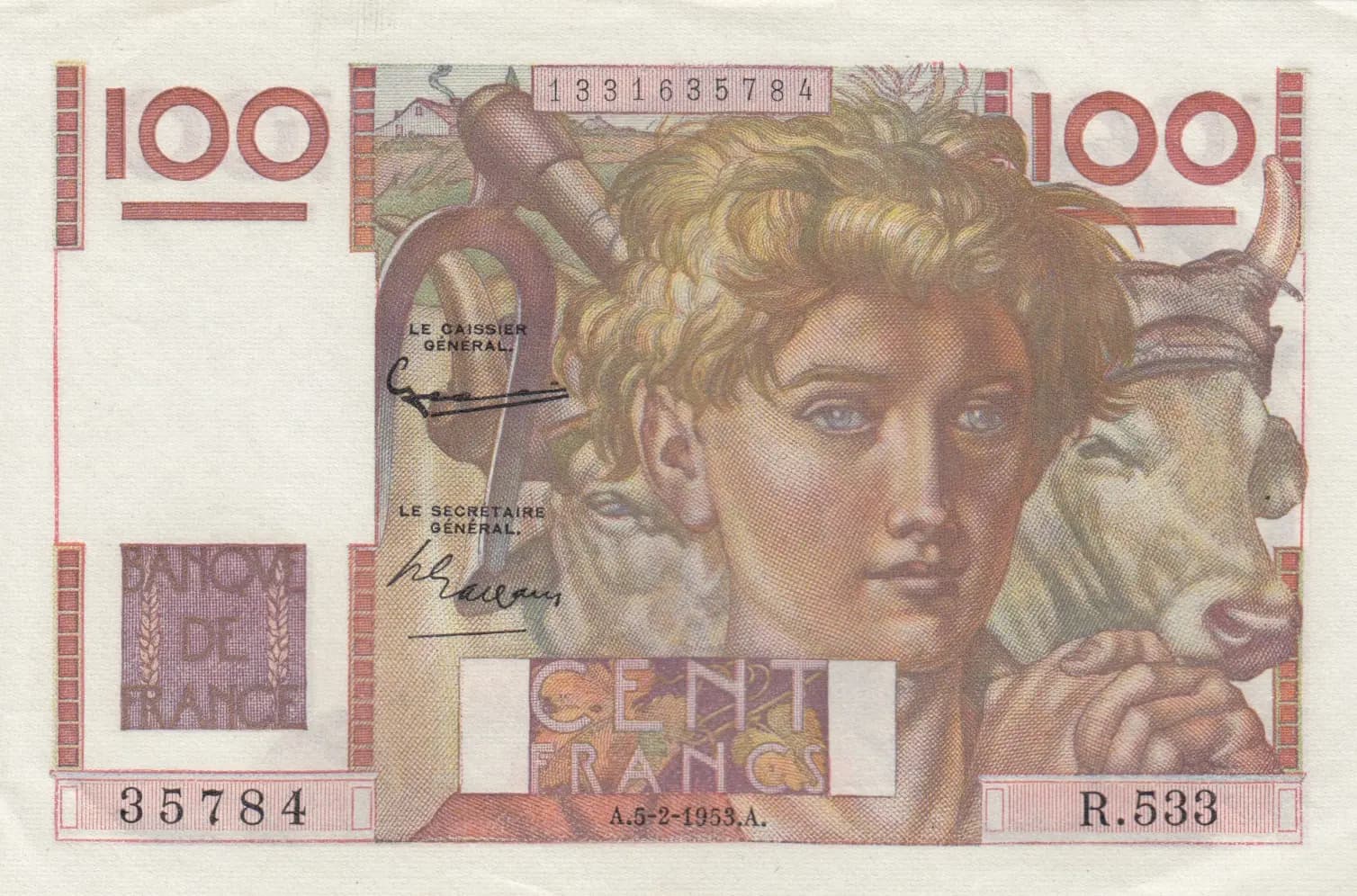
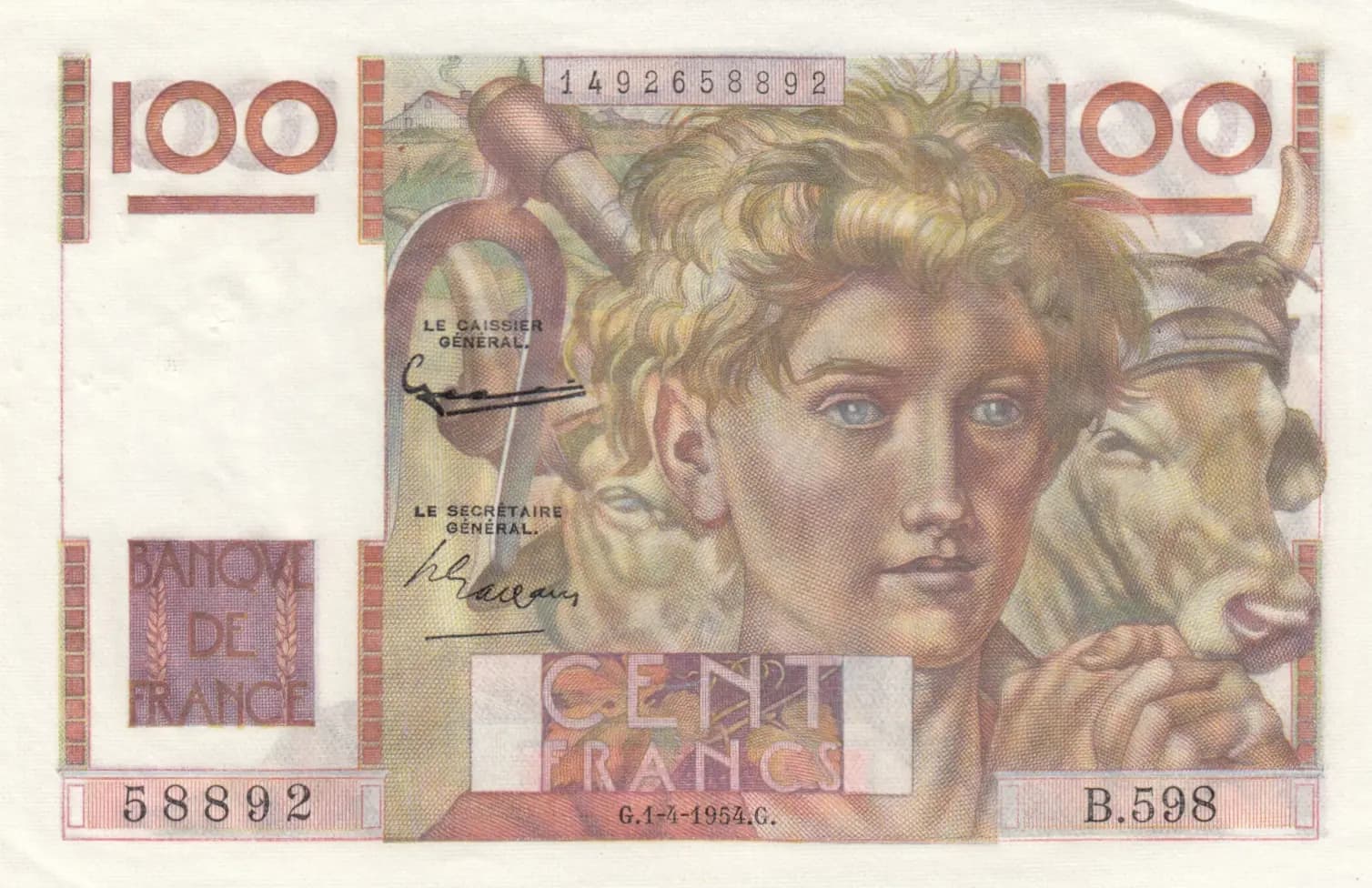
100 francs 1952
Market Prices
38 salesAbout This Note
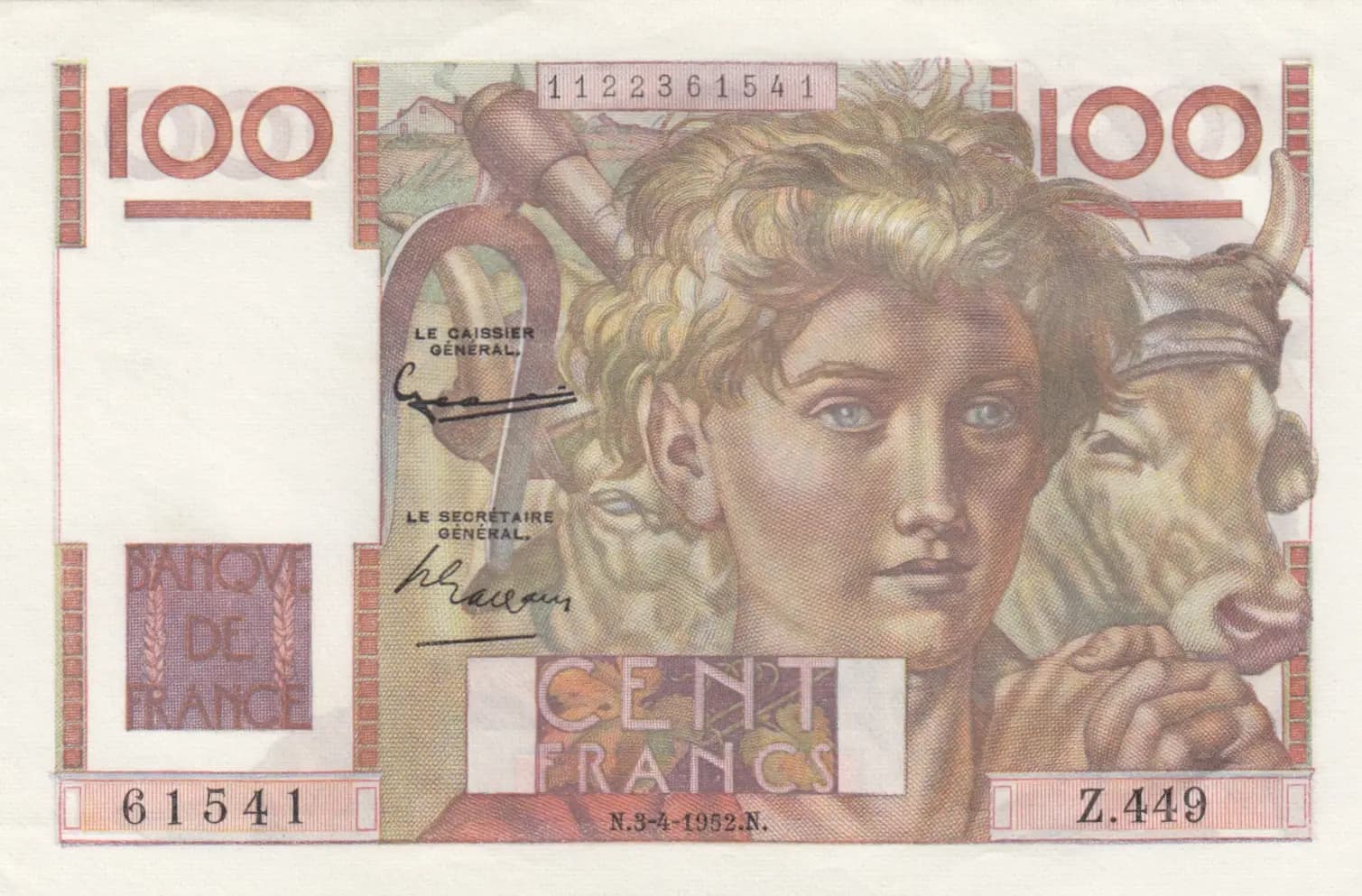
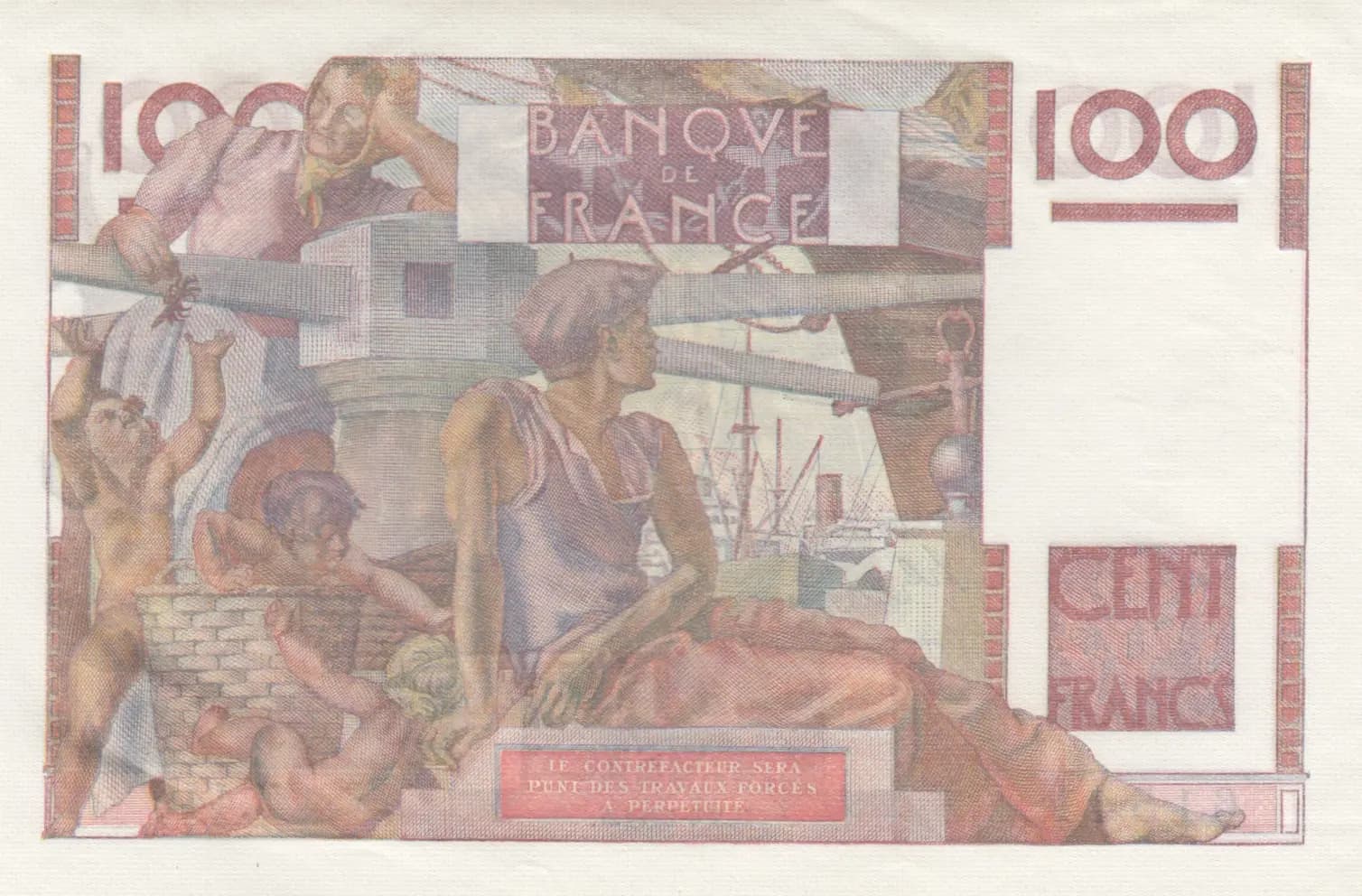
A stunning uncirculated example of the French 100 Francs from 1952 (Pick P-128d), featuring the iconic allegorical design with three male portrait busts on the obverse and a classical maritime/labor scene on the reverse. The note exhibits crisp, clean paper with sharp engraving detail throughout and no visible signs of circulation—representing the highest grade of preservation for this popular mid-20th century French banknote.
Common. The eBay price history shows consistent market activity across multiple condition grades (F through UNC) spanning from 2009 to 2025, with UNC examples selling in the $40-45 range historically and more recent PMG-graded higher examples reaching $73-132. The broad circulation of sold examples and moderate prices indicate this is a readily available note in the collector market. The 1951-1954 series was issued in substantial quantities, and while uncirculated examples command a premium, they are not difficult to obtain.
Issued during the Fourth Republic period (1951-1954), this note reflects France's post-war recovery and modernization. The allegorical reverse depicting figures engaged in maritime and construction activities symbolizes the nation's industrial development and labor, while the classical portraits on the obverse represent French values of learning, wisdom, and governance during a period of economic reconstruction.
The obverse features three classical male busts in allegorical style: on the left, a mature bearded figure holding a scroll or document (representing law, knowledge, or administration); in the center, a younger curly-haired figure (representing youth and vigor); and on the right, an older bearded classical figure (representing wisdom and experience). The reverse depicts an elaborate allegorical scene representing French commerce and labor, with multiple classical figures engaged in various activities near maritime elements including a visible sailing ship, architectural fortifications, and what appears to be dock or construction work. The composition symbolizes France's economic vitality and industrial capacity during the post-war period. Both sides feature ornamental borders with vertical striping patterns and decorative corner designs typical of mid-century French banknote aesthetics.
Front side: '100' (denomination), 'CENT FRANCS' (One Hundred Francs), 'LE GAISSIER GENERAL' (The General Cashier), 'LE SECRETAIRE GENERAL' (The General Secretary), date marking 'N.S-4-1952.N' (April 1952), serial numbers '615541' and '112293615541', variety designation 'Z.449'. Back side: '100' (denomination), 'CENT FRANCS' (One Hundred Francs), 'BANQUE DE FRANCE' (Bank of France—appears as watermark text), 'LE CONTREFACTEUR SERA PUNI DES TRAVAUX FORCES A PERPETUITE' (The counterfeiter will be punished with hard labor in perpetuity—standard anti-counterfeiting warning).
Intaglio engraving (copperplate printing), the standard security printing method for French banknotes of this era. The fine line engraving throughout, complex cross-hatching patterns, and sharp detail preservation visible in this uncirculated example are characteristic of high-security intaglio work. This note was produced by the Banque de France's printing facilities, which employed master engravers to create the intricate allegorical designs.
This specific example is dated April 1952 (N.S-4-1952.N) with serial designation Z.449 and individual serial number 615541. The Pick catalog P-128d designation indicates this is the 'd' variety of the 100 Francs 1952 issue, reflecting subtle variations within the 1951-1954 series that distinguish different printings or batches. The 'Z' prefix in the variety designation may indicate a specific printing batch or security feature variant, though detailed variety catalogs would be required to specify the exact distinguishing characteristics of the P-128d variety.